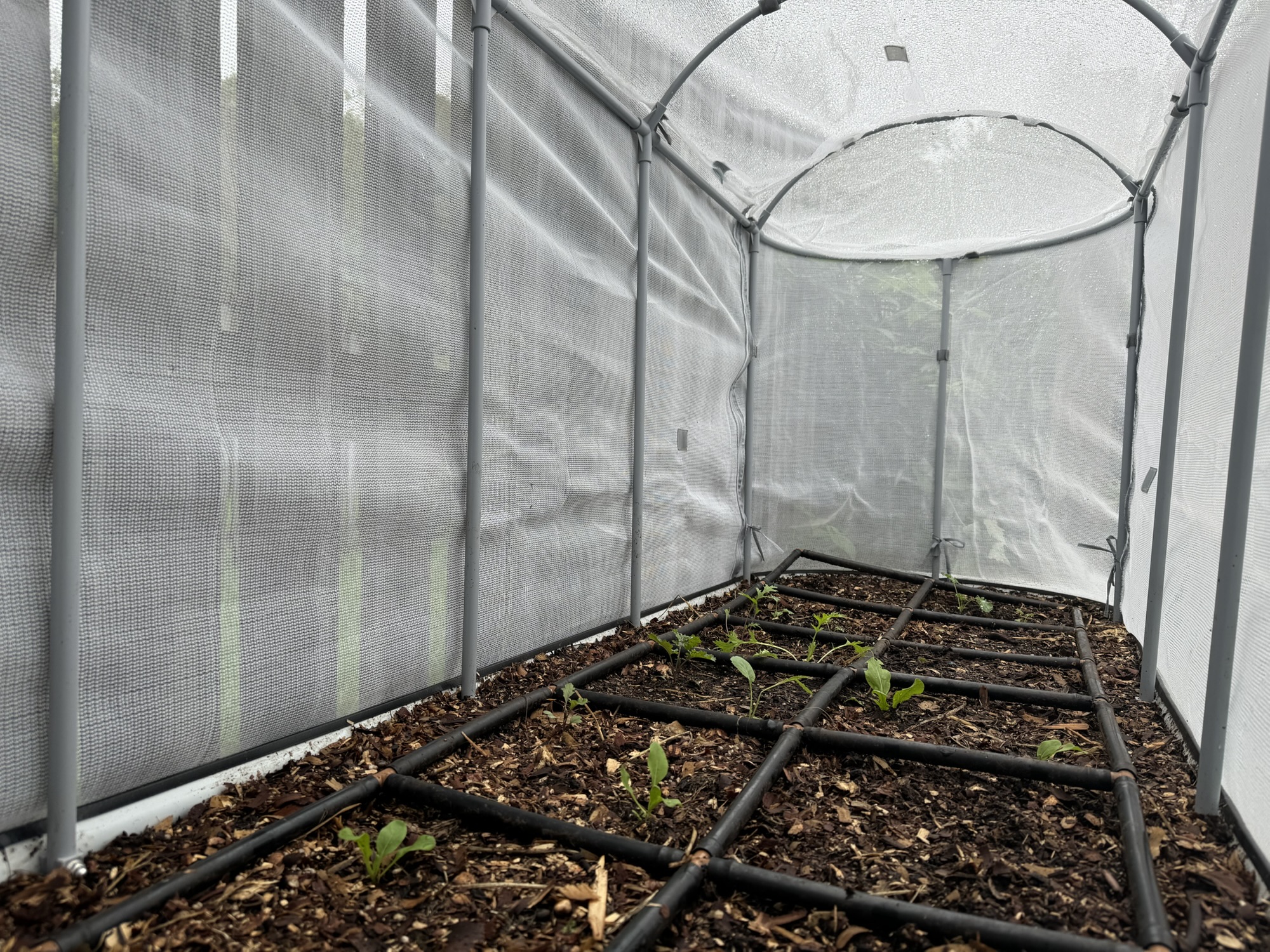
One of the biggest challenges in growing vegetables is keeping insects from damaging your crops before you have a chance to harvest them.
While there are many pest control options available, one of the simplest and most effective methods is preventing insects from reaching your plants in the first place.
That’s exactly what insect netting does.

Instead of treating pest problems after they appear, insect netting creates a physical barrier that keeps many insects from laying eggs on your plants while still allowing sunlight, rain, and airflow to reach them.
In my Maryland Zone 7 garden, insect netting has become one of the most valuable tools I own. It has dramatically reduced problems with cabbage worms and leaf miners, and I use it every season to protect many of my cool-season vegetables.
Here’s how to use insect netting effectively in your garden.
What Is Insect Netting?
Insect netting is a lightweight mesh fabric designed to keep insects away from your plants.

Unlike shade cloth or frost blankets, its primary purpose is pest exclusion.
It allows:
- Sunlight
- Air circulation
- Rain
- Irrigation
to pass through while preventing many insects from reaching the plants beneath it.
Why Use Insect Netting?
Using insect netting offers several advantages.
It helps:
- Prevent insects from laying eggs
- Reduce damage from chewing pests
- Protect seedlings
- Minimize the need for insecticides
- Improve harvest quality
- Support organic gardening practices
- Reduce crop loss
Rather than reacting to pest damage, you’re preventing many problems before they begin.
Common Pests Insect Netting Helps Prevent
Insect netting is especially effective against flying insects.
Depending on the mesh size, it may help reduce damage from:
- Cabbage moths
- Flea beetles
- Leaf miners
- Cabbage loopers
- Diamondback moths
- Onion maggots
- Carrot rust flies
- Aphids winged adults
- Bean beetles
- Whiteflies
The sooner the netting is installed, the more effective it will be.
Which Vegetables Benefit Most?
Many vegetables benefit from insect netting.
Some of the best candidates include:
Brassicas
- Broccoli
- Cabbage
- Cauliflower
- Kale
- Collards
- Bok choy
- Napa cabbage
- Brussels sprouts
- Kohlrabi
These crops are especially vulnerable to cabbage worms and flea beetles.
Root Crops
- Beets
- Carrots
- Radishes
- Turnips
Netting helps protect against leaf miners and root fly pests.
Leafy Greens
Young leafy greens often stay cleaner and healthier under netting.
Onions
Netting can help reduce problems with onion maggots and certain leaf-feeding insects.
When Should You Install Insect Netting?
The best time is immediately after planting.
Do not wait until you see pests.
Once insects have already laid eggs beneath the netting, covering the plants traps the problem inside.
- Right after transplanting
- Immediately after direct sowing
- Before insects become active
Prevention is far more effective than treatment.
How to Install Insect Netting
The easiest setup uses hoops or supports.
Popular options include:
- PVC hoops
- Poly tubing hoops
- Metal garden hoops
- Flexible fiberglass rods
- Wire hoops
- Raised bed cover system like Vego’s
Stretch the netting over the supports so it doesn’t rest directly on the plants whenever possible.
This creates:
- Better airflow
- More growing space
- Less leaf rubbing
- Easier harvesting
Secure the Edges
One of the most important steps is sealing the edges.
If insects can crawl underneath, the netting won’t provide much protection.
Secure the edges with:
- Soil
- Landscape staples
- Bricks
- Rocks
- Boards
- Sandbags
- Garden clips

Walk around the entire bed and check for gaps.
Can Rain and Water Pass Through?
Yes.
Most insect netting allows:
- Rain
- Hose watering
- Drip irrigation
- Soaker hoses
to pass through easily.
Continue checking soil moisture regularly because raised beds and containers can still dry out during hot weather.
Does Insect Netting Block Sunlight?
No.
Quality insect netting allows most sunlight to reach the plants while only slightly reducing light levels.
Vegetables continue receiving plenty of sunlight for healthy growth.
Can Insect Netting Overheat Plants?
Usually not.
Unlike some heavier covers, insect netting allows excellent airflow.
However, during extreme summer heat, temperatures beneath any cover can become slightly warmer.
Monitor your plants during heat waves.
For cool-season vegetables started in late summer, you may combine insect netting with temporary shade cloth by supporting the shade cloth above the netting during the hottest afternoons.
Do You Need to Remove It?
That depends on the crop.
Keep It On
For crops that don’t require insect pollination, the netting can often remain until harvest.
Examples include:
- Lettuce
- Spinach
- Kale
- Broccoli
- Cabbage
- Carrots
- Beets
- Onions
Can You Harvest Through the Netting?
Yes.
Simply lift one side, harvest what you need, and reseal the edges carefully.

Try not to leave openings longer than necessary.
Check Plants Regularly
Even under netting, inspect your plants.
Look for:
- Holes in the fabric
- Loose edges
- Trapped insects
- Weed growth
- Signs of disease
A quick inspection every few days helps catch problems early.
Clean and Store Your Netting
At the end of the season:
- Shake off soil and leaves.
- Wash if necessary.
- Allow it to dry completely.
- Fold neatly.
- Store in a dry location away from direct sunlight.
Proper care helps quality insect netting last for several seasons.
Common Mistakes to Avoid
Waiting Until Pests Arrive
Install netting before insects begin laying eggs.
Leaving Gaps
Even a small opening may allow pests inside.
Trapping Existing Insects
Inspect plants carefully before covering them.
Letting the Netting Rest on Plants
Whenever possible, support the netting above the crop.
My Experience Using Insect Netting
In my Maryland Zone 7 garden, insect netting has become one of the most effective tools I use.
I rely on it heavily for brassicas like bok choy, Napa cabbage, broccoli, kale, and cabbage because it dramatically reduces cabbage worm damage.
I’ve also had much better success growing beets since using insect netting to protect them from leaf miners. Before I started covering them, the leaves often developed tunnels that reduced both the appearance and quality of the crop.
Now, I install the netting as soon as I plant, and it has become part of my regular gardening routine.
Insect Netting Checklist
- Install immediately after planting.
- Support the netting with hoops.
- Seal every edge securely.
- Check regularly for gaps.
- Water through the netting.
- Inspect for trapped insects.
- Open only when necessary for harvesting.
- Clean and store after the season.
Final Thoughts
Insect netting is one of the easiest and most effective ways to protect vegetables from common garden pests.
Instead of constantly chasing cabbage worms, flea beetles, or leaf miners after they appear, you can prevent many of those problems before they start.
Combined with healthy soil, crop rotation, and regular garden inspections, insect netting helps produce cleaner, healthier vegetables while reducing the need for pesticides.
For many home gardeners, it’s one of the best investments you can make for a productive vegetable garden.
Frequently Asked Questions
What is insect netting used for?
Insect netting protects vegetables by preventing insects from reaching plants to feed or lay eggs while still allowing sunlight, rain, and airflow through.
Does insect netting stop cabbage worms?
Yes. When installed before cabbage butterflies lay eggs, insect netting is one of the most effective ways to prevent cabbage worm damage.
Can rain pass through insect netting?
Yes. Most insect netting allows rain and irrigation water to pass through without removing the cover.
Should insect netting touch plants?
It’s better to support the netting above the plants using hoops or a frame. This improves airflow and gives plants room to grow.
Can I leave insect netting on all season?
Yes, for crops that don’t require insect pollination, such as lettuce, spinach, kale, broccoli, cabbage, carrots, and beets.
Does insect netting keep out aphids?
It can help prevent winged aphids from reaching your plants, especially when installed before infestations begin, but it won’t control aphids that are already present under the cover.
Related Articles
- Sustainable Pest Management: How I Protect my Garden Without Harmful Chemicals
- How to Use Shade Cloth in the Vegetable Garden
- How to Prepare Garden Beds for Fall Planting
- How to Keep Fall Seedlings Alive During Summer Heat
- How to Grow Broccoli
- How to Grow Cabbage
- How to Grow Bok Choy
- How to Grow Beets
- How to Grow Carrots
- How to Grow Kale
- Succession Planting for Continuous Harvests
This page contains affiliate links to my brand partners like Vego Garden, GreenStalk, Walmart & Amazon at no extra cost to you.
Your support helps me create free gardening content. Thank you!


Leave a Reply