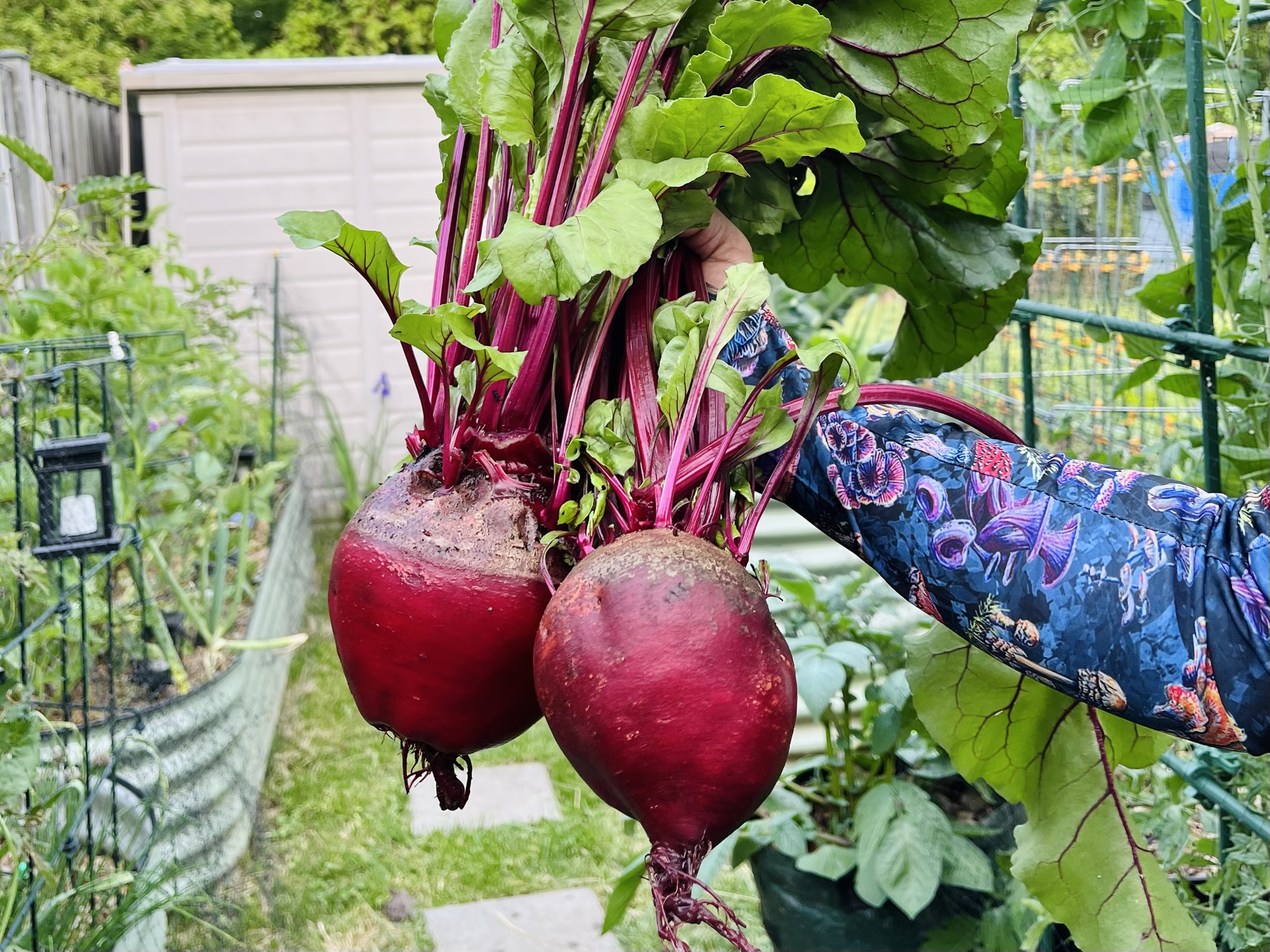
Beets are one of the most useful vegetables you can grow because they give you two harvests from one plant.
The roots are sweet, earthy, and versatile in the kitchen, while the leaves can be cooked and eaten much like spinach or Swiss chard.
Beets are also compact, cold tolerant, and well suited to raised beds, containers, and small gardens. They grow best during the cooler parts of the year, making them an excellent spring and fall crop.

In my Maryland Zone 7 garden, beets are one of those vegetables I enjoy growing in small batches. They do not need much space, and even if the roots stay small, the greens are still useful. I have also learned that protecting them from leaf miners can make a big difference in the quality of the harvest.
Here is everything you need to know about growing beets successfully.
Why Grow Beets?
Beets are a great crop for beginner and experienced gardeners alike.
They are:
- Easy to grow from seed
- Suitable for cool weather
- Productive in small spaces
- Edible from root to leaf
- Good for succession planting
- Well suited to containers and raised beds
Depending on the variety, beets may be red, golden, white, striped, round, or cylindrical.
When to Plant Beets
Beets are cool-season vegetables.
They grow best when temperatures are mild.
Spring Planting
Sow beets several weeks before your average last frost date.
In Zone 7, this often means late winter through early spring, depending on the weather and soil conditions.
Beets tolerate light frost, but growth slows in very cold soil.
Fall Planting
Fall is another excellent season for beets.
In Zone 7, they are commonly planted from late summer into early fall.
Plant early enough for the roots to size up before short days and hard freezes slow growth.
Succession Planting
For a steady harvest, sow a small amount every two to three weeks during cool weather.
This helps prevent all the roots from maturing at once.
Choosing a Beet Variety
There are many excellent varieties to try.
Popular options include:
- Detroit Dark Red
- Chioggia
- Golden
- Bull’s Blood
- Cylindra
- Early Wonder
- Touchstone Gold
Choose based on:
- Root color
- Days to maturity
- Flavor
- Leaf quality
- Available space

Golden and striped varieties can be especially appealing if you want something different from traditional red beets.
How Much Sun Do Beets Need?
Beets grow best in full sun.
Provide at least:
- 6 hours of direct sunlight daily
They can tolerate partial shade, especially in warmer weather, but too much shade may lead to smaller roots.
If you are growing them mainly for greens, partial shade is usually less of a problem.
Preparing the Soil
Beets grow best in loose, fertile, well-drained soil.
Compacted or rocky soil can lead to:
- Small roots
- Forked roots
- Misshapen roots
- Slow growth
Before planting:
- Remove weeds and rocks.
- Loosen the soil several inches deep.
- Add finished compost.
- Level the surface.
- Water before sowing if the soil is dry.
Avoid adding large amounts of fresh manure or excessive nitrogen immediately before planting. This can encourage leafy growth at the expense of root development.
How to Plant Beet Seeds
Beets are usually direct sown but if you’re like me and get excited to start gardening as early as possible, you can absolutely start beets indoors to get a head start on the season.
I like transplanting young seedlings while they’re still small to minimize root disturbance. It’s a great option if you’re trying to maximize your growing season or get an earlier harvest.
Whether you direct sow or start them indoors, beets are a rewarding crop that’s well worth growing.
Plant seeds:
- About ½ inch deep
- 1 to 2 inches apart
- In rows 10 to 12 inches apart
Keep the soil consistently moist until seedlings emerge.
Beet seeds may take approximately 5 to 14 days to germinate, depending on soil temperature and moisture.
Beet “Seeds” Are Actually Seed Clusters
One important thing to know is that what looks like a single beet seed is often a cluster containing several seeds.
That means one seed cluster may produce multiple seedlings.

This is why thinning is essential. If you’re not a fan of thinning out or cutting extra seedlings, you can separate them.
Do not assume you planted incorrectly if several seedlings emerge from one spot.
How to Thin Beet Seedlings
Thin seedlings once they are a few inches tall.
For full-sized roots, leave approximately:
- 3 to 4 inches between plants
For baby beets, closer spacing is fine.
Use scissors to snip unwanted seedlings at soil level rather than pulling them if the roots are tangled. This reduces disturbance to the plants you want to keep.
The thinnings are edible and can be added to salads or cooked as baby greens.
Can You Transplant Beets?
Yes, although direct sowing is usually easier.
Young beet seedlings can be transplanted carefully if:
- They were started in individual cells
- The roots are not badly disturbed
- They are transplanted while still small
Beets may form misshapen roots if the taproot is damaged.
For that reason, many gardeners prefer to direct sow them.
Watering Beets
Beets grow best with consistent moisture.
Irregular watering can cause:
- Tough roots
- Slow growth
- Cracking
- Bitter greens
Water deeply enough to moisten the root zone, but do not leave the soil constantly soggy.
Mulch can help maintain more even moisture.
Fertilizing Beets
Beets do not need excessive fertilizer.
Before planting, compost may be enough if the soil is already healthy.
If additional feeding is needed, use a balanced fertilizer.
Avoid applying too much nitrogen, which may produce large leaves and small roots.
Beets also benefit from adequate boron, but boron should not be added casually because too much can damage plants. A soil test is the safest way to determine whether supplementation is needed.
Mulching Beets
Apply a light layer of mulch after the seedlings are established.
Mulch helps:
- Keep the soil moist
- Reduce weeds
- Moderate soil temperature
- Keep roots from drying out
Good options include:
- Shredded leaves
- Straw
- Fine untreated mulch
- Compost
Do not bury young seedlings under thick mulch.
Growing Beets in Raised Beds
Raised beds, like what I have from Vego Garden,. are an excellent place to grow beets.
They provide:
- Loose soil
- Good drainage
- Easier weed control
- Better root development
Make sure the soil is deep enough and free from rocks or compacted layers.
Growing Beets in Containers
Beets also grow well in containers.
Choose a pot that is:
- At least 8 to 10 inches deep
- Wide enough for proper spacing
- Equipped with drainage holes
- Filled with high-quality potting mix
Compact or round varieties are usually easiest in containers.
Keep in mind that pots dry out faster than garden beds, so check the soil regularly.
Can Beets Grow in a Vertical Planter?
Yes, especially when growing them for baby roots or greens.
Choose pockets with enough depth and avoid overcrowding.
One or two plants per pocket may be enough, depending on the size of the planter.
The upper levels may dry out faster, so monitor moisture carefully.
Common Beet Pests
Leaf Miners
Leaf miners are one of the most common beet pests.
The larvae tunnel between the layers of the leaf, creating pale, translucent, or blotchy areas.

To reduce damage:
- Use insect netting early and secure it well.
- Remove affected leaves and burn them.
- Check the undersides of leaves for eggs.
- Rotate crops when possible.
In my garden, covering beets with insect netting has noticeably reduced leaf miner damage.
Aphids
Aphids feed on tender growth and may cause curling or distortion.
Small populations can often be removed with water.
Flea Beetles
Flea beetles create tiny holes in young leaves.
Seedlings are most vulnerable.
Insect netting can help protect plants while they establish.
Slugs and Snails
Slugs may damage young seedlings, especially during wet weather.
Reduce hiding places and inspect the garden regularly. Use slug baits if needed.
Common Beet Diseases
Possible problems include:
- Cercospora leaf spot
- Damping off
- Root rot
- Downy mildew
Reduce disease risk by:
- Avoiding overcrowding
- Improving airflow
- Watering near the soil
- Rotating crops
- Removing infected leaves
- Avoiding constantly wet soil
Why Are My Beet Roots Small?
Small roots may result from:
- Crowded spacing
- Compacted soil
- Too much shade
- Excessive nitrogen
- Inconsistent watering
- Planting too late
- Harvesting too early
- Pest or disease stress
Small beets are still edible.
You can also harvest and use the leaves even if the roots do not size up as expected.
Why Are My Beets Growing Mostly Leaves?
This often happens when the soil has too much nitrogen or the plants are crowded.
Thin the seedlings, avoid heavy nitrogen feeding, and make sure the soil is loose enough for roots to expand.
Why Are My Beet Leaves Turning Yellow?
Possible causes include:
- Overwatering
- Underwatering
- Nutrient deficiency
- Aging leaves
- Root stress
- Disease
Check the soil moisture first before adding fertilizer.
When to Harvest Beet Greens
Beet greens can be harvested at almost any stage.
For baby greens, pick when the leaves are a few inches tall.
For larger greens, remove only a few outer leaves from each plant so the root can continue developing.
Avoid removing too many leaves at once because the plant needs them for photosynthesis.
When to Harvest Beet Roots
Most beets are ready when the roots are approximately:
- 1½ to 3 inches in diameter
The exact size depends on the variety and your preference.
Smaller roots are usually more tender.
Larger roots may become woody if left too long.
You can often see the top of the root pushing above the soil, which makes checking the size easy.
How to Harvest Beets
To harvest:
- Water the soil if it is very dry.
- Loosen the soil around the root.
- Pull gently from the base of the leaves.
- Support the root with your other hand if needed.
For stubborn roots, use a hand fork to loosen the soil first.
How to Store Fresh Beets
After harvesting:
- Remove the tops, leaving approximately 1 inch of stem.
- Do not cut into the root.
- Brush off loose soil.
- Store the roots in the refrigerator.
Removing the leaves helps prevent them from pulling moisture from the root.
Beet roots may keep for several weeks under proper refrigeration.
Store the greens separately and use them sooner.
Can You Freeze Beets?
Yes.
For best results:
- Cook the beets until tender.
- Cool them.
- Peel and slice.
- Package in freezer-safe containers.
- Freeze.
Raw beets do not usually freeze as well because the texture may become unpleasant.
Can You Roast Beet Greens?
Yes.
Beet greens can be:
- Sautéed
- Steamed
- Added to soups
- Used in stir-fries
- Mixed with other leafy greens
The stems are edible too, although they may need slightly longer cooking.
Succession Planting With Beets
Beets fit well into many garden rotations.
Possible sequences include:
- Spring beets followed by beans
- Garlic followed by fall beets
- Radishes followed by beets
- Summer crops followed by fall beets
Because they mature relatively quickly, they are useful for filling open spaces.
Good Companion Plants for Beets
Beets can grow alongside:
- Lettuce
- Spinach
- Onions
- Green onions
- Radishes
- Broccoli
- Cabbage
- Kale
Avoid overcrowding and make sure each crop has enough light and water.
My Tips for Growing Beets in Zone 7
In my Maryland Zone 7 garden, beets perform best when I:
- Plant them in cool weather.
- Use loose soil.
- Keep the seedbed consistently moist.
- Thin seedlings early.
- Protect them from leaf miners.
- Harvest smaller roots before they become tough.
- Use the greens even when the roots stay small.
Beets may not always produce perfectly shaped roots, but they are still one of the most practical crops because nearly the entire plant is edible.
Beet Growing Checklist
- Plant during cool weather.
- Sow seeds approximately ½ inch deep.
- Keep the soil moist until germination.
- Thin seedlings to 3 to 4 inches apart.
- Grow in loose, well-drained soil.
- Water consistently.
- Avoid excessive nitrogen.
- Protect leaves from leaf miners.
- Harvest greens lightly.
- Pull roots while they are still tender.
- Sow small batches for continued harvests.
Final Thoughts
Beets are a compact, versatile vegetable that deserves a place in almost any garden.
They grow well in raised beds, containers, and small spaces, and they provide both tender greens and flavorful roots.
The most important steps are simple: plant during cool weather, keep the soil loose and consistently moist, and thin the seedlings so the roots have enough room to develop.
Even if your beets do not grow perfectly, they are rarely a complete loss. The greens are delicious, small roots are still useful, and every planting teaches you something for the next season.
Frequently Asked Questions
Are beets easy to grow?
Yes. Beets are generally easy to grow as long as they are planted in loose soil, thinned properly, and kept consistently moist.
How long do beets take to grow?
Most beet varieties mature in approximately 50 to 70 days, although baby greens and small roots can be harvested sooner.
Do beets need full sun?
Beets grow best with at least six hours of sunlight, but they can tolerate partial shade.
How many beets grow from one seed?
A beet seed cluster may produce several seedlings, but each individual seedling develops one main root.
Do I need to thin beets?
Yes. Thinning is essential because beet seeds often produce multiple seedlings from one cluster.
Can beets grow in containers?
Yes. Use a container at least 8 to 10 inches deep with good drainage.
Why are my beets all leaves and no roots?
Crowding, excess nitrogen, compacted soil, or insufficient sunlight may prevent good root development.
Can beet leaves be eaten?
Yes. Beet greens and stems are edible and can be cooked like spinach or Swiss chard.
Can beets survive frost?
Yes. Beets tolerate light frost, and cool weather may improve their flavor. Severe freezes can damage exposed roots and leaves.
Related Articles
- Best Vegetables to Plant in Fall
- How to Prepare Garden Beds for Fall Planting
- Succession Planting for Continuous Harvests
- How to Grow Spinach
- How to Grow Lettuce
- How to Grow Carrots
- How to Keep Fall Seedlings Alive During Summer Heat
- How to Protect Plants With Insect Netting
- When to Harvest Beets
- How to Store Beets After Harvest
This page contains affiliate links to my brand partners like Vego Garden, GreenStalk, Walmart & Amazon at no extra cost to you.
Your support helps me create free gardening content. Thank you!


Leave a Reply