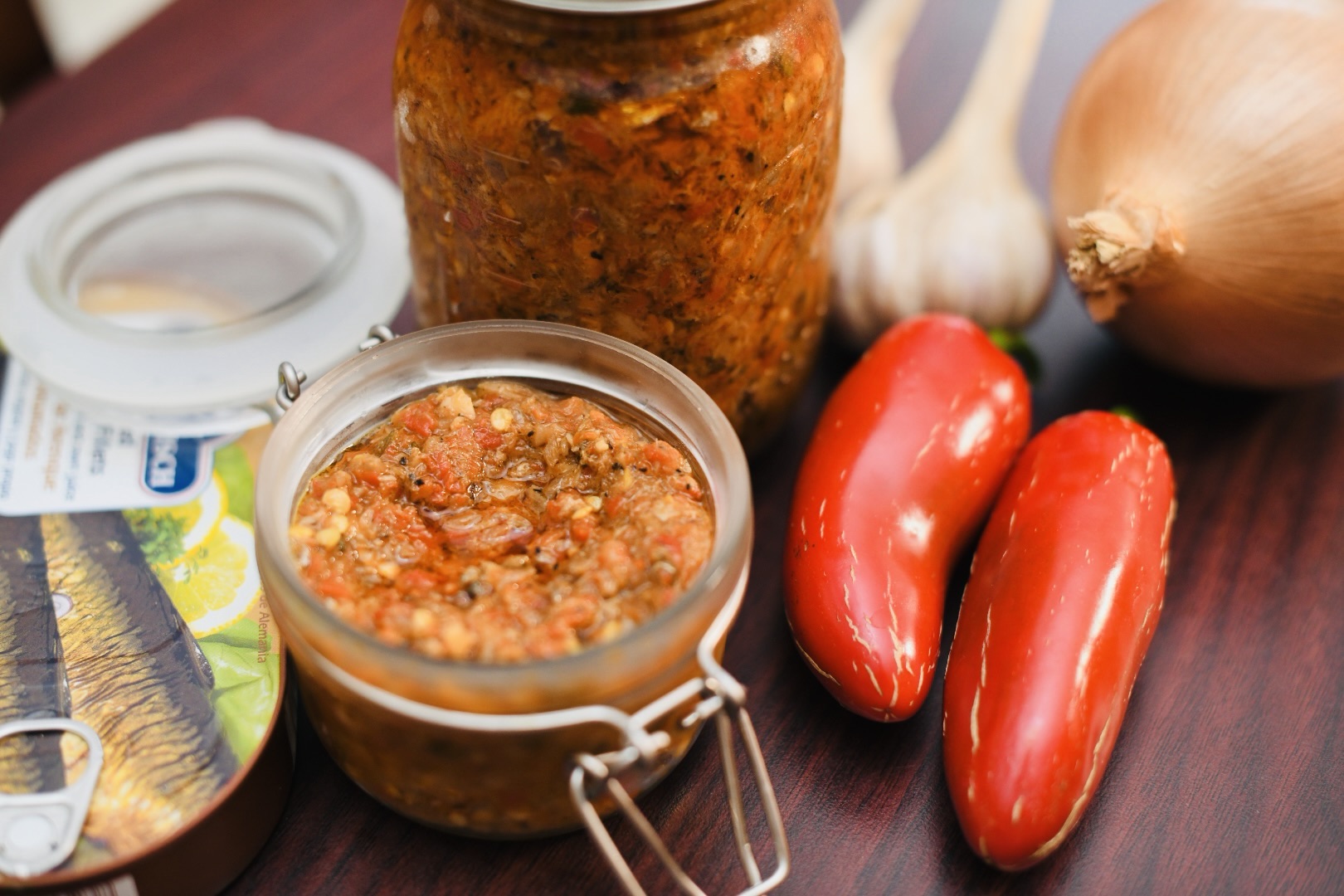
Sometimes the best recipes we bring into our kitchens begin at someone else’s table.
I was introduced to a delicious West African chili sauce when our Liberian friend had us try this sauce when we had dinner. I loved it so much that I wanted to learn how to make something similar at home.
I want to be clear that I’m not claiming this recipe is an authentic Liberian chili sauce or a traditional West African recipe. This is simply my version, inspired by what my friend served us that evening.
I taught myself how to make it based on the flavors I remembered and adapted it to ingredients that are easier for me to find. For example, instead of dried fish, I use canned smoked herring.
The result tastes close to what I remember eating at my friend’s house—and it has become another delicious way for me to use jalapeños, garlic, and fresh thyme from my garden.
A Recipe Inspired by Friends
Food has such an interesting way of connecting us to people and cultures.
Sometimes you eat something at someone’s house and can’t stop thinking about it afterward.
That’s what happened to me with this chili sauce.
My friend is Liberian, and when they invited us to dinner, they served a spicy sauce that I absolutely loved. I didn’t leave with a written recipe, so later I tried recreating the flavors from memory.
Over time, I came up with this version.
It isn’t meant to duplicate or represent one specific traditional recipe. It’s simply my West African-inspired chili sauce based on a dish shared with me by a Liberian friend.
And, of course, I found a way to incorporate ingredients from my own garden.
Using Jalapeños From My Garden
Traditional West African pepper sauces can use much hotter peppers, but I grow a lot of jalapeños—and they’re peppers we actually enjoy eating.
So that’s what I use.
For this batch, I used about 10 large jalapeño peppers.
If you want a milder sauce, remove the pale inner membranes from the peppers before mincing them.
If you enjoy more heat, leave more of the membranes intact.
You can also experiment with hotter peppers if that’s what you grow and enjoy.
That’s one thing I love about cooking from the garden: I can adapt recipes to whatever I’m harvesting.
And Homegrown Garlic
I also used garlic from my garden.
Garlic is one of those crops that earns its space because we use so much of it in the kitchen.
For this recipe, I use about 10 cloves, so the garlic definitely isn’t hiding in the background!
I used my homegrown garlic along with my jalapeños.
The onions, however, came from the grocery store.
My onions weren’t very successful in the garden this year—and that’s okay.
Garden-to-table cooking doesn’t mean every single ingredient has to come from your backyard.
I use what I successfully grow and buy the rest.
Using Thyme From My Garden
I also used fresh thyme from my garden in this chili sauce.
Thyme is a small herb, but it adds a lovely earthy, herbal flavor that works well with the jalapeños, garlic, onions, and smoked herring.
For this batch, I used about ¼ cup loosely packed fresh thyme leaves, with the stems removed.
I rinsed the thyme, gently patted it dry, and removed the leaves from the stems before adding them to the sauce.
Fresh herbs are another reminder that garden-to-table cooking doesn’t have to involve large harvests. Even a small handful of thyme can add something special to a recipe.
West African-Inspired Chili Sauce Recipe
Yield: About 3 cups
Prep time: 25 minutes
Cook time: 35–45 minutes
Total time: About 1 hour
Heat level: Medium to hot, depending on the jalapeños
Ingredients
- ½ cup neutral oil or the oil from the smoked herring cans
- 10 large jalapeño peppers
- 2 medium yellow onions
- 10 garlic cloves
- ½ cup loosely packed fresh thyme leaves, stems removed
- 2 cans smoked herring, about 3–4 ounces each
- 1 tablespoon ground black pepper
- 1–2 teaspoons liquid seasoning, plus more to taste
- 1–2 teaspoons salt to start, plus more to taste
For less heat: Remove the inner membranes and seeds from the jalapeños.
For more heat: Leave some or all of the membranes intact.
Because canned smoked herring and liquid seasoning can already contain quite a bit of sodium, start with a small amount of salt and adjust after tasting.
Optional Ingredient
- 1 dried bay leaf
If you add a bay leaf, remove it before serving or storing the sauce. Do not eat it.
How to Make West African-Inspired Chili Sauce
Step 1: Prepare the Jalapeños
Wash and dry the jalapeños.
Remove the stems and cut the peppers open.
For a milder sauce, remove the seeds and inner membranes. You can leave more of them intact if you prefer your sauce hotter.
Wear gloves when handling hot peppers if your skin is sensitive to them, and avoid touching your face or eyes.
Step 2: Mince the Jalapeños
Add the jalapeños to a food processor and pulse until finely minced, about 10–15 pulses.
You want very small pieces, but you don’t need to turn the peppers into a completely smooth purée.
Transfer the minced peppers to a bowl and set them aside.
Step 3: Mince the Onions
Roughly chop the onions and add them to the food processor.
Pulse until finely minced, about 10–15 pulses.
Transfer them to another bowl.
Processing each ingredient separately gives you more control over the texture and allows you to cook them in stages.
Step 4: Mince the Garlic
Add the peeled garlic cloves to the food processor and pulse until finely minced, about 5–8 pulses.
Set the garlic aside.
Step 5: Prepare the Fresh Thyme
Rinse the fresh thyme and gently pat it dry.
Remove the leaves from the stems. Measure out about ½ cup loosely packed leaves and set them aside.
Step 6: Prepare the Smoked Herring
Drain the smoked herring if the cans contain excess liquid. If the herring is packed in oil and you enjoy that flavor, you can add some or all of the oil to the sauce.
Remove any large bones or skin if necessary, then finely mince or flake the fish with a fork.
Preparing the herring before cooking makes it easier to distribute throughout the sauce.
Step 7: Gently Cook the Garlic
Heat the oil in a large, heavy-bottomed skillet or saucepan over medium-low heat.
Add the minced garlic and cook for 3–5 minutes, stirring frequently, until it becomes fragrant and lightly golden.
The garlic should smell sweet and aromatic, not sharp or burnt.
If it begins browning quickly, reduce the heat immediately. Burnt garlic can make the entire sauce taste bitter.
Step 8: Add the Onions
Add the minced onions to the pan.
Cook for 8–10 minutes, stirring occasionally, until the onions soften and become translucent.
They do not need to brown deeply. The mixture should look moist and softened, with no large raw-looking pieces of onion.
Step 9: Add the Jalapeños
Stir in the minced jalapeños.
Cook for 10–12 minutes, stirring every few minutes, until the peppers soften and the mixture begins to thicken slightly.
The peppers should look glossy and tender rather than crisp.
Cooking a large quantity of hot peppers can release irritating vapors, so use good kitchen ventilation. Open windows or turn on an exhaust fan before you begin.
I learned this the hard way—the smell made it to our bedroom, and I could still smell it after cleanup. If you have a portable or tabletop stove, you may prefer to prepare this sauce outdoors in a well-ventilated area.
Step 10: Add the Fresh Thyme and Bay Leaf
Stir in the fresh thyme leaves and add the bay leaf, if using.
Cook for 3–5 minutes, stirring occasionally, until the thyme is fragrant and evenly distributed.
The sauce should smell herbal and savory, and the thyme leaves should be softened.
Adding the thyme after the peppers have started to cook helps preserve some of its fresh flavor while still allowing it to blend into the sauce.
Step 11: Add the Smoked Herring
Add the minced smoked herring and stir thoroughly to combine it with the peppers, onions, garlic, and thyme.
Cook for 5–7 minutes, stirring frequently, until the fish is heated through and incorporated throughout the mixture.
The sauce should look cohesive, with the herring evenly distributed rather than sitting in large pieces.
The smoked herring adds a salty, smoky, savory flavor that makes this sauce very different from a simple chili garlic sauce.
Step 12: Season the Sauce
Add the ground black pepper and 1 teaspoon of liquid seasoning.
Stir well and cook for 2–3 minutes.
Taste carefully, then add salt a little at a time. Start with 1 teaspoon, stir, and taste again. Add more liquid seasoning or salt only if needed.
The finished sauce should be spicy, savory, smoky, and well seasoned without tasting overwhelmingly salty.
If the sauce seems dry, stir in a tablespoon or two of additional oil. If it seems too loose, continue cooking uncovered for another 3–5 minutes, stirring frequently, until it thickens slightly.
Remove the bay leaf before serving or storing.
Step 13: Cool and Serve
Remove the pan from the heat and let the sauce cool for 15–20 minutes.
It will thicken slightly as it cools.
Serve warm, at room temperature, or chilled, depending on how you plan to use it. Use a clean spoon each time you serve it.
How Spicy Is This Chili Sauce?
That depends on your jalapeños.
One of the funny things about growing jalapeños is that you don’t always know exactly how hot each pepper will be.
Some can be relatively mild.
Then you bite into another one from the same garden and wonder what happened!
For a milder version, remove as much of the pale inner placental tissue as possible.
For more heat, leave it intact or substitute some of the jalapeños with hotter peppers.
Can I Use Other Peppers?
Yes.
This recipe is already an adaptation, so use peppers that match the heat level you actually enjoy.
Jalapeños work particularly well for me because they’re something I grow in my garden.
If you grow hotter peppers, you could incorporate a small amount into the sauce.
Just remember that some peppers are dramatically hotter than jalapeños, so don’t assume you can substitute them at the same quantity.
Why I Use Canned Smoked Herring
The version that inspired this sauce used ingredients that aren’t necessarily the easiest for me to find locally.
Instead of searching for the exact dried fish traditionally used in someone’s version of the dish, canned smoked herring is convenient and readily available to me.
It also gives the sauce that smoky, savory fish flavor I remember.
Is it exactly the same?
No.
But that’s why I call this recipe West African-inspired rather than authentic.
It’s my attempt to recreate a flavor I enjoyed while working with ingredients that are practical for my kitchen.
How to Serve This Chili Sauce
This sauce has a lot of flavor, so you don’t need much. Start with 1–2 tablespoons per serving and add more as desired.
Try serving it with:
- Rice
- Grilled or roasted meats
- Chicken
- Fish
- Fried or roasted plantains
- Vegetables
- Eggs
- Stews
- Soups
- Fried chicken
- Other savory dishes that could use some heat
I especially like the combination of heat, garlic, onion, fresh thyme, smokiness, and savory flavor from the fish. I love the umami flavor of this sauce, especially when it’s added to soups or served with fried chicken.
Adding fish to a sauce is not everyone’s cup of tea, but I love it.
How to Store It
Because this homemade sauce contains cooked fresh vegetables, fish, and oil, it is not a shelf-stable condiment.
Allow the sauce to cool for no more than 2 hours at room temperature, then transfer it to clean, covered containers and refrigerate promptly.
For conservative home storage, treat this like other cooked fish leftovers and use the refrigerated sauce within 3–4 days.
If you’ve made more than you can eat during that time, freeze the extra in small portions.
To freeze, spoon the cooled sauce into freezer-safe containers or silicone molds, leaving a little room for expansion. Freeze for up to 2–3 months for best quality.
Thaw frozen sauce overnight in the refrigerator, then reheat it gently in a saucepan or microwave until hot. Stir well before serving.
Do not store this homemade sauce at room temperature, and do not can it unless you are following a tested canning recipe specifically designed for this type of sauce.
Garden-to-Table Doesn’t Have to Mean 100% Homegrown
I used homegrown jalapeños.
I used homegrown garlic.
I used fresh thyme from my garden.
And I bought my onions.
My onions simply didn’t do very well this year!
But I think that’s an important part of realistic garden-to-table cooking.
I don’t grow food because I’m trying to eliminate the grocery store.
I grow ingredients we enjoy eating and combine them with the things I buy.
Even if your garden contributes only one or two ingredients to dinner, that’s still food you grew yourself.
And in this case, three ingredients from my little garden helped me recreate a dish inspired by a meal shared with friends.
I think that’s pretty special.
Food Connects Us
This recipe didn’t start in my garden.
It started at my friend’s dinner table.
Someone shared their food with us, I discovered a flavor I loved, and that experience eventually inspired me to experiment in my own kitchen using peppers, garlic, and fresh thyme I grew myself.
My version isn’t meant to represent all Liberian or West African cooking.
It’s simply a recipe inspired by something delicious a Liberian friend introduced me to.
And that’s one of the beautiful things about food.
We grow it.
We cook it.
We share it.
And sometimes a dish someone shares with us becomes part of the story of our own kitchen and garden.
Let’s grow food at home.
Related Articles
- How to Grow Jalapeño Peppers
- Jalapeño Chili Garlic Oil
- How to Ferment Jalapeño Peppers for Hot Sauce
- How to Ferment Hot Sauce
- How to Grow Garlic
- When to Harvest Peppers
- Harvest Tips for Beginner Gardeners
- Vegetable Gardening in Maryland


Leave a Reply