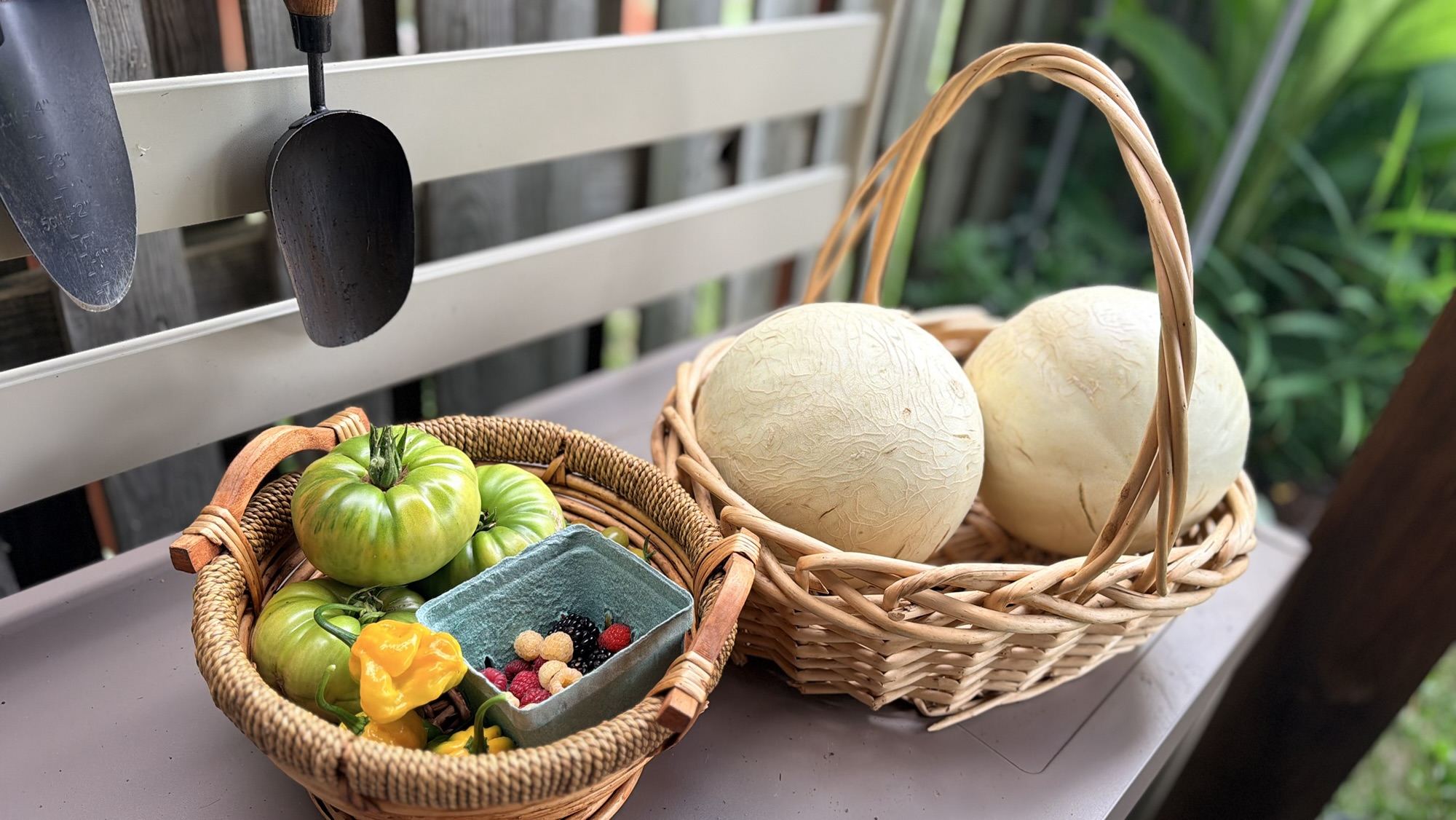
August always feels like two gardening seasons happening at once.
The summer garden is still producing tomatoes, peppers, melons, beans, and other warm-season crops, but I’m also looking ahead to fall.
There are seeds to start, beds to clear, struggling plants to evaluate, and decisions to make about which crops are still worth keeping.
Then there’s the weather.

August in Maryland can be hot and humid, but this year also brought plenty of rain. While rain can save me from watering, too much of it creates a different set of problems.
This month reminded me that gardening isn’t just about planting something and waiting for the harvest.
Sometimes it means protecting tomatoes from deer.
Sometimes it means checking containers after heavy rain.
And sometimes it means admitting that a honeydew melon should have been harvested sooner.
Here are some of the highlights and challenges from my August garden.
August in My Maryland Garden
By August, my garden looks very different from the neat little garden I imagined at the beginning of spring.
Everything is bigger.
The tomatoes are sprawling, the peppers are tall, and vines have taken over their supports.
Some plants are thriving, while others are clearly reaching the end of their season.
At the same time, I’m constantly moving between harvesting summer crops and preparing space for fall plantings.
That’s one reason I enjoy documenting the garden throughout the year. Every month tells a different story.
August’s story was one of harvesting, protecting, troubleshooting, and transitioning.
August Garden Highlights
Harvesting Summer Tomatoes
Tomatoes continued to be one of the stars of the summer garden.
By August, I’m no longer thinking about how tiny the seedlings were in spring. Instead, I’m focused on keeping the plants supported, protecting the fruit, watching for disease, and harvesting tomatoes before something else gets to them.


And there is always something else interested in my tomatoes.
I’ve learned that growing tomatoes isn’t just about growing healthy plants. Sometimes the bigger challenge is actually getting the fruit into the kitchen.
Protecting My Tomatoes With Organza Bags
One of my more unusual garden tasks this month was wrapping some of my slicing tomatoes in organza bags.
Yes, individually.

At this point, I don’t trust the wildlife—or the bugs.
Deer are always a concern in my garden, and stink bugs can also damage ripening tomatoes. The organza bags provide an extra layer of protection around individual fruits while still allowing airflow.
Does wrapping individual tomatoes make me look like an overprotective tomato mom?
Probably.
But when you’ve waited months for a beautiful slicing tomato, you start getting creative.
Honeydew Melon Harvests
Growing melons is always exciting because they take so long to develop.
Unlike beans or leafy greens, which provide frequent harvests, melons make you wait.
And wait.
And keep checking.

I successfully harvested one honeydew melon and was still eating it when another melon began approaching maturity. That led directly to one of this month’s biggest lessons: when a melon is ready, harvest it.
Growing More Food Vertically
Vertical gardening continues to be one of the most important strategies in my small garden.
Melons, pole beans, tomatoes, and other climbing or supported crops allow me to use vertical space instead of letting everything spread across the ground.
In a small backyard, I simply don’t have unlimited square footage.
Growing upward allows me to fit more food into the space I have while also improving airflow and making harvesting easier.
Every season reinforces how important vertical gardening is for me.
Peppers Continued Growing
By this point in the season, my pepper plants have become tall and productive.
Peppers appreciate heat, so while many cool-season vegetables struggle or disappear during summer, peppers are finally enjoying themselves.
I grow mostly mild and sweet peppers because those are the varieties we actually use, including:
- Bell peppers
- Lunchbox peppers
- Banana peppers
- Poblanos
- Anaheim peppers
- Jalapeños
I also grow Scotch Bonnet peppers for a friend.
One thing I’ve learned from growing different varieties is that they don’t all develop at the same speed. Some peppers are simply much slower than others.
Ginger and Turmeric Continued Growing
My ginger and turmeric are long-season crops, so August isn’t harvest time yet.
They’re still growing.
I started the ginger early because Maryland doesn’t naturally provide the long, warm growing season ginger prefers. Turmeric also requires patience.
These aren’t crops that provide instant gratification, but watching the foliage grow throughout summer reminds me that plenty is happening underground.
If everything goes according to plan, I’ll harvest the rhizomes much later in the year.
Moringa Is Getting Tall
Moringa is one of the summer crops I try to grow each year. Although it only lasts for a couple of months here in Maryland, I love having it, even for a short time, because it reminds me of my other home.
I’ve harvested it once so far, and I still have a couple of months to enjoy it before the weather turns cold.
Marigolds Are Out of Control
I planted Sparky French marigolds and Park Seed’s White Swan African marigolds this year, and they exploded in August.
They grew so vigorously that they covered a surprising amount of space, making it harder to walk through the garden.
I’ve pruned some of them, and I need to do more, although I don’t always have the time or energy to keep up with them.
They’re beautiful and beneficial, but even helpful plants can become difficult to manage when they grow too aggressively.
Some Basil Bolted
Renee’s Garden Lemon Basil bolted this month and became a magnet for pollinators. It smells delicious and has been a lovely addition to the garden.
Lemon basil isn’t an herb I use often, but I grow it to support biodiversity and encourage beneficial insects.
I also grew another variety called lettuce leaf basil. Some of those plants bolted as well, but a few are still producing leaves that I can enjoy.
Planting Honeynut Squash for a Late Crop
I planted honeynut squash around the middle of August.
That’s definitely late for a warm-season squash in Maryland, so this planting is an experiment.
The question is whether the plants will have enough time to grow, flower, set fruit, and mature before cold weather arrives.
Late-season planting always involves some risk, but sometimes I have seeds, an open space, and enough curiosity to say: Why not try?
Unfortunately, the plant is already stunted. I think the wet weather at the end of August contributed to the problem, so I don’t have much hope of getting a harvest. Still, I’m glad I tried.
I’m still deciding whether to remove the plant or leave it in place a little longer. Since it isn’t taking up much space, I may give it more time and see what happens.
August Garden Challenges
Of course, August wasn’t all harvest baskets and thriving plants. There were plenty of challenges too.
Too Much Rain
One of the biggest issues this month was rain.
After periods of heavy rain, I make a habit of walking through the garden and checking my containers. Drainage can become blocked, causing water to remain in the pots longer than it should.
That’s especially concerning for my potted tomatoes. Tomatoes appreciate consistent moisture, but they don’t want their roots sitting in water.
After heavy rain, I check for:
- Water pooling on the soil
- Blocked drainage holes
- Soggy containers
- Plants leaning after storms
- Broken branches
- Splashed soil on lower foliage
- Fruit cracking
Sometimes I need to create another drainage opening or otherwise help excess water escape.
Rain means I don’t have to water. Too much rain means I have an entirely different list of chores.
My Honeydew Melon Cracked
This one hurt.
I knew my honeydew melon was getting close to harvest, but I waited. Partly because I was still eating the first melon I harvested, and partly because the content creator in me wasn’t quite ready to harvest the next one.
I wanted to document it, film it, and make the timing work for my content.
The melon did not care about my content schedule.
With all the rainy weather we had been experiencing, I shouldn’t have delayed. Eventually, the melon cracked.
Melons can split when they receive a sudden increase in water, especially as they approach maturity. The fruit absorbs water faster than the rind can accommodate the expansion.
Lesson learned:
When a melon is ready, harvest the melon.
The video can figure itself out later.
Deer Pressure
Deer continue to be one of the realities of gardening where I live.
There is a state park behind our home, so wildlife is never very far away. That can be wonderful—until the animals start eating the garden.
Tomatoes are valuable enough to me that I’m willing to take extra precautions, including protecting individual fruits when necessary.
I’ve learned that wildlife protection isn’t a one-time garden task. It’s an ongoing part of growing food here.
Stink Bugs and Other Tomato Pests
Deer aren’t the only creatures interested in tomatoes.
Stink bugs can pierce tomato fruit and leave damaged areas beneath the skin. Once tomatoes begin ripening, I pay much closer attention to them.
This is another reason I started experimenting with organza bags around individual slicing tomatoes. At this point in the season, every large tomato feels valuable.
Yellowing Tomato Leaves
Late summer is also when tomato plants start looking a little less glamorous.
Yellow leaves don’t always mean the same thing. Possible causes include:
- Natural aging
- Drought stress
- Nutrient deficiencies
- Early blight
- Septoria leaf spot
- Root problems
- Pest damage
- Insufficient sunlight
- Heat stress
- Herbicide injury
Older lower leaves naturally yellow as the plant redirects energy toward new growth and fruit production.
However, when yellowing spreads rapidly or appears alongside spotting, wilting, distortion, or other unusual symptoms, it’s worth investigating.
By August, I’m less concerned about keeping tomato plants picture-perfect and more concerned about keeping them healthy enough to finish producing.
Heat Stress
August heat can be hard on plants.
Tomato leaves may curl or fold inward, almost like a taco shell, during periods of intense heat. Plants do this partly to reduce water loss.
Heat stress doesn’t automatically mean a plant is dying, but it does tell me to check:
- Soil moisture
- Container temperature
- Sun exposure
- Watering consistency
Container plants require especially close attention because their root zones heat up and dry out much faster than plants growing in large raised beds.
Summer Pest Pressure
Late summer can feel like peak pest season.
The garden has been growing for months, insects have had plenty of time to multiply, and stressed plants are often more vulnerable.
This is also why I no longer try to force cool-season vegetables through summer. A crop may technically survive under shade cloth or insect netting, but that doesn’t necessarily mean it’s thriving.
My kale experience was a good reminder of that. Even when I protected the plants from cabbage moths, heat stress and pressure from other pests eventually became too much.
Sometimes the best pest-management strategy is simply:
Grow the crop during the season when it naturally wants to grow.
Transitioning From Summer to Fall
August isn’t just the end of summer gardening. It’s also the beginning of fall gardening.
That transition happens much earlier than many beginner gardeners realize. If I wait until October to start thinking about my fall garden, I’ve already missed opportunities.
Starting Fall Crops While It’s Still Hot
One of the strangest things about fall gardening is that many fall vegetables need to be started while it still feels completely like summer.
I’m thinking about crops such as:
- Broccoli
- Cabbage
- Kale
- Collards
- Bok choy
- Napa cabbage
- Mizuna
- Tatsoi
- Lettuce
- Spinach
Some of these crops prefer cool temperatures, but they need enough time to establish before the days become dramatically shorter.
That means starting seeds while I’m still harvesting tomatoes and peppers.
Protecting Fall Seedlings From Summer Heat
Starting fall vegetables in August creates a strange problem:
The vegetables want fall, but the weather is still giving them summer.
Young seedlings may need protection from:
- Intense afternoon sun
- Drying soil
- Heat
- Heavy rain
- Insects
Shade cloth can be extremely helpful during this transition. I can gradually expose seedlings to stronger sunlight as temperatures become more favorable.
Evaluating What Stays and What Goes
By August, I start looking at each plant differently.
Instead of asking:
Can I keep this alive?
I ask:
Is this plant still worth the space?
That’s an important difference.
A struggling plant may technically survive another month, but if it’s producing very little while occupying valuable garden space, removing it may make more sense.
That space could become:
- Lettuce
- Bok choy
- Spinach
- Mizuna
- Kale
- Onions
- Other fall vegetables
Small-space gardening requires making choices. I can’t grow everything at once.
Preparing Garden Beds for Fall
As summer crops finish, I begin preparing those spaces for the next planting.
That may include:
- Removing spent plants
- Pulling weeds
- Adding compost
- Checking soil moisture
- Refreshing mulch
- Repairing trellises
- Installing insect netting
- Planning where fall crops will grow
I don’t completely rebuild my soil every time I change crops. Instead, I try to replenish what was used and create good conditions for the next planting.
Thinking Ahead to Fall Onions and Shallots
I’m also already thinking about my fall onion plans.
This year, I plan to grow Texas Grano onions again and try Zebrune shallots from seed.
I’ve had better results with Texas Grano grown from seed and planted in fall than I have with onion sets.
The shallots will be a new experiment.
That’s another thing I enjoy about the transition into fall. Even while one garden season is ending, I’m already excited about trying something new.
What August Taught Me
Every month in the garden seems to leave behind a few lessons. August gave me several.
1. Harvest When the Crop Is Ready
The cracked honeydew was probably the clearest reminder.
Plants don’t follow my filming schedule. When something is ready—especially when heavy rain is coming—I need to harvest it.
2. Check Containers After Heavy Rain
We often think about containers drying out, but drainage problems can be just as damaging.
A quick garden walk after a storm can catch problems before roots sit in water for too long.
3. Protect the Harvest You Worked Months to Grow
If wrapping individual tomatoes in organza bags helps me actually harvest them, I’ll do it.
There’s no prize for growing the prettiest unprotected tomato if the deer eats it before I do.
4. Don’t Force Plants Through the Wrong Season
Summer reminded me again that vegetables perform best when they’re grown during the conditions they prefer.
Shade cloth and insect netting are useful tools, but they can’t completely transform August into October.
5. Start Thinking About Fall Before Summer Is Over
The fall garden begins long before cool weather arrives.
August is a month of overlap. I’m harvesting one season while planting the next.
6. Experiments Don’t Have to Be Perfect
Six moringa seeds gave me one plant. I planted honeynut squash later than ideal.
Some experiments will work. Others won’t.
Either way, I’ll know more next year than I knew this year.
Looking Ahead to September
September will be another transition month.
I’m hoping to continue harvesting warm-season vegetables while giving more garden space to fall crops.
My focus will increasingly shift toward:
- Fall planting
- Cool-season greens
- Brassicas
- Onions and shallots
- Removing declining summer plants
- Monitoring late tomatoes and peppers
- Preparing for shorter days and cooler nights
The summer garden isn’t finished yet, but fall is definitely coming.
And I’m ready for it.
Final Thoughts
August wasn’t a perfect garden month.
There was heat, rain, pest pressure, deer, and one very unfortunate cracked honeydew melon.
But there were also tomatoes worth protecting, peppers growing in the summer heat, melons to harvest, ginger and turmeric continuing their long growing season, and new fall crops waiting for their turn.
That’s what I love about documenting the garden honestly.
A productive garden doesn’t always look perfect. Some plants thrive, some struggle, and some fruits crack before you harvest them.
Sometimes you plant something in the middle of August knowing perfectly well that you may be pushing your luck.
That’s gardening.
As August comes to an end, I’m not just looking at what went wrong. I’m looking at what the garden produced, what it taught me, and what I can do differently next season.
Most importantly, I’m already looking forward to what September will bring.
Related Articles
- What to Do in Your Garden in August (Zone 7 Guide)
- What to Do in Your Garden in September (Zone 7 Guide)
- What to Plant in August (Zone 7 Guide)
- Best Vegetables to Plant in Fall
- How to Keep Fall Seedlings Alive During Summer Heat
- How to Prepare Garden Beds for Fall
- Why Fall Is One of the Best Times to Grow Vegetables
- When to Harvest Tomatoes
- When to Harvest Melons
- How to Tell When a Honeydew Melon Is Ready to Harvest
- Why Tomato Leaves Turn Yellow or Brown
- How to Protect Plants With Insect Netting
- How to Use Shade Cloth in the Vegetable Garden
- Succession Planting for Continuous Harvests
- Vegetable Gardening in Maryland


Leave a Reply