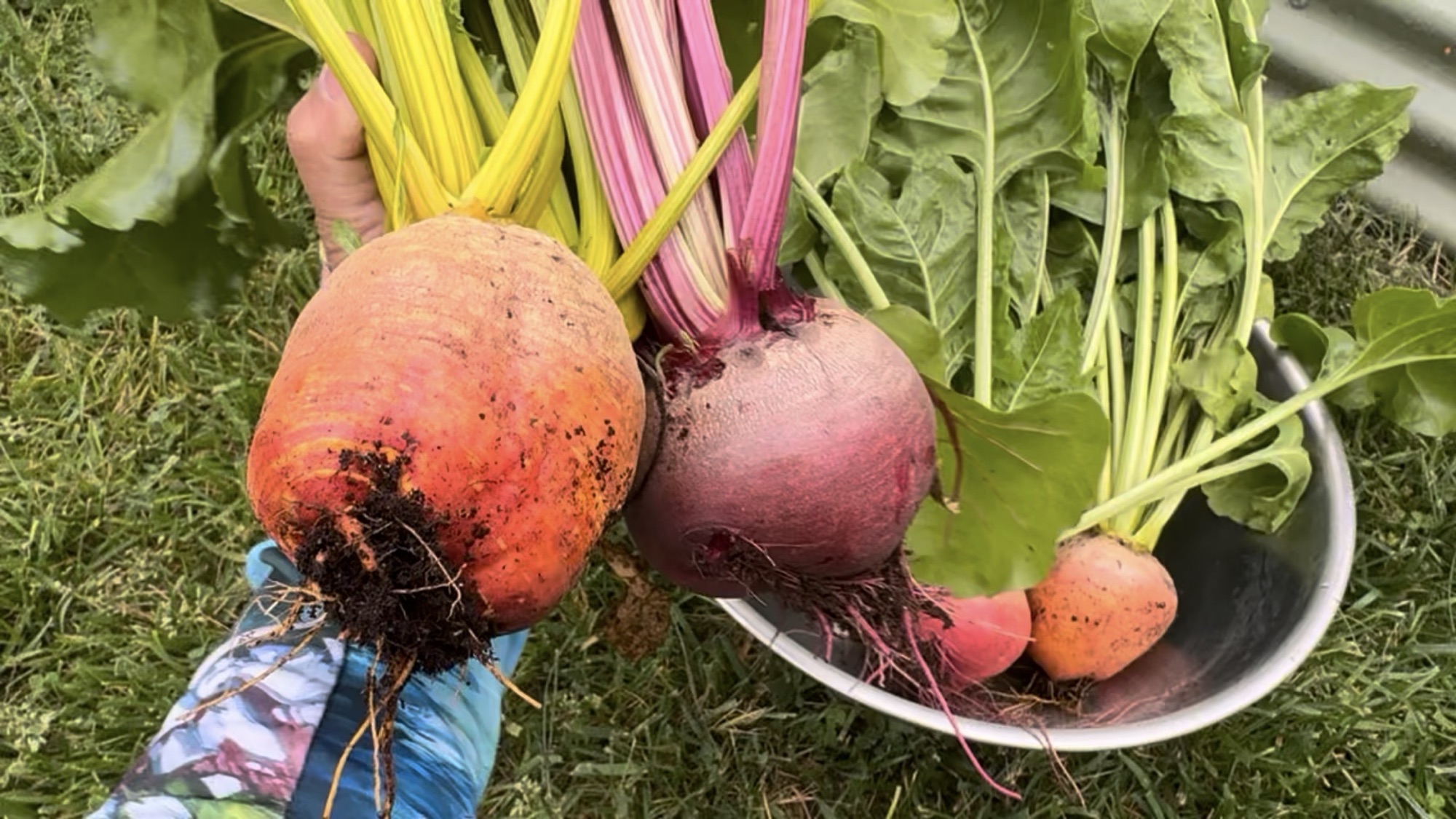
For a long time, beets weren’t high on my list of vegetables to grow.
My husband wasn’t a fan of anything earthy—he says it tastes like dirt. 😂 I wasn’t sure if I’d enjoy them either. That changed after I tried boiled beets and learned more about their health benefits. Later on, I also tried pickled beets and liked them even more. To be honest, it’s not a flavor I crave, but I started growing them mainly for their benefits.

I also didn’t realize how many different varieties there were to choose from. This season, I grew red, golden, and Chioggia beets, and each one brought something unique to the garden. Besides producing delicious roots, the greens can be enjoyed long before harvest day.
If you’re thinking about growing beets, here’s what I’ve learned from growing these three beautiful varieties.
Why Grow Beets?
One of the things I appreciate most about beets is that they’re really two crops in one.
While you’re waiting for the roots to size up, you can harvest the young leaves for salads, stir-fries, soups, or sautéing.

Then, when the roots are ready, you get another harvest.
For gardeners trying to maximize a small space, that’s a pretty good return.
Beets also thrive during the cool seasons, making them an excellent crop for both spring and fall gardens.

Red Beets: The Classic Choice
When most people think of beets, they picture the familiar deep red variety.
Red beets have an earthy flavor and a beautiful color that works well roasted, pickled, steamed, or grated into salads.
They’re dependable, productive, and a great choice for gardeners growing beets for the first time.

One thing to keep in mind is that red beets can stain your hands, cutting boards, and even some foods they touch.
For many gardeners, though, that’s just part of their charm.
Golden Beets: Sweet and Mild
Golden beets quickly became one of my favorites.
Their beautiful golden flesh adds color to both the garden and the kitchen, but what I appreciate most is their mild, slightly sweeter flavor.

Another bonus? They don’t stain nearly as much as red beets.
If you’ve never enjoyed the earthy taste of traditional beets, golden beets might surprise you.
They’re delicious roasted, added to salads, or enjoyed alongside other root vegetables.
Chioggia Beets: Beautiful Inside and Out
If you’ve ever sliced into a Chioggia beet, you know why they’re so popular.
Inside, you’ll find beautiful pink-and-white rings that almost look hand-painted.
They’re one of the prettiest vegetables I’ve ever grown.

The striped pattern makes them especially fun to serve fresh in salads or roasted as a colorful side dish.
While the rings become less noticeable after cooking, they’re still a wonderful addition to any garden simply because they’re so unique.
Growing vegetables that are both beautiful and delicious is always a win.
Growing Beets Successfully
Beets are surprisingly easy to grow once you understand a few basics.
Plant During Cool Weather
Beets perform best in the cooler temperatures of spring and fall.
In my Zone 7 garden, I like sowing them before the weather gets too warm, giving the roots plenty of time to develop before summer heat arrives.
Multi-Sow the Seeds
Many gardeners and gardening guides suggest direct-sowing beets because they don’t like their roots disturbed, but I haven’t found that to be true. I multi-sow them indoors, and once they sprout, I separate them into individual cells. As long as you do this early enough, the shape of the beetroot isn’t affected.

Keeping the soil consistently moist during germination also helps improve success.
Direct Sow Seeds and Thin the Seedlings
That said, you can absolutely direct-sow beet seeds and thin them later. Each beet “seed” is actually a cluster that often produces multiple seedlings.
Thinning them may feel difficult, but giving each plant enough space allows the roots to grow much larger.
Don’t throw those thinnings away—they’re delicious in salads or stir-fries.
Keep the Soil Moist
Consistent watering encourages even growth and helps prevent woody or cracked roots.
A layer of mulch can help retain moisture and reduce weeds throughout the growing season.
Harvesting Beets
One thing I like about beets is that you don’t have to wait for giant roots.

In fact, many gardeners prefer harvesting them when they’re about the size of a golf ball to a tennis ball because they’re often sweeter and more tender.
You can also harvest a few leaves here and there while the roots continue growing.
Just avoid removing too many from any one plant so it can continue developing underground.
A Challenge I Faced
One challenge I dealt with this season was leaf miners feeding on the beet leaves.

To help protect my crop, I grew many of my beets under insect netting. That simple change made a noticeable difference and allowed the plants to produce healthier foliage.
It’s a good reminder that sometimes small adjustments can have a big impact on the success of your garden.
How I Like to Use Beets
Freshly harvested beets are incredibly versatile.
Some of my favorite ways to enjoy them include:
- Roasted with olive oil and herbs
- Added to salads
- Pickled
- Steamed
- Blended into smoothies
I also harvest and cook the beet greens just like spinach or Swiss chard.
Using both the roots and the greens helps reduce waste while making the most of every harvest.
Will I Grow Them Again?
Definitely.
Each variety brought something different to the garden.
The red beets were dependable classics.
The golden beets offered a sweeter flavor and less mess.
The Chioggia beets added incredible beauty to every harvest.
Growing multiple varieties made the season even more enjoyable, and I’ll happily make room for all three again.
Final Thoughts
Growing red, golden, and Chioggia beets reminded me that even familiar vegetables can surprise you.
Each variety had its own personality, flavor, and beauty, making every harvest something to look forward to.
Whether you’re growing beets for the colorful roots, the nutritious greens, or simply because you enjoy trying something new, they’re a rewarding crop that’s well worth adding to your spring or fall garden.
If you’ve never grown beets before, this might be the season to give them a try. You may discover a new favorite—just like I did.
Let’s Grow Together
Do you grow beets in your garden?
Which variety is your favorite—red, golden, Chioggia, or another type?
I’d love to hear your experiences, favorite recipes, or growing tips in the comments below.
If you enjoyed this guide, be sure to explore my other vegetable variety reviews, seasonal garden updates, and practical growing tips as we continue learning and growing together.
This page contains affiliate links to my brand partners like Vego Garden, GreenStalk, Walmart & Amazon at no extra cost to you.
Your support helps me create free gardening content. Thank you!


Leave a Reply