If canning tomatoes feels intimidating, freeze them instead.
Freezing is one of my favorite ways to preserve tomatoes because it’s easy, flexible, and doesn’t require me to decide immediately what I’m going to make with every tomato I harvest.
You can freeze tomatoes whole, dice them into portions, or turn them into sauce or paste first. Later, they can become soup, stew, sauce, chili, or another cooked dish.

I especially like freezing cherry tomatoes whole. During tomato season, I don’t always have enough time—or enough tomatoes at once—to make a large batch of sauce.
So I freeze them.
Preserving your harvest doesn’t always have to become another big project. Sometimes the easiest method is the one you’ll actually use.
Can You Freeze Fresh Tomatoes?
Yes. Fresh tomatoes can be frozen in several ways:
- Whole tomatoes
- Cherry tomatoes
- Diced or chopped tomatoes
- Tomato sauce
- Tomato purée
- Tomato paste
You don’t have to preserve every tomato the same way. Choose the method that best fits how you plan to use it later.
Why I Like Freezing Tomatoes
I don’t always harvest enough tomatoes at one time to justify making a large batch of sauce. Sometimes I get a handful today, another handful tomorrow, and a bowl a few days later.
Instead of processing everything immediately, I can freeze the tomatoes and deal with them later. That flexibility is especially helpful when the garden is busy with harvesting, watering, cooking, and maintenance.
Freezing Is Less Intimidating Than Canning
Canning is a useful preservation skill, but it requires tested recipes, proper equipment, and safe processing procedures.

If you’re not ready to learn canning, you can still preserve your tomato harvest. Freezing is a much more approachable place to start because you’re storing the tomatoes frozen rather than creating a shelf-stable product.
Start with what feels manageable. You can always learn other preservation methods later.
Method 1: Freeze Whole Tomatoes
Freezing whole tomatoes may be the easiest method.
How to Freeze Whole Tomatoes
- Choose ripe tomatoes in good condition.
- Wash them under clean running water.
- Dry them thoroughly.
- Remove the stems.
- Place the tomatoes in freezer-safe bags or containers.
- Remove as much excess air as practical.
- Label the package with the contents and date.
- Freeze.
That’s it. You don’t need to turn a handful of tomatoes into an afternoon-long project.
Freezing Cherry Tomatoes Whole
Cherry tomatoes can ripen faster than I can use them during summer, so freezing them whole is especially convenient.
Wash and dry the tomatoes, remove the stems, and place them in a freezer-safe bag or container.
If you want them to remain separate, freeze them in a single layer on a tray first. Once frozen, transfer them to a freezer bag. This makes it easy to grab only a handful at a time.
If you plan to use a larger amount together, you can skip this step and freeze them directly in a container.
What Happens to the Texture of Frozen Tomatoes?
Frozen tomatoes won’t have the same firm texture as fresh tomatoes after thawing. Freezing damages the tomato’s cell structure, causing the fruit to become soft.
For that reason, frozen tomatoes are best treated as cooking tomatoes. They work well in soups, stews, sauces, chili, curries, and other dishes where the tomatoes will soften anyway.
They aren’t ideal for sandwiches, salads, or other recipes that depend on fresh tomato texture.
How to Use Whole Frozen Tomatoes
Whole frozen tomatoes can be used for:
- Tomato sauce
- Pasta sauce
- Soups
- Stews
- Chili
- Curries
- Braised dishes
- Tomato purée
- Cooked salsa recipes
One of the biggest advantages is that you can preserve the tomatoes now and decide what they’ll become later.
Frozen Tomato Skins Are Easy to Remove
The skins of frozen tomatoes often slip off as the tomatoes begin to thaw or after brief contact with warm water.
This can be helpful when making a smooth sauce. If the skins don’t bother you, you may not need to remove them, depending on the recipe.
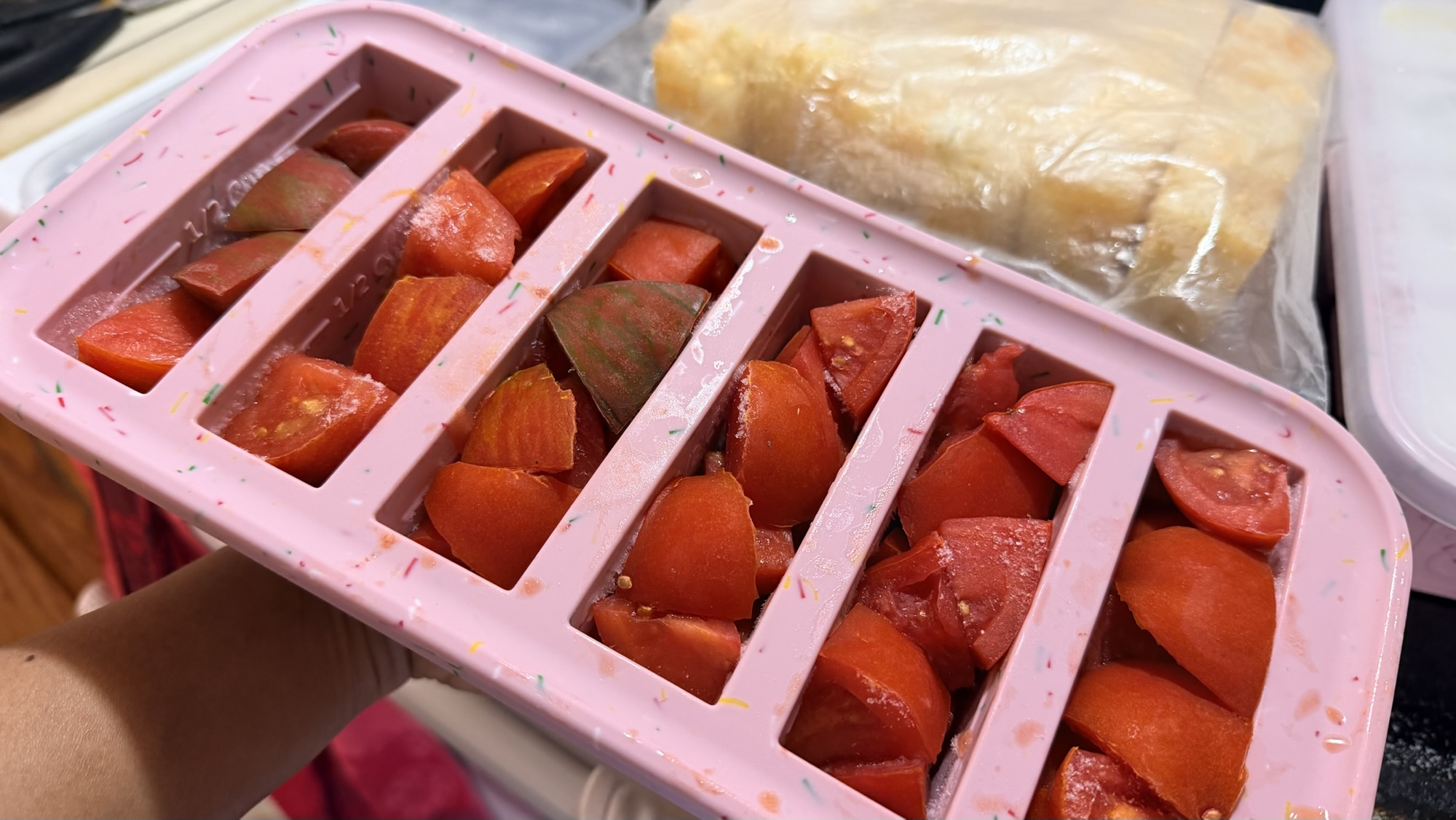
Method 2: Freeze Diced Tomatoes
Dicing tomatoes before freezing takes a little more preparation, but it makes cooking later very convenient.
Wash the tomatoes, remove the stems and damaged areas, and dice them. Then portion the tomatoes into freezer trays such as Souper Cubes.
Once frozen, remove the tomato portions from the trays and transfer them to a labeled freezer-safe bag or container.
Now you can use exactly what you need without thawing an entire container.
Why I Like Freezing Tomatoes in Portions
I don’t always need a large amount of tomatoes for one recipe. Sometimes I only need enough for a soup, stew, or sauce.
Freezing tomatoes in measured portions lets me use one block—or several—while keeping the rest frozen. It also makes the freezer easier to organize.
Convenient portions make it much more likely that I’ll actually use the food I preserved.
Method 3: Make Tomato Sauce and Freeze It
If I have enough tomatoes and time, I can make tomato sauce before freezing it.
Cook the tomatoes using your preferred recipe, cool the sauce promptly, and portion it into freezer-safe containers or trays. Souper Cubes work well because they create measured blocks that are easy to store.
Once frozen, transfer the portions to labeled freezer bags or containers.
Why Freeze Tomato Sauce in Portions?
Portioning gives you more flexibility. One frozen block might be enough for soup, while several could become pasta sauce or stew.
Freezing sauce in one large container may require you to thaw more than you need. Smaller portions let you use only what the recipe calls for.
Method 4: Freeze Tomato Paste
Tomato paste also freezes well, especially in small portions.
Freeze the paste in trays until solid, then transfer the portions to a labeled freezer-safe container. When cooking, you can take out only the amount you need.
Freeze Now, Process Later
You don’t have to process every tomato during the busiest part of the season.
When tomatoes are ripening, peppers need harvesting, beans need picking, and the garden needs watering, another bowl of tomatoes can feel like one more task.
Instead of making sauce that night, freeze the tomatoes. When the garden slows down, you can pull them from the freezer and process them.
That takes some of the pressure out of preserving.
You Can Collect Tomatoes Until You Have Enough
Small-space gardeners may not harvest 20 pounds of tomatoes at once. That’s fine.
Freeze a few tomatoes today, more next week, and another batch after that. Eventually, you may have enough frozen tomatoes to make a larger batch of sauce.
You don’t need a huge harvest all at once to preserve food.
Should You Thaw Frozen Tomatoes Before Cooking?
Not always.
Frozen tomatoes can often go directly into soups, stews, sauces, and similar dishes. Diced tomatoes are especially convenient to add straight to a pot.
Whole tomatoes may be easier to peel after partial thawing. Frozen sauce can usually be reheated directly.
The best method depends on what you’re making.
Frozen Tomatoes Release More Liquid
Because freezing breaks down the tomato’s cellular structure, thawed tomatoes may release extra liquid.
You can use that liquid in soups, stews, and sauces. If you’re making a thicker dish, cook the tomatoes longer to reduce the moisture.
Reducing the tomatoes is especially important when making tomato paste or a thick sauce.
Do You Need to Blanch Tomatoes Before Freezing?
Not necessarily.
If you’re freezing whole tomatoes for later cooking, you can simply wash, dry, remove the stems, and freeze them. You can deal with the skins and final preparation later.
Do You Need to Peel Tomatoes Before Freezing?
No. Tomatoes can be frozen with their skins on.
If you’re freezing whole tomatoes for later processing, leaving the skins on saves time during the busiest part of the gardening season.
Do You Need to Remove Tomato Seeds Before Freezing?
No. You don’t need to remove the seeds before freezing.
Whether you remove them later depends on the recipe and the texture you want. For many soups, stews, sauces, and everyday dishes, leaving them in is perfectly fine.
How to Prevent Freezer Burn
Use freezer-safe bags or containers and remove as much excess air as possible.
For diced tomatoes, sauce, or paste, freezing portions in trays first can save space. Once frozen, transfer the portions to freezer bags or containers.
Label each package with the contents, preparation, and date.
For example:
Cherry tomatoes — whole — September 2026
Tomato sauce — 1-cup portions — September 2026
Future you will appreciate knowing what’s inside.
How Long Can You Freeze Tomatoes?
Food kept continuously at 0°F (-18°C) remains safe indefinitely, although quality gradually declines over time.
For the best flavor, color, and texture, rotate through your freezer and use older harvests first.
The goal of preserving food is to eventually eat it.
Freezing Tomatoes vs. Canning Tomatoes
Both methods can be useful, but they serve different needs.
Freezing Tomatoes
Freezing is:
- Beginner-friendly
- Fast
- Flexible
- Good for small harvests
- Useful for portioning
- Easy to fit into a busy schedule
The main disadvantage is that it requires freezer space.
Canning Tomatoes
Canning can provide shelf-stable storage when you follow a scientifically tested recipe and correct processing method.
It doesn’t require freezer space after processing, but it does require more equipment, preparation, knowledge, and attention to food safety.
You don’t have to choose one method forever. Use the method that works best for you.
Freezing Tomatoes Is Perfect for Small Harvests
You don’t need baskets of tomatoes to begin preserving.
If your garden gives you ten cherry tomatoes today, you can freeze ten cherry tomatoes. If you harvest a bowl next week, freeze that bowl too.
Small harvests still add up. The tomato you freeze today may become part of dinner months from now.
That counts.
What Tomatoes Can You Freeze?
You can freeze many types of tomatoes, including:
- Cherry tomatoes
- Grape tomatoes
- Plum or paste tomatoes
- Slicing tomatoes
- Beefsteak-type tomatoes
- Dwarf tomato varieties
Some varieties are better suited for thick sauces and paste because they contain less water. But if your goal is to preserve tomatoes for cooked dishes, use what you’re growing.
What Can You Make With Frozen Tomatoes?
Frozen tomatoes can become:
- Pasta sauce
- Pizza sauce
- Tomato soup
- Chili
- Stews
- Curry
- Shakshuka
- Tomato-based braises
- Cooked salsa
- Tomato purée
- Tomato paste
- Rice dishes
- Vegetable soups
You’re not just freezing tomatoes.
You’re freezing future meals.
A Simple Tomato Freezing Routine
When tomato season gets busy, choose the method that matches the time you have.
If I don’t have time: Freeze the tomatoes whole and process them later.
If I have a little more time: Dice them and freeze them in portions.
If I have enough tomatoes and time: Make tomato sauce and freeze it in portions.
If I want something concentrated: Make tomato paste and freeze it in small portions.
You don’t need to turn every harvest into a complicated preservation project.
Don’t Let Preserving Your Garden Become Overwhelming
Preservation can sound like another skill you need to master: canning, fermenting, dehydrating, pickling, and more.
You don’t have to learn everything at once.
Start with freezing.
It can be as simple as washing tomatoes and putting them into the freezer. That’s a perfectly valid way to preserve the food you worked hard to grow.
Grow It Now. Decide What to Make Later.
You don’t have to decide what every tomato will become during the busiest part of summer.
Freeze cherry tomatoes whole, dice larger tomatoes into portions, or make sauce and paste before freezing. Later, those tomatoes can become soup, sauce, stew, or dinner.
Preserving food doesn’t have to be complicated to be worthwhile.
Sometimes the simplest thing you can do with today’s harvest is freeze it and figure out the rest later.
Let’s grow food at home.
Frequently Asked Questions
Can you freeze whole tomatoes?
Yes. Wash and dry the tomatoes, remove the stems, package them in freezer-safe bags or containers, and freeze them for use in cooked dishes.
Can you freeze cherry tomatoes whole?
Yes. Freeze them directly or freeze them individually on a tray first before transferring them to a freezer bag.
Do you need to blanch tomatoes before freezing?
Not necessarily. Whole tomatoes can be washed, dried, and frozen directly for later cooking.
Do you need to peel tomatoes before freezing?
No. Tomatoes can be frozen with their skins intact. The skins often become easier to remove as the tomatoes thaw.
Can you freeze diced tomatoes?
Yes. Portion diced tomatoes into freezer-safe containers or trays, freeze them, and then transfer the portions to labeled freezer bags or containers.
Can you freeze homemade tomato sauce?
Yes. Cool the sauce promptly, portion it into freezer-safe containers or trays, freeze it, and store the portions in labeled packaging.
Can you freeze tomato paste?
Yes. Tomato paste freezes well in small portions, making it convenient for recipes that require only a little.
Are frozen tomatoes good for salads?
Usually not. Frozen tomatoes become soft after thawing, so they’re better for soups, sauces, stews, and other cooked dishes.
Can frozen tomatoes go directly into soup?
Yes. Frozen tomatoes and diced tomato portions can often be added directly to soups and stews without thawing.
How long do frozen tomatoes last?
Food kept continuously frozen at 0°F (-18°C) remains safe indefinitely, although quality decreases over time. For the best results, use older tomatoes first.
Related Articles
- How to Grow Tomatoes
- When to Harvest Tomatoes
- How to Grow Dwarf Tomatoes
- How to Grow Micro Tomatoes
- How to Grow Healthy Vegetables at Home
- Harvest Tips for Beginner Gardeners
- Vegetable Gardening in Maryland
- Container Gardening for Beginner Gardeners


Leave a Reply