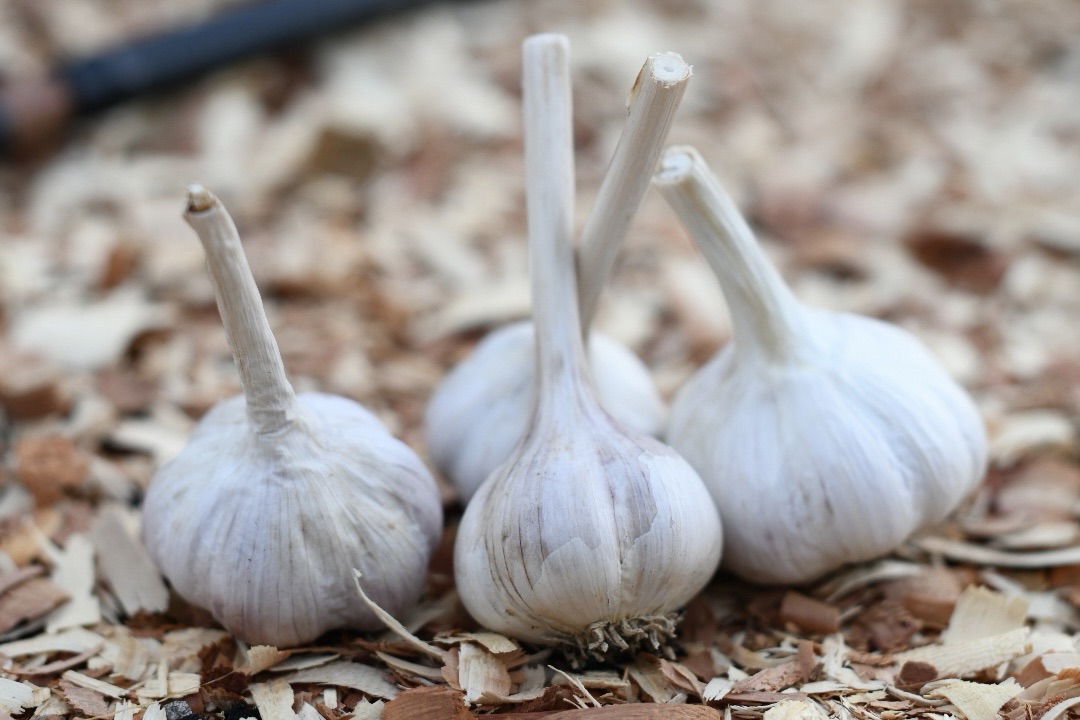
One thing I’ve learned from growing garlic in a small garden is that you can’t just think about where you’re going to plant it this fall.
You also have to think about what you’ll want to grow in that same space next spring and summer.
Garlic is one of my favorite crops to grow because we use it so often in the kitchen. But unlike lettuce, bok choy, or other vegetables that can be harvested relatively quickly, garlic takes several months to grow.
Here in my Maryland Zone 7 garden, I plant garlic in fall and usually harvest it around early summer.

That means the space I give garlic in October will still be occupied when I’m ready to plant tomatoes, peppers, beans, and other warm-season vegetables.
And when you’re gardening in a small townhouse backyard like mine, that’s something you can’t afford to overlook.
Over the years, I’ve learned to plan my garlic placement more carefully so I can grow a worthwhile harvest without giving up valuable space for next summer’s crops.
Here’s how I approach planting garlic in a small garden.
Why Garlic Requires More Planning in a Small Garden
Garlic is relatively easy to grow once it’s established.
You plant the cloves in fall, allow them to establish roots, and let them experience winter cold before they resume growing in spring.
But garlic also occupies the garden for a long time.

In my Zone 7 garden, garlic planted in October or November may remain in the ground until June or July, depending on the variety and growing conditions.
That’s approximately eight or nine months of growing space.
If you have a large garden, dedicating an entire bed to garlic may not be a problem.
But if you only have one or two raised beds, you need to think carefully about how much space you’re willing to commit.
For me, the goal isn’t simply to grow as much garlic as possible.
It’s to grow enough garlic while still having room for the vegetables we enjoy eating throughout the rest of the year.
1. Plan Next Summer’s Garden Before Planting Garlic
Before planting my garlic, I like to think about what I want to grow in that bed next spring and summer.

This might sound like planning too far ahead, but it actually makes fall planting much easier.
Ask yourself:
- Will I want to grow tomatoes in this bed?
- Am I planning to plant peppers here?
- Will this space be needed for beans or other warm-season vegetables?
- Can some of those crops grow somewhere else?
- How much garlic do we realistically need?
If you already know where your summer vegetables will go, you can plan your garlic around them.
For example, if you want to grow tomatoes in a particular raised bed, you might reserve the main planting positions for tomatoes while growing garlic in another section.
That way, when spring arrives, you’re not forced to choose between removing garlic too early or delaying your summer planting.
Think about planting dates
In my garden, I usually start tomato seeds indoors in early April.
By the time the weather is warm enough to transplant them outdoors, my garlic is often still growing.
That’s why planning ahead matters.
Garlic and tomatoes don’t necessarily follow the same schedule.
You need to account for the overlap.
2. Decide How Much Garlic You Actually Need
When you have limited space, it’s tempting to plant as many garlic cloves as possible.
But before doing that, consider how much garlic your household uses.
Do you cook with garlic every day?
Do you want enough to store for several months?
Are you growing garlic mainly for fresh use?
Do you want to save some bulbs for planting next fall?
Your answers will help determine how much space to dedicate.
I use garlic frequently in the kitchen, so it’s a crop that deserves a place in my garden.
But I still have to balance it with everything else I want to grow.
Remember, every garlic clove you plant will ideally produce one bulb.
If you plant 30 cloves, you’re generally aiming for approximately 30 bulbs.
That makes it easier to estimate how much garlic you want to grow.
3. Lay Out Your Garlic Before Digging Planting Holes
This is one of my favorite garlic planting habits.
Instead of immediately digging holes, I place the garlic cloves on top of the soil where I want them to grow.
This gives me a visual idea of how much space they’ll occupy.
I can adjust the spacing, move cloves around, and decide whether I want to leave certain areas open.
Sometimes I intentionally leave spaces for spring plants.
It’s a simple step, but it helps me visualize the growing season ahead.
Why I like this method
Laying out the cloves first helps me:
- Check spacing before planting.
- Avoid accidentally overcrowding the bed.
- Reserve areas for future vegetables.
- Estimate how many cloves will fit.
- Make adjustments without digging unnecessary holes.
For a small-space garden, that little bit of planning can make a big difference.
4. Give Garlic Enough Space to Grow
Garlic doesn’t need an enormous amount of room, but overcrowding can affect bulb development.
A common recommendation is to plant garlic cloves approximately 6 inches apart, although spacing can vary by variety and growing conditions.
Larger varieties may benefit from additional room.
Planting cloves too closely can create competition for sunlight, nutrients, water, and root space.
When you’re trying to maximize a small garden, it can be tempting to squeeze in extra cloves.
But more plants don’t always mean a better harvest.
I would rather grow fewer healthy garlic plants with good-sized bulbs than overcrowd the bed and end up with disappointing results.
How deep should garlic be planted?
A common planting depth is approximately 2–3 inches, measured from the soil surface to the top of the clove, though recommendations vary by climate and soil.
Plant the pointed end facing upward and the flat root end facing downward.
Keep the papery skin intact.
After planting, cover the cloves with soil and water appropriately.
A layer of organic mulch can help moderate soil temperatures and protect the soil during winter.
5. Reserve Space for Tomatoes and Other Summer Vegetables
This is where small-space planning becomes especially important.
Let’s say you have a raised bed that you normally use for tomatoes.
You could fill the entire bed with garlic in fall.
But when it’s time to transplant tomatoes in spring, the garlic may still be several weeks away from harvest.
Now you have a problem.
You either have to delay planting tomatoes, find another growing location, or harvest garlic before the bulbs have fully developed.
That’s why I like reserving space ahead of time.
One approach: Plant garlic along the edges
Instead of filling the entire bed, you can plant garlic in rows along the edges or in a designated section.

Leave enough space for your future summer vegetables.
This can work particularly well when the center of the bed is reserved for larger plants.
However, remember that mature garlic leaves can still occupy space and that nearby crops will compete for resources.
Plan for the mature size of both crops, not just their size at planting.
Another approach: Dedicate one section to garlic
You can also divide a raised bed into different planting areas.
One section grows garlic.
Another section remains available for early spring vegetables or summer transplants.
This approach makes it easier to harvest garlic without disturbing neighboring plants.
6. Can You Grow Garlic With Tomatoes?
Yes, garlic and tomatoes can sometimes share a growing area, especially when their planting positions and timing are planned carefully.
However, that doesn’t mean you should plant them extremely close together.
Garlic needs enough sunlight and space to develop bulbs.
Tomatoes eventually develop large root systems and can create substantial shade.
If you plant tomatoes too close to garlic while the garlic is still developing, the plants may compete for water, nutrients, and sunlight.
What I consider before combining them
I think about:
- Where the tomato plants will be positioned.
- How large they’ll become.
- Where their supports will go.
- Whether the garlic will receive enough sunlight.
- Whether I can harvest the garlic without damaging the tomato roots.
In my garden, I prefer planning the tomato positions first and then deciding whether garlic can fit around them.
I don’t want to compromise either crop simply to squeeze more plants into the same bed.
7. Remember That Garlic Needs Sunlight in Spring
When you plant garlic in fall, the surrounding garden may look completely different from how it will look in late spring.
Trees may have fewer leaves.
Summer vegetables are gone.
Trellises may be empty.
The bed may receive plenty of sunlight.
But by May or June, things can change.
Tomatoes grow taller.
Beans climb trellises.
Other vegetables fill the bed.
And nearby trees may cast more shade.
Garlic grows much of its foliage during spring, and that foliage helps support bulb development.
If larger plants shade it too early, bulb growth may suffer.
This is why I don’t only consider how the bed looks when I’m planting garlic.
I think about how it will look several months later.
8. Consider Growing Garlic in Grow Bags
If your raised beds are already committed to other crops, containers can be another option.
Garlic can grow successfully in grow bags as long as they provide adequate depth, drainage, and growing space.
Choose a grow bags that can accommodate the developing root system and the number of cloves you want to plant.
A grow bag around 10–12 inches deep or deeper is often practical, with enough width to maintain proper spacing.
Use a suitable, well-draining potting mix rather than compacted garden soil.
Remember winter protection
Grow bags are more exposed to freezing temperatures than in-ground soil.
In cold climates, the potting mix can freeze more rapidly, putting garlic roots at greater risk.
Large grow bags generally provide more insulation than small pots.
You may need to move containers to a sheltered location or provide additional insulation during severe cold.
The goal is to allow garlic to experience the cold period it needs without exposing its roots to unnecessarily harsh conditions.
9. Use Succession Planting to Make the Most of Your Space
One of my favorite small-space gardening strategies is succession planting.
Instead of using a garden bed for only one crop throughout the year, I grow different vegetables in the same space as the seasons change.
Garlic can fit into this approach.
For example:
Fall: Plant garlic.
Winter: Garlic establishes roots and experiences cold temperatures.
Spring: Garlic resumes active growth.
Early Summer: Harvest mature garlic.
Summer: Replant the available space with an appropriate warm-season crop.
This works especially well for crops that can be planted after garlic harvest.
Depending on your climate and timing, you might grow bush beans, certain cucumbers, or other crops that still have enough time to mature before fall.
The important thing is checking your remaining growing season.
Don’t assume every summer vegetable can be planted successfully after garlic is harvested.
10. Don’t Forget About Garlic Harvesting Access
This is something that can easily be overlooked when planning a mixed raised bed.
Garlic needs to be harvested.
And when that time comes, you’ll need enough room to loosen the soil and lift the bulbs without damaging nearby plants.
If you’ve planted garlic tightly around tomato roots or underneath sprawling vegetables, harvesting can become difficult.
That’s why I like keeping garlic in reasonably organized sections.
Even when I grow different crops in the same bed, I want to be able to access each crop when it’s ready.
A garden isn’t just about fitting plants into the available space.
It’s also about being able to care for and harvest them.
11. Don’t Forget About Your Trellises and Plant Supports
If you use trellises, tomato cages, or other supports, think about their placement before planting garlic.
I use different support systems in my garden, including tomato towers, string trellises, cages, and stakes.
Some of these need to be installed deeply into the soil.
If garlic is planted directly where a support needs to go, you may accidentally damage the cloves or developing bulbs when installing it later.
This is another reason I like planning my garden layout ahead of time.
I want to know where the major supports will go before I fill the bed with garlic.
12. Choose Garlic Varieties That Work for Your Garden
There are two main categories of garlic: hardneck and softneck.
Both can be grown successfully in many home gardens, but they have different characteristics.
Hardneck garlic
Hardneck garlic generally performs well in regions with cold winters.
It produces a stiff central stalk and usually develops garlic scapes.
Many hardneck varieties are appreciated for their flavor and large cloves.
One variety I’ve enjoyed growing is German White.
Softneck garlic
Softneck garlic often stores longer under suitable conditions and generally doesn’t produce the same hard central stalk.
Many varieties are well suited to regions with milder winters, although performance depends on the specific variety and local growing conditions.
For a small garden, choose garlic based on flavor, storage needs, climate suitability, and how much space you’re willing to dedicate.
13. Prepare Your Soil Before Planting
Garlic performs best in fertile, well-draining soil.
Before planting, remove weeds and finished crops from the growing area.
If needed, incorporate finished compost or other amendments based on your soil’s condition.
Avoid adding excessive fertilizer simply because you’re planting a new crop.
Garlic needs adequate nutrients, but over-fertilizing can create problems.
I like preparing the soil before laying out my cloves so I can focus on spacing and placement when it’s time to plant.
After planting, water appropriately and mulch as needed.
14. Make a Simple Garden Map
You don’t need an elaborate garden planning system to grow garlic successfully.
A simple sketch can be enough.
Draw your raised bed and mark:
- Where the garlic is planted.
- Where tomatoes will go.
- Where peppers or other summer vegetables may be planted.
- Where trellises and supports will be installed.
- Which areas will become available after garlic harvest.
You can also take a photograph of your garlic layout before planting.
I find visual planning especially useful because it helps me see whether my ideas will actually fit.
And months later, when the garden looks completely different, having a record of the layout can be incredibly helpful.
My Small-Space Garlic Planting Checklist
Before planting garlic, I like to make sure I’ve considered the following:
☐ Decide how much garlic my household needs.
☐ Choose a suitable garlic variety.
☐ Identify where summer vegetables will grow next year.
☐ Reserve space for tomatoes, peppers, and other planned crops.
☐ Consider the mature size of neighboring plants.
☐ Plan trellis and support locations.
☐ Prepare fertile, well-draining soil.
☐ Lay out garlic cloves before digging holes.
☐ Maintain appropriate spacing.
☐ Plant cloves pointed-end up with the papery skin intact.
☐ Water and mulch appropriately.
☐ Record where the garlic is planted.
☐ Plan how the space will be used after harvest.
Frequently Asked Questions About Growing Garlic in Small Gardens
Can I grow garlic in a small raised bed?
Yes. Garlic grows well in raised beds with adequate sunlight, drainage, and spacing. You can dedicate a section of the bed to garlic or plan its placement around other crops.
How much space does garlic need?
Many garlic varieties grow well when planted approximately 6 inches apart. Larger varieties may benefit from more space. Always consider the mature size of the bulbs and neighboring plants.
Can I plant tomatoes before harvesting garlic?
Sometimes. Tomatoes and garlic can overlap in the same bed if spacing, sunlight, and harvesting access are carefully planned. Avoid placing tomatoes so close that they shade garlic or interfere with bulb development.
Can I plant vegetables after harvesting garlic?
Yes. Once garlic is harvested, the space can be replanted with vegetables suited to the remaining growing season. Bush beans and certain other relatively quick-growing crops may be options.
When should I plant garlic in Zone 7?
Garlic is commonly planted in fall, often during October or November in Zone 7. Exact timing depends on local weather and soil conditions.
Can I grow garlic in grow bags
Yes. Choose a sufficiently deep, well-draining grow bag with adequate spacing between cloves. Grow bag-grown garlic may need additional root-zone protection during severe winter weather.
Final Thoughts: Plan for More Than One Season
Growing garlic in a small garden has taught me that successful garden planning isn’t just about what’s happening right now.
It’s also about thinking ahead.
When I plant garlic in fall, I’m already considering what I want to grow in spring and summer.
I don’t want to fill every available space without thinking about what comes next.
And I don’t want to sacrifice a productive summer garden simply because I planted more garlic than I realistically needed.
For me, the goal is balance.
I want to grow garlic because we use it regularly.
But I also want room for tomatoes, peppers, beans, leafy greens, and other vegetables that feed us throughout the growing season.
A productive small garden isn’t about fitting the greatest number of plants into every square foot. It’s about making thoughtful decisions so the same space can keep producing food throughout the year.
So before you plant your garlic this fall, take a few minutes to think about next summer.
Lay out your cloves.
Reserve space for future crops.
Plan where your supports will go.
And remember that the garden you’re planting today is also the garden you’ll be growing in several months.
Let’s grow food at home!
Related Posts
- How to Grow Garlic
- What Deserves a Spot in Your Fall Garden When Space Is Limited?
- The October Garden Reset: Make Room Without Pulling Everything
- What to Do in Your Garden in October (Zone 7 Guide)
- Container Gardening for Beginner Gardeners


Leave a Reply