Fall is one of my favorite times to slow down, look around my garden, and think about everything that happened during the growing season.
Some plants are still producing. Others have finished their season. My fall vegetables are growing, garlic planting is on my mind, and the cooler temperatures remind me that winter isn’t far away.

But preparing the garden for fall doesn’t mean everything has to be cleaned up at once.
In my Maryland Zone 7 garden, I grow food in a small townhouse backyard using raised beds, containers, and vertical planters. I’ve learned that fall garden preparation is much easier when I break everything down into manageable tasks.
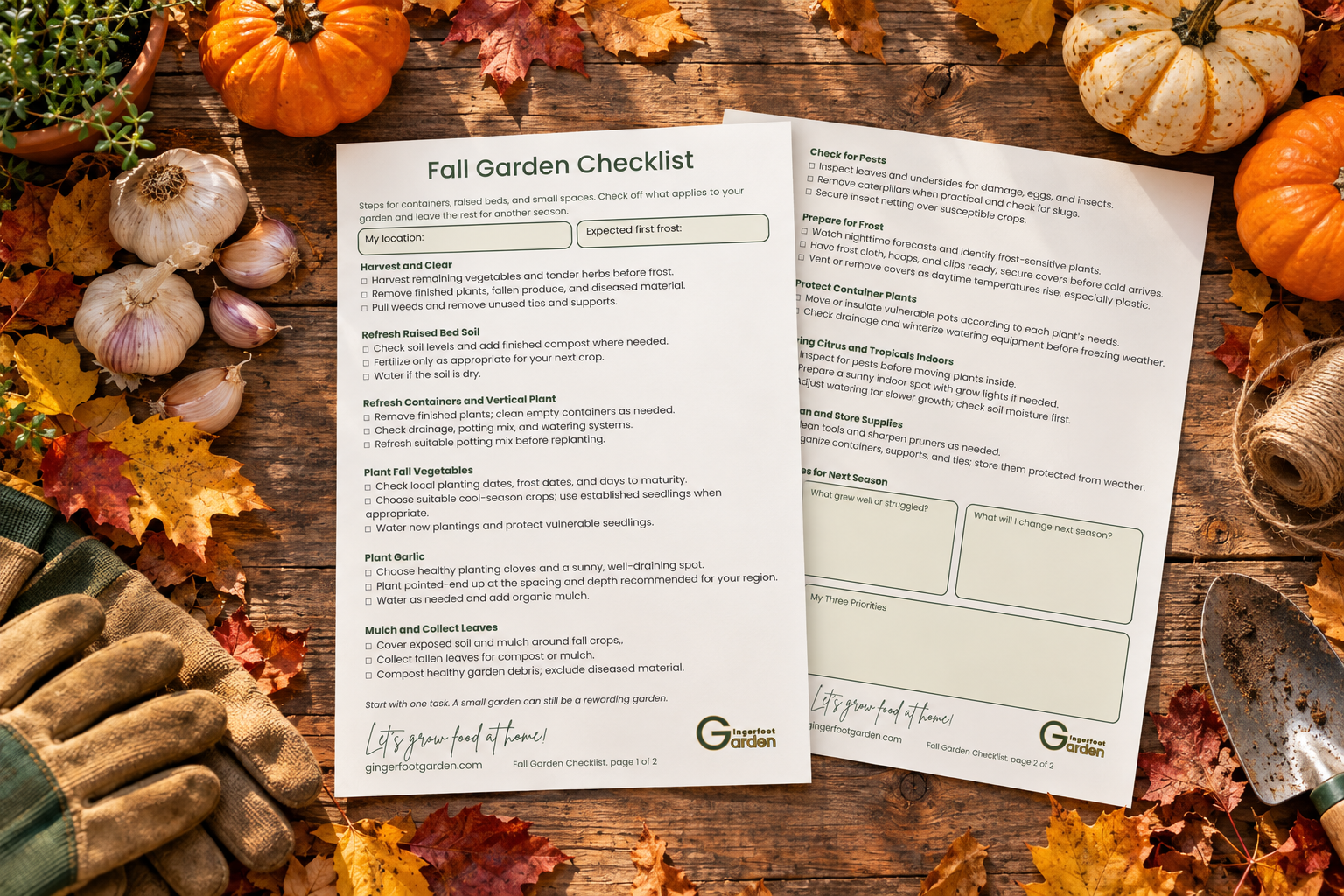
That’s why I created a free, printable Fall Garden Checklist.
Whether you’re growing vegetables in a few containers or several raised beds, this guide will help you decide what needs attention, what can wait, and how to prepare your garden for the colder months ahead.

And remember, you don’t have to complete every task on this list. Choose what applies to your garden and leave the rest for another season.
Download Your Free Fall Garden Checklist
Before we get started, I’ve put together a two-page printable checklist to help you stay organized.
My Fall Garden Checklist includes practical tasks for harvesting, cleaning up your garden, refreshing soil, planting vegetables and garlic, protecting plants from frost, and preparing for winter.
It also includes space to record your location, expected first frost date, garden observations, and three priorities for the season.
You can print the checklist and check off tasks as you complete them, or keep a digital copy to reference throughout the season.
Let’s go through each section so you know what to do and why it matters.
1. Harvest Remaining Vegetables and Clear Finished Plants
The first thing I like to do when preparing my garden for fall is walk around and see what’s still producing.
Some warm-season vegetables may continue producing into early fall, especially when temperatures remain mild.
In my garden, that might include tomatoes, peppers, beans, and other late-season crops.
Before the first frost arrives, I make sure to harvest any remaining vegetables and tender herbs that I don’t want to lose.
What to do
- Harvest remaining vegetables and tender herbs before frost.
- Remove finished plants that are no longer producing.
- Pick up fallen produce and diseased plant material.
- Pull weeds from garden beds and containers.
- Remove unused plant ties, stakes, and supports.
You don’t necessarily need to remove every summer plant just because fall has arrived.
If a plant is healthy and still producing or need more time to mature like ginger and turmeric, you may decide to keep it a little longer.

I prefer transitioning my garden gradually instead of clearing everything at once.
What about diseased plants?
When cleaning up, pay attention to plants showing significant signs of disease.
Remove infected foliage and fallen debris to help reduce potential sources of disease in the garden.
I generally keep heavily diseased material out of my home compost because I can’t always guarantee that the compost reaches temperatures high enough to destroy plant pathogens.
Healthy garden debris, on the other hand, can become valuable compost material.
2. Refresh Your Raised Bed Soil
After growing vegetables throughout spring and summer, your raised beds may need some attention.
Vegetables use nutrients as they grow, and the soil level in raised beds can settle over time.

But that doesn’t mean you need to remove all the old soil and replace it.
I prefer working with the soil I already have.
How to refresh raised bed soil in fall
Start by removing finished plants and weeds.
Check the soil level and condition.
If needed, add a layer of finished compost to replenish organic matter.
Depending on what you plan to grow next, you may also need fertilizer or other appropriate soil amendments.

Here’s what I check:
- Has the soil level dropped?
- Is the soil compacted or poorly draining?
- Does the bed need additional finished compost?
- Am I planting another crop immediately?
- Does that crop need additional fertilizer?
- Is the soil dry enough to need watering?
I use compost and worm castings regularly in my garden, but I don’t automatically add every amendment I have.
The goal is to give the next crop what it needs, not to add more fertilizer simply because another season is starting.
If the bed will remain empty through winter, I like covering the soil with organic mulch rather than leaving it exposed.
3. Refresh Containers and Vertical Planters
Fall is also a good time to give containers and vertical planters some attention.
I use different types of containers in my garden, including self-watering planters, rolling planters, and my GreenStalk vertical planter.
These growing spaces work hard during the summer.
By fall, some plants may be finished, and the potting mix may need refreshing before the next planting.
Container maintenance checklist
- Remove finished plants.
- Clean empty containers when needed.
- Check drainage openings.
- Inspect self-watering reservoirs and watering systems.
- Check the condition of the potting mix.
- Refresh suitable potting mix before replanting.
You don’t necessarily need to throw away used potting mix.
If it is still in good condition and hasn’t been affected by serious disease or contamination, it may be suitable for reuse after refreshing it.
You can add finished compost or an appropriate potting mix amendment depending on what the next crop needs.
Preparing vertical planters for fall
I like using vertical planters for leafy greens because they help me grow more food without taking up additional ground space.
When transitioning a vertical planter from summer to fall, I remove finished plants, check the potting mix, and prepare the pockets for new vegetables.
Fall greens such as lettuce, spinach, and bok choy can be good options when planted at the right time.
The important thing is making sure the planter has adequate light, moisture, and nutrients.
4. Plant Fall Vegetables
Fall isn’t necessarily the end of vegetable gardening.
For many gardeners, it’s another opportunity to grow food.

Cool-season vegetables often perform better during mild fall weather than they do during the hottest months of summer.
But before planting, it’s important to consider your local climate and how much growing time remains.
Check your first frost date
Your average first frost date helps you estimate how much time you have before cold weather arrives.
Here in Maryland Zone 7, I begin planning many of my fall crops while it’s still summer.
That’s because vegetables need time to germinate, establish roots, and grow before shorter days and colder temperatures slow them down.
Choose appropriate fall vegetables
Depending on your location and planting dates, you might grow:
- Bok choy
- Lettuce
- Spinach
- Kale
- Collard greens
- Mizuna
- Tatsoi
- Cabbage
- Broccoli
- Green onions
Bok choy is one of my personal favorites.
We eat it regularly, and I love how well it fits into my small-space garden.
Seeds or transplants?
If you’re planting later in fall, established seedlings may be more practical than starting everything from seed.
I like starting seedlings separately while summer crops are still producing.
When space becomes available, I already have young plants ready to transplant.
After planting, water as needed and protect vulnerable seedlings from pests and harsh weather.
Remember that not every fall crop can be started successfully in October. Always check your local planting dates and the variety’s days to maturity.
5. Plant Garlic for Next Year’s Harvest
Garlic is one of the crops I look forward to planting every fall.
Unlike many vegetables that are harvested within a few weeks or months, garlic spends a long time in the garden.

In my Zone 7 garden, I typically plant garlic in fall and harvest it the following summer.
How to plant garlic
- Choose healthy garlic bulbs intended for planting.
- Separate the bulbs into individual cloves shortly before planting.
- Select a sunny location with well-draining soil.
- Plant each clove with the pointed end facing upward.
- Follow the recommended planting depth and spacing for your variety and region.
- Water appropriately after planting.
- Add organic mulch to protect the soil.
Garlic is one of those crops that rewards patience.
It establishes roots during fall, experiences winter cold, and resumes growth as temperatures warm in spring.
I especially like growing garlic in raised beds because I can prepare the soil and manage the growing space more easily.
Since garlic occupies the bed for several months, I make sure to plan its location before filling every available space with other fall vegetables.
6. Mulch Your Garden and Collect Fall Leaves
One of the easiest ways to prepare your garden for winter is to protect the soil.
Bare soil is exposed to rainfall, erosion, weeds, and changing temperatures.

Adding organic mulch helps protect the surface while contributing organic matter as it decomposes.
What can you use for mulch?
Depending on what’s available, you can use:
- Shredded fall leaves
- Wood shavings (Cedar pet bedding)
- Straw
- Other suitable organic mulch materials
I especially appreciate fall leaves because they’re free and widely available.
Instead of throwing them all away, I collect some for use in the garden.
Save leaves for compost
Dry leaves are also an excellent carbon-rich material for composting.
I like keeping a supply available because my compost bins often receive plenty of nitrogen-rich materials such as vegetable scraps and fresh garden debris.

Having dry leaves ready makes it easier to balance those materials.
Healthy garden debris can also be composted, while significantly diseased material is best handled separately when your home composting process can’t reliably destroy pathogens.
Fall cleanup can produce a surprising amount of useful organic material.
7. Check Your Fall Vegetables for Pests
Cooler weather doesn’t mean pests have disappeared.
Some insects and slugs remain active well into fall.
Brassicas such as cabbage, broccoli, kale, collards, and bok choy can still experience pest damage.
What to check
Inspect the leaves, especially the undersides, for:
- Insect eggs
- Caterpillars
- Chewed leaves
- Aphids
- Slugs
- Other visible pest activity
I regularly use insect netting over my brassicas to help keep certain pests from reaching the plants.

It’s much easier to prevent damage than to deal with a major infestation later.
However, insect netting doesn’t replace regular inspections.
Pests may already be present when the netting is installed, and slugs can still cause problems.
Make sure your netting is properly secured and continue checking your vegetables.
8. Prepare Your Garden for Frost
One of the most important fall garden tasks is preparing for the first frost.
You don’t need to wait until freezing temperatures are already in the forecast to gather your supplies.
In fact, I prefer having everything ready ahead of time.
Identify frost-sensitive plants
Start by looking at what you’re growing.
Warm-season vegetables such as tomatoes, peppers, basil, and eggplants are much more vulnerable to frost than established cold-hardy vegetables.
Some crops may need protection, while others can tolerate light frost without much trouble.
Gather your frost protection supplies
Depending on your garden setup, you may need:
- Frost cloth
- Garden hoops
- Clips
- Stakes
- Row covers
- Cold frames
- Greenhouse-style covers

I use garden cover systems and hoops in my raised beds, which makes protecting fall vegetables more manageable.
Cover plants before cold arrives
Secure covers before temperatures drop significantly.
Make sure they’re anchored properly so wind cannot blow them away.
Also remember that frost cloth, insect netting, and plastic covers serve different purposes.
Insect netting primarily provides pest protection.
Frost cloth provides some insulation.
Plastic can help create a warmer environment when used over a supported structure, but it needs careful temperature management.
Vent covers during warm days
This is especially important when using plastic.
Even on a cool fall day, sunlight can quickly increase temperatures underneath a covered structure.
Vent or remove covers when necessary to prevent overheating.
9. Protect Container Plants From Cold Weather
Container plants can be more vulnerable to cold temperatures because their roots are surrounded by a smaller volume of soil.
Unlike plants growing in the ground, their root systems have less insulation from surrounding earth.
This is especially important for smaller containers.
How to protect container plants
Depending on the plant and the expected temperatures, you may need to:
- Move containers to a more sheltered location.
- Group pots together.
- Insulate vulnerable containers.
- Protect plants with suitable covers.
- Bring tender plants indoors.
Rolling planters make this process easier, especially for larger plants.
I appreciate being able to move containers instead of having to lift heavy pots every time the weather changes.
Check watering equipment
Before freezing weather arrives, inspect your watering systems.
Check drainage, hoses, irrigation equipment, and self-watering reservoirs.
Drain or winterize equipment as needed to prevent damage from freezing water.
10. Bring Citrus and Tropical Plants Indoors
Some plants need more than a frost blanket to survive winter.
My calamansi and other citrus plants are examples.

I grow them in containers so I can move them into a protected environment when temperatures become too cold.
Inspect plants before bringing them indoors
Before moving plants inside, check carefully for pests.
Look underneath leaves and along branches and stems.
Common problems may include scale insects, aphids, and spider mites.
You don’t want to bring pests indoors along with your plants.
Prepare an indoor growing location
Choose a location that provides as much suitable light as possible.
A sunny window may help, but supplemental grow lights can be useful when natural light is insufficient.
I also adjust watering because plants often grow more slowly indoors during winter.
Instead of watering on a fixed schedule, I check the soil moisture first.
Overwatering can become a problem when plants are using less water.
11. Clean and Store Garden Supplies
As more summer crops finish, I begin collecting the supplies that are no longer needed.
This is a good opportunity to clean and organize the garden before winter.
Garden supplies to check
- Pruners
- Hand tools
- Tomato cages
- Stakes
- Trellises
- Plant ties
- Empty containers
- Watering equipment
Remove soil and plant debris from tools and allow them to dry before storage.
Sharpen pruners when needed.
Organize supports and containers so they’re easier to find next spring.
I also use this opportunity to think about which tools and garden supplies were actually useful.
In a small garden, storage space matters too.
12. Take Notes for Next Season
This may be one of the most overlooked fall gardening tasks.
Before the growing season becomes a distant memory, take a few minutes to reflect.
What worked?
What struggled?
What would you do differently?
I find that these observations become incredibly helpful when I start planning the next growing season.
What grew well or struggled?
Think about:
- Your most productive vegetables
- Varieties you enjoyed growing
- Pest problems
- Diseases
- Plants that received too little sunlight
- Containers that worked well
- Crops that took up too much space
What will you change next season?
Maybe you want to grow fewer tomato varieties.
Maybe you want more bok choy.
Maybe a vertical planter would help you use your space better.
Maybe you need to start certain seeds earlier.
Write these observations down while they’re still fresh.
Choose your three priorities
One feature I included in my printable Fall Garden Checklist is a space for My Three Priorities.
Instead of trying to accomplish everything, choose the three tasks that matter most for your garden right now.
For example:
- Harvest remaining peppers before frost.
- Prepare the raised bed for garlic.
- Move citrus plants indoors.
Once those are finished, you can move on to other tasks.
This helps make fall garden preparation more manageable, especially when life gets busy.
When Should You Start Your Fall Garden Checklist?
You don’t have to wait until October.
Many fall gardening tasks begin in late summer, especially if you’re planning to grow cool-season vegetables.
A simple seasonal approach is:
Late Summer: Plan fall crops, start seedlings, and identify growing spaces that will become available.
Early Fall: Harvest summer crops, refresh soil, transplant fall vegetables, and begin cleanup.
Mid-Fall: Plant garlic where appropriate, collect leaves, mulch beds, and prepare frost protection.
Late Fall: Protect vulnerable plants, winterize watering equipment, bring tender plants indoors, and finish necessary cleanup.
The exact timing depends on your location and weather.
Your USDA Hardiness Zone is helpful, but your local first frost date and actual forecast are especially important for fall garden planning.
Frequently Asked Questions About Fall Garden Preparation
Should I remove all my vegetable plants in fall?
No. You can keep healthy plants that are still producing and remove them when they’re finished or when weather conditions make continued growing impractical.
Should I fertilize my raised beds before winter?
Not necessarily. Fertilizer should be applied according to the needs of the next crop and the condition of your soil. Adding finished compost can help replenish organic matter, but you don’t need to fertilize every empty bed automatically.
Can I reuse potting soil from summer containers?
Often, yes. If the potting mix is in good condition and hasn’t been affected by serious disease or contamination, you may be able to refresh and reuse it.
Do I need to cover all my vegetables before frost?
No. Some established cool-season vegetables tolerate light frost. Protection depends on the crop, its maturity, and how cold the weather is expected to become.
What should I do with fallen leaves?
You can shred leaves for mulch, add them to compost, or save dry leaves as a carbon-rich compost ingredient.
Can I still plant vegetables in October?
Possibly. It depends on your local frost dates, climate, the vegetable, and whether you’re using seeds or established transplants. Some crops may need protection to grow or survive into colder weather.
Is fall a good time to add compost to raised beds?
Yes. Fall can be a good time to add finished compost to garden beds, especially after summer crops are removed. It can help replenish organic matter and prepare the soil for future planting.
Your Garden Doesn’t Have to Be Perfect Before Winter
One thing I’ve learned from growing food in a small space is that gardening doesn’t have to be an all-or-nothing project.
You don’t need to finish every task in one weekend.
You don’t need to remove every plant.
And you certainly don’t need your garden to look perfect.
Some plants may still be producing.
Some beds may be ready for winter.
Others may have garlic, onions, or cold-hardy vegetables growing in them.
That’s perfectly fine.
The goal of fall garden preparation isn’t to create a perfectly empty garden. It’s to care for the space you have and prepare it for whatever comes next.
Start with one task.
Then another.
A small garden can still be a rewarding garden.
Get Your Free Printable Fall Garden Checklist
Ready to prepare your garden for fall?
I’ve created a free, two-page Fall Garden Checklist specifically with raised beds, containers, and small-space gardeners in mind.
It includes:
- Harvesting and garden cleanup tasks
- Raised bed soil preparation
- Container and vertical planter maintenance
- Fall vegetable and garlic planting
- Mulching and composting
- Pest inspections
- Frost preparation
- Container plant protection
- Bringing citrus and tropical plants indoors
- Tool cleanup and storage
- Garden reflection and planning space
You can print it, keep it nearby, and check off each task as you complete it.
GET YOUR FREE FALL GARDEN CHECKLIST
Remember, you don’t have to do everything. Just start with what matters most in your garden.
Let’s grow food at home!


Leave a Reply