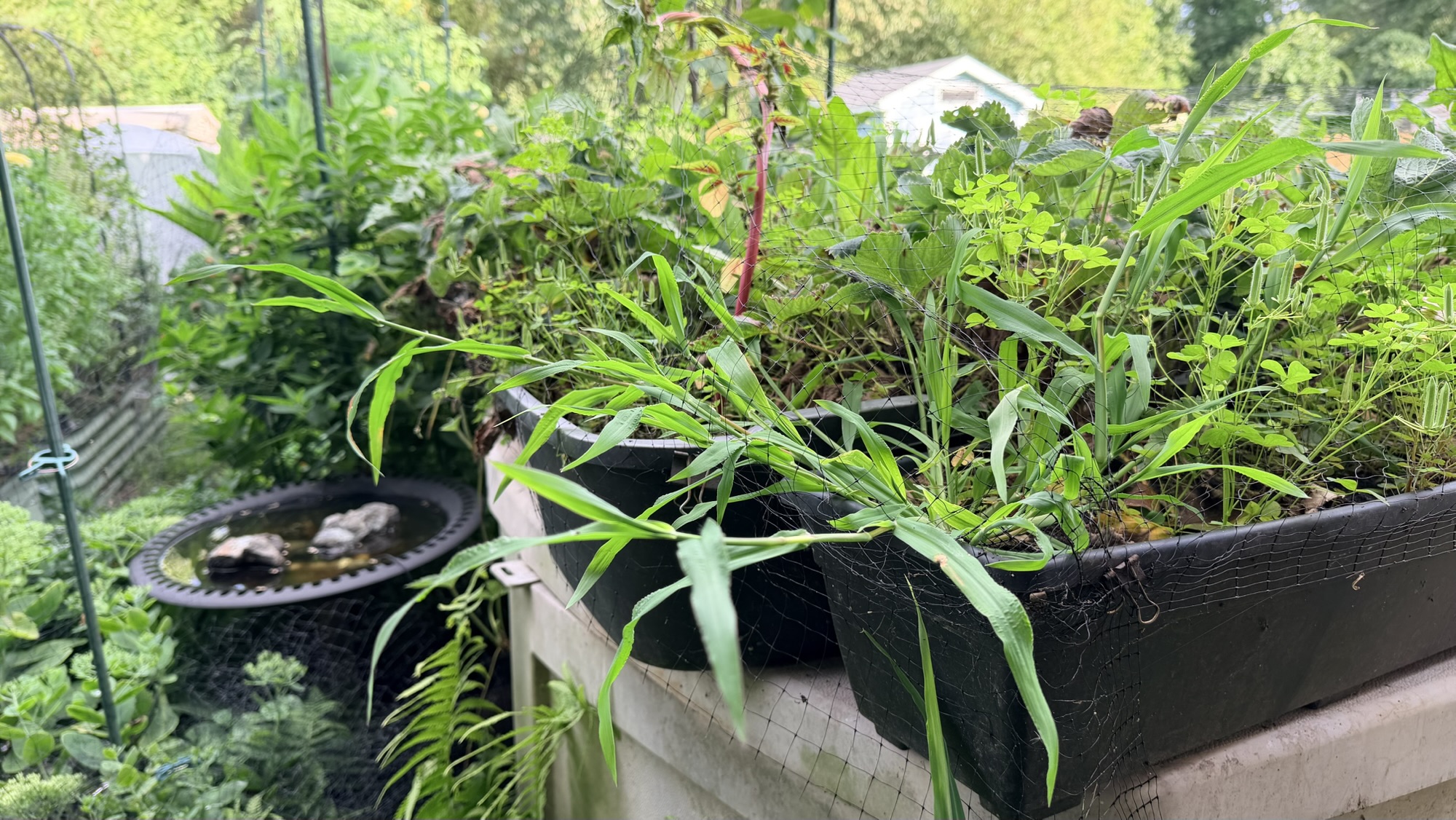
Before you dump old potting soil from your containers into the trash, stop.
You may be throwing away something you can use again.
After a full growing season, potting mix may look different. The level may have dropped, the mix may feel compacted, roots may be everywhere, nutrients may have been used, and water may drain differently.
But that doesn’t automatically mean the potting soil is bad.
In many cases, old potting soil can be refreshed and reused.
If you grow food in containers, raised planters, or a small-space garden, reusing what you already have can save money and reduce waste.
Instead of replacing perfectly usable soil every season, ask:
What’s wrong with this soil—and what does it actually need?
Can You Reuse Old Potting Soil?
Yes, in many situations.
However, don’t remove the old plant and immediately assume the mix is ready for another heavy-feeding vegetable.
After a growing season, potting mix may have lost nutrients, settled, decomposed, or become filled with roots. Repeated watering may also affect its structure.
The better question is:
What does this potting mix need before I reuse it?
Potting Soil Doesn’t Suddenly Become “Dead”
Potting soil doesn’t become useless after one plant grows in it.
What may have changed is its fertility and physical structure.
If the mix is low in nutrients, you can address fertility. If it has become compacted and drains poorly, fertilizer won’t fix the problem. If the container has lost volume, you may need to add fresh material.
Evaluate the mix before deciding what to do with it.
Check Why the Previous Plant Struggled
Before reusing potting soil, think about the previous plant.
Was it healthy and simply finished producing? Or did it die from a serious or unidentified problem?
Ask:
- Was the plant generally healthy?
- Did it have a known disease?
- Were there serious pests?
- Did the roots rot?
- Did the container drain properly?
- Did the soil develop an unusual odor?
- Did the plant decline for an unknown reason?
If you suspect a serious soilborne disease or persistent pest problem, don’t automatically reuse the mix for another susceptible vegetable. Identify the problem first.
How to Refresh Old Potting Soil
1. Remove the Old Plant
Remove the finished plant, large roots, thick stems, weeds, and unwanted debris.
If the plant was healthy, you don’t need to remove every small root. Small healthy roots can break down over time.
If the previous plant had a root disease or pest problem, remove affected roots and avoid carrying contaminated material into another container.
2. Loosen the Mix
Break apart compacted areas with your hands or a garden tool.
As you work, check whether the mix feels loose, dense, waterlogged, extremely dry, or packed with roots.
This helps you determine what it needs next.
3. Check Drainage
Container plants need a growing medium that holds moisture while allowing excess water to drain.
If water sits in the container too long, fertilizer won’t solve the problem. You may need to add fresh potting mix or an appropriate aeration material to improve structure.
Look at the problem first. Then choose the solution.
4. Add Finished Compost
Finished compost can add organic matter and nutrients while improving the growing medium.
Use compost that looks and smells earthy rather than like recognizable food waste.
Mix a reasonable amount into the existing potting mix. Compost is an amendment, not necessarily a complete replacement for a well-structured container mix.
5. Add Fresh Potting Mix
If the container has settled or lost volume, add fresh potting mix.
You don’t necessarily need to replace everything. Blending usable old mix with fresh material can restore volume and structure while reducing waste and expense.
6. Consider Worm Castings
Worm castings can add organic matter and a modest amount of nutrients.
Use them as an amendment rather than filling the entire container with them.
7. Restore Aeration if Needed
If the mix has become dense, an aeration material such as perlite may help improve air space and drainage.
Not every container needs perlite. Evaluate structure separately from fertility.
A plant can have enough nutrients and still struggle if its roots don’t receive the right balance of air and moisture.
8. Fertilize for the Next Crop
Old potting soil may need additional nutrients, but don’t automatically add fertilizer without considering what you’re planting.
Leafy greens don’t have the same nutritional demands as a large tomato growing all summer.
Follow the fertilizer label and avoid overfertilizing.
More fertilizer does not automatically create healthier plants.
Compost and Fertilizer Are Not the Same
Compost and fertilizer can both support plant growth, but they serve different purposes.
Compost primarily adds organic matter and may provide varying amounts of nutrients. Fertilizer supplies nutrients in more defined concentrations.
Depending on the condition of your potting mix and the next crop, you may use compost, fertilizer, or both.
Can You Add Kitchen Scraps Directly to Old Potting Soil?
Fresh kitchen scraps can decompose in soil, but they should not be confused with finished compost.
If you plan to plant immediately, use finished compost instead. Fresh scraps can affect moisture, nutrient availability, microbial activity, and the root environment. They may also attract pests.
If you bury scraps in old potting soil, give them time to decompose before planting.
Can You Mix Old Potting Soil Into Compost?
Yes.
If you don’t need the mix immediately, you can add some of it to a composting or soil-building system.
Old potting mix may eventually be used to:
- Refresh another container
- Fill part of a raised planter
- Mix with finished compost
- Support a soil-building project
- Provide another appropriate garden use
You don’t have to reuse it in the same place it came from.
Can You Reuse Potting Soil From Tomatoes and Peppers?
Often, yes, if the plants were generally healthy.
Tomatoes and peppers are heavy feeders, so refresh the mix and provide fertility appropriate for the next crop.
If either plant had a serious or suspected soilborne disease, be more cautious. You may want to use the soil elsewhere rather than immediately planting another related crop in it.
Old doesn’t automatically mean bad.
Can You Reuse Potting Soil From Diseased Plants?
There is no universal answer.
Some diseases affect foliage, while others can persist in plant debris or growing media.
If a plant had a serious or unidentified disease, don’t spread that potting soil throughout your garden. Identify the problem first.
In some cases, discarding or repurposing the growing medium may be safer.
What About Soil With Root Rot?
If a plant died from root rot, determine why.
Possible causes include:
- Poor drainage
- Blocked drainage holes
- Dense potting mix
- Overwatering
- A possible pathogen
If the growing medium stays saturated or smells sour, address the drainage and underlying cause before reusing it.
Can You Reuse Potting Soil Year After Year?
Potentially, yes.
However, reuse doesn’t mean never maintaining the mix.
Over time, you may need to manage:
- Organic matter
- Nutrients
- Drainage
- Aeration
- Soil volume
- Roots
- Fertilizer salts
- Pests and diseases
A heavily degraded mix may eventually be better used elsewhere while you start a container with fresher potting mix.
The goal is to reuse resources wisely, not avoid replacing anything under every circumstance.
What If Old Potting Soil Doesn’t Absorb Water?
Some potting mixes become difficult to rewet after drying out.
If water runs down the sides or straight through the container, water slowly and give the mix time to absorb moisture. Loosen the soil and moisten it gradually.
If the structure has deteriorated significantly, adding fresh potting mix may help.
What About Fertilizer Salt Buildup?
Repeated fertilizer applications can leave soluble salts in container media.
A whitish crust on the soil surface or container may indicate mineral buildup, although deposits can have several causes.
If you suspect salt accumulation, don’t add more fertilizer. Improve drainage and watering practices, and consider replacing or repurposing severely affected mix.
Don’t Use Garden Soil as Potting Mix
If your container needs more volume, don’t automatically add soil from your yard.
Garden soil can become too dense and poorly aerated in containers.
Use materials designed for container growing.
Refreshing Soil for Raised Planters and Small Containers
Small containers are easy to empty, mix, and refill.
Large raised planters and 30-gallon containers are different. Replacing all the growing media every year can be expensive and unnecessary.
For larger containers, you can often remove the finished plant, loosen the upper layer, add appropriate amendments, restore lost volume, and replant.
What Should You Do With Old Potting Soil You Don’t Want in a Container?
If the mix is free from serious pest or disease problems, you may still be able to use it elsewhere.
Possible uses include:
- Adding it to a raised-bed mix
- Mixing it with finished compost
- Using it in a soil-building project
- Filling low areas in an appropriate garden bed
- Incorporating it into future potting mixes
- Using it for less-demanding plants
The best use depends on the condition of the mix and why you stopped using it.
When Should You Throw Old Potting Soil Away?
You may want to dispose of potting mix if there is a significant risk of spreading:
- A serious soilborne disease
- Persistent pests
- Contamination
- Another problem that could affect the garden
You may also decide that badly degraded mix is no longer worth rehabilitating.
The message isn’t:
Never throw away potting soil.
It’s:
Don’t throw it away just because it’s old.
Evaluate it first.
My Simple Old Potting Soil Refresh Routine
If the previous plant was healthy and the mix is still in reasonable condition:
- Remove the finished plant, large roots, weeds, and debris.
- Loosen the potting mix.
- Check drainage and structure.
- Add finished compost.
- Add fresh potting mix if the container has settled.
- Add other amendments only when needed.
- Fertilize according to the next crop and product directions.
- Replant.
That’s easier and less expensive than replacing all the potting mix every season.
Can You Plant Immediately After Refreshing Old Potting Soil?
It depends on what you added.
You may be able to plant immediately after using ready-to-use potting mix, finished compost, or amendments intended for immediate planting.
If you added fertilizer, follow the product directions.
If you added fresh scraps or unfinished compost, allow time for decomposition before planting.
What you add determines how soon the soil is ready.
Don’t Add Amendments Just Because You Have Them
Old soil doesn’t automatically need compost, worm castings, biochar, perlite, fertilizer, bone meal, and several other products.
If drainage is already good, more aeration material may not be necessary. If you’re growing leafy greens, a phosphorus-heavy amendment may not be useful. If the soil already contains enough nutrients, additional fertilizer can create problems.
Amend with a purpose.
Soil Tests Can Help With Larger Systems
For a few small containers, you can often refresh the mix based on its condition and the needs of your plants.
For large raised planters or repeatedly reused growing media, a soil test can provide useful information before you make major nutrient adjustments.
Testing is especially helpful when plants repeatedly show the same problems despite normal care.
Reusing Potting Soil Saves Money and Reduces Waste
Container gardening can become expensive, especially when you have large containers, elevated planters, or vertical gardens.
Replacing all the growing media every season adds up.
Reusing old potting soil can reduce costs and keep usable material out of the trash.
Old plants, leaves, kitchen scraps, cardboard, and used potting mix can all become resources when handled appropriately.
You Don’t Need Perfect Soil to Grow Food
Plants need a growing medium that provides:
- Root support
- Moisture
- Drainage
- Air around the roots
- Essential nutrients
Your goal isn’t to create a magical soil recipe.
It’s to create conditions where plants can grow.
If old potting mix can provide those conditions after being refreshed, use it.
Don’t Toss It Just Because the Season Is Over
At the end of the growing season, old potting soil may need compost, fresh mix, better drainage, fertilizer, or simply a good loosening.
The solution depends on the problem.
Old potting soil isn’t automatically bad potting soil.
Before throwing it away, inspect it, think about what grew there, check its structure, and determine what it needs.
Then refresh it and put it back to work.
Don’t toss your soil. Take care of it.
Let’s grow food at home.
Frequently Asked Questions
Can I reuse old potting soil?
Yes, if the previous plant was generally healthy and there isn’t a serious disease, pest, or contamination problem. Refresh the structure and fertility as needed.
What should I add to old potting soil?
Depending on its condition, you might add finished compost, fresh potting mix, worm castings, perlite, or fertilizer appropriate for the next crop.
Do I need to replace potting soil every year?
Not necessarily. Potting mix can often be refreshed and reused for multiple seasons, although some material may eventually need to be replaced.
Can I reuse potting soil from tomatoes?
Often, yes, if the tomato plants were healthy. Because tomatoes are heavy feeders, refresh and fertilize the mix before planting another demanding crop.
Can I reuse potting soil from a diseased plant?
It depends on the disease. Identify the problem before reusing the mix with susceptible plants. In some cases, discarding or repurposing the media is safer.
Can I mix old potting soil with new potting soil?
Yes. Mixing usable old potting mix with fresh mix can restore volume and structure while reducing the amount of new material you need.
Can I add compost to old potting soil?
Yes. Finished compost can add organic matter and nutrients. Avoid filling the container mostly with compost because plants still need a well-structured growing medium.
Can I plant immediately after refreshing old potting soil?
Often, yes, if you used finished compost and ready-to-use amendments. Follow fertilizer directions, and allow fresh scraps or unfinished compost to decompose before planting.
Can I reuse potting soil in a raised bed?
Yes, if it is free from serious pest and disease problems. Incorporate it into an appropriate raised-bed mix rather than using it as the only material.


Leave a Reply