One of the hardest parts of gardening isn’t always getting plants to grow.
Sometimes it’s deciding when to let them go.
At the end of summer, I find myself walking through the garden asking the same questions:
Should I remove this plant now, or can I get one more harvest?
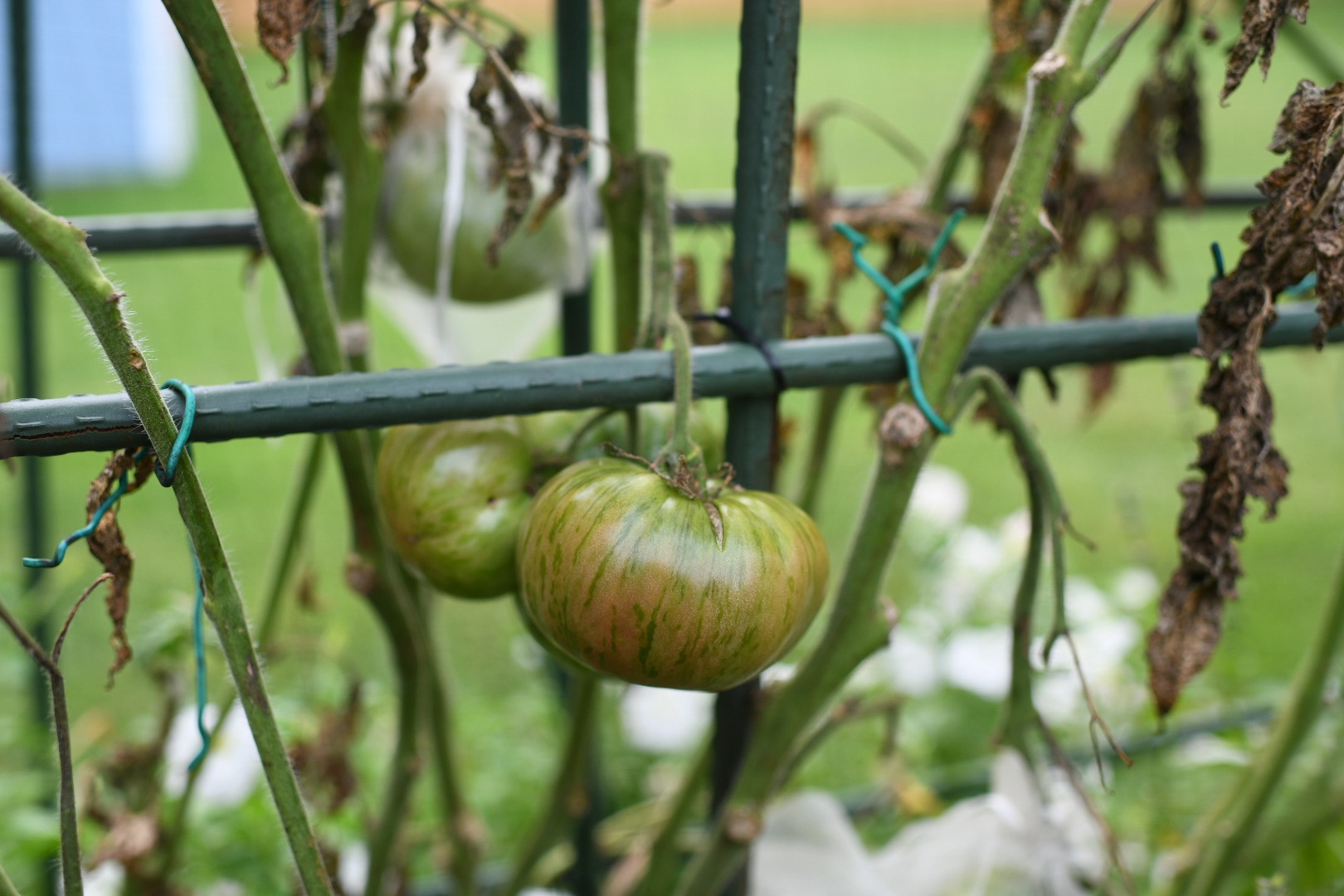
There might still be green tomatoes hanging on the vine.
A pepper plant may still have flowers.
An overgrown bean vine might produce another handful of beans.
And technically, some of those plants could stay in the garden until frost finally kills them.
But just because a plant is still alive doesn’t necessarily mean it deserves to stay.
Especially in a small garden.
Sometimes removing a summer vegetable plant is exactly what you need to do to make room for the next growing season.
Here’s how I decide when it’s time to remove tomatoes, peppers, beans, cucumbers, squash, okra, and other summer vegetables from my garden.
You Don’t Have to Wait Until the First Frost
A common assumption is that summer vegetable plants should stay in the garden until frost kills them.
You certainly can keep healthy, productive warm-season vegetables growing while the weather remains favorable.
But you don’t have to.
Your first frost date is useful because it gives you an idea of how much growing time may remain.
However, it shouldn’t be the only thing determining when you clean up the summer garden.
I also consider:
- Whether the plant is still producing
- Whether the remaining fruit has enough time to mature
- The health of the plant
- Pest and disease problems
- How much space it’s occupying
- What I want to plant next
- How much we’re actually eating
- How much time and energy I want to continue putting into it
Sometimes a plant earns another few weeks.
Sometimes it’s time for it to go.
1. The Plant Has Stopped Producing
One of the easiest decisions is a plant that has clearly finished producing.
Maybe your cucumber vine has stopped flowering.
Your bean vines aren’t producing new beans.
Your squash plant has slowed dramatically.
Or your tomato plant has very little fruit left.
Ask yourself:
Is this plant still giving me enough food to justify the space it’s using?
This question is especially important in a small-space garden.
A large plant occupying several square feet may not be worth keeping for the possibility of one more small harvest when that same space could be used for several fall vegetables.
2. The Plant Is Mostly Dead or Declining
By late summer, many vegetable plants simply look tired.
Leaves may be yellowing.
Stems may be drying.
Vines may be dying back.
The plant may still technically be alive, but that doesn’t mean it’s going to return to the vigorous plant you had earlier in the season.
Some decline is normal as annual vegetable plants reach the end of their growing cycle.
You don’t need to remove a plant because of one yellow leaf.
But when most of the plant is declining and production has slowed significantly, removing it may make more sense than continuing to maintain it.
3. Disease Is Taking Over
Disease can change my decision quickly.
Tomatoes, cucumbers, squash, and other summer vegetables can look pretty rough by the end of the season.
If a plant has significant disease and is barely producing, I usually have much less reason to keep it.
Removing heavily diseased plant material can also reduce the amount of infected debris left in the garden.
However, don’t assume every yellow or brown leaf means disease.
Heat stress, inconsistent watering, nutrient issues, natural aging, and other environmental conditions can also affect how plants look.
Try to identify what’s happening before deciding what to do.
If you’re unsure, look at the entire plant rather than one damaged leaf.
4. Pest Damage Has Become Severe
A plant that’s constantly battling pests may reach a point where keeping it isn’t worth the effort.
A few damaged leaves aren’t a reason to pull a productive vegetable plant.
Gardens don’t have to look perfect.
But if a plant is heavily infested, declining, and no longer giving you much of a harvest, removal may be the better choice.
This can also help you clean up hiding places and reduce pest pressure around the rest of the garden.
5. There Isn’t Enough Time for New Fruit to Mature
This is a big one near the end of the season.
A tomato plant may still be flowering.
A squash plant may produce another flower.
Your bean vines may still be growing.
But ask:
Does this plant realistically have enough time to produce something I can harvest before cold weather arrives?
Your average first frost date becomes useful here.
Suppose you’re only a few weeks away from your typical first frost and a warm-season plant is just beginning to produce new flowers.
Those flowers may not have enough time to turn into a useful harvest.
At that point, keeping the entire plant for potential future fruit may not make sense—especially if you need the space for fall vegetables.
6. The Remaining Fruit Is Worth Waiting For
The opposite can also be true.
Sometimes I keep a plant because there are fruits already developing that I think have a reasonable chance of reaching a useful stage.
Tomatoes are a good example.
If I have several tomatoes developing on an otherwise healthy plant and the weather forecast remains favorable, I may give them more time.
Peppers can also continue producing surprisingly late into the season.
This is why I don’t clear my entire summer garden simply because September arrives.
The calendar says fall before the garden necessarily looks like fall.
For a while, summer and fall can exist together.
I may still be harvesting tomatoes and peppers while planting bok choy and other cool-season vegetables elsewhere in the garden.
7. You Need the Space for Fall Vegetables
This may be the biggest deciding factor in my garden.
I have limited space.
Every bed matters.
If an old summer vegetable is occupying valuable growing space but barely producing, I have to decide whether that plant is more valuable than what I could grow there next.
Maybe removing an exhausted cucumber vine gives me space for bok choy.
Maybe a finished bean planting can become a bed of spinach.
Maybe removing okra gives me room for leafy greens.
This is where succession planting becomes so useful.
Instead of thinking of a garden bed as belonging to one vegetable for the entire year, think about how that same space can produce food through multiple seasons.
You Don’t Have to Remove Everything at Once
Garden cleanup doesn’t have to happen in one weekend.
I actually prefer transitioning the garden gradually.
I might remove one finished plant today.
Another next week.
Tomatoes and peppers can stay if they’re healthy and productive.
Meanwhile, I can plant fall vegetables wherever space becomes available.
This makes the transition much more manageable.
It also allows me to continue enjoying the end of the summer harvest without delaying my entire fall garden.
Start Your Fall Seedlings Before Summer Plants Are Finished
Here’s another way to make the transition easier:
You don’t have to wait for an empty garden bed to start your fall garden.
I can start bok choy, kale, cabbage, lettuce, or other fall seedlings separately while tomatoes, peppers, beans, and other summer vegetables are still growing.
By the time those seedlings are ready to transplant, another summer crop may be ready to come out.
This helps me make better use of my limited growing space.
Instead of waiting for one season to completely end before beginning another, the seasons overlap.
When Should You Remove Tomato Plants?
Tomatoes can make this decision especially difficult.
They often look terrible by late summer while somehow continuing to produce tomatoes.
If a tomato plant is still reasonably healthy and has fruit developing, I may leave it.
But I start considering removal when:
- Production has slowed significantly
- Most of the plant is declining
- Disease is severe
- Remaining fruit is unlikely to mature
- The plant is no longer worth the space
- I need the bed for fall crops
- Frost is approaching
You can also harvest mature green tomatoes before frost rather than losing them on the plant.
The decision doesn’t have to be between keeping the plant forever or losing every remaining tomato.
When Should You Remove Pepper Plants?
Peppers are another crop I tend to keep around longer.
Once established, pepper plants can continue producing into fall as long as temperatures remain favorable.
If the plant is healthy and peppers are developing, I usually don’t rush to remove it simply because summer has officially ended.
But peppers are warm-season plants.
Eventually cold temperatures will end their season.
As frost approaches, harvest the usable peppers you want to keep rather than assuming they’ll be fine through freezing conditions.
When Should You Remove Cucumber Plants?
Cucumbers often make the decision easier for me.
By late summer, vines may become tired, diseased, pest-damaged, or significantly less productive.
If the vine isn’t producing useful cucumbers anymore, I don’t see much reason to keep maintaining a huge mass of foliage.
Removing an old cucumber vine can free a surprising amount of space.
And in a small garden, that space is valuable.
When Should You Remove Squash Plants?
Squash plants can take up an enormous amount of garden space.
If they’re healthy and actively producing, that space may be worthwhile.
But if the plant is severely declining, affected by pests such as squash vine borers, heavily diseased, or no longer producing useful fruit, I start thinking about removal.
A large squash plant occupying half a bed for the possibility of one more fruit may not be the best use of my garden.
Again, it comes down to value.
What is this plant giving me compared with what else I could grow in that space?
When Should You Remove Bean Plants?
Beans can also tell you when they’re finished.
Production may slow.
Leaves begin declining.
Vines start looking tired.
At some point, continuing to maintain the plants gives you very little in return.
If you’re growing beans for dry seed or seed saving, however, you may intentionally leave pods on the plant longer so they can mature and dry.
Your goal for the crop matters.
When Should You Remove Okra?
Okra can continue producing while temperatures remain warm.
Mine did well this summer.
But by the end of the season, I was simply ready to be done with it.
And I think that’s a perfectly valid reason too.
The plant had produced well.
We had harvested plenty.
I wanted the space for something else.
So I harvested the last okra and let the plant go.
A plant doesn’t have to completely fail before you’re allowed to remove it.
Sometimes it has simply done its job.
It’s Okay to Remove a Plant That’s Still Producing
This can be difficult for gardeners.
We spend months caring for these plants.
We started them from seeds or tiny transplants.
We watered them.
Fed them.
Protected them.
Supported them.
Then we look at a plant with one small tomato or three beans hanging from it and think:
But it’s still producing!
Yes.
But that doesn’t automatically mean it needs to stay.
If you’ve already harvested plenty, you’re tired of eating that vegetable, or the plant is occupying space you need for something more useful, you can remove it.
Gardening isn’t about squeezing every possible tomato out of every plant.
Your time, energy, and garden space have value too.
Consider Your Own Capacity
This is something we don’t talk about enough in gardening.
Sometimes the question isn’t:
Can this plant keep producing?
The question is:
Do I want to keep taking care of it?
Maybe you’re tired.
Maybe the garden became overwhelming during summer.
Maybe you don’t want to plant a fall garden at all.
Maybe you’d rather clean everything up and take a break.
That’s okay.
A vegetable garden is supposed to serve your household.
You’re not obligated to maximize every square inch of soil every month of the year.
Sometimes the right decision is to let a plant go because you’re ready to let it go.
What Should You Do With Summer Plants After Removing Them?
Once you remove a plant, decide whether the material is appropriate for your compost.
Healthy plant material can often become valuable compost material rather than going to waste.
I compost a lot of my garden debris.
It eventually breaks down and becomes organic matter I can return to the garden.
But I don’t automatically put every removed plant into my compost.
Plants with serious disease problems, mature weed seeds, or certain persistent pests may need different handling depending on the specific problem and your composting method.
When in doubt, identify the disease or pest first before adding heavily affected material to your home compost.
Don’t Pull Plants Aggressively From Raised Beds
When removing annual vegetable plants, you don’t always need to yank every root out of the soil.
Pulling a large root system can disturb the surrounding soil and nearby plants.
Depending on the crop and whether there are disease or pest concerns involving the roots, you may choose to cut the plant at soil level and leave healthy roots to decompose in place.
Those roots can eventually contribute organic matter to the soil.
However, if you’re dealing with a root disease, root-knot nematodes, or another soil-related problem, leaving affected roots behind may not be appropriate.
Know why you’re removing the plant.
What Should You Do With the Empty Garden Bed?
Removing a summer crop isn’t the end of the process.
Now you have an opportunity.
If you’re planting another crop, prepare the space for what’s coming next.
Remove unwanted debris.
Check the soil.
Add finished compost or appropriate amendments if needed.
Then plant your next crop.
I don’t automatically throw away or completely replace my raised-bed soil every season.
I refresh it and keep using it.
Healthy garden soil is something we build over time.
What Can You Plant After Summer Vegetables?
If you still have enough growing time in your area, the space left behind by summer vegetables can become a fall garden.
Depending on your climate, planting date, and first frost date, options might include:
- Bok choy
- Lettuce
- Spinach
- Kale
- Collard greens
- Mizuna
- Tatsoi
- Other cool-season vegetables
Check your local first frost date and the days to maturity for the specific variety before planting.
A vegetable being considered a fall crop doesn’t mean it can be planted at any point during fall.
Timing still matters.
What If You Don’t Want to Plant Anything Else?
You don’t have to.
An empty garden bed isn’t a failure.
If you’re finished growing for the year, clean up the bed and protect the soil.
You might add compost, apply mulch, plant an appropriate cover crop, or otherwise prepare the bed for the next growing season.
This can also be a good time to evaluate what worked and what didn’t.
What would you grow again?
What wasn’t worth the space?
What did your family actually eat?
What did you grow too much of?
Those questions can make next year’s garden better.
A Simple End-of-Summer Decision Test
If you’re standing in front of an old vegetable plant and can’t decide whether to remove it, ask yourself:
- Is it still healthy?
- Is it still producing enough to matter to me?
- Will the remaining fruit realistically mature before cold weather?
- Am I still eating or preserving the harvest?
- Is disease or pest pressure becoming a problem?
- Do I need this space for another crop?
- Do I still want to spend time caring for this plant?
You don’t need seven yeses to keep a plant.
And you don’t need seven noes to remove it.
The questions simply help you decide what makes sense for your garden.
There’s a Beauty in Letting Go
At the end of every season, I eventually have to say goodbye to plants I’ve cared for for months.
Sometimes it’s easy.
Sometimes I look at a few tomatoes hanging on a tired vine and convince myself it needs another week.
But I’ve learned that there’s a beauty in letting go.
Removing an old crop gives me room to grow something new.
It creates space for bok choy, lettuce, spinach, kale, or whatever comes next.
And sometimes it simply gives me room to rest.
That’s part of gardening too.
We plant.
We grow.
We harvest.
And eventually, we clear the space and begin again.
So don’t feel like you have to keep every summer vegetable plant until frost finally makes the decision for you.
Look at the plant.
Look at the weather.
Look at what you want to grow next.
And consider your own capacity.
If the plant is still healthy, productive, and useful to you, enjoy another harvest.
If it has done its job, it’s okay to let it go.
Sometimes making room for something new starts with knowing when something else is finished.
Let’s grow food at home.
Frequently Asked Questions
Should I remove tomato plants at the end of summer?
Not necessarily. If tomato plants are healthy, productive, and have fruit that can reasonably continue developing before cold weather, you can keep them growing. Consider removing plants that are severely diseased, declining, barely producing, or occupying space you need for another crop.
Do I have to wait until frost to remove summer vegetables?
No. You can remove summer vegetables whenever they’re no longer useful to your garden. Production, plant health, pest and disease pressure, available growing time, your next planting, and your own capacity are all reasonable factors to consider.
Should I remove vegetable plants that are still producing?
You don’t have to, but you can. A plant that’s producing very little may not be worth keeping if you need the space for another crop or no longer want to maintain it.
Should I compost old vegetable plants?
Healthy plant material can often be composted. Be more cautious with material affected by serious diseases, persistent pests, or mature weed seeds. How safely those materials can be composted depends partly on the specific problem and how your compost pile is managed.
Can I plant fall vegetables immediately after removing summer crops?
Often, yes, after preparing the area appropriately. Remove unwanted debris, assess the soil, add finished compost or suitable amendments if needed, and check whether your chosen fall vegetable still has enough growing time before cold weather.
Should I remove the roots of old vegetable plants?
Not always. Healthy roots can sometimes be cut off at soil level and allowed to decompose in place. However, roots affected by certain diseases, nematodes, or other soil-related problems may need to be removed.


Leave a Reply