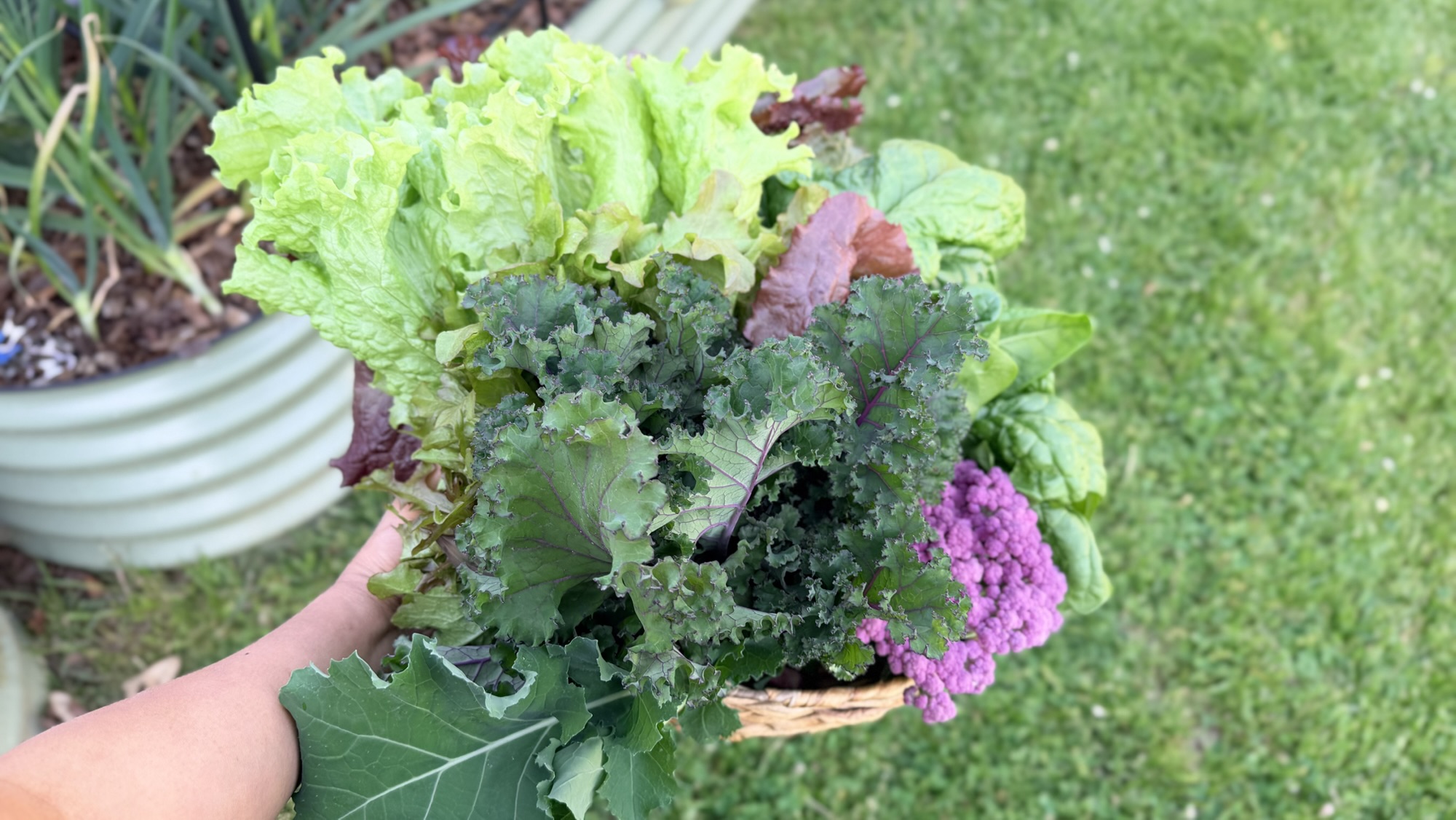
It’s September. Is it too late to start a fall vegetable garden in Zone 7?
Not necessarily!
Fall is a whole new growing season, and there are still vegetables you can plant in September—especially quick-growing leafy greens and other cool-season crops.
Here in my Maryland Zone 7 garden, September is an interesting transition month. Tomatoes and peppers may still be producing while I’m planting bok choy, lettuce, spinach, and other vegetables for fall.
If you’re a beginner, you don’t need to grow everything.
Start with a few vegetables that grow relatively quickly, enjoy cooler temperatures, and—most importantly—are vegetables you actually want to eat.
Here are five easy vegetables to plant in September for a Zone 7 fall garden.
A quick note about Zone 7: Your USDA Hardiness Zone alone does not tell you exactly when frost will arrive. First frost dates vary by location and from year to year. Always check your local average first frost date and the days to maturity for the specific variety you’re planting.
1. Bok Choy
If I had to recommend one fall vegetable for beginner gardeners, bok choy would be high on my list.
It’s also one of my favorite cool-season vegetables to grow.
Bok choy grows relatively quickly, doesn’t require much garden space, and can be grown in raised beds, containers, and vertical planters.
That makes it especially useful in my small garden.
Why Bok Choy Is Good for Beginners
Bok choy is a cool-season vegetable that grows well as temperatures begin to fall.
Depending on the variety, you can harvest it at different stages. You don’t have to wait for a large, fully developed head. Baby bok choy can be harvested earlier, which is especially helpful when you’re planting later in the fall season.
I particularly enjoy growing smaller varieties such as Li Ren Choi.
How to Plant Bok Choy in September
You can direct-sow bok choy or transplant seedlings.
If September is still unusually hot in your area, starting seeds in a protected location can make establishment easier.
Keep the soil consistently moist while seeds germinate and young plants become established.
Once the weather cools, bok choy really begins to feel at home.
Watch for Pests
Bok choy may love fall weather, but unfortunately, pests love bok choy too.
Cabbage worms, flea beetles, and slugs can damage the leaves.
I like protecting bok choy and other brassicas with insect netting as soon as possible rather than waiting until significant damage appears.
2. Lettuce
Lettuce is another excellent vegetable for a beginner fall garden.
It’s compact, grows relatively quickly, and doesn’t require a traditional in-ground vegetable garden.
You can grow lettuce in:
- Raised beds
- Containers
- Window boxes
- Elevated planters
- Vertical gardens
- Small backyard spaces
That’s one reason lettuce is such a useful crop for small-space gardeners.
Why September Is a Good Time for Lettuce
Lettuce generally prefers cooler conditions than the heat of summer.
Hot temperatures can make lettuce difficult to establish and encourage plants to bolt.
As temperatures begin cooling in September, growing conditions often become much more favorable.
However, early September in Zone 7 can still be hot.
If you’re planting during a warm spell, pay close attention to moisture and consider protecting young seedlings from intense afternoon sun.
Harvest Lettuce Young
Another advantage of lettuce is that you don’t always have to wait for a mature head.
Depending on the type you’re growing, you may be able to harvest individual outer leaves or grow lettuce specifically for baby greens.
For a September planting, that flexibility can be valuable.
3. Spinach
Spinach is one of those vegetables that reminds us why fall gardening is different from summer gardening.
It likes cool weather.
Instead of trying to keep spinach happy through summer heat, you can take advantage of falling temperatures and grow it as a cool-season crop.
Why Grow Spinach in Fall?
Spinach is compact, making it a good choice for small gardens.
You can grow it in garden beds or containers, and you can harvest young leaves rather than waiting for plants to become large.
It can also tolerate colder conditions better than many warm-season vegetables.
Be Patient With Early September Spinach
There’s one challenge beginners should know about.
September doesn’t always feel like fall in Zone 7.
We can still experience hot days here in Maryland, particularly early in the month.
Spinach germination can be more difficult when the soil is too warm.
If conditions are still very hot, you may have better success waiting for temperatures to moderate or starting seeds in a cooler, protected location.
Fall gardening is less about following a calendar date exactly and more about paying attention to the weather.
4. Kale
Kale is an excellent cool-season vegetable for a beginner fall garden.
It’s relatively cold-tolerant, productive, and able to continue growing as temperatures drop.
Why Kale Works Well in a Fall Garden
Kale can be harvested young for tender leaves or allowed to grow larger for more substantial harvests.
That flexibility is especially helpful when you’re planting in September and working with an uncertain fall growing window.
You don’t have to wait for one large harvest. Instead, you can pick individual leaves as needed while the plant continues producing.
Kale can grow in raised beds, containers, and other small garden spaces.
It’s also a practical choice if you want a dependable leafy green that handles cooler weather better than many summer vegetables.
Protect Kale From Pests
Kale belongs to the brassica family, so cabbage worms, flea beetles, and slugs may still be a problem.
Inspect the leaves regularly and consider using insect netting early in the season to protect young plants.
5. Collard Greens
Collard greens are another beginner-friendly cool-season vegetable to consider for a September garden in Zone 7.
They’re hardy, productive, and well suited to fall growing conditions.
Why Grow Collard Greens in September?
Collards can tolerate cool temperatures and may continue producing well into the fall.
Like kale, they can be harvested gradually by picking the outer leaves while allowing the plant to keep growing.
That makes them useful when you want a steady supply of greens rather than one large harvest.
Collard greens need more room than some smaller leafy crops, but they can still work well in raised beds or larger containers if given adequate space.
If you already enjoy eating collards, they’re a worthwhile addition to a beginner fall garden.
What About Broccoli, Cabbage, and Cauliflower?
You may notice that I didn’t put broccoli, heading cabbage, or cauliflower on my top-five list.
That doesn’t mean you can’t grow them in a Zone 7 fall garden.
The issue is timing.
Many varieties need a longer growing period than quick-growing leafy greens.
If you’re starting in September, transplants may make more sense than starting slower-maturing varieties from seed. The best choice depends on your local first frost date, the variety’s days to maturity, and how far into September you are.
This is an important distinction for beginners.
A vegetable being a fall crop doesn’t automatically mean you can start it at any point during fall.
Some fall crops actually need to be started during summer so they have enough time to mature.
What About Mizuna and Tatsoi?
Mizuna and tatsoi are also excellent cool-season vegetables.
They’re relatively cold-tolerant, grow well in small spaces, and can be harvested gradually.
Both are worth considering if you enjoy Asian greens and want to add variety to your fall garden.
However, they may be less familiar to some gardeners than kale or collard greens. Choose the vegetables you’re most likely to eat.
Remember:
Don’t grow something just because it’s easy to grow. Grow something you’ll actually eat.
How Late Can You Plant a Fall Garden in Zone 7?
There isn’t one planting date that works for everyone in Zone 7.
Zone 7 covers many locations, and your first frost date can differ from another gardener’s even if you share the same hardiness zone.
Instead of asking only:
“What zone am I in?”
Also ask:
“When is my average first frost?”
Then look at the days to maturity listed for the specific variety you’re growing.
If your bok choy takes around 45 days to mature, for example, you need to consider whether you have enough growing time left.
But don’t simply count backward 45 days and assume you’re finished.
Plant growth generally slows as days become shorter and temperatures become colder.
Giving fall vegetables some additional time is helpful.
Start With Your First Frost Date
Your first frost date is one of the most useful pieces of information when planning a fall vegetable garden.
If you’re a beginner, here’s a simple way to think about it:
Average first frost date → Days to maturity → Add some extra growing time → Estimate your planting window
It’s not a perfect formula because weather is unpredictable, but it’s much more useful than choosing a planting date based only on your hardiness zone.
And remember that an average first frost date is an estimate, not a guarantee.
Frost can arrive earlier or later in any particular year.
September Can Still Be Hot
One of the biggest challenges with fall gardening is that you often have to plant cool-season vegetables while the weather still feels like summer.
That’s certainly possible here in Maryland.
Your bok choy may be dreaming of cool autumn weather while September decides to give you another hot afternoon.
Young seedlings may need some extra help during this transition.
Keep the soil consistently moist while seeds germinate and transplants become established.
Temporary shade can also be useful during unusually hot conditions.
Don’t assume something is wrong with your fall garden simply because seedlings struggle during a hot spell.
Sometimes you just have to help them through the transition.
Protect Your Fall Vegetables From Insects
Another common beginner mistake is assuming pests disappear as soon as summer ends.
They don’t.
Many of the vegetables we love growing in fall are also favorites of garden pests.
Bok choy, kale, collard greens, cabbage, broccoli, and other brassicas can attract cabbage worms and flea beetles.
Slugs can also become a problem.
One of my favorite preventive tools is insect netting.
Put it over susceptible crops early.
It’s much easier to keep pests away from your vegetables than to wait until the leaves are full of holes and then try to figure out what happened.
Don’t Overwater Just Because You’re Used to Summer
Your watering routine will probably change as fall progresses.
During summer, garden soil and containers can dry incredibly quickly.
As temperatures cool, water evaporates more slowly.
Instead of automatically watering according to your summer schedule, check the soil.
Newly planted seeds still need consistent moisture to germinate, and transplants need adequate water while becoming established.
But established fall vegetables may not need to be watered as frequently as summer crops.
Let the soil tell you what the plants need.
You Can Grow Fall Vegetables in Containers
You don’t need a large garden to grow these vegetables.
Bok choy, lettuce, spinach, kale, and collard greens can all work well in small-space gardens.
That’s one of the reasons I enjoy growing leafy greens.
You can tuck them into available spaces, grow them in containers, or use vertical planters.
As summer vegetables finish, you can also reuse those spaces for fall crops.
A container that held a summer vegetable doesn’t necessarily need to sit empty until next spring.
Refresh the soil if needed and put that space back to work.
Don’t Throw Away Your Soil
When transitioning from summer to fall, you usually don’t need to replace all the soil in your raised beds or containers.
I prefer refreshing mine.
Remove unhealthy plant debris and old roots as appropriate, then evaluate the soil.
Depending on what it needs, you might add finished compost, worm castings, or an appropriate fertilizer or soil amendment.
You’ve already invested time and resources into building that soil.
Take care of it and keep using it.
Start Small If This Is Your First Fall Garden
You don’t need to grow all five vegetables on this list.
Choose one.
Or choose two.
If you’ve never grown a fall vegetable before, I would much rather see you successfully grow a container of bok choy than plant an enormous fall garden that becomes overwhelming.
Start with vegetables you already know you’ll use in the kitchen.
For me, bok choy is an easy choice because it’s something I enjoy eating and cooking.
Your list might look completely different.
That’s okay.
The goal isn’t to grow the most vegetables.
The goal is to confidently grow food at home.
My 5 Easy September Vegetables for a Zone 7 Fall Garden
If you’re trying to keep it simple, these are the five vegetables I’d consider:
- Bok choy — quick-growing, compact, and one of my personal favorites.
- Lettuce — excellent for containers and small spaces, with the option to harvest young leaves.
- Spinach — a classic cool-season green that becomes happier as temperatures cool.
- Kale — cold-tolerant, productive, and useful for gradual harvests.
- Collard greens — hardy, productive, and well suited to cool fall weather.
You could easily grow several of these in a very small area.
And that’s exactly why I like them.
Fall Is a Whole New Growing Season
September doesn’t have to mean the end of your vegetable garden.
It can mean tomatoes and peppers are still ripening on one side of the garden while bok choy and lettuce are beginning on the other.
That’s what makes this time of year so interesting.
Two seasons can exist in the garden at the same time.
If you’re a beginner, don’t worry about growing an enormous fall garden.
Find your average first frost date.
Choose one or two quick-growing vegetables you actually enjoy eating.
Check the days to maturity.
Plant them.
Protect them from pests.
And learn as you go.
You may discover that some of your favorite gardening happens after summer is over.
Let’s grow food at home.
Related Articles
- Fall Vegetable Gardening for Beginners: How to Start a Fall Garden
- What to Do in Your Garden in September: Zone 7 Guide
- Understanding Frost Dates
- Understanding USDA Hardiness Zones
- How to Grow Bok Choy
- How to Grow Kale
- How to Grow Collard Greens
- Container Gardening for Beginner Gardeners
- Compost vs. Fertilizer: What’s the Difference?
- How to Refresh Raised-Bed Soil
- Zone 7 Planting Calendar


Leave a Reply