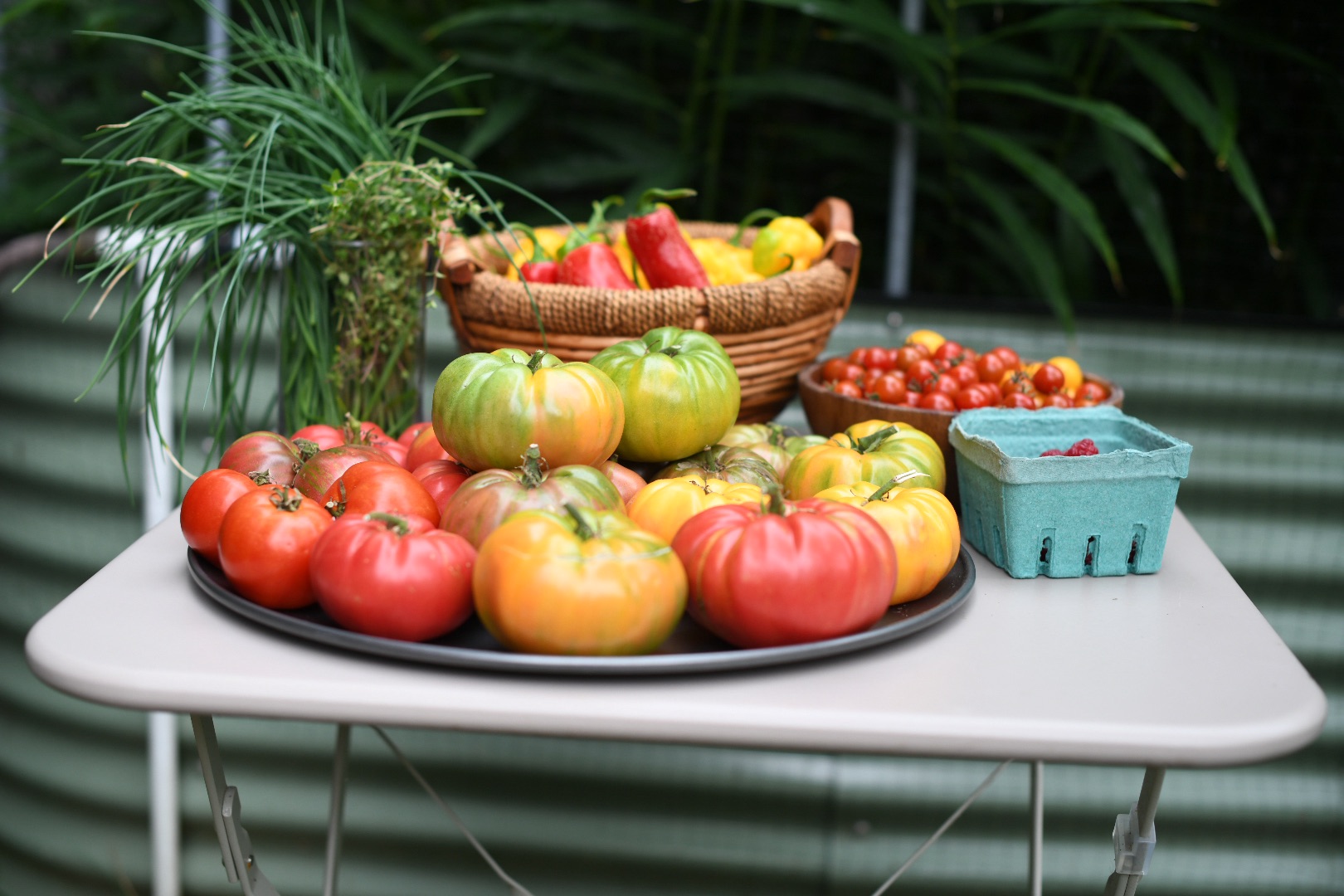
September always feels like two gardening seasons happening at the same time. The calendar says fall is here, but the summer garden isn’t necessarily finished.
This month, I was still harvesting tomatoes, peppers, raspberries, blackberries, long beans, and the last of my okra while thinking about fall vegetables, cleaning up finished plants, refreshing growing spaces, and deciding what deserved a little more time.

That’s September gardening in Maryland. Some days still feel like summer, while others remind you that cooler weather is coming. Throughout the month, I kept asking myself: Do I keep this plant a little longer, or is it time to let it go?
Here’s a look at what was happening in my small Zone 7 garden this September.
September Is a Transition Month in My Zone 7 Garden
September isn’t a complete reset for me. I don’t walk into the garden on September 1 and pull every summer vegetable simply because fall is approaching. If something is healthy and producing food we’re still going to eat, I’m happy to give it more time.
At the same time, I have limited growing space. Every summer plant I keep is also occupying space that could potentially grow bok choy, lettuce, spinach, kale, collards, onions, or another cool-season crop.
So September becomes a balancing act. I’m harvesting, planting, cleaning, preserving, composting, and slowly making room for the next season.
I actually enjoy seeing the overlap. Summer and fall don’t have to happen separately in the garden.
Tomatoes Were Still Ripening
My tomato plants were still giving me tomatoes in September. At this point in the season, I’m not necessarily expecting the same vigorous growth I saw earlier in summer. The plants have been through months of heat, rain, pests, pruning, harvesting, and changing weather.
But if there are tomatoes still ripening and the plant is reasonably healthy, I don’t feel the need to remove it immediately. This is where I start looking at each plant individually:
- Is it still producing?
- Are there tomatoes already developing?
- Does the plant look healthy enough to keep?
- Do I need the space for something else?
- How much growing time do I realistically have left?
Those questions matter more to me than simply saying, “It’s September, so the tomatoes need to go.”
September Tomatoes Also Mean Thinking About Preservation
By late summer, I’ve usually reached the point where I’m thinking beyond eating every tomato fresh. One of the easiest ways I preserve tomatoes is freezing them.

I especially like freezing cherry tomatoes whole. I can wash them, dry them, freeze them, and process them later when I have more time. Larger tomatoes can be diced and frozen in portions, and I also like freezing tomato sauce or tomato paste in portion trays such as Souper Cubes.
This method works well for me because it’s easy and not intimidating. I don’t have to turn every bowl of tomatoes into a major preservation project the same day I harvest them. Sometimes I can simply freeze them and decide what they’ll become later.
The Peppers Were Still Going Strong
Peppers are one crop I’m usually reluctant to remove too early. After waiting all season for them to really get going, late summer and early fall can be when they finally seem determined to produce everything at once.
My September harvests included jalapeños and Scotch bonnet peppers, and those peppers didn’t just sit in a harvest bowl. They went into the kitchen.
That’s one of my favorite parts of gardening. I don’t grow food simply to say I grew it. I want to use it.
Turning Peppers Into Food
This year, peppers became several different things in my kitchen. I made chili garlic oil, experimented with fermented peppers, prepared a West African-inspired chili sauce, and made a tropical hot sauce using mango, pineapple, jalapeños, and Scotch bonnet peppers.


That tropical sauce has a combination I really enjoy: sweet, tangy, savory, and spicy. The mango and pineapple help balance the heat, while the peppers still make sure you know you’re eating hot sauce.
This is exactly the kind of garden-to-table experience that keeps me excited about growing food. A few pepper plants can become ingredients for so many different things.
Red Jalapeños Were Especially Beautiful
One thing I really enjoyed was letting some jalapeños fully ripen. Jalapeños don’t have to be harvested green. If you leave them on the plant, they can mature to red.
Those red jalapeños added beautiful color to my hot sauce. It’s a small detail, but gardening makes you notice things like that. You’re not just buying a pepper from a grocery store. You get to watch it develop from a flower to a green fruit and eventually to a fully ripe red pepper.
The Last of the Okra
September was also when I finally said goodbye to my okra, and I was ready. It had done well. I harvested from it, we ate it, and it served its purpose. Eventually, though, I reached the point where I was simply done with okra for the season.
That’s reason enough.
Sometimes gardeners feel like they have to keep a productive plant until frost finally kills it. You don’t. If you’ve harvested enough and would rather use the space for something else, you can remove it.
Gardening is supposed to work with your life. You’re allowed to say: That was a good season. I’m done.
There’s a Beauty in Letting Go
This became one of the bigger themes in my garden as summer ended. Every year, I eventually face the same decisions:
- Should I keep this plant?
- Should I wait for those last fruits to ripen?
- Should I clear the bed now?
There are practical things to consider, such as how much time is left before frost, whether the plant is still producing, whether the remaining fruits will realistically mature, and whether I need the space.
But there’s another consideration that doesn’t get talked about enough: Do I have the capacity to keep caring for it?
Sometimes letting go is the right gardening decision. Removing a plant doesn’t erase everything it produced during the season. It simply creates room for what comes next.
Long Beans Were Still Producing
My long beans were another September harvest. Beans are a great example of why I love vertical gardening. When you have a small backyard, you eventually realize that you can’t keep expanding outward, so you grow upward.
Long beans and other climbing beans can use vertical space that would otherwise go unused. Because long beans are something I actually enjoy eating, they earn their place in my garden.
That’s always one of my biggest considerations when planning: Grow what you actually eat.
A productive plant isn’t very useful if nobody in your house wants to eat the harvest.
Raspberries and Blackberries Were Still Producing
I was also harvesting raspberries and blackberries in September. Growing fruit in a small garden has become something I’ve really enjoyed. You don’t necessarily need a large orchard or rows of berry bushes. You can incorporate fruit wherever it makes sense for your space.

My garden includes raspberries, blackberries, blueberries, and several fruit trees that I grow in containers. It’s another reminder that a small garden doesn’t have to mean vegetables only.
Berry harvests may not always come in giant bowls, especially in a small home garden, but they don’t need to. A handful of berries picked from your own backyard still counts.
This is something I want beginner gardeners to remember: Don’t compare your harvest to someone growing on acres of land. Look at what your own space can produce. Small harvests add up.
The Fall Garden Was Growing at the Same Time
While I was harvesting summer vegetables, the cool-season garden was becoming part of the picture too. This is one of my favorite things about September. The garden isn’t simply ending. It’s changing.

Cool-season vegetables give me an opportunity to continue growing food after heat-loving crops begin slowing down. Some of the vegetables I like growing for fall include:
- Bok choy
- Lettuce
- Spinach
- Kale
- Collard greens
- Mizuna
- Tatsoi
- Cabbage
- Broccoli
- Cauliflower
Bok choy is especially high on my list. It’s one of my favorite cool-season leafy greens, and I use it frequently in the kitchen.
Growing Food Doesn’t Stop When Summer Ends
Beginner gardeners sometimes think vegetable gardening is mainly a spring and summer activity. You plant after frost, harvest through summer, and then everything ends.
But gardening doesn’t necessarily stop when September arrives. For me, fall is another growing season. The crops, temperatures, pest pressure, and amount of daylight change, but I’m still growing food.
In some ways, I really enjoy cool-season gardening after dealing with summer heat.
But You Don’t Have to Grow a Fall Garden
If you’re exhausted after your summer garden, you don’t have to plant a fall garden.
Gardening can become surprisingly demanding during summer. There’s watering, harvesting, pruning, pest management, disease prevention, preserving, cooking, and cleaning up.
If September arrives and you need a break, take one. There’s always another growing season.
I love fall gardening, but that doesn’t mean everyone needs to immediately fill every empty space with another crop. Your capacity matters too.
Refreshing the Garden as Space Opens Up
As summer plants come out, I don’t automatically throw away the soil. I refresh it, especially in my raised beds and containers.
After a long growing season, the soil may have settled. Plants have used nutrients, and organic materials have continued decomposing. But that doesn’t mean the soil needs to be replaced.
Depending on what the bed needs, I may add:
- Finished compost
- Worm castings
- Additional raised-bed mix
- Fertilizer appropriate for the next crop
- Mulch
The important thing is that I don’t automatically add everything. I look at the soil and think about what I’m planting next. Amend with a purpose.
Old Soil Isn’t Automatically Bad Soil
This is one gardening habit I really want beginners to learn. Don’t assume that soil becomes useless because something already grew in it.
Raised-bed soil can be maintained, potting mix can often be refreshed, compost can replenish organic matter, and fertilizer can replace nutrients when appropriate.
Good soil is something we continue building. Especially when you’re gardening in containers and raised beds, replacing everything every year can become incredibly expensive. I’d rather take care of what I already have.
September Is a Great Time to Compost
Garden cleanup also gives me plenty of compost material. Healthy spent plants and kitchen scraps can become compost, and one of the best free compost ingredients of fall is about to become abundant: leaves.
Fallen leaves are an excellent source of carbon—the “brown” side of the compost pile. Instead of treating all those leaves as trash, I can use them to help build future garden soil.
That’s the cycle I love about gardening. Plants grow from the soil, we harvest food, leftover organic material decomposes, and eventually some of it goes back into building the soil again.
Pest Protection Still Matters in Fall
Cooler weather doesn’t mean every pest suddenly disappears. My brassicas and leafy greens can attract cabbage worms and other pests.
One of my favorite ways to reduce pest problems is to prevent them in the first place. I use fine insect netting to create a physical barrier over susceptible crops. The goal is to keep pests such as cabbage moths from reaching the plants and laying eggs.
It isn’t a guarantee of a completely pest-free garden, so I still inspect underneath the netting. Slugs, aphids, cutworms, and other pests can still become problems. However, preventing some pests from reaching the plants in the first place can make fall gardening much easier.
September Reminded Me Again Why I Grow Food
My garden isn’t large, and I’m not trying to replace the grocery store. Every harvest isn’t huge, but look at what can still come out of a small backyard in September:
- Tomatoes
- Peppers
- Long beans
- Okra
- Raspberries
- Blackberries
- Cool-season vegetables beginning another round of growth
Some ingredients go directly into dinner. Some become sauce, some get frozen, and some become something completely different from what I imagined when I planted the seed.
That’s enough for me.
September Garden Challenges
September isn’t all harvest baskets. It’s also a month of decisions.
One of the biggest challenges is managing the transition between seasons. There are summer plants I could technically keep, fall vegetables that need the space, vegetables to preserve, soil to refresh, and plants that need protection from pests.
Eventually, I have to accept that not every last tomato or pepper needs to stay on the plant forever. That’s gardening. Sometimes the challenge isn’t getting something to grow. Sometimes it’s knowing when you’ve grown it long enough.
What September Taught Me
If I had to summarize this month, these are the lessons I’d carry forward:
Grow what you actually eat. My favorite harvests are the ones that become foods we enjoy.
Preservation doesn’t have to be complicated. Sometimes freezing tomatoes is enough.
Use the space you have. Long beans can climb, fruit can grow in containers, and cool-season greens can replace finished summer crops.
Don’t throw away resources unnecessarily. Old soil can often be refreshed, healthy garden debris can become compost, and fallen leaves can become mulch or compost material.
You don’t have to keep every plant until frost. Sometimes a plant has given enough.
Finally, a new season doesn’t mean the previous season has to disappear overnight. September can hold both.
Looking Ahead to October
October will continue the transition. The days will get shorter, temperatures will continue dropping, and the first frost will get closer.
My attention will increasingly move toward cool-season vegetables, frost protection, garden cleanup, composting, and preparing parts of the garden for winter. I’ll also continue harvesting whatever the summer garden is willing to give me for as long as keeping those plants still makes sense.
That’s the rhythm of a four-season garden. Not everything ends at once. One crop finishes, another begins. One bed gets cleared, another fills with seedlings. Little by little, the garden changes.
September Wasn’t the End of the Garden
That’s probably the biggest takeaway from this month. September wasn’t the end. It was a transition.
I harvested some of the last summer vegetables, let go of plants I was ready to remove, preserved food, made sauces from peppers I grew myself, refreshed soil, continued growing fall vegetables, and watched the garden slowly shift into another season.
There really is beauty in letting go, but there’s also something exciting about the space that letting go creates. An empty space in the garden isn’t necessarily the end of something. Sometimes it’s simply room for whatever you decide to grow next.
Let’s grow food at home.
September Garden Highlights at a Glance
Harvested this month:
- Tomatoes
- Jalapeño peppers
- Scotch bonnet peppers
- Long beans
- Last of the okra
- Raspberries
- Blackberries
In the kitchen:
- Frozen tomatoes
- Chili garlic oil
- Tropical mango pineapple hot sauce
- West African-inspired chili sauce
- Other garden-to-table meals
Garden priorities:
- Transitioning from summer to fall crops
- Deciding which summer plants to keep
- Clearing finished plants
- Refreshing raised-bed and container soil
- Composting healthy garden debris
- Protecting fall vegetables from pests
- Preparing for cooler temperatures and eventual frost
Biggest September lesson:
You don’t have to keep every summer plant until frost, and you don’t have to clear the entire garden simply because fall has arrived.
Let the seasons overlap. Keep what’s still worthwhile, let go of what’s finished, and make room for what comes next.


Leave a Reply