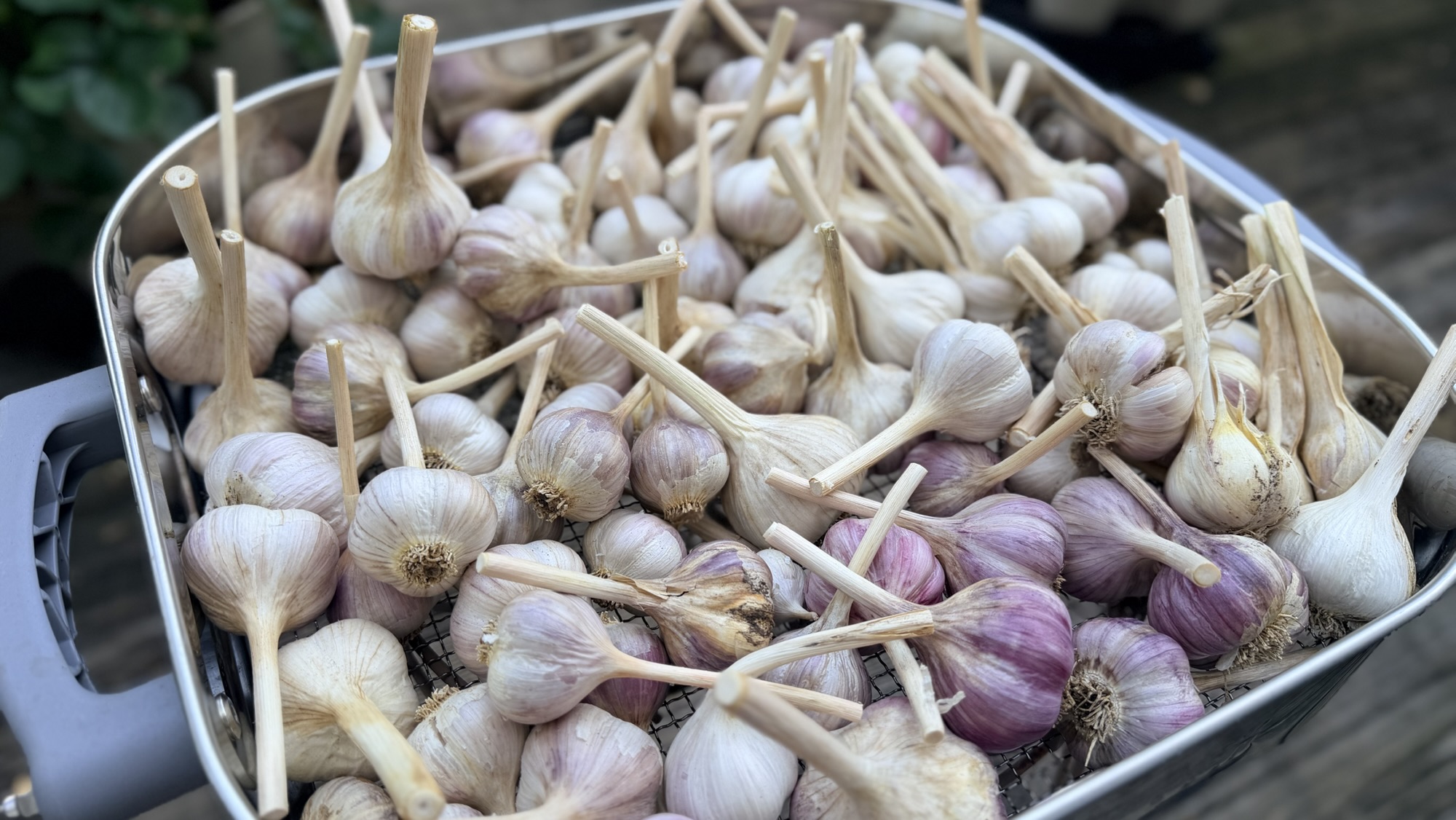
Garlic is one of those crops that rewards patience.
Unlike many vegetables you plant in spring and harvest a few months later, garlic is usually planted in the fall and harvested the following summer. It spends the winter developing roots beneath the soil before taking off with vigorous growth in spring.
That long growing season is well worth the wait. Homegrown garlic has incredible flavor, stores for months when cured properly, and once you’ve harvested your first crop, you may never want to buy garlic from the grocery store again.

In my Maryland Zone 7 garden, garlic has become one of my favorite crops to grow. Over the years, I’ve learned that timing, healthy soil, and proper spacing make a huge difference. I’ve also discovered that growing garlic in raised beds has consistently given me better results than growing it in containers.
Here’s everything you need to know about growing garlic successfully.
Why Grow Your Own Garlic?
Garlic is one of the easiest vegetables to grow because it:
- Requires very little maintenance during winter
- Produces large harvests in a small space
- Stores for many months
- Can be replanted from your own harvest
- Has exceptional flavor compared to store-bought garlic
- Is naturally resistant to many common garden pests

Each clove you plant becomes an entire bulb.
That means a single bulb can produce several new bulbs the following season.
Understanding the Types of Garlic
There are two main types of garlic.
Hardneck Garlic
Hardneck garlic produces a flower stalk called a scape in late spring or early summer.
It generally offers:
- Excellent flavor
- Large cloves
- Better cold tolerance
- Easy-to-peel cloves
- Fewer cloves per bulb
The scapes are edible and are considered a seasonal delicacy.
One of my favorite hardneck varieties has been German White, which has performed exceptionally well in my garden.
Softneck Garlic
Softneck garlic:
- Produces more cloves per bulb
- Stores longer than hardneck garlic
- Does not usually produce scapes
- Is commonly sold in grocery stores
- Can be braided after harvest
Gardeners in warmer climates often have better success with softneck varieties.
Choosing Seed Garlic
Always purchase garlic intended for planting from a reputable supplier whenever possible.
Avoid planting:
- Treated grocery store garlic
- Soft or damaged bulbs
- Moldy cloves
- Diseased bulbs

Healthy planting cloves produce healthier harvests.
Choose the largest cloves from healthy bulbs because larger cloves often produce larger bulbs.
Do not plant the tiny cloves found near the center of some bulbs if you want maximum bulb size.
When to Plant Garlic
Garlic is traditionally planted in the fall, several weeks before the ground freezes.
This allows the cloves to:
- Develop roots
- Become established
- Experience winter cold
- Begin vigorous growth in spring
For most Zone 7 gardens, planting from October through November works well, depending on local weather.
The goal is to encourage root growth without producing large amounts of top growth before winter arrives.
Vernalization
Garlic needs exposure to cold temperatures to form proper bulbs.
This natural cold period is called vernalization.
In colder climates, fall-planted garlic receives this chilling naturally outdoors.
Gardeners in warmer regions sometimes refrigerate planting garlic before planting to help satisfy this cold requirement.
The amount of chilling needed depends on the garlic variety and your climate.
Can You Plant Garlic in Spring?
Yes, you can—but garlic planted in the fall usually has more time to grow and often produces larger bulbs.
Spring-planted garlic may have:
- Smaller bulbs
- A shorter growing season
- Lower overall yields
Still, planting garlic in spring can be worthwhile, especially if the alternative is waiting another year.
One of my gardening friends successfully grew large bulbs from garlic planted in spring. Her trick was keeping the seed garlic in the refrigerator throughout the fall and winter so it could receive the cold period needed for vernalization.
That cold exposure helped prepare the garlic for bulb formation, almost as though it had spent winter outdoors.
So, if you missed the fall planting window, don’t give up. Properly chilled garlic can still produce a good harvest when planted in spring.
The Best Soil for Garlic
Garlic prefers soil that is:
- Loose
- Fertile
- Rich in organic matter
- Well-drained
Before planting:
- Remove weeds.
- Add compost.
- Loosen compacted soil.
- Avoid fresh manure immediately before planting.
Healthy soil encourages larger bulbs.
Raised Beds vs. Containers
I’ve grown garlic in both raised beds and containers.
In my experience, raised beds consistently produce better garlic.
The improved drainage, larger root zone, and more stable soil moisture have resulted in healthier plants and larger bulbs.

Containers can work for growing garlic, but they require closer attention to moisture and may not always provide enough room for the bulbs to reach their full size.

Maryland winters tend to be wet, and in my experience, garlic cloves planted in plastic containers were more likely to rot. Because of that, I prefer using grow bags for garlic. They generally provide better drainage and airflow around the roots, which can help prevent the soil from staying overly wet during winter.
How Much Sun Does Garlic Need?
Garlic grows best with at least:
6 to 8 hours of direct sunlight daily.
More sunlight generally leads to:
- Stronger leaves
- Larger bulbs
- Better yields
Avoid planting beneath trees or in heavily shaded areas.
How to Plant Garlic
Separate the bulb into individual cloves just before planting.
Plant each clove:
- Pointed end up
- About 2 inches deep
- 4–6 inches apart
- In rows spaced 8–12 inches apart
Leave the papery skin on each clove.


Planting upside down can delay or reduce growth.
Mulching Garlic
After planting, apply a thick layer of mulch such as:
- Straw
- Shredded leaves
- wood shavings or chips
Mulch helps:
- Insulate the soil
- Suppress weeds
- Retain moisture
- Prevent frost heaving in winter
Watering Garlic
Garlic prefers consistent moisture during active growth.
Water when necessary during:
- Spring growth
- Bulb formation
- Dry weather
Keep soil evenly moist but not waterlogged.
As harvest approaches and the leaves begin dying back, gradually reduce watering to help the bulbs mature and dry properly.
Fertilizing Garlic
Garlic is a fairly heavy feeder during its active growing period.
I like to:
- Add compost before planting.
- Feed with a nitrogen-rich fertilizer in early spring as growth begins.
- Switch to a balanced fertilizer later in the season.
Avoid heavy nitrogen fertilization late in the season once bulb development is well underway. Too much late nitrogen can encourage leaf growth instead of bulb development.
Remove Garlic Scapes
Hardneck garlic produces scapes in late spring.
These should be removed once they curl.
Removing scapes helps the plant focus energy on bulb development.


Scapes are also edible and can be used in:
- Stir-fries
- Pesto
- Roasted dishes
- Soups
Learn more about Garlic Scapes: When to Harvest and How to Use Them
Common Garlic Problems
Small Bulbs
Caused by poor soil, overcrowding, or insufficient sunlight.
Yellowing Leaves
Normal near harvest, but early yellowing may indicate stress or nutrient issues.
Rot
Often caused by poor drainage or overly wet soil.
One pest that has been particularly challenging in my garden is the Allium Leaf Miner.
The larvae tunnel inside garlic leaves, reducing plant vigor and affecting bulb quality.
Protecting Garlic From Allium Leaf Miner
If Allium Leaf Miner is present in your area, prevention is much easier than treatment.
One of the most effective methods is covering garlic with fine insect netting before the adult flies become active.
The cover should remain in place during the egg-laying period and be secured well around the edges to prevent insects from entering.
Crop rotation and removing infested plant material at the end of the season can also help reduce future problems.
Why Are My Garlic Leaves Turning Brown?
As harvest approaches, the lower leaves naturally begin turning yellow and brown.
This is normal.
However, early browning may indicate:
- Drought stress
- Root problems
- Nutrient deficiencies
- Pest damage
- Disease
Check the timing before assuming there’s a problem.
When Is Garlic Ready to Harvest?
Garlic is usually ready in early to mid-summer, depending on your climate and variety.
Rather than harvesting by calendar date, watch the leaves.

Harvest when:
- The lower leaves have turned brown.
- Several upper leaves remain green.
- About one-third to one-half of the leaves have died back.
Harvesting too early produces undersized bulbs.
Waiting too long can cause bulbs to split underground.
How to Harvest Garlic
Choose a dry day.
Instead of pulling directly on the stem:
- Loosen the soil with a garden hand tool like trowel.
- Lift the bulb carefully.
- Shake off loose soil.
- Leave the leaves attached.
Avoid bruising the bulbs.
Damaged garlic doesn’t store as well.
How to Cure Garlic
Freshly harvested garlic should be cured before storage.
Bundle or spread the plants in a:
- Dry
- Shaded
- Well-ventilated area
Allow them to cure for approximately two to four weeks. A shed is a perfect place to cure garlic.
Once cured:
- Trim the roots.
- Cut the stems unless braiding softneck garlic.
- Brush away loose dirt.
- Store in a cool, dry location.
Proper curing greatly improves storage life.
Saving Garlic for Next Year
One of the best parts of growing garlic is that you can save your own planting stock.
Choose:
- Healthy bulbs
- Large bulbs
- Disease-free bulbs
Save the largest cloves for planting in fall.
Over time, this helps maintain strong harvests.
My Experience Growing Garlic
Garlic has become one of the crops I look forward to every year.
Growing it has taught me that patience is just as important as good soil.
I’ve had my best success growing German White hardneck garlic in raised beds, where drainage is excellent and the plants have plenty of room to develop.
I’ve also learned that harvesting garlic scapes at the right time makes a noticeable difference in bulb size, and protecting plants from Allium Leaf Miner with insect netting has become an important part of my garlic-growing routine.
Every July, pulling those beautiful bulbs from the ground feels like the reward for months of waiting.
Garlic Growing Checklist
- Choose quality seed garlic.
- Plant in fall.
- Select a sunny location.
- Improve the soil with compost.
- Plant cloves pointed side up.
- Mulch after planting.
- Water during active growth.
- Fertilize in spring.
- Remove garlic scapes from hardneck varieties.
- Protect from Allium Leaf Miner if present.
- Harvest when about one-third to one-half of the leaves have browned.
- Cure before storing.
- Save the best bulbs for next year’s planting.
Final Thoughts
Garlic is one of the most satisfying crops you can grow.
Although it requires a long growing season, it asks for very little once established.
Plant it in the fall, give it healthy soil and sunshine, and let nature do much of the work through winter.
If you’re new to gardening, garlic is an excellent confidence-building crop. And if you’ve been gardening for years, you’ll probably find yourself experimenting with new varieties every season.
There’s nothing quite like cooking with garlic you planted months earlier and harvested with your own hands.
Frequently Asked Questions
Is garlic easy to grow?
Yes. Garlic is one of the easiest crops for beginner gardeners because it requires relatively little maintenance once planted.
When should I plant garlic?
In most climates, garlic is planted in the fall, several weeks before the ground freezes. Gardeners in Zone 7 typically plant during October or November.
Can I grow garlic in containers?
Yes, but raised beds often produce larger bulbs because they provide better drainage and more root space.
Why are my garlic bulbs small?
Small bulbs are often caused by planting too late, using small cloves, overcrowding, insufficient sunlight, poor fertility, or inadequate watering during bulb development.
Should I remove garlic scapes?
Yes, for hardneck garlic. Removing the scapes encourages the plant to put more energy into developing larger bulbs.
How long does garlic take to grow?
Fall-planted garlic generally takes about 8 to 9 months from planting to harvest, depending on the variety and climate.
Can I plant garlic from the grocery store?
It’s better to plant certified seed garlic. Grocery store garlic may be treated to prevent sprouting or may not be well suited to your growing conditions.
Related Articles
- When to Harvest Garlic & How to Cure It
- When to Harvest Garlic Scapes & How to Use Them
- How to Build Healthy Garden Soil from the Start
- How to Protect Plants With Insect Netting
- Raised Beds vs. Containers: Which Is Better?
- Understanding USDA Hardiness Zones
- Best Vegetables for Beginners
- How to Prepare Garden Beds for Fall Planting
- How to Grow Onions
This page contains affiliate links to my brand partners like Vego Garden, GreenStalk, Walmart & Amazon at no extra cost to you.
Your support helps me create free gardening content. Thank you!


Leave a Reply