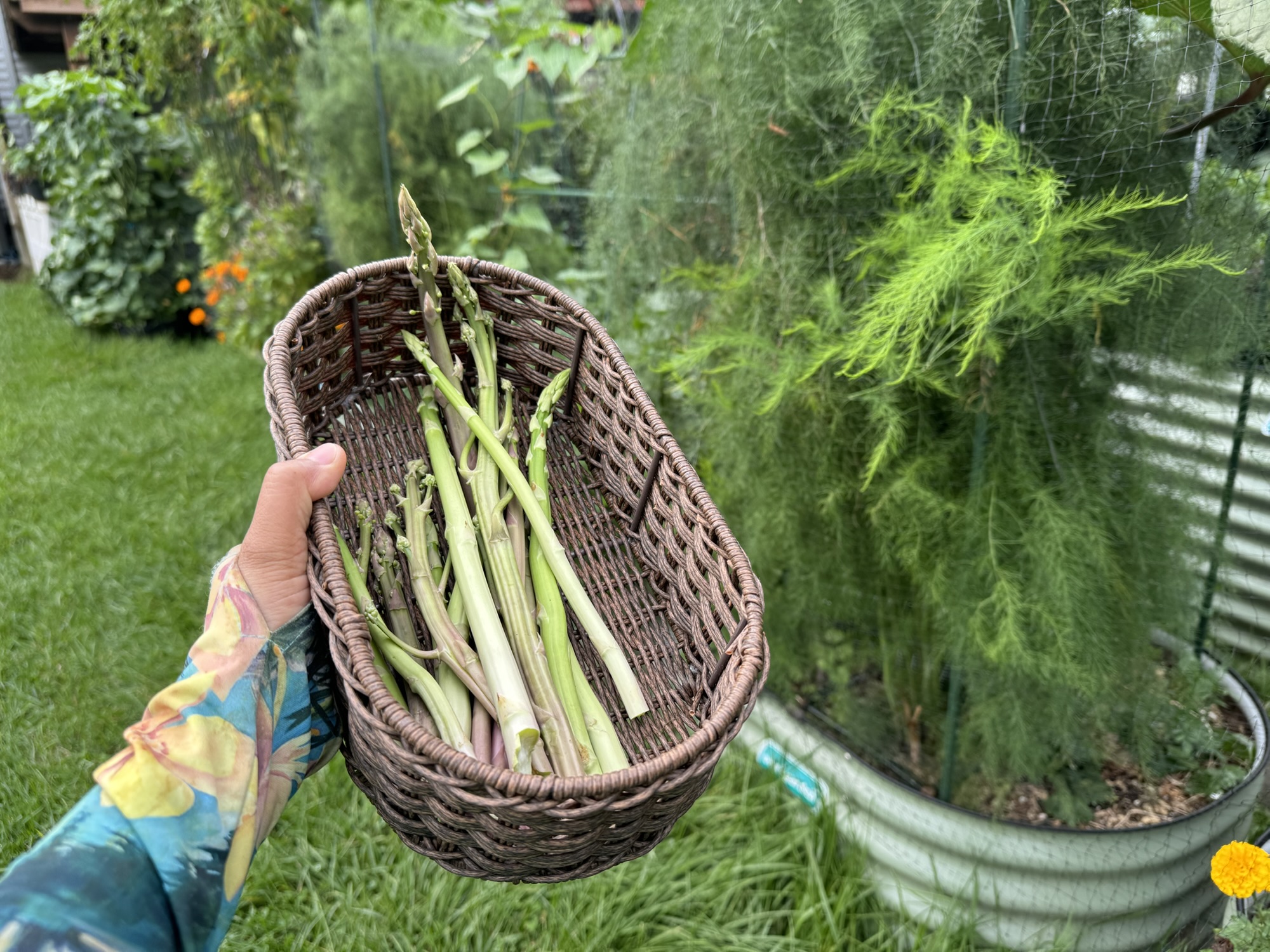
Asparagus is one of the few vegetables that becomes more productive with age. While it requires patience in the beginning, a well-maintained asparagus bed can reward you with delicious spring harvests for 15 to 20 years—or even longer.
Unlike annual vegetables that need to be replanted every year, asparagus is a perennial. Once established, it returns each spring with fresh spears, making it one of the best long-term investments for a home vegetable garden.

In my Maryland Zone 7 garden, asparagus is one of the first vegetables to emerge each spring. Watching those tender green spears push through the soil after winter is always exciting because it signals that a new gardening season has officially begun.
If you’re willing to wait through the establishment period, asparagus is surprisingly easy to grow.
Why Grow Asparagus?
Growing asparagus has many benefits.
You’ll enjoy:
- Fresh harvests every spring
- A perennial crop that returns every year
- Tender spears with excellent flavor
- Lower grocery costs over time
- Very little maintenance once established
- An attractive garden plant with fern-like foliage

Because asparagus lives for many years, choosing the right location from the start is important.
Understanding How Asparagus Grows
Asparagus grows from an underground crown.

Each spring, the crown sends up edible shoots called spears.

If the spears aren’t harvested, they continue growing into tall, fern-like stems.

These ferns aren’t just decorative—they collect sunlight and produce energy that the crown stores for next year’s harvest.
This is why allowing healthy foliage to grow after harvest is so important.
The stronger the fern growth, the stronger next year’s crop will be.
Choosing the Right Variety
Several excellent asparagus varieties are available for home gardens.
Popular choices include:
- Mary Washington
- Purple Passion
- Jersey Knight
- Jersey Giant
- Jersey Supreme
- Millennium
Some varieties produce only male plants, which generally produce larger harvests because they don’t spend energy producing seeds.
Others include both male and female plants.
Choose varieties suited to your climate and growing conditions.
Crowns vs. Seeds
Most gardeners begin with asparagus crowns rather than seeds.
Planting Crowns
Advantages include:
- Faster harvests
- Easier establishment
- More reliable results
Crowns are one-year-old root systems that begin producing much sooner than seed-grown plants.
Growing from Seed
Growing asparagus from seed is possible but requires more patience.

Seed-grown plants often need an additional year before harvesting begins.
I’ve grown Mary Washington asparagus from seeds and Purple Passion from crowns. It was great trying both but growing them from crowns is the fastest turnaround.
When to Plant Asparagus
Plant asparagus crowns while they are dormant.
In Zone 7, this is usually in early spring, before active growth begins.
Plant as soon as the soil can be worked.
Avoid planting into frozen or waterlogged soil.
Choosing the Best Location
Since asparagus remains in the same location for many years, choose your planting site carefully.
Look for:
- Full sun
- Excellent drainage
- Rich soil
- Plenty of space
- A location that won’t be disturbed by future garden changes
Avoid areas where water collects after heavy rain.

In my Maryland garden, I don’t grow a lot of asparagus, but I do have a small patch tucked into the corner of one of my raised beds where it receives full sun.
Since asparagus is a perennial, I’m able to grow other crops around it, including tomatoes, petunias, turmeric, onions, and moringa. I just have to keep in mind that the asparagus ferns can become quite large during the summer, so I plan the surrounding plants carefully and make sure they still have enough room and sunlight.
Preparing the Soil
Asparagus prefers fertile, loose soil rich in organic matter.
Before planting:
- Remove weeds.
- Loosen the soil deeply.
- Mix in generous amounts of compost.
- Remove rocks and large roots.
- Level the planting area.
Because asparagus will remain in place for many years, investing time in soil preparation pays off.
The ideal soil pH is approximately 6.5 to 7.5.
How to Plant Asparagus Crowns
Traditional planting involves shallow trenches.
Dig trenches:
- About 6–8 inches deep
- Approximately 12–18 inches wide
Create a small mound of soil along the bottom.
Spread each crown over the mound with the roots pointing outward.
Space crowns approximately:
- 12–18 inches apart
Cover with a few inches of soil.
As the shoots grow, gradually fill the trench until it reaches ground level.
This gradual filling encourages strong root development.
How Much Sun Does Asparagus Need?
Asparagus grows best in full sun.
Provide at least:
- 6–8 hours of direct sunlight daily
Too much shade leads to:
- Thin spears
- Reduced harvests
- Weak fern growth
Watering Asparagus
Keep newly planted crowns evenly moist during establishment.
Once mature, asparagus becomes fairly drought tolerant.
However, regular watering during dry periods helps produce:
- Thicker spears
- Healthier ferns
- Stronger crowns
Avoid constantly soggy soil.
Fertilizing Asparagus
Feed asparagus annually.
Good options include:
- Compost
- Balanced fertilizer
- Well-rotted manure
Apply fertilizer:
- In early spring before spears emerge
- Again after harvest if needed
Healthy fern growth during summer is essential because it fuels next year’s harvest.
Mulching Asparagus
Mulch offers several benefits.
It helps:
- Suppress weeds
- Hold moisture
- Moderate soil temperature
- Improve soil over time
Good mulch choices include:
- Straw
- Shredded leaves
- Compost
Keep thick mulch away from emerging spears.
Weed Control
Young asparagus does not compete well with weeds.
Remove weeds carefully by hand whenever possible.
Avoid deep cultivation because asparagus roots grow close to the soil surface.
A layer of mulch greatly reduces weed pressure.
When Can You Harvest Asparagus?
Patience is essential.
First Year
Do not harvest.
Allow all spears to develop into ferns.
Second Year
Many gardeners still avoid harvesting or harvest only a few spears very lightly.
Allow most of the plant’s energy to strengthen the crown.
Third Year
A light harvest may begin if the plants are vigorous.
Fourth Year and Beyond
You can usually enjoy a full harvest season from healthy, established plants.
Giving asparagus enough time to establish is one of the best ways to ensure decades of productive harvests.
How to Harvest Asparagus
Harvest spears when they are:
- About 6–8 inches tall
- Firm
- Tightly closed at the tip
Use a sharp knife or snap the spear near ground level.
Continue harvesting until the spears become noticeably thinner than a pencil.
At that point, stop harvesting and allow the remaining spears to become ferns.
Why You Should Stop Harvesting
It can be tempting to harvest every spear that appears.
However, the plant needs time to recharge.
Allowing fern growth helps the crown:
- Store energy
- Build stronger roots
- Produce larger harvests next spring
Caring for Asparagus After Harvest
Once harvesting ends:
- Water during dry periods.
- Fertilize if needed.
- Allow all remaining spears to become ferns.
- Keep the bed weed-free.
Healthy fern growth is the key to future harvests.
Fall Care
Leave the ferns standing until they naturally turn yellow or brown.
Once dormant:
- Cut the ferns to ground level.
- Remove plant debris.
- Apply mulch if desired.
Cleaning the bed helps reduce overwintering pests and diseases.
Common Asparagus Pests
Asparagus Beetles
These are the most common pests.
They feed on:
- Spears
- Ferns
Inspect plants regularly and remove beetles by hand when possible.
Keeping the bed clean during fall also helps reduce populations.
Slugs
Young spears may occasionally be damaged by slugs during wet weather.
Iron phosphate bait and good sanitation may help.
Common Diseases
Possible problems include:
- Crown rot
- Rust
- Fusarium wilt
Reduce disease risk by:
- Choosing healthy crowns
- Providing good drainage
- Avoiding overcrowding
- Removing old fern debris
- Rotating only when establishing new beds
Growing Asparagus in Raised Beds
Raised beds work very well for asparagus.
Advantages include:
- Excellent drainage
- Loose soil
- Easier weed control
- Convenient harvesting
Choose a bed deep enough to support the long-lived root system.
Can You Grow Asparagus in Containers?
While possible, it’s generally not ideal.
Asparagus develops an extensive root system over time.
Large, deep containers are required, and long-term production is usually lower than in the ground or raised beds.
If space allows, permanent garden beds remain the better option.
Can You Grow Asparagus From Store-Bought Spears?
No.
The harvested spears sold in grocery stores won’t produce new plants.
You’ll need crowns or viable seeds to establish an asparagus bed.
Saving Seeds
Female asparagus plants produce red berries that contain seeds.
Seeds can be collected and grown, although they require patience and produce more variable results than purchased crowns.
Most home gardeners prefer dividing or purchasing crowns instead.
My Tips for Growing Asparagus
Growing asparagus has taught me one important lesson: patience pays off.
In my Zone 7 garden, I’ve found that:
- Full sun produces stronger plants.
- Rich soil makes a noticeable difference.
- Regular weeding is important while the bed is young.
- Leaving healthy ferns all summer is essential for future harvests.
- Harvesting lightly during the early years is worth the wait.
Every spring, those first tender spears remind me that good gardening often rewards patience more than speed.
Asparagus Growing Checklist
- Choose a permanent sunny location.
- Plant crowns in early spring.
- Prepare deep, fertile soil.
- Space crowns 12–18 inches apart.
- Water consistently during establishment.
- Weed regularly.
- Mulch to conserve moisture.
- Fertilize annually.
- Harvest lightly during early years.
- Allow ferns to grow after harvest.
- Cut back dead ferns in late fall or winter.
Final Thoughts
Asparagus isn’t the fastest vegetable you’ll ever grow, but it may be one of the most rewarding.
A little patience during the first few years can provide decades of spring harvests with relatively little maintenance.
If you’re planning a long-term vegetable garden, asparagus deserves a place in it.
Plant it once, care for it well, and you’ll look forward to those first fresh spears every spring for many years to come.
Frequently Asked Questions
How long does asparagus take to grow?
Most gardeners begin harvesting lightly in the third year, with full harvests starting around the fourth year after planting crowns.
Can I harvest asparagus the first year?
No. It’s best to allow all spears to grow into ferns during the first year so the crowns become well established.
Does asparagus come back every year?
Yes. Asparagus is a perennial vegetable that returns every spring for many years.
Does asparagus need full sun?
Yes. At least six to eight hours of direct sunlight each day produces the healthiest plants and thickest spears.
Can asparagus survive winter?
Yes. Asparagus is very cold hardy. The above-ground ferns die back in fall, while the underground crowns remain alive and produce new growth the following spring.
How often should I water asparagus?
Keep newly planted crowns consistently moist. Mature plants need supplemental watering during extended dry periods but generally require less frequent watering than many annual vegetables.
Can asparagus grow in raised beds?
Yes. Raised beds provide excellent drainage and loose soil, making them an excellent choice for asparagus.
How long does an asparagus bed last?
With proper care, an asparagus bed can remain productive for 15 to 20 years or more.
Related Articles
- How to Grow Garlic
- How to Grow Onions
- How to Grow Spinach
- How to Grow Lettuce
- How to Prepare Garden Soil
- Best Vegetables for Beginners
- Best Vegetables to Plant in Fall
- What to Plant in Spring
- How to Transition Your Garden from Summer to Fall
- How to Mulch Your Garden Properly
This page contains affiliate links to my brand partners like Vego Garden, GreenStalk, Walmart & Amazon at no extra cost to you.
Your support helps me create free gardening content. Thank you!



Leave a Reply