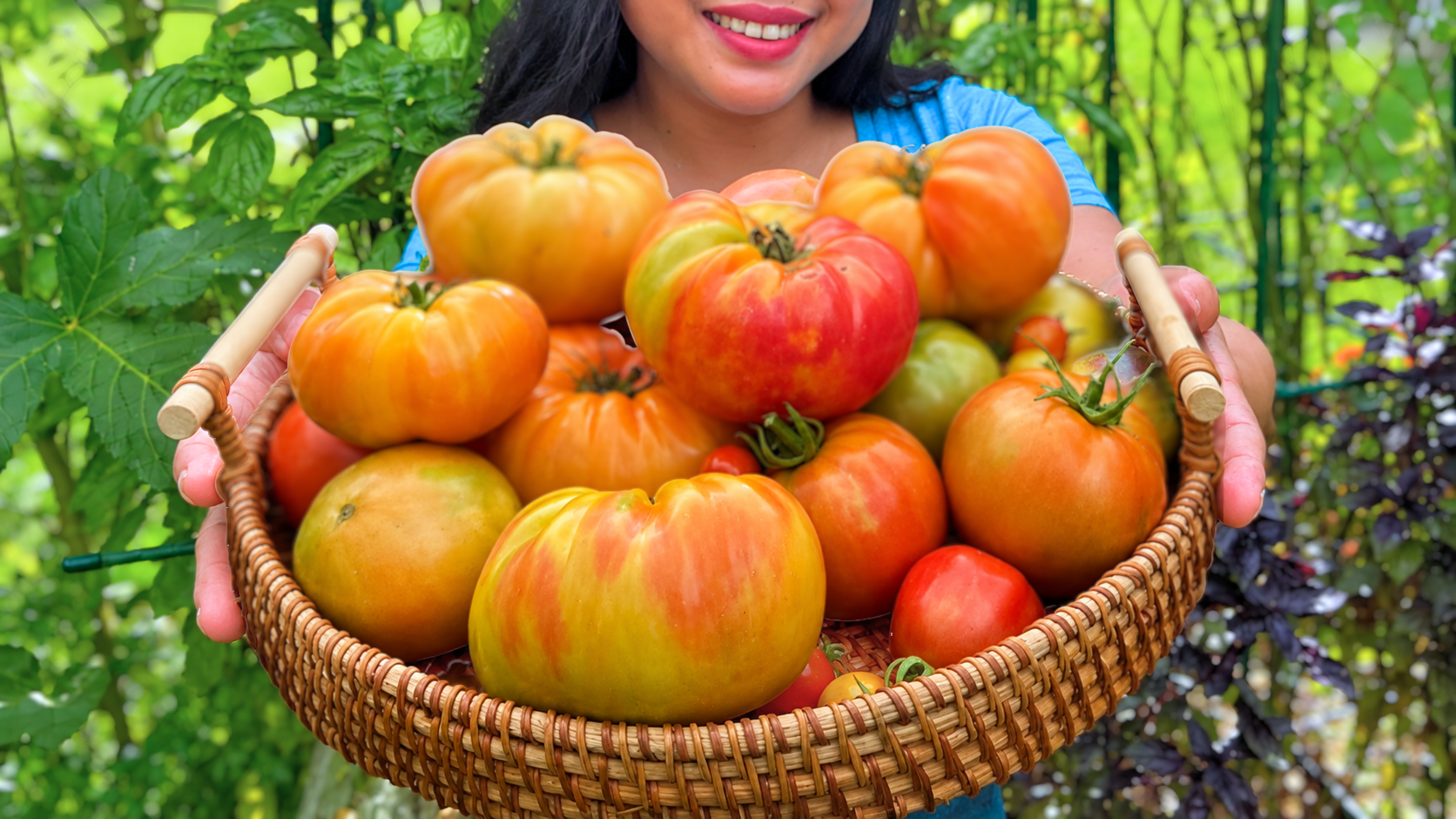
If you love fresh tomatoes but don’t have room for giant vines taking over your garden, dwarf tomatoes might become your new favorite crop.
Dwarf tomatoes produce impressive harvests on compact, sturdy plants that are much easier to manage than traditional indeterminate varieties. They fit beautifully into raised beds, containers, patios, and small backyards while still producing delicious, full-sized tomatoes.

In my Maryland Zone 7 garden, dwarf tomatoes have become some of my favorite varieties to grow. Since my garden is relatively small, they allow me to enjoy several different tomato varieties without sacrificing valuable growing space.
Here’s everything you need to know about growing dwarf tomatoes.
Why Grow Dwarf Tomatoes?
Dwarf tomatoes are an excellent choice because they:
- Produce large, flavorful tomatoes on compact plants
- Fit well in small gardens
- Grow beautifully in raised beds
- Thrive in large containers
- Are easier to support than large indeterminate vines
- Require less pruning
- Make harvesting easier
They offer many of the benefits of traditional tomatoes while using much less space.
What Are Dwarf Tomatoes?
Dwarf tomatoes are not simply small tomatoes.
Instead, they are compact tomato plants that produce fruit ranging from cherry-sized tomatoes to large beefsteak-type tomatoes.

Most dwarf tomatoes:
- Grow about 3 to 5 feet tall
- Have thick, sturdy stems
- Produce shorter internodes
- Continue producing throughout much of the growing season
They stay compact without sacrificing fruit quality.
My Favorite Dwarf Tomato Varieties
I’ve grown several dwarf varieties that have performed exceptionally well in my Maryland garden.

Some of my favorites include:
- Choemato – my personal favorite for outstanding flavor.
- Dwarf Awesome – productive with beautiful, flavorful fruit.
- Tasty Wine – excellent taste and reliable harvests.
Growing several varieties lets me enjoy different colors, flavors, and uses throughout the season.
When to Plant Dwarf Tomatoes
Like all tomatoes, dwarf tomatoes are warm-season plants.
Plant outdoors only after:
- All danger of frost has passed.
- Soil has warmed.
- Nighttime temperatures remain consistently above 50°F (10°C).
In Zone 7 Maryland, this is typically after the average last spring frost.
Starting Seeds Indoors
Start seeds indoors about 6 to 8 weeks before your last expected frost.
To grow healthy seedlings:
- Fill trays with seed-starting mix.
- Sow seeds about ¼ inch deep.
- Keep the soil warm and evenly moist.
- Provide bright grow lights or a sunny window.
- Pot up seedlings as they outgrow their cells.
Harden seedlings off for 7 to 10 days before transplanting outdoors.
How Much Sun Do Dwarf Tomatoes Need?
When it comes to what dwarf tmatoes need including sunlight, they are no different from the large size indeterminate tomatoes. They need 6 to 8 hours or more of direct sunlight daily.
More sunlight encourages:
- Strong growth
- Better flowering
- Sweeter fruit
- Higher yields
Choose the sunniest location available.
The Best Soil
Healthy tomatoes begin with healthy soil.
Dwarf tomatoes prefer soil that is:
- Rich in organic matter
- Well-draining
- Fertile
- Slightly acidic
Before planting:
- Mix in compost.
- Loosen the soil.
- Remove weeds.
Healthy soil supports healthy roots.
Growing in Raised Beds
Raised beds are one of my favorite places to grow dwarf tomatoes because they provide:
- Excellent drainage
- Loose soil
- Easier maintenance
- Better soil quality
Their compact size makes it easy to grow several varieties together.
Growing in Containers
Dwarf tomatoes perform exceptionally well in containers.
Choose:
- A container holding 10 to 15 gallons for most varieties
- High-quality potting mix
- Good drainage
Larger containers help keep the soil evenly moist during hot summer weather.

I’ve also successfully grown them in 20 gallon grow bags. The air pruning features of fabric grow bags very helpful for the roots. They have the tendency to dry out but keeping them close together helped reduce drying out and also mulching keep the moisture longer.
Plant Deeply
When transplanting:
- Remove the lower leaves.
- Bury part of the stem.
Tomatoes naturally develop roots along buried stems, creating stronger plants.
Proper Spacing
One advantage of dwarf tomatoes is that they require less space.
I generally space mine about 18 to 24 inches apart, which provides excellent airflow while allowing me to fit more varieties into my raised beds.
Do Dwarf Tomatoes Need Support?
Yes.
Although they’re sturdier than many indeterminate tomatoes, dwarf tomatoes still benefit from support as fruit begins to develop.
Good options include:
- Tomato cages
- Stakes
- Small trellises
- Tomato ladders

Supporting the plants keeps fruit cleaner and reduces broken branches.
Watering
Water deeply whenever the soil begins to dry.
Consistent watering helps prevent:
- Blossom-end rot
- Fruit cracking
- Plant stress
Avoid frequent shallow watering.
Mulching
Mulch helps:
- Conserve moisture
- Suppress weeds
- Keep soil cooler
- Reduce soil splashing onto leaves
Straw, shredded leaves, and compost all make excellent organic mulches.
Fertilizing
Dwarf tomatoes are productive plants and appreciate fertile soil.
Before planting:
- Add compost.
- Incorporate a balanced fertilizer if needed.
Continue feeding according to the fertilizer label once flowering and fruit production begin.
Avoid excessive nitrogen, which encourages leaves instead of fruit.
Pruning
Unlike many indeterminate tomatoes, dwarf tomatoes usually require only minimal pruning.
Remove:
- Dead leaves
- Yellow leaves
- Diseased foliage
- Leaves touching the soil
Many gardeners, including me, leave most suckers on dwarf varieties because the plants are naturally compact.
Common Problems
Blossom-End Rot
Usually caused by inconsistent watering.
Maintain even soil moisture throughout the season.
Fruit Cracking
Often caused by sudden heavy watering after dry weather.
Yellow Leaves
Possible causes include:
- Aging foliage
- Nutrient deficiencies
- Overwatering
- Disease
Common Pests
Watch for:
- Tomato hornworms
- Aphids
- Whiteflies
- Flea beetles
- Stink bugs
Inspect plants regularly to catch problems early.
Common Diseases
Possible diseases include:
- Early blight
- Septoria leaf spot
- Fusarium wilt
- Verticillium wilt
Good airflow, crop rotation, and watering at the base of the plant help reduce disease problems.
When to Harvest Dwarf Tomatoes
Harvest when the fruit:
- Has developed its full mature color
- Feels slightly firm
- Comes away easily from the vine
Frequent harvesting encourages continued production.
Storing Tomatoes
For the best flavor:
- Store tomatoes at room temperature.
- Keep them out of direct sunlight.
- Refrigerate only if absolutely necessary.
My Experience Growing Dwarf Tomatoes
Dwarf tomatoes have completely changed how I grow tomatoes in my small backyard.
Instead of planting only a few sprawling indeterminate vines, I can grow several unique varieties without overcrowding my raised beds.
Some of my favorites include Choemato, Dwarf Awesome, and Tasty Wine, which have consistently produced outstanding flavor in my Maryland garden. Their manageable size also makes watering, pruning, and harvesting much easier throughout the season.
Dwarf Tomato Growing Checklist
- Choose a dwarf variety suited to your space.
- Start seeds indoors 6–8 weeks before your last frost.
- Plant in full sun.
- Improve the soil with compost.
- Plant deeply.
- Support the plants with cages or stakes.
- Water consistently.
- Mulch around plants.
- Fertilize throughout the growing season.
- Harvest regularly.
Final Thoughts
Dwarf tomatoes prove that you don’t need towering vines to enjoy an incredible tomato harvest.
Their compact size, excellent productivity, and outstanding flavor make them one of the best choices for raised beds, containers, and small gardens.
If you’re looking to grow more varieties in less space, dwarf tomatoes are well worth adding to your garden.
Frequently Asked Questions
Are dwarf tomatoes determinate or indeterminate?
Many dwarf tomatoes have an indeterminate growth habit but remain naturally compact. Always check the description of your specific variety.
Can dwarf tomatoes grow in containers?
Yes. Dwarf tomatoes are among the best tomatoes for container gardening, especially in 10- to 15-gallon containers.
Do dwarf tomatoes need cages?
Yes. While they’re sturdier than traditional tomatoes, cages or stakes help support the weight of the fruit.
How tall do dwarf tomato plants get?
Most dwarf tomatoes grow between 3 and 5 feet tall, depending on the variety.
Should I prune dwarf tomatoes?
Usually only lightly. Remove damaged or diseased foliage and leaves touching the soil, but heavy pruning is often unnecessary.
Are dwarf tomatoes good for beginners?
Absolutely. Their manageable size and excellent productivity make them a great option for beginner gardeners.
Related Articles
- How to Grow Micro Tomatoes
- The Best Tomatoes for Small Gardens
- Why Dwarf Tomatoes Are Perfect for Small Spaces
- When to Harvest Tomatoes
- How to Prevent Blossom-End Rot
- Container Gardening for Beginners
- Vertical Gardening in Small Spaces
- How to Build Healthy Garden Soil from the Start
- Best Vegetables for Beginners
- Gardening for Beginners: Everything You Need to Know to Get Started
This page contains affiliate links to my brand partners like Vego Garden, GreenStalk, Walmart & Amazon at no extra cost to you.
Your support helps me create free gardening content. Thank you!



Leave a Reply