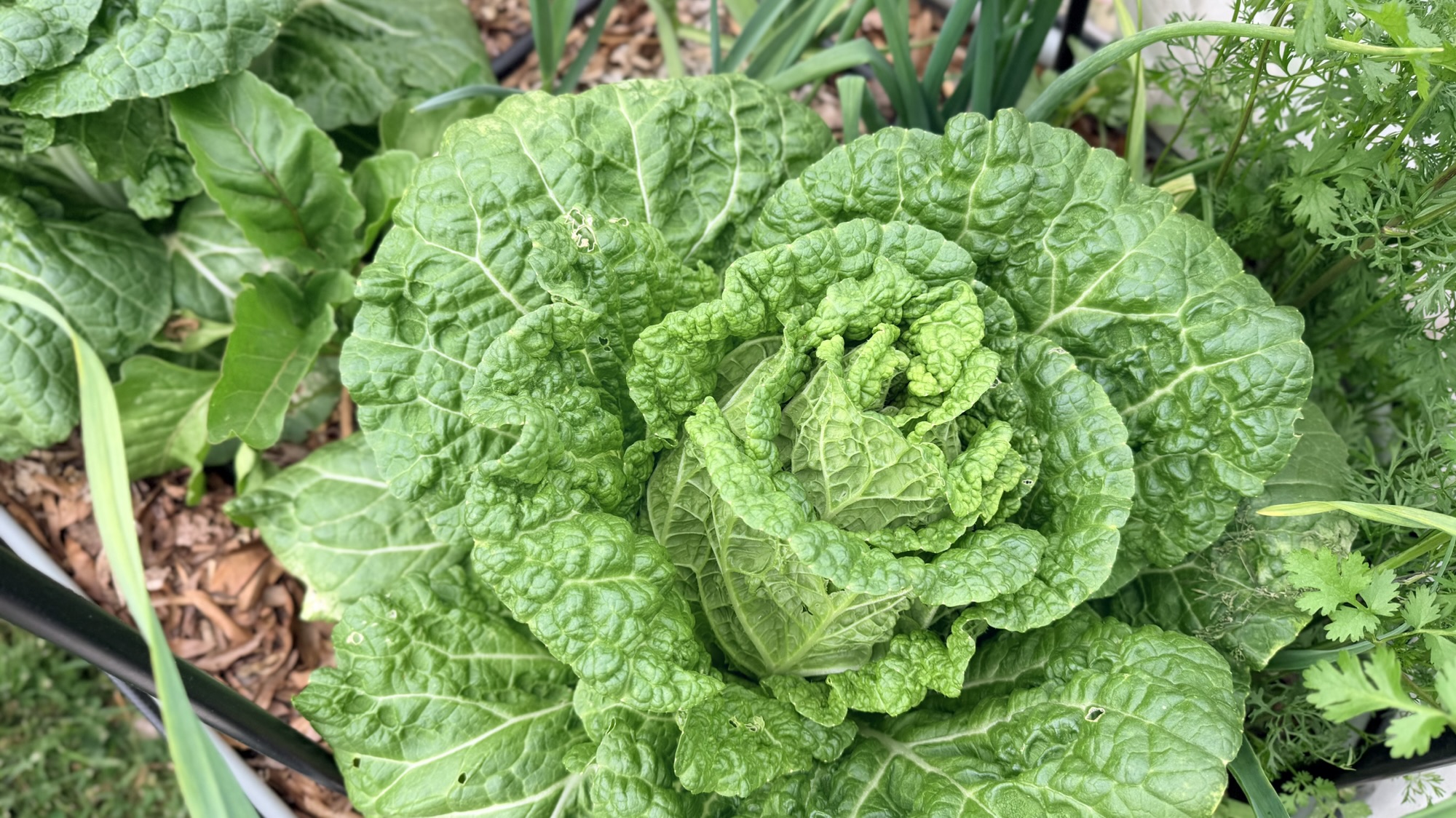
Napa cabbage is one of my favorite cool-season vegetables to grow and eat.
In the Philippines, Napa cabbage is commonly called Pechay Baguio. The name refers to Baguio City, a place recognized as one of the coldest major cities in the Philippines. That cooler climate helps explain why Napa cabbage grows especially well there.
Napa cabbage is also a very familiar taste to me, which is one of the reasons I love growing it in my garden. The tender leaves are mild, crisp, and incredibly versatile in the kitchen. I can use them in stir-fries, soups, dumplings, or fresh dishes, and of course Napa cabbage is one of the vegetables most people immediately associate with kimchi.
It is also one of those crops that reminds me just how important timing is in gardening.
Napa cabbage loves cool weather, but it doesn’t always appreciate the unpredictable temperature swings we can experience in Maryland. Plant it too late in spring and summer heat may cause it to bolt. Start it too early and a period of cold followed by warmer temperatures may also trigger premature flowering.
I’ve had especially good experiences growing compact varieties such as Little Jade, which has become one of my favorites for a small-space garden.
If you want to grow crisp, beautiful heads of Napa cabbage at home, here’s everything you need to know.
What Is Napa Cabbage?
Napa cabbage (Brassica rapa subsp. pekinensis) is a cool-season leafy vegetable in the brassica family.
It is related to:
- Bok choy
- Turnips
- Mustard greens
- Mizuna
It produces elongated heads made of pale, thick midribs surrounded by tender green leaves.
Unlike the dense, round heads of traditional European cabbage, Napa cabbage is usually:
- Longer
- More tender
- Mild flavored
- Quicker to cook
You may also see it called:
- Chinese cabbage
- Chinese leaf
- Celery cabbage
- Pechay Baguio
Why Grow Napa Cabbage?
Napa cabbage deserves a place in a cool-season garden because it:
- Grows relatively quickly
- Produces substantial harvests from a small footprint
- Works well in raised beds
- Can grow in containers
- Thrives during spring and fall
- Has tender, versatile leaves
- Offers a familiar flavor for many Filipino gardeners
- Can be harvested young or allowed to form full heads
Compact varieties are especially useful for gardeners who want to maximize limited growing space.
My Favorite Napa Cabbage: Little Jade
Little Jade has become one of my favorite Napa cabbage varieties.
It produces smaller, more compact heads than many traditional Napa cabbages, making it a particularly good fit for my small Maryland garden.
Compact varieties offer several advantages:
- Closer spacing
- Faster maturity
- Smaller individual heads
- Easier use in the kitchen
- Better fit for raised beds and containers
If you have limited space or don’t need enormous heads of cabbage, miniature Napa varieties are worth considering.
Napa Cabbage Is a Cool-Season Crop
Napa cabbage grows best when temperatures are cool but not severely cold.
Its ideal seasons are generally:
- Spring
- Fall
It does not enjoy prolonged summer heat.
Hot weather can cause:
- Bolting
- Loose heads
- Bitter flavor
- Increased pest pressure
This makes timing one of the most important parts of growing Napa cabbage successfully.
When to Plant Napa Cabbage
For spring harvests, start seeds indoors several weeks before your average last frost and transplant once conditions are appropriate.
For fall harvests, start seeds during summer so plants mature as temperatures cool.
In my Zone 7 Maryland garden, I particularly like Napa cabbage as a fall crop.
Fall offers several advantages:
- Temperatures are moving cooler rather than hotter.
- Mature plants tolerate cool conditions well.
- Pest pressure may eventually decline.
- Cabbage quality can be excellent.
The biggest challenge is getting those fall seedlings established while summer is still hot.
When to Start Spring Napa Cabbage
For a spring crop, start Napa cabbage seeds indoors approximately 4 to 6 weeks before your average last frost date. This gives seedlings enough time to develop before transplanting while helping you avoid exposing very young plants to prolonged cold.
Transplant seedlings outdoors when they have several true leaves and daytime temperatures are beginning to moderate. Ideally, nighttime temperatures should remain above freezing, and the forecast should not include an extended period of unusually cold weather.
You can also direct sow Napa cabbage in the garden approximately 2 to 4 weeks before your average last frost date, depending on your local conditions and the variety you are growing. Use row cover or frost cloth if a hard freeze is expected.
For spring planting:
- Start seeds indoors 4 to 6 weeks before the last frost.
- Harden seedlings gradually before transplanting.
- Avoid planting too early during a prolonged cold spell.
- Provide afternoon shade if temperatures rise quickly.
- Harvest promptly as summer heat approaches.
In Zone 7 Maryland, spring timing can be unpredictable. I prefer to watch the extended forecast and soil conditions rather than relying only on the calendar. The goal is to give Napa cabbage enough cool weather to form heads without allowing young plants to experience the cold-then-warm temperature swings that can trigger bolting.
Why Napa Cabbage Can Be Tricky in Spring
Napa cabbage has an unusual problem.
Exposure to prolonged cold while plants are young, followed by warmer temperatures, may encourage the plants to bolt rather than form heads.
That means planting extremely early isn’t always better.
If seedlings experience a significant cold spell after transplanting, they may decide they’ve already gone through winter and begin flowering once temperatures warm.
This is why I watch the forecast rather than relying only on a planting calendar.
Starting Napa Cabbage From Seed
Napa cabbage is easy to start from seed.
Step 1: Fill Seed Trays
Use a fine, high-quality seed-starting mix.
Step 2: Sow the Seeds
Plant seeds approximately:
¼ to ½ inch deep.
Step 3: Keep the Mix Moist
Keep the growing medium evenly moist but not saturated.
Step 4: Provide Strong Light
Once seedlings emerge, place them under strong grow lights.
Insufficient light can cause:
- Leggy seedlings
- Weak stems
- Poor transplant quality
When to Start Fall Napa Cabbage
Fall gardening requires thinking backward.
You need enough time for the plants to:
- Germinate.
- Grow into transplants.
- Establish outdoors.
- Form heads before severe winter weather.
In Zone 7, this often means starting Napa cabbage sometime during mid- to late summer, depending on the variety’s days to maturity.
Compact, fast-growing varieties such as Little Jade can make fall timing easier.
Keeping Fall Seedlings Alive During Summer
This may be one of the hardest parts of growing a fall brassica crop.
Napa cabbage prefers cool weather, but fall seedlings often have to begin life during July or August heat.
I protect young seedlings by:
- Providing shade during extreme afternoon heat
- Keeping the seed-starting mix consistently moist
- Avoiding hot surfaces
- Using shade cloth when necessary
- Gradually hardening seedlings before transplanting
The goal is simply getting them through summer until the weather begins working in their favor.
Hardening Off Napa Cabbage Seedlings
Before transplanting seedlings into the garden, gradually expose them to outdoor conditions.
Over approximately one week, introduce:
- Outdoor temperatures
- Sunlight
- Wind
Begin with sheltered conditions and gradually increase their exposure.
Even cool-season vegetables can suffer sunburn if seedlings grown indoors are suddenly placed in full sun.
How Much Sun Does Napa Cabbage Need?
Napa cabbage grows best with approximately:
6 or more hours of direct sunlight per day.
During fall, I give it as much sunlight as possible because daylight hours become shorter as the season progresses.
Spring crops can tolerate some afternoon shade as temperatures begin warming.
In warmer areas, including lower-elevation parts of the Philippines, afternoon shade can help protect Napa cabbage from excessive heat and reduce the risk of bolting.
The Best Soil for Napa Cabbage
Napa cabbage is a fairly hungry vegetable.
It performs best in soil that is:
- Fertile
- Loose
- Well-draining
- Rich in organic matter
- Consistently moist
Before planting, I like to add finished compost to the bed.
Healthy soil supports the rapid leafy growth needed to form a full head.
Soil pH
Napa cabbage generally performs well in slightly acidic to neutral soil, around:
pH 6.0 to 7.5.
If you’ve struggled repeatedly with brassica growth, a soil test can help determine whether pH or nutrient deficiencies are contributing.
Spacing Napa Cabbage
Spacing depends on the mature size of the variety.
Full-size Napa cabbage generally needs approximately:
12 to 18 inches between plants.
Compact varieties may be planted somewhat closer according to the seed packet instructions.
Don’t overcrowd them simply because the transplants look small.
Those tiny seedlings need enough room to eventually develop heads.
Growing Napa Cabbage in Raised Beds
Raised beds are an excellent place to grow Napa cabbage.
They offer:
- Loose soil
- Good drainage
- Easy pest protection
- Convenient harvesting
- Easy installation of insect netting and frost covers
I especially appreciate being able to place a cover system over an entire bed of brassicas.
Growing Napa Cabbage in Containers
Napa cabbage can also grow in containers.
Compact varieties are especially well suited.
Choose a container with:
- Good drainage
- Quality potting mix
- Enough room for the mature head
- Consistent access to water
For a compact variety, one plant per appropriately sized container can produce a beautiful harvest.
Because containers dry faster than raised beds, moisture needs closer attention.
Watering Napa Cabbage
Consistent moisture is extremely important.
Irregular watering can contribute to:
- Poor growth
- Small heads
- Tough leaves
- Plant stress
Water deeply whenever the upper soil begins drying.
The goal is evenly moist soil without waterlogged roots.
Mulching
Mulch helps keep conditions more stable.
Use organic materials such as:
- Shredded leaves
- Straw
- Other clean garden mulch
Mulch helps:
- Retain moisture
- Suppress weeds
- Reduce soil temperature fluctuations
- Prevent soil from splashing onto leaves
Fertilizing Napa Cabbage
Napa cabbage needs enough nitrogen to develop all that leafy growth.
Start with:
- Compost
- Fertile soil
Then supplement with an appropriate balanced or nitrogen-containing fertilizer if necessary.
I’ve also used gentle liquid feeds such as fish emulsion for leafy crops.
Always follow the product instructions.
More fertilizer isn’t automatically better.
Why Isn’t My Napa Cabbage Forming a Head?
Several things can interfere with heading.
Possible causes include:
- Temperatures that are too hot
- Bolting
- Insufficient fertility
- Inconsistent watering
- Overcrowding
- Planting too late
- Severe pest damage
Some plants simply remain as loose leaves when growing conditions are poor.
Those leaves are still edible even if the plant never forms a perfect head.
Do You Need to Tie Napa Cabbage Leaves?
No.
A healthy heading variety should naturally form its own head under good growing conditions.
Tying outer leaves together does not fix the underlying causes of poor heading.
Focus instead on:
- Proper timing
- Spacing
- Moisture
- Fertility
- Pest control
Napa Cabbage Pests
Unfortunately, Napa cabbage is very popular with pests.
Common problems include:
- Imported cabbageworms
- Cabbage loopers
- Diamondback moth larvae
- Flea beetles
- Aphids
- Slugs
Without protection, tender leaves can become badly damaged.
Insect Netting Is One of My Favorite Solutions
I rely heavily on insect netting for brassicas.
Instead of repeatedly treating caterpillars after they appear, I prefer preventing cabbage moths and butterflies from laying eggs on the plants in the first place.
Install netting:
- Immediately after transplanting
- Before pest pressure begins
- With all edges securely closed
Check carefully before covering.
You do not want to trap pests underneath the netting with your cabbage.
Do You Need to Remove Netting for Pollination?
No—not when growing Napa cabbage for heads and leaves.
Unlike cucumbers, squash, and melons, Napa cabbage doesn’t need insect pollination to produce the portion you’re harvesting.
This means it can remain protected under insect netting for much of the season.
That’s one reason netting is so useful for brassicas.
Watch for Flea Beetles
Flea beetles can create numerous tiny holes in young Napa cabbage leaves.
Seedlings are particularly vulnerable.
An established plant may tolerate moderate damage, but a tiny transplant can be severely stressed.
Early protection is much easier than trying to repair badly damaged seedlings.
Slug Damage
Slugs love cool, moist growing conditions—the exact conditions Napa cabbage enjoys.
They may hide:
- Beneath mulch
- Between lower leaves
- Around the base of plants
Inspect plants during damp weather and remove hiding places around heavily affected crops.
Common Diseases
Potential diseases include:
- Black rot
- Clubroot
- Downy mildew
- Alternaria leaf spot
Good prevention includes:
- Crop rotation
- Proper spacing
- Watering near soil level
- Removing badly infected plants
- Keeping garden tools clean
Avoid planting brassicas in the same location continuously if disease has become a recurring problem.
Can Napa Cabbage Handle Frost?
Established Napa cabbage can tolerate light frost.
Cool weather can even improve the quality of many brassicas.
However, severe freezes can damage heads.
Use frost cloth or row covers if unusually cold weather arrives before you’re ready to harvest.
Using Frost Protection in Fall
One of the advantages of growing in fall is that season extension becomes easier.
I can cover my raised beds with:
- Frost cloth
- Greenhouse-style covers
- Other lightweight protection
This can give Napa cabbage additional time to finish developing even when nighttime temperatures begin dropping.
When to Harvest Napa Cabbage
Harvest timing depends on whether you want baby leaves or mature heads.
Baby Napa Cabbage
Young plants can be harvested early for tender leaves.
Mature Heads
A mature head should feel:
- Firm
- Dense
- Well-filled
Gently squeeze the upper portion.
If it still feels very loose, it may benefit from additional growing time.
How Long Does Napa Cabbage Take to Grow?
Many varieties mature in approximately:
50 to 80 days, depending on the cultivar and whether the maturity period is calculated from sowing or transplanting.
Compact varieties may mature particularly quickly.
Always check your specific seed packet.
How to Harvest Napa Cabbage
Use a clean, sharp knife.
Cut the head near soil level while holding it firmly with your other hand.
Remove damaged outer leaves.
You can also leave the roots and base in the ground temporarily. Occasionally small secondary leaves may develop, although they won’t usually form another full-sized head.
What if the Head Is Small?
Harvest it anyway!
This is something gardening has taught me again and again.
Not every cabbage needs to become grocery-store sized to be worth growing.
A smaller homegrown Napa cabbage is still:
- Fresh
- Edible
- Useful
- Something you grew yourself
Weather, pests, timing, and spacing can all influence final size.
How to Store Napa Cabbage
After harvesting:
- Remove damaged outer leaves.
- Keep the head unwashed until you’re ready to use it.
- Refrigerate in a loose or perforated bag.
Napa cabbage generally stores well in the refrigerator for several weeks when kept cool and protected from drying.
For longer preservation, fermentation is one of its most famous uses.
Can You Regrow Napa Cabbage From Kitchen Scraps?
The cut base can sometimes produce new leafy growth when placed in water or moist soil.
However, don’t expect it to produce another full-sized head.
It’s more of a fun experiment than a reliable method for producing a second cabbage crop.
For a real harvest, start new plants from seed or transplants.
Succession Planting Napa Cabbage
If your growing season allows, you can stagger plantings instead of transplanting everything on one day.
This may provide:
- Smaller harvests over a longer period
- Less risk from one unusual weather event
- More manageable amounts for the kitchen
For fall gardening, however, later succession plantings must still have enough time to mature before severe winter weather.
Growing Napa Cabbage in Maryland
Maryland’s climate makes Napa cabbage both rewarding and challenging.
Spring temperatures can change rapidly, while fall usually provides a longer period of increasingly cool weather.
That’s why I especially like fall Napa cabbage.
My general Zone 7 approach is:
- Start seeds during summer.
- Protect seedlings from extreme heat.
- Transplant once conditions begin moderating.
- Cover immediately with insect netting.
- Keep soil consistently moist.
- Feed as necessary.
- Add frost protection later in the season.
- Harvest when heads become firm.
The transition from summer heat to fall coolness is the trickiest part.
Once the plants become established and temperatures cooperate, Napa cabbage can grow beautifully.
My Experience Growing Napa Cabbage
Napa cabbage has taught me a lot about growing brassicas in an unpredictable climate.
I’ve learned that protecting the leaves from pests is only one piece of the puzzle.
You can keep cabbage worms away with insect netting, but the plant still needs the right:
- Temperature
- Water
- Soil
- Timing
One of my favorite varieties has been Little Jade.
Its compact size makes it a wonderful fit for my small garden, and I appreciate that I can harvest a useful head without dedicating a huge amount of raised-bed space to one plant.
Napa cabbage is also a very familiar taste to me. In the Philippines, I know it as Pechay Baguio, and that familiarity is one of the reasons I love growing it in my garden. Harvesting it at home brings back the flavors I know while allowing me to enjoy a fresh crop from my own backyard.
I’ve also learned not to judge the success of a crop entirely by size.
A smaller head harvested from my backyard still becomes food for our table.
And that’s ultimately why I’m growing it.
Napa Cabbage Growing Checklist
- Choose a variety suited to your season and space.
- Start seeds indoors or direct sow at the appropriate time.
- Avoid prolonged cold exposure when plants are young.
- Give plants at least 6 hours of sunlight.
- Add compost before planting.
- Space according to mature size.
- Maintain consistent moisture.
- Feed leafy growth as needed.
- Install insect netting early.
- Check regularly for slugs and flea beetles.
- Protect fall plants from severe freezes.
- In warm climates, grow during the coolest season and provide afternoon shade when needed.
- Harvest when heads feel firm.
- Don’t worry if a smaller head is still healthy and usable.
Final Thoughts
Napa cabbage can be a little more particular than some beginner vegetables, but it is well worth learning how to grow.
The key is matching the crop to the season.
Give it cool weather, fertile soil, consistent moisture, enough room to form a head, and protection from hungry brassica pests.
In Maryland, I especially appreciate growing it in the Spring and in the fall as long as you timed it correctly.
For me, Napa cabbage is more than just another vegetable. Its flavor is familiar, comforting, and connected to the food I grew up eating. That familiarity is one of the reasons I love growing it in my garden.
And for a small-space gardener, varieties like Little Jade make it possible to enjoy beautiful homegrown Napa cabbage without giving one plant an enormous section of the garden.
Even if every head isn’t perfect, there’s something incredibly satisfying about cutting into a crisp cabbage that came straight from your own backyard.
Frequently Asked Questions
Is Napa cabbage the same as Pechay Baguio?
Yes. In the Philippines, Napa cabbage is commonly called Pechay Baguio. The name is associated with Baguio City, one of the country’s coldest major cities and a place where Napa cabbage grows well because of the cooler climate.
Is Napa cabbage easy to grow?
Napa cabbage is moderately easy once you get the timing right. Temperature swings, bolting, and cabbage pests are the biggest challenges.
When should I plant Napa cabbage?
Grow Napa cabbage during cool spring or fall weather. In Zone 7, fall is often an excellent season because temperatures become progressively cooler as the plants mature. In the Philippines, grow it during the coolest part of the year, especially in warmer areas.
How long does Napa cabbage take to grow?
Many varieties mature in approximately 50 to 80 days, although timing depends on the cultivar and growing conditions.
Does Napa cabbage need full sun?
Give it at least 6 hours of direct sunlight when possible. Some afternoon shade may help spring crops as temperatures warm. In hot climates, afternoon shade can help prevent heat stress and bolting.
Can Napa cabbage grow in containers?
Yes. Compact varieties such as Little Jade are particularly well suited to generously sized containers with good drainage.
Why isn’t my Napa cabbage forming a head?
Heat, bolting, poor fertility, overcrowding, inconsistent watering, or pest damage can prevent proper head formation.
Why did my Napa cabbage bolt?
Bolting may be triggered by hot weather or by young plants experiencing prolonged cold followed by warmer temperatures.
Should I tie Napa cabbage leaves together?
No. A healthy heading variety should form a head naturally when growing conditions are appropriate.
How do I keep cabbage worms off Napa cabbage?
Cover plants with fine insect netting before cabbage moths and butterflies can lay eggs on the leaves. Secure all edges carefully.
Does Napa cabbage need pollination?
Not when you’re growing it for leaves or heads. This means plants can remain underneath insect netting without needing pollinator access.
Can Napa cabbage survive frost?
Established plants tolerate light frost, but harder freezes may damage mature heads. Frost cloth or other row covers can extend the harvest season.
Related Articles
- How to Grow Bok Choy
- How to Grow Cabbage
- How to Grow Broccoli
- How to Grow Cauliflower
- How to Protect Plants With Insect Netting
- How to Keep Fall Seedlings Alive During Summer Heat
- Best Vegetables to Plant in Fall
- How to Prepare Garden Beds for Fall Planting
- What to Plant in August (Zone 7 Guide)
- Vegetable Gardening in Maryland
- Understanding Frost Dates



Leave a Reply