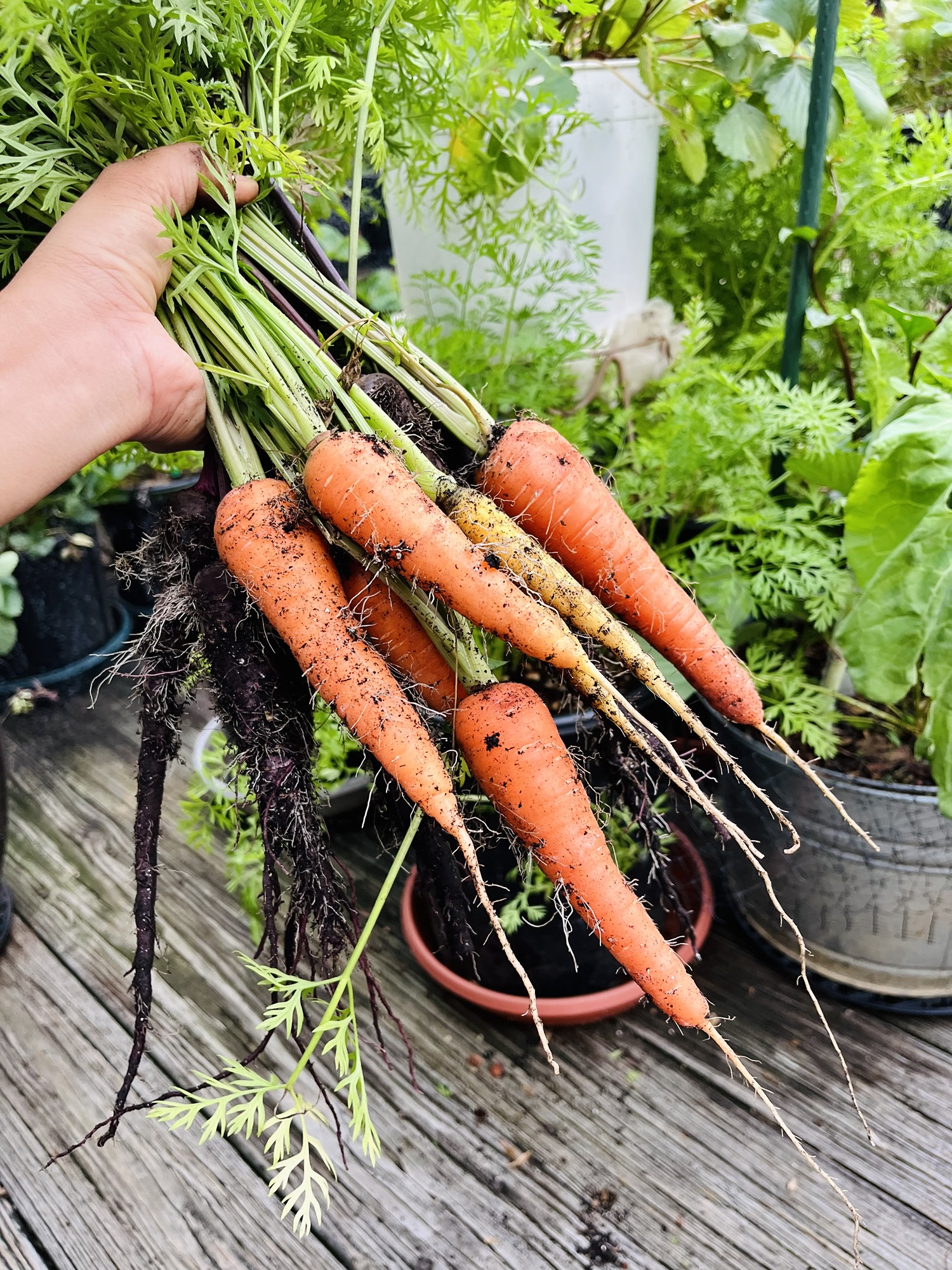
There’s something incredibly satisfying about pulling a carrot from the ground.
Unlike tomatoes or peppers, carrots stay hidden beneath the soil until harvest day. You never quite know how large they’ll be until you gently pull them from the earth.
Homegrown carrots are often sweeter, crisper, and more flavorful than store-bought ones. They’re also surprisingly easy to grow once you understand what they need.

In my Maryland Zone 7 garden, carrots are one of my favorite cool-season crops. They thrive in the cooler temperatures of spring and fall, and raised beds have made it much easier for me to grow straight, healthy roots.
Here’s everything you need to know about growing carrots successfully.
Why Grow Carrots?
Carrots are a wonderful crop because they:
- Grow well in small gardens
- Thrive in raised beds and containers like buckets
- Store well after harvest
- Can be planted in both spring and fall
- Come in many colors and shapes
- Taste sweeter after cool weather
- Are beginner-friendly with the right soil
Once you grow your own carrots, you’ll quickly notice the difference in flavor.
Choosing the Right Variety
Carrots come in many shapes, sizes, and colors.
Some popular types include:
Nantes
- Sweet flavor
- Straight roots
- Excellent for beginners
Danvers
- Handles heavier soils better
- Strong, tapered roots
Imperator
- Long, slender carrots
- Common in grocery stores
- Best suited to deep, loose soil
Chantenay
- Short, broad roots
- Excellent for shallow or heavier soils
Choose a variety that matches your soil depth and growing conditions.


When to Plant Carrots
Carrots prefer cool weather.
Plant them:
- In early spring as soon as the soil can be worked.
- Again in late summer for a fall harvest.
Fall-grown carrots are often especially sweet because cool temperatures encourage the roots to convert starches into sugars.
Direct Sow Only
Carrots should always be direct sown.
Unlike many vegetables, they do not transplant well.
Any disturbance to the developing taproot can cause:
- Forked roots
- Twisted carrots
- Misshapen growth
Sow seeds exactly where you want them to grow.
How Much Sun Do Carrots Need?
Carrots grow best with:
6 to 8 hours of direct sunlight daily.
They’ll tolerate some light shade, especially during warmer weather, but full sun generally produces the best roots.
The Best Soil
Healthy soil is the key to growing beautiful carrots.
Carrots prefer soil that is:
- Loose (add sand or perlite)
- Deep
- Well-draining
- Free of rocks
- Rich in organic matter
Raised beds are ideal because they provide loose soil that allows roots to grow straight.
Avoid fresh manure before planting, as it can contribute to forked roots.
Preparing the Soil
Before planting:
- Remove rocks.
- Break up compacted soil.
- Add finished compost.
- Rake the surface smooth.
The easier it is for the roots to grow downward, the straighter your carrots will be.
How to Plant Carrot Seeds
Carrot seeds are tiny.
Sow them:
- About ¼ inch deep
- In shallow rows
- Lightly cover with fine soil and vermiculite.
Because they’re so small, many gardeners accidentally sow them too thickly.
That’s perfectly normal—you’ll thin them later.
Keep the Soil Moist During Germination
This is one of the most important steps.
Carrot seeds can take 10 to 21 days to germinate.
During this time:
- Keep the soil consistently moist.
- Avoid letting the surface dry out.
Even one day of dry soil can reduce germination.
Some gardeners cover the row with burlap, a wooden board, or shade cloth until seedlings emerge to help retain moisture. Remove the cover as soon as you see sprouts so the seedlings receive plenty of light.
Thin the Seedlings
Once seedlings begin growing, thin them to allow enough space.

Crowded carrots compete with one another and produce smaller roots.
Although it can be difficult to remove healthy seedlings, thinning results in much better harvests.
Watering
Carrots prefer:
- Deep watering
- Consistent moisture
- Even soil moisture throughout the season
Avoid long periods of drought followed by heavy watering, which may cause roots to split.
Mulching helps maintain even soil moisture.
Fertilizing
Carrots don’t require heavy fertilization.
Too much nitrogen encourages leafy tops instead of root development.
Adding compost before planting is often enough.
If needed, use some slow-release fertilizer according to the label or a bone meal.
Growing Carrots in Raised Beds
Raised beds like what I have from Vego Garden offer several advantages:
- Loose soil
- Excellent drainage
- Fewer rocks
- Easier harvesting
- Straighter carrots

If you struggle with heavy clay soil, raised beds can make a dramatic difference.
Growing Carrots in Containers
Yes—you can grow carrots in containers.
Choose:


Short carrot varieties are especially well suited to container gardening.
Companion Planting
Carrots grow well alongside:
- Lettuce
- Onions
- Green onions
- Radishes
- Spinach
Fast-growing radishes are often planted with carrots because they germinate quickly, marking the row while the slower carrot seedlings emerge.
Common Problems
Forked Carrots
Usually caused by:
- Rocky soil
- Compacted soil
- Fresh manure
- Root disturbance
Small Roots
Possible causes include:
- Overcrowding
- Poor soil
- Inadequate sunlight
- Harvesting too early
Cracked Carrots
Often caused by inconsistent watering.
Common Pests
Watch for:
- Carrot rust flies
- Aphids
- Leafhoppers
- Nematodes
- Cut worms
Floating row covers can help protect carrots from carrot rust flies in areas where they’re a problem.
Common Diseases
Possible diseases include:
- Leaf blight
- Powdery mildew
- Root rot
Crop rotation and good airflow help reduce disease pressure.
When to Harvest Carrots
Most carrots mature in about 60 to 80 days, depending on the variety.
Harvest when:
- The shoulders are visible at the soil surface.
- The roots have reached the expected diameter.
- They have developed good color.
You don’t have to harvest them all at once.
Many gardeners leave carrots in the ground and harvest as needed during cool weather.
How to Harvest
Water lightly beforehand if the soil is very dry.
Then:
- Loosen the soil with a garden fork.
- Grasp the greens near the base.
- Pull gently upward.
Avoid pulling hard in compacted soil, as the tops may break off.
Storing Carrots
For the longest storage:
- Remove the leafy tops immediately.
- Brush off loose soil.
- Refrigerate in a perforated bag or container.
Removing the tops helps prevent moisture loss from the roots.
Carrots also freeze well after blanching.
My Experience Growing Carrots
Growing carrots has taught me the importance of patience.
The seeds are tiny and seem to take forever to germinate, but once they do, they’re remarkably rewarding.
I’ve found that raised beds make a huge difference in producing straighter, healthier carrots, and fall-grown carrots are some of my favorites because the cooler weather makes them especially sweet.
Harvesting carrots always feels a bit like uncovering hidden treasure beneath the soil.
Carrot Growing Checklist
- Direct sow seeds.
- Plant in cool weather.
- Prepare loose, rock-free soil.
- Keep the soil consistently moist during germination.
- Thin seedlings.
- Water deeply and evenly.
- Mulch around plants.
- Watch for pests.
- Harvest when roots reach full size.
- Remove tops before storage.
Final Thoughts
Carrots are one of the most rewarding root vegetables to grow at home.
With loose soil, consistent moisture, and a little patience, you’ll be rewarded with crisp, sweet carrots that are far fresher than anything from the grocery store.
If you’re gardening in raised beds or containers, carrots are an excellent crop to include in your cool-season planting plan.
Frequently Asked Questions
Are carrots easy to grow?
Yes. Carrots are beginner-friendly when grown in loose, well-drained soil with consistent moisture.
Can I transplant carrots?
No. Carrots should always be direct sown because transplanting often damages the taproot and causes misshapen roots.
Why are my carrots forked?
Forked carrots are usually caused by rocky soil, fresh manure, compacted soil, or root disturbance.
How long do carrots take to grow?
Most carrot varieties mature in about 60 to 80 days, depending on the variety.
Can carrots grow in containers?
Yes. Choose a container deep enough for your chosen variety and fill it with loose, well-draining potting mix.
Should I thin carrot seedlings?
Yes. Thinning gives each carrot enough room to develop into a healthy, full-sized root.
Related Articles
- How to Grow Beets
- When to Harvest Carrots
- How to Build Healthy Garden Soil from the Start
- Raised Beds vs. Containers: Which Is Better?
- How to Fertilize Vegetables Naturally
- Best Vegetables for Beginners
- Composting for Beginners
- Organic Gardening for Beginners
- What to Plant in Spring (Zone 7 Guide)
- Understanding Frost Dates
This page contains affiliate links to my brand partners like Vego Garden, GreenStalk, Walmart & Amazon at no extra cost to you.
Your support helps me create free gardening content. Thank you!


Leave a Reply