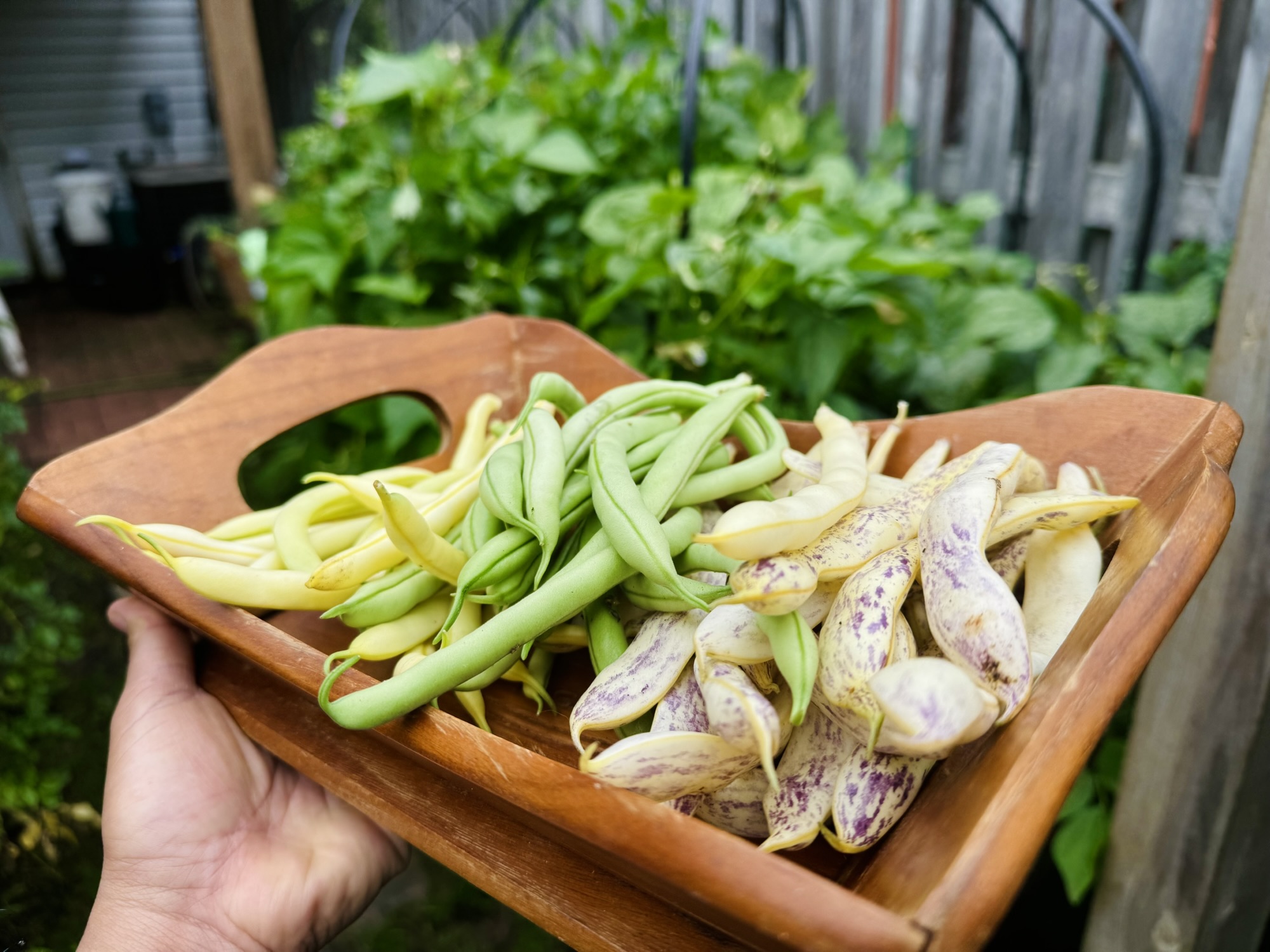
Bush beans are one of the most rewarding vegetables you can grow.
They germinate quickly, require very little maintenance, and produce generous harvests in a relatively short amount of time. Because they don’t need a trellis like pole beans, they’re perfect for beginner gardeners and anyone growing in small spaces.
In my Maryland Zone 7 garden, bush beans have become one of my favorite warm-season crops. I especially enjoy growing colorful varieties like Dragon Tongue, Purple Bush Beans, and Yellow Cherokee Wax Beans, which add beauty to the garden and variety to the dinner table.
If you’re ready to grow your own fresh beans, here’s everything you need to know.
Why Grow Bush Beans?
Bush beans are an excellent choice because they:
- Grow quickly
- Are easy for beginners
- Don’t require a trellis
- Produce generous harvests
- Grow well in raised beds and containers like buckets
- Improve garden soil by fixing nitrogen
- Mature in about two months
They’re one of the easiest vegetables to grow successfully.
Bush Beans vs. Pole Beans
Although both are green beans, they grow very differently.

Bush Beans
- Compact plants
- Usually 18–24 inches tall
- No trellis required
- Mature quickly
- Produce over a shorter period
Pole Beans
- Long climbing vines
- Require sturdy supports
- Produce over a much longer season
- Take longer to mature
If you’re looking for a low-maintenance crop, bush beans are a great place to start.
My Favorite Bush Bean Varieties
Over the years, I’ve enjoyed growing several beautiful bush bean varieties.


Some favorites include:
- Dragon Tongue – cream-colored pods with striking purple streaks and outstanding flavor.
- Purple Bush Beans – easy to harvest because the purple pods stand out against the foliage.
- Yellow Cherokee Wax Beans – bright yellow pods that are tender and productive.
Growing several colors makes harvesting even more fun.
When to Plant Bush Beans
Bush beans are warm-season vegetables.

Direct sow seeds only after:
- All danger of frost has passed.
- Soil temperatures are at least 60°F (16°C).
- The soil has warmed well in spring.
Cold, wet soil often causes seeds to rot instead of germinate.
In Central Maryland (Zone 7), this is usually after the average last spring frost.
Direct Sow Seeds
Bush beans should be direct sown.
Unlike many vegetables, they generally don’t like being transplanted because their roots are easily disturbed.
Sow seeds directly where you want the plants to grow.
How to Plant Bush Bean Seeds
Plant seeds:
- About 1 inch deep
- Approximately 2 to 4 inches apart
- In rows or blocks
Water thoroughly after planting.
Most seeds germinate within 7 to 10 days in warm soil.
Succession Planting
One of the easiest ways to enjoy bush beans for a longer season is to plant several crops.
Sow a new row every 2 to 3 weeks until midsummer.
Succession planting provides continuous harvests instead of one large crop.
How Much Sun Do Bush Beans Need?
Bush beans grow best in:
At least 6 to 8 hours of direct sunlight daily.
More sunlight generally results in:
- Better flowering
- More pods
- Stronger plants
- Higher yields
The Best Soil
Bush beans prefer soil that is:
- Well-drained
- Loose
- Fertile
- Rich in organic matter
Before planting:
- Add compost.
- Remove weeds.
- Loosen compacted soil.
Healthy soil encourages strong root development.
Growing Bush Beans in Raised Beds
Raised beds, like Vego Garden‘s, are excellent for bush beans because they provide:
- Loose soil
- Good drainage
- Easy harvesting
- Efficient spacing

Their compact growth habit allows many plants to fit into a relatively small space.
Growing Bush Beans in Containers
Bush beans grow beautifully in containers.
Choose:
- A container at least 8 to 10 inches deep like buckets or 5 gallon nursery pots
- High-quality potting mix
- Good drainage

Because the plants stay compact, they’re an excellent choice for patios, decks, and balconies.
Growing Bush Beans in GreenStalk Planters
Bush beans can also be grown successfully in a GreenStalk planter, especially compact varieties.
For best results:
- Plant one bean plant per pocket, or a few seeds and thin to the strongest seedling.
- Use high-quality potting mix with added compost.
- Place the GreenStalk in full sun.
- Keep the soil consistently moist, especially during flowering and pod development.
Bush beans are a great option for vertical gardening because they stay compact and don’t require climbing support.
Do Bush Beans Need Fertilizer?
Beans are unique because they naturally fix nitrogen with the help of beneficial bacteria.
Too much nitrogen can produce:
- Lots of leaves
- Few bean pods
Instead:
- Add compost before planting.
- Use a balanced fertilizer only if your soil is poor.
Avoid heavy applications of high-nitrogen fertilizer as it will only produce leaves and hardly any fruits.
Watering
Bush beans prefer:
- Consistent moisture
- Deep watering
- Even soil moisture
Water at the base of the plants whenever possible to help reduce disease.
Mulching helps maintain moisture during hot weather.
Mulching
Organic mulch helps:
- Reduce weeds
- Retain moisture
- Moderate soil temperature
- Keep pods cleaner
Straw, shredded leaves or cedar pet wood shavings work well.
Do Bush Beans Need Support?
Most bush beans grow perfectly well without support.
However, heavily loaded plants may benefit from:
- Small stakes
- Low fencing
- Short supports
This helps keep pods off the soil.
Common Problems
Poor Germination
Often caused by:
- Cold soil
- Excess moisture
- Old seed
Wait until the soil warms before planting.
Flowers but No Beans
Possible causes include:
- Excess heat
- Poor pollination
- Too much nitrogen
Plants usually begin producing again once temperatures moderate.
Common Pests
Watch for:
- Mexican bean beetles
- Aphids
- Spider mites
- Slugs
- Japanese beetles
Inspect plants regularly.
Floating row covers can protect young plants until flowering begins.
Common Diseases
Possible diseases include:
- Bean rust
- Powdery mildew
- Bacterial blight
Good spacing and watering at the base of the plants help reduce disease.
When to Harvest Bush Beans
Most bush beans mature in:
50 to 60 days, depending on the variety.
Harvest when the pods are:
- Smooth
- Firm
- Crisp
- Before the seeds inside become large
Tender young beans have the best flavor.
Harvest Often
Frequent harvesting encourages more production.
During peak season, check your plants every day or two.
Leaving mature beans on the plant signals it to stop producing.
How to Harvest
Pick beans gently by hand or use scissors.
Hold the stem while pulling the pod to avoid breaking branches.
Storing Bush Beans
Fresh bush beans can be:
- Refrigerated for about a week
- Blanched and frozen
- Pickled
- Pressure canned (following safe canning guidelines)

Freezing is one of my favorite ways to preserve a bumper harvest.
My Experience Growing Bush Beans
Bush beans are one of those vegetables that never disappoint me.
Because my garden is relatively small, I appreciate crops that produce well without taking up much room. Varieties like Dragon Tongue, Purple Bush Beans, and Yellow Cherokee Wax Beans have become regulars in my garden because they’re productive, beautiful, and delicious.
Their quick growth and easy care also make them one of the first vegetables I recommend to beginner gardeners.
Bush Bean Growing Checklist
- Direct sow after frost.
- Plant in full sun.
- Improve soil with compost.
- Water consistently.
- Avoid excessive nitrogen fertilizer.
- Succession plant every 2–3 weeks.
- Harvest frequently.
- Preserve extra beans by freezing or canning.
Final Thoughts
Bush beans are one of the easiest vegetables you can grow.
Their compact size, quick maturity, and generous harvests make them an excellent choice for raised beds, containers, GreenStalk planters, and beginner gardens.
If you’re looking for a productive crop that requires very little maintenance, bush beans deserve a place in your garden.
Frequently Asked Questions
Are bush beans easy to grow?
Yes. Bush beans are one of the easiest vegetables for beginners because they grow quickly and require very little maintenance.
Do bush beans need a trellis?
No. Most bush beans grow as compact plants and don’t require climbing support.
Can bush beans grow in containers?
Absolutely. Containers at least 8 to 10 inches deep work well for bush beans.
Can I grow bush beans in a GreenStalk planter?
Yes. Bush beans perform very well in GreenStalk planters because of their compact growth habit. Just provide full sun, consistent moisture, and quality potting mix. Use the Original (or 11 inch deep) planter so the plant can grow larger.
How long do bush beans take to grow?
Most varieties are ready to harvest in 50 to 60 days.
Should I harvest bush beans every day?
During peak production, harvesting every day or two encourages the plants to continue producing more beans.
Related Articles
- Why Bush Beans Are One of the Easiest Vegetables to Grow
- When to Harvest Bush Beans
- Best Vegetables for Beginners
- Succession Planting for Continuous Harvests
- How to Grow Vertically in Small Spaces
- Vertical Gardening with GreenStalk Planters
- How to Build Healthy Garden Soil from the Start
- Composting for Beginners
- Organic Gardening for Beginners
- Gardening for Beginners: Everything You Need to Know to Get Started
This page contains affiliate links to my brand partners like Vego Garden, GreenStalk, Walmart & Amazon at no extra cost to you.
Your support helps me create free gardening content. Thank you!


Leave a Reply