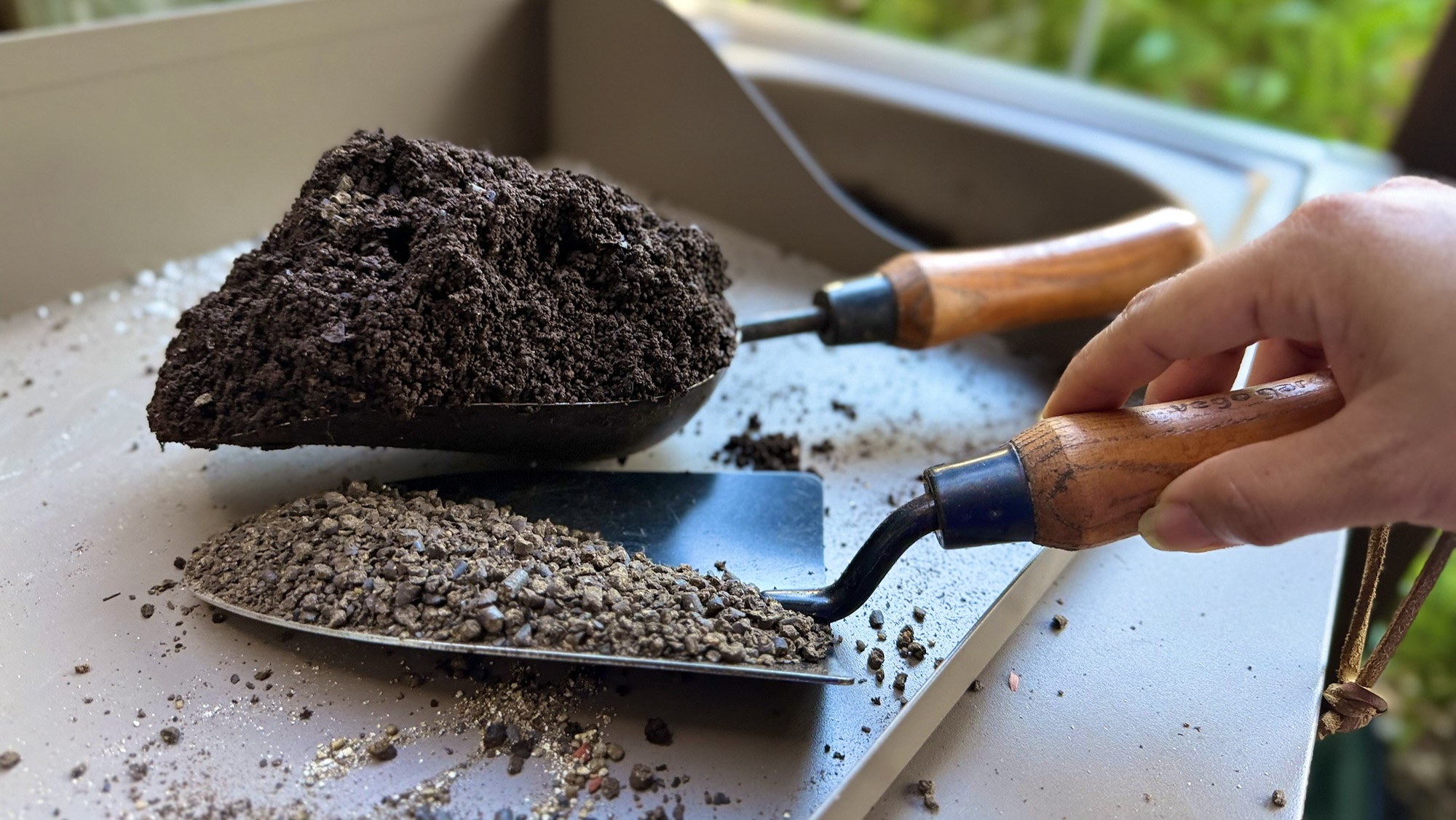
When I first started gardening, I thought compost and fertilizer were basically the same thing.
If both helped plants grow, why would I need both?
As I gained experience, I realized they play completely different roles in the garden. Compost focuses on improving the soil, while fertilizer focuses on feeding the plants.
Understanding that simple difference made it much easier to know what my garden actually needed.
If you’re new to gardening, here’s how compost and fertilizer compare—and why using both often gives the best results.
What Is Compost?
Compost is decomposed organic matter made from materials like:
- Vegetable scraps
- Fruit peels
- Coffee grounds
- Dry leaves
- Grass clippings
- Shredded cardboard

As these materials break down, they become a dark, crumbly soil amendment rich in organic matter.
Compost’s primary job is improving the soil.
What Is Fertilizer?
Fertilizer provides nutrients that plants need to grow.
The three primary nutrients are:
- Nitrogen (N) – promotes leafy growth
- Phosphorus (P) – supports root growth, flowering, and fruit development
- Potassium (K) – improves overall plant health and disease resistance

Fertilizers may be:
- Organic
- Synthetic
- Granular
- Liquid
- Slow-release
- Water-soluble
Their primary job is feeding plants.
The Biggest Difference
The simplest way to remember it is:
Compost feeds the soil.
Fertilizer feeds the plant.
Healthy gardens usually benefit from both.
What Compost Does
Compost helps:
- Improve soil structure
- Increase water retention
- Improve drainage
- Feed beneficial microbes
- Increase organic matter
- Reduce soil compaction
- Encourage healthy root development
- Improve long-term soil health
Its benefits continue long after it’s added to the garden.
What Fertilizer Does
Fertilizer helps plants:
- Grow faster
- Produce greener leaves
- Develop stronger roots
- Flower more
- Produce better harvests
- Recover from nutrient deficiencies
Unlike compost, fertilizer supplies nutrients in higher concentrations.
Does Compost Contain Nutrients?
Yes—but usually in relatively small amounts.
Compost does contain nutrients, but its greatest value comes from improving soil health rather than acting as a concentrated fertilizer.
Think of compost as slowly building a healthy foundation.
Does Fertilizer Improve Soil?
Usually not.
Most fertilizers supply nutrients directly to plants but do very little to improve:
- Soil structure
- Water retention
- Organic matter
- Soil biology
That’s why fertilizer alone doesn’t create healthy soil.
Why I Use Both
In my own garden, I think of compost and fertilizer as teammates.
Before planting, I like to mix compost into my raised beds to improve the soil and add organic matter.
Then, during the growing season, I feed heavy-feeding crops like tomatoes, peppers, squash, and cucumbers with fertilizer when they need an extra boost.
Using both gives my plants healthy soil to grow in while making sure they have the nutrients needed for strong growth and productive harvests.
Which Plants Need More Fertilizer?
Heavy feeders often benefit from additional fertilizer, including:
- Tomatoes
- Peppers
- Corn
- Cabbage
- Broccoli
- Squash
- Cucumbers
- Pumpkins
Fast-growing vegetables remove significant nutrients from the soil.
Which Plants Benefit Most From Compost?
Nearly every garden benefits from compost.
I especially add compost to:
- Raised beds
- Vegetable gardens
- Flower beds
- Containers
- Fruit trees
- Berry bushes
Even lawns can benefit from compost applications.
Organic Compost vs. Organic Fertilizer
These are also different products.
Organic Compost
- Improves soil
- Adds organic matter
- Supports beneficial microbes
Organic Fertilizer
- Supplies concentrated nutrients
- Feeds plants
- Often releases nutrients more slowly than synthetic fertilizers
Many organic gardeners use both together.
Can You Use Only Compost?
In some gardens, yes—especially if your soil is already healthy and you’re growing light-feeding crops.
However, vegetables that produce lots of fruit, such as tomatoes or peppers, often benefit from supplemental fertilizer during the growing season.
Can You Use Only Fertilizer?
You can, but it’s generally not the best long-term strategy.
Without adding organic matter over time, soil may become:
- Less fertile
- More compacted
- Poor at holding moisture
- Less biologically active
Healthy soil is built gradually.
Signs Your Garden Needs Compost
Consider adding compost if your soil is:
- Hard and compacted
- Sandy and dries quickly
- Low in organic matter
- Difficult to work
- Poorly drained
Regular compost applications improve nearly all soil types.
Signs Your Plants May Need Fertilizer
Plants may need additional nutrients if they show:
- Slow growth
- Pale leaves
- Yellowing foliage
- Poor flowering
- Small harvests
Before adding fertilizer, make sure the problem isn’t caused by watering, pests, disease, or poor sunlight.
How Often Should You Add Compost?
Many gardeners add compost:
- Before spring planting
- When preparing new beds
- As a top dressing during the growing season
- At the end of the season before winter
A little added every year steadily improves your soil.
How Often Should You Fertilize?
This depends on:
- The crop
- Your soil
- The fertilizer you’re using
Always follow the instructions on the fertilizer label.
More fertilizer doesn’t always mean better growth.
Overfertilizing can actually reduce harvests and damage plants.
Common Beginner Mistakes
Avoid these common misconceptions:
- Thinking compost and fertilizer are interchangeable.
- Applying too much fertilizer.
- Forgetting to improve the soil with compost.
- Assuming every plant needs the same amount of fertilizer.
- Expecting compost to solve severe nutrient deficiencies immediately.
My Gardening Philosophy
One of the biggest lessons I’ve learned is that healthy gardens begin underground.
Rather than relying only on fertilizer, I focus first on building healthy soil with compost and organic matter.
When the soil is healthy, plants often become stronger, more productive, and better able to withstand stress.
Fertilizer still has an important place, but I see it as supporting healthy soil—not replacing it.
Compost vs. Fertilizer at a Glance

Final Thoughts
Compost and fertilizer are both valuable tools, but they do different jobs.
Compost builds healthy soil by improving structure, water retention, and microbial life. Fertilizer provides the nutrients plants need for healthy growth, flowering, and fruit production.
Instead of choosing one over the other, think about how they can work together.
Healthy soil creates healthy plants, and healthy plants produce the abundant harvests every gardener hopes for.
Frequently Asked Questions
Is compost the same as fertilizer?
No. Compost improves the soil, while fertilizer provides nutrients directly to plants.
Can compost replace fertilizer?
Sometimes, but not always. Compost contains nutrients, but many heavy-feeding vegetables benefit from additional fertilizer during the growing season.
Do I need compost if I already use fertilizer?
Yes. Fertilizer feeds plants, but compost improves soil structure, water retention, and beneficial microbial activity.
Which is better for vegetable gardens?
The best approach is using both. Compost builds healthy soil, while fertilizer supplies nutrients when plants need them most.
Can you add too much fertilizer?
Yes. Overfertilizing can damage plants, encourage excessive leafy growth, and reduce harvests.
How often should I add compost?
Many gardeners add compost at least once a year, typically before planting in spring or when preparing beds for the next growing season.
Related Articles
- Composting for Beginners
- How to Build Healthy Garden Soil from the Start
- Organic Gardening for Beginners
- Why Mulching Is One of the Best Things You Can Do
- How to Prepare Garden Beds for Fall Planting
- Gardening for Beginners: Everything You Need to Know to Get Started
- The 4 Things Every Plant Needs to Thrive
- Best Vegetables for Beginners
- Raised Beds vs. Containers: Which Is Better?
- How to Grow Healthy Vegetables at Home
This page contains affiliate links to my brand partners like Vego Garden, GreenStalk, Walmart & Amazon at no extra cost to you.
Your support helps me create free gardening content. Thank you!


Leave a Reply