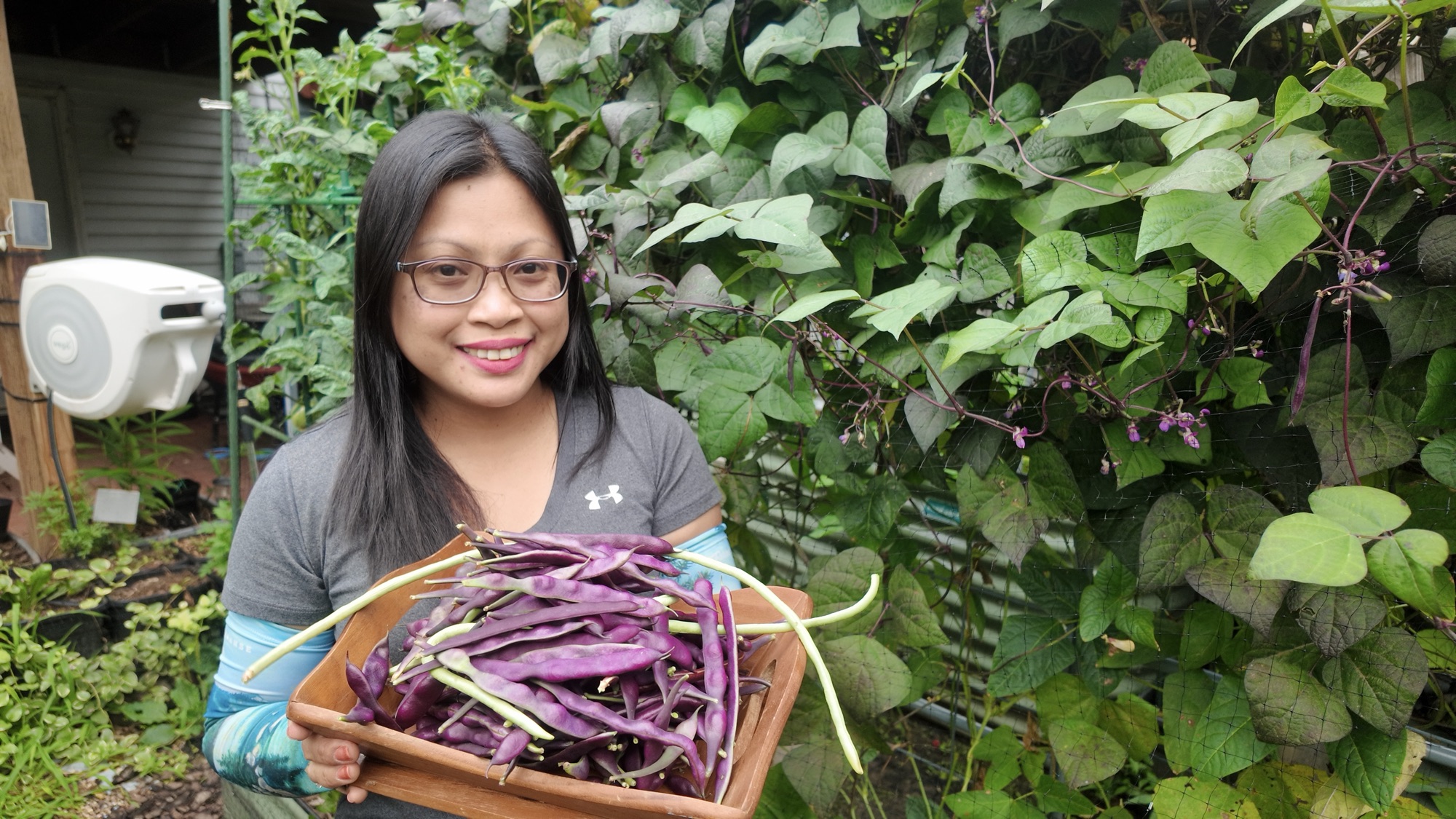
Pole beans are one of my favorite vegetables for making the most of a small garden.
Instead of taking up valuable ground space, they grow upward, climbing trellises, arches, strings, and other vertical supports. Once established, the vines can continue producing fresh beans for weeks—as long as you keep harvesting them.

In my Maryland Zone 7 garden, vertical growing is especially important because I have limited space. Pole beans allow me to turn a relatively small section of a raised bed into a tall wall of edible growth.
I’ve grown several varieties over the years, including Blauhilde, Thai Soldier long beans, and yardlong beans like sitaw. Watching the vines climb is impressive enough, but once the beans begin hanging from the trellis, they’re incredibly easy to see and harvest.
If you’re looking for a productive vegetable that grows upward instead of outward, pole beans deserve a place in your garden.
What Are Pole Beans?
Pole beans are climbing bean plants that produce long vines rather than compact bushes.
Unlike bush beans, which generally remain around 1 to 2 feet tall, pole bean vines can easily reach:
6 to 10 feet or more, depending on the variety.
The plants naturally wrap themselves around supports as they grow.
Pole beans can produce:
- Green beans
- Purple beans
- Yellow beans
- Romano-type beans
- Dry beans
There are also other climbing legumes, such as yardlong beans, that grow similarly but belong to a different species.
Why Grow Pole Beans?
Pole beans offer several advantages, particularly for small-space gardeners.
They:
- Grow vertically instead of sprawling
- Produce for a long period
- Offer high yields from a small footprint
- Are easy to harvest from a trellis
- Improve airflow around the plants
- Come in many colors and varieties
- Add height and beauty to the garden

They are one of the easiest ways to turn vertical garden space into additional food production.
Pole Beans vs. Bush Beans
Both are useful crops, but they grow differently.

I grow both because they serve different purposes.
Bush beans are wonderful when I want a quick crop, while pole beans are better when I want a longer-lasting harvest from vertical space.
My Favorite Pole Bean Varieties
One of the fun things about growing beans is the enormous variety available.
Blauhilde
Blauhilde is a beautiful purple pole bean.
The pods are:
- Long
- Deep purple
- Easy to spot among green foliage

Like many purple beans, the pods turn green when cooked.
It’s both ornamental and productive, which makes it fun to grow on a visible trellis.
Yardlong Beans
Yardlong beans grow on vigorous climbing vines and thrive during hot summer weather.
I’ve grown varieties such as Thai Soldier and sitaw in my garden.
Technically, yardlong beans aren’t the same species as common pole beans, but their climbing habit makes them excellent for the same vertical growing systems.
They are especially useful when Maryland summer heat becomes intense.
When to Plant Pole Beans
Pole beans are warm-season vegetables.
Wait until:
- All danger of frost has passed.
- The soil has warmed.
- Night temperatures are consistently mild.
Bean seeds can rot in cold, wet soil, so planting too early rarely gives you an advantage.
In my Zone 7 garden, I prefer waiting for genuinely warm spring conditions before sowing.
Direct Sow Pole Beans
Pole beans are generally best direct sown.
Their roots don’t appreciate unnecessary disturbance, and the seeds germinate quickly once the soil is warm.
Direct sowing also eliminates the work of starting another crop indoors.
How to Plant Pole Bean Seeds
Plant seeds approximately:
- 1 inch deep
- 4 to 6 inches apart, depending on the variety and trellis
If you’re planting around a pole or teepee, several seeds can be placed around each support.
Water gently after planting and keep the soil consistently moist until germination.
How Long Do Pole Beans Take to Germinate?
In warm soil, bean seeds often germinate within approximately:
7 to 10 days.
Cool soil can dramatically slow germination.
If the seeds remain in cold, soggy soil for too long, they may rot.
Install the Trellis Before Planting
This is one of the most important pole bean growing tips.
Put your trellis in place before or immediately after sowing.
Trying to install a support once bean vines are already growing creates unnecessary problems.
You can:
- Damage roots
- Break vines
- Disturb nearby plants
Pole beans grow quickly once they take off, so have their support ready from the beginning.
The Best Trellises for Pole Beans
Pole beans aren’t particularly picky as long as they have something sturdy to climb.
Good options include:
- A-frame trellises
- Garden arches
- String trellises
- Cattle panels
- Remesh panels
- Teepees
- Fences
- Trellis netting
Choose a support at least 6 feet tall whenever possible.
Using an A-Frame Trellis
A-frame trellises are one of my favorite vertical structures.
The shape creates a sturdy support that can handle vigorous vines and windy summer weather.
Beans can climb both sides of the structure, allowing you to grow a substantial crop in a relatively narrow section of the garden.
An A-frame also creates usable space underneath.
Depending on the amount of sunlight available, I can use that lower area for shorter crops that tolerate some shade.
Growing Pole Beans on a String Trellis
String trellises are another excellent option.
You can build a frame using:
- Metal conduit
- Wood
- Other sturdy supports
Then attach vertical strings for the vines.
Pole beans naturally twine around narrow supports, so strings work especially well.
Guide young plants toward the string initially, and they usually take over from there.
Which Direction Do Pole Beans Climb?
Bean vines naturally twine around supports.
Once a young vine reaches the trellis, gently wrap or guide it around the support.
Avoid forcing the stem or bending it sharply.
After the plant attaches, it usually continues climbing without much assistance.
How Much Sun Do Pole Beans Need?
Pole beans grow best with:
6 to 8 or more hours of direct sunlight per day.
Full sun encourages:
- Vigorous vines
- Abundant flowering
- Better bean production
Some afternoon shade may be tolerated, but heavy shade reduces yields.
The Best Soil for Pole Beans
Pole beans prefer soil that is:
- Loose
- Well-draining
- Moderately fertile
- Rich in organic matter
Before planting, I like incorporating finished compost into the bed.
Avoid creating excessively nitrogen-rich soil.
Too much nitrogen can result in enormous vines with relatively few beans.
Do Pole Beans Make Their Own Nitrogen?
Beans are legumes.
Their roots can form a relationship with nitrogen-fixing bacteria that convert atmospheric nitrogen into forms associated with plant growth.
However, that doesn’t mean beans need absolutely no nutrition.
Healthy soil still matters.
For most home gardens, compost and balanced soil fertility provide a good foundation without excessive nitrogen fertilizer.
Growing Pole Beans in Raised Beds
Pole beans are excellent for raised beds because you can add a trellis along:
- One side
- The back
- The center
- Across an A-frame
I prefer positioning tall vertical structures so they don’t unnecessarily shade sun-loving crops.
This lets me grow upward while preserving the rest of the bed for additional vegetables.
What Can You Grow Under Pole Beans?
Once the bean canopy fills in, the area beneath the trellis may receive partial shade.
That space can sometimes be used for:
- Lettuce
- Spinach
- Bok choy
- Herbs
- Green onions
This works especially well when you position the trellis so the shorter crops still receive enough sunlight.
It’s one of my favorite ways to layer plants in a small garden.
Can You Grow Pole Beans in Containers?
Yes.
Use a large container with:
- Good drainage
- Quality potting mix
- A strong vertical support
Remember that a mature pole bean vine can become large and heavy.
A flimsy trellis in a small container may tip over during wind.
Make sure the support and container are stable.
Watering Pole Beans
Pole beans need consistent moisture, particularly during:
- Flowering
- Pod development
- Hot, dry weather
Water deeply rather than constantly applying small amounts.
Aim the water at the soil instead of wetting the foliage whenever possible.
Mulching Pole Beans
Once the soil has warmed, add organic mulch around the plants.
Mulch helps:
- Reduce moisture loss
- Suppress weeds
- Moderate soil temperature
- Reduce soil splashing onto leaves
Straw and shredded leaves are both useful options.
Fertilizing Pole Beans
Pole beans generally don’t need aggressive fertilization.
If your soil has been improved with compost, you may need little additional fertilizer.
If growth is weak and a soil test indicates deficiencies, use an appropriate balanced fertilizer.
Avoid repeatedly feeding with high-nitrogen fertilizer.
A giant green vine isn’t necessarily a productive bean vine.
Pole Bean Flowers
Once the plants mature, flowers begin appearing along the vines.
Depending on the variety, flowers may be:
- White
- Pink
- Purple
- Other subtle shades
Beans develop from these flowers.
It’s normal for some flowers to drop, particularly during periods of environmental stress.
Why Are My Pole Beans Flowering but Not Producing?
Possible causes include:
- Extreme heat
- Water stress
- Excess nitrogen
- Young plants
- Sudden temperature changes
Beans are largely self-pollinating, so poor bee activity isn’t usually the main issue the way it can be for crops like melons.
When temperatures improve and plants are otherwise healthy, pod production often resumes.
Heat and Pole Bean Production
Common snap beans can struggle to set pods during periods of extreme heat.
This is one reason I also enjoy growing yardlong beans.
Yardlong beans thrive in temperatures that may cause traditional green beans to slow down.
Growing different bean types can help extend your summer bean harvest.
Should You Prune Pole Beans?
Pole beans generally don’t require routine pruning.
If vines reach the top of the trellis and become difficult to manage, you can pinch the growing tip.
This may encourage side branching.
Otherwise, focus on:
- Removing damaged foliage
- Harvesting regularly
- Keeping the vines supported
Common Pole Bean Pests
Watch for:
- Japanese beetles
- Mexican bean beetles
- Aphids
- Spider mites
- Slugs on young seedlings
Check plants regularly, especially the undersides of leaves.
Because vines can become dense, pests sometimes hide within the foliage.
Common Pole Bean Diseases
Possible diseases include:
- Bean rust
- Bacterial blight
- Anthracnose
- Powdery mildew
- Mosaic viruses
Reduce disease pressure by:
- Giving plants adequate spacing
- Watering near the soil
- Avoiding handling wet foliage
- Rotating bean crops
- Removing badly infected plants
Vertical growing naturally improves airflow, which can help.
When to Harvest Pole Beans
For snap beans, harvest while pods are:
- Young
- Smooth
- Tender
- Firm
- Before the seeds become very swollen
Most pole bean varieties begin producing somewhere around 55 to 75 days after planting, although maturity varies considerably.
Always check your specific variety.
Harvest Pole Beans Frequently
This may be the most important harvesting tip:
Don’t stop picking.
Once pods become mature and seeds begin developing, the plant receives a signal that reproduction has been successful.
Frequent harvesting encourages continued flowering and pod production.
During peak season, inspect the vines every day or two.
You’ll be surprised how quickly a small bean becomes oversized.
How to Harvest Pole Beans
Use one hand to support the vine and the other to remove the bean.
You can also use garden scissors.
Avoid pulling aggressively because you may break:
- Flowers
- Tender stems
- Developing pods
Handle the vines gently.
What Happens if Pole Beans Get Too Big?
Overmature snap beans become:
- Tough
- Fibrous
- Stringy
- Less enjoyable for fresh eating
You can leave selected pods on the plant if you want to save mature beans or seeds.
Otherwise, harvest regularly while pods are tender.
Growing Pole Beans for Dry Beans
Some varieties can be allowed to mature completely for dry bean harvest.
Instead of picking young pods:
- Allow pods to remain on the vine.
- Wait until they dry and become brittle.
- Harvest before prolonged wet weather.
- Shell the dry beans.
- Allow them to dry thoroughly before storage.
Check whether your particular variety is suitable for dry use.
Saving Pole Bean Seeds
Beans are among the easiest crops for seed saving.
Choose healthy plants and allow several pods to mature completely.
Once the pods are dry:
- Harvest them.
- Shell the beans.
- Allow seeds to dry completely.
- Store them somewhere cool and dry.
Open-pollinated varieties are the best choice when you want offspring that closely resemble the parent plant.
My Experience Growing Pole Beans
Pole beans fit naturally into the way I garden.
Because my backyard is small, I am always looking for opportunities to grow up instead of out.
A trellis turns a narrow strip of raised-bed space into several feet of productive growing area.
I especially enjoy varieties that bring something different to the garden. Blauhilde gives me beautiful purple pods that are easy to spot among the leaves, while Thai Soldier and other yardlong beans thrive during the hottest part of summer and connect my garden to vegetables I grew up eating.
Once pole beans begin producing, checking the trellis for new pods becomes part of my regular garden routine.
And because the beans are hanging vertically rather than hidden near the soil, harvesting is remarkably easy.
Pole Bean Growing Checklist
- Choose a pole bean variety suited to your climate.
- Wait until frost danger has passed.
- Direct sow into warm soil.
- Install the trellis before planting.
- Provide at least 6–8 hours of sunlight.
- Add compost before planting.
- Avoid excessive nitrogen fertilizer.
- Guide young vines onto the support.
- Water consistently during flowering and pod production.
- Mulch after the soil warms.
- Check regularly for pests.
- Harvest tender pods every day or two during peak production.
- Save selected mature pods for seed if desired.
Final Thoughts
Pole beans are one of the most productive ways to use vertical space in a vegetable garden.
Give them warm soil, sunshine, consistent moisture, and something tall to climb, and they can transform a small section of garden into a wall of food.
They’re especially valuable in small-space gardens because the plants occupy relatively little ground while producing vertically for weeks.
If you’re choosing between bush beans and pole beans, you don’t necessarily have to choose just one.
Grow bush beans when you want a quick, concentrated harvest.
Grow pole beans when you want to maximize vertical space and keep harvesting throughout the season.
I make room for both.
Frequently Asked Questions
Are pole beans easy to grow?
Yes. Pole beans are beginner-friendly once you provide warm soil and a sturdy trellis. They need little training after the vines begin climbing.
Do pole beans need a trellis?
Yes. Pole beans are vigorous climbing plants and require vertical support such as a trellis, arch, strings, poles, or fencing.
How tall do pole beans grow?
Many pole beans reach approximately 6 to 10 feet or more, depending on the variety and growing conditions.
How long do pole beans take to produce?
Many varieties begin producing approximately 55 to 75 days after planting, although exact maturity varies by cultivar.
Can pole beans grow in containers?
Yes. Use a large, stable container and provide a sturdy vertical support.
Do pole beans need full sun?
Pole beans perform best with approximately 6 to 8 or more hours of direct sunlight daily.
Do pole beans need fertilizer?
They usually don’t require heavy feeding. Begin with healthy soil and compost, and avoid excessive nitrogen, which can encourage foliage at the expense of beans.
Why are my pole beans flowering but not producing beans?
Extreme temperatures, water stress, or excess nitrogen can interfere with pod set. Healthy plants often begin producing again when conditions improve.
How often should I harvest pole beans?
During peak production, check the plants every day or two. Frequent harvesting encourages continued bean production.
What is the difference between pole beans and yardlong beans?
Both are climbing legumes, but common pole beans are generally Phaseolus vulgaris, while yardlong beans are forms of Vigna unguiculata. Yardlong beans usually tolerate extreme summer heat better.
Related Articles
- How to Grow Bush Beans
- How to Grow Yardlong Beans (Sitaw)
- Bush Beans vs. Pole Beans: Which Should You Grow?
- How to Grow Vertically in Small Spaces
- Best Vegetables for Beginner Gardeners
- Succession Planting for Continuous Harvests
- How to Build Healthy Garden Soil from the Start
- How to Mulch Your Garden Properly
- How to Grow Vegetables in Containers
- Vertical Gardening With GreenStalk Planters
This page contains affiliate links to my brand partners like Vego Garden, GreenStalk, Walmart & Amazon at no extra cost to you.
Your support helps me create free gardening content. Thank you!



Leave a Reply