Mulch is one of the simplest improvements you can make in a vegetable garden, yet it’s often overlooked by beginners.
A good layer of mulch helps conserve moisture, suppress weeds, regulate soil temperature, and improve soil health over time. It can also reduce the amount of watering and weeding you need to do throughout the growing season.

In my Maryland Zone 7 garden, mulch has become an essential part of my routine. Whether I’m growing tomatoes, peppers, leafy greens, or garlic, keeping the soil covered has made a noticeable difference in how well my garden performs, especially during the heat of summer.
Here’s everything you need to know about mulching your garden properly.
What Is Mulch?
Mulch is any material spread over the surface of the soil around your plants.
It acts as a protective layer that shields the soil from harsh weather while helping create a healthier environment for plant roots.
Mulch can be:
- Organic
- Inorganic
For vegetable gardens, organic mulches are usually the best choice because they improve the soil as they break down.
Why Mulch Your Garden?
Mulching offers many benefits.
It helps:
- Reduce weeds
- Hold moisture in the soil
- Keep roots cooler during summer
- Protect soil from erosion
- Reduce soil splashing onto leaves
- Improve soil structure over time
- Feed beneficial soil organisms
- Reduce watering frequency
- Keep vegetables cleaner at harvest
One simple layer of mulch can solve several common gardening problems at once.
The Best Mulch for Vegetable Gardens
Several materials work well in home gardens.
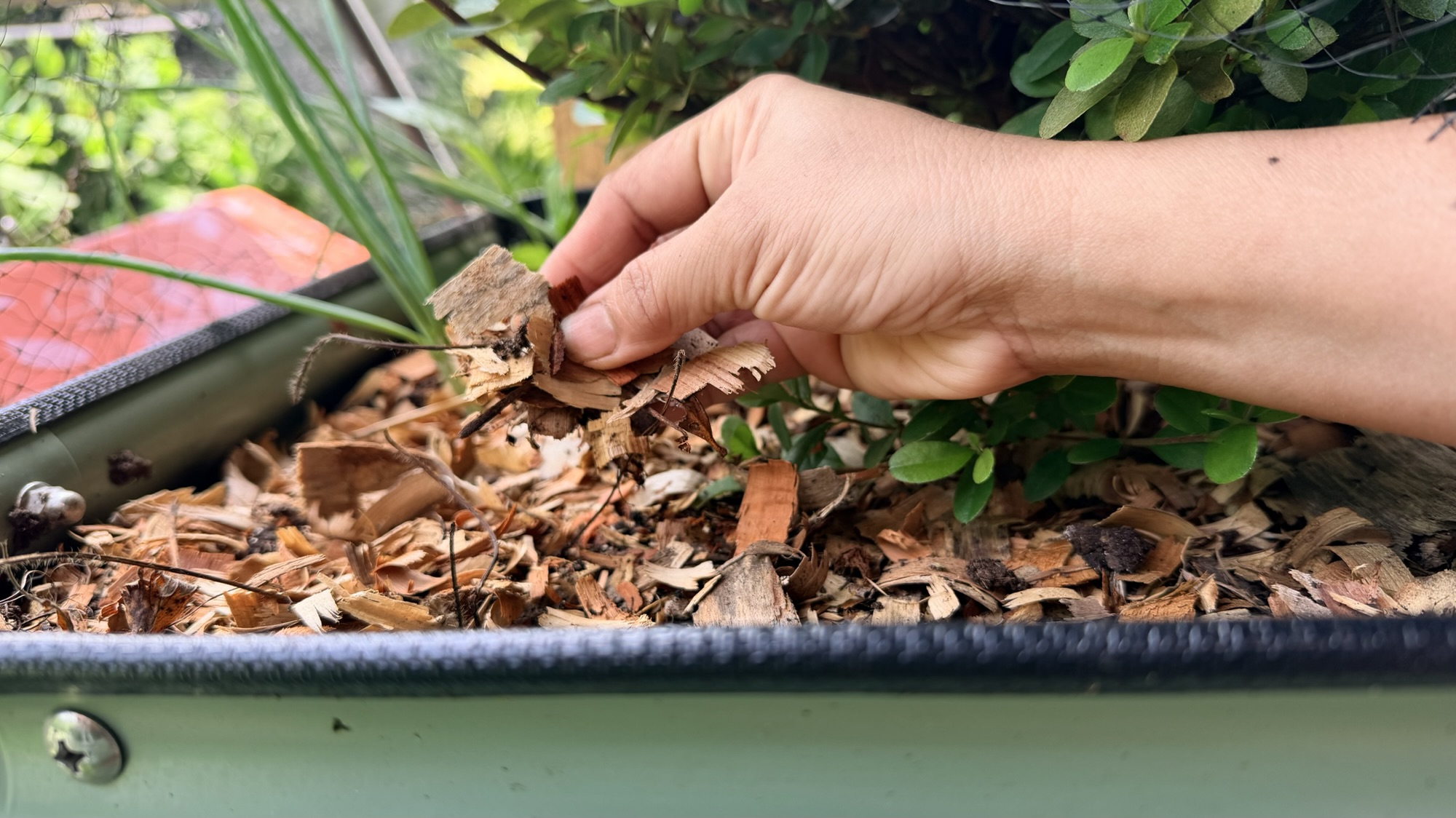
Cedar Ped Bedding (Wood Shavings)
This isn’t the most common material for mulching, but aside from leaves, it has become one of my favorites.

I use untreated cedar wood shavings, like cedar pet bedding, as a light layer over the soil.
A few reasons I like it:
- It can be a cheaper alternative to buying a bale of straw.
- It’s a little heavier than dry leaves, so it doesn’t blow around as easily on windy days.
- It looks neat in the garden.
- And I love the fresh cedar smell.
It may not be the first mulch people think of, but it has worked well for me and is another reminder that there are plenty of simple ways to protect the soil without overcomplicating things.
I buy mine from Tractor Supply and Walmart.
Shredded Leaves (or not shredded)
Autumn leaves are one of the best free mulches available.
After shredding, they:
- Improve soil
- Hold moisture
- Encourage earthworms
- Break down naturally
I love saving fall leaves because they become a valuable resource throughout the following growing season.
We don’t have trees in our property but I ask friends for some during the fall.
Straw
Straw is one of the most popular mulches for vegetables.
Benefits include:
- Lightweight
- Excellent moisture retention
- Suppresses weeds
- Breaks down slowly
- Easy to spread
Use clean, weed-free straw whenever possible.
Avoid hay, which often contains weed seeds.
Pine Needles
Pine needles make an excellent mulch for some plants.
They:
- Stay in place well
- Break down slowly
- Allow good airflow
Contrary to a common myth, they do not significantly acidify established garden soil.
Mulches to Avoid
Some materials are less suitable around vegetables.
Avoid:
- Fresh black walnut leaves or wood
- Pressure-treated wood chips
- Dyed landscape mulch around edible crops
- Thick layers of uncomposted manure
- Hay containing weed seeds
Choose clean, natural materials whenever possible.
When Should You Mulch?
The best time depends on the season.
Spring
Wait until the soil has warmed before applying thick layers of mulch.
Applying mulch too early can keep cool spring soil from warming as quickly.
Summer
Summer is one of the most important times to mulch.
Mulch helps protect plant roots from extreme heat while reducing water loss.
Fall
Mulch helps protect the soil through winter and gradually breaks down, improving the garden for next spring.
How Much Mulch Should You Use?
For most vegetable gardens:
Apply approximately:
- 1 to 2 inches of organic mulch depending your your weather. 3 inches would be the maximum.
Too little won’t suppress weeds effectively.
Too much can reduce airflow and trap excessive moisture around plant stems.
Keep Mulch Away From Plant Stems
One of the most common mistakes is piling mulch directly against plants.
Leave a small gap around:
- Tomatoes
- Peppers
- Squash
- Cucumbers
- Herbs
- Flowers
This improves airflow and helps prevent stem rot and fungal problems.
Think of mulch as a blanket for the soil—not a coat wrapped around the plant.
Should You Mulch Newly Planted Seeds?
Usually, wait.
Very small seedlings can struggle through thick mulch.
For direct-sown vegetables:
- Allow seeds to germinate.
- Wait until seedlings become established.
- Then apply mulch carefully around them.
This is especially helpful for:
- Carrots
- Beets
- Lettuce
- Spinach
- Radishes
Mulching Around Transplants
Transplants benefit from mulch almost immediately.
Once they’re planted and watered:
- Add mulch around the base.
- Keep it a few inches away from the stem.
This helps reduce transplant stress by keeping the soil evenly moist.
Mulching Raised Beds
Raised beds dry out more quickly than in-ground gardens.

Mulch helps:
- Reduce evaporation
- Moderate soil temperature
- Reduce weed growth
- Improve soil over time
Almost every raised bed in my garden receives mulch during the growing season.
Mulching Containers
Containers also benefit from mulch.

Even a thin layer helps:
- Slow moisture loss
- Reduce temperature fluctuations
- Keep potting mix from splashing during watering
Because containers have limited soil volume, they dry out much faster than garden beds.
Mulching Garden Paths
Mulching isn’t just for planting beds.
Garden paths can also be covered with:
- Wood chips
- Straw
- Leaves
Mulched paths help:
- Suppress weeds
- Reduce mud
- Improve walking surfaces
Does Mulch Prevent Weeds?
Mulch greatly reduces weeds but doesn’t eliminate them completely.
A thick layer blocks sunlight, making it difficult for many weed seeds to germinate.
Any weeds that do appear are usually easier to remove.
Does Mulch Replace Watering?
No.
Mulch slows moisture loss, but your garden will still need watering during dry periods.
Continue checking the soil regularly, especially during hot weather.
Think of mulch as helping you water less often—not eliminating the need to water.
Does Mulch Attract Pests?
Sometimes mulch can attract insects like peel bugs but most beneficial insects actually thrive in healthy mulch layers.
However:
- Thick mulch touching stems may encourage slugs.
- Wet mulch piled against plants may create hiding places for pests.
Proper application greatly reduces these issues.
Should You Remove Old Mulch?
Usually not.
Organic mulch naturally breaks down over time.
Instead of removing it every year:
- Add a fresh layer as needed.
- Allow older mulch to improve the soil.
Only remove mulch if it has become diseased or infested with pests.
Can Mulch Improve Soil?
Yes.
One of the biggest advantages of organic mulch is that it eventually becomes part of the soil.
As it decomposes, it:
- Adds organic matter
- Improves drainage
- Increases water retention
- Feeds beneficial organisms
- Supports earthworms
Healthy soil is built gradually, and mulch plays an important role in that process.
Which Vegetables Benefit Most?
Almost every vegetable benefits from mulch.
Some of the biggest improvements can be seen with:
- Tomatoes
- Peppers
- Cucumbers
- Squash
- Garlic
- Onions
- Broccoli
- Cabbage
- Kale
- Lettuce
- Spinach
Root vegetables also appreciate the more consistent soil moisture mulch provides.
My Favorite Mulches
Over the years, I’ve found myself reaching for the same materials again and again.
In my Maryland Zone 7 garden, I most often use:
- Cedar Pet Bedding (Wood Shavings)
- Shredded leaves
- Straw
I especially enjoy using Cedar Pet bedding because it’s a cheaper alternative to straw and it smells good. I also love using shredded autumn leaves because they’re free, readily available, and gradually improve the soil while helping retain moisture throughout the growing season.
Common Mulching Mistakes
Applying Mulch Too Thickly
More isn’t always better.
Excessively thick mulch can reduce airflow and trap too much moisture.
Mulching Too Close to Stems
Leave a small space around every plant.
Using Weed-Seed-Filled Hay
Hay often introduces more weeds than it prevents.
Waiting Too Long
Mulch is most effective before weeds become established.
Garden Mulching Checklist
- Pull existing weeds.
- Water the soil.
- Spread 2–3 inches of mulch.
- Keep mulch away from stems.
- Refresh mulch as needed.
- Monitor soil moisture.
- Add more as it naturally breaks down.
Final Thoughts
Mulching is one of the easiest ways to improve your vegetable garden.
A simple layer of organic mulch helps conserve moisture, suppress weeds, protect plant roots, and gradually build healthier soil.
Whether you’re gardening in raised beds, containers, or traditional rows, mulch can save time while helping your vegetables thrive.
For me, it’s become one of those gardening tasks that pays off all season long—and one I never skip.
Frequently Asked Questions
What is the best mulch for a vegetable garden?
Straw and shredded leaves are among the best organic mulches for vegetable gardens. But I’ll also add my favorite Cedar pet bedding (wood shavings) as the best alternative.
How thick should mulch be?
Most vegetable gardens benefit from a layer about 1 to 2 inches thick. 3 inches would be most but it depends on your local climate.
Should mulch touch plant stems?
No. Leave a small gap around stems to improve airflow and reduce the risk of rot and disease.
When should I mulch my garden?
Mulch after the soil has warmed in spring, throughout summer to conserve moisture, and again in fall to protect the soil over winter. In short, alway cover your planting space with mulch even when you’re not growing anything in it.
Can I mulch containers?
Yes. A thin layer of mulch helps containers retain moisture and stay cooler during hot weather.
Does mulch stop weeds completely?
No, but it greatly reduces weed growth and makes any weeds that do emerge much easier to remove.
Should I remove old mulch every year?
Usually not. Organic mulch naturally breaks down and improves the soil. Simply add a fresh layer when needed.
Related Articles
- Why Mulch Is One of the Best Things You Can Do
- How to Build Healthy Garden Soil from the Start
- How Often Should You Water Your Garden?
- How to Prepare Garden Beds for Fall Planting
- How to Use Shade Cloth in the Vegetable Garden
- How to Grow Tomatoes
- How to Grow Peppers
- How to Grow Garlic
- How to Grow Onions
- Gardening for Beginners: Everything You Need to Know
This page contains affiliate links to my brand partners like Vego Garden, GreenStalk, Walmart & Amazon at no extra cost to you.
Your support helps me create free gardening content. Thank you!


Leave a Reply