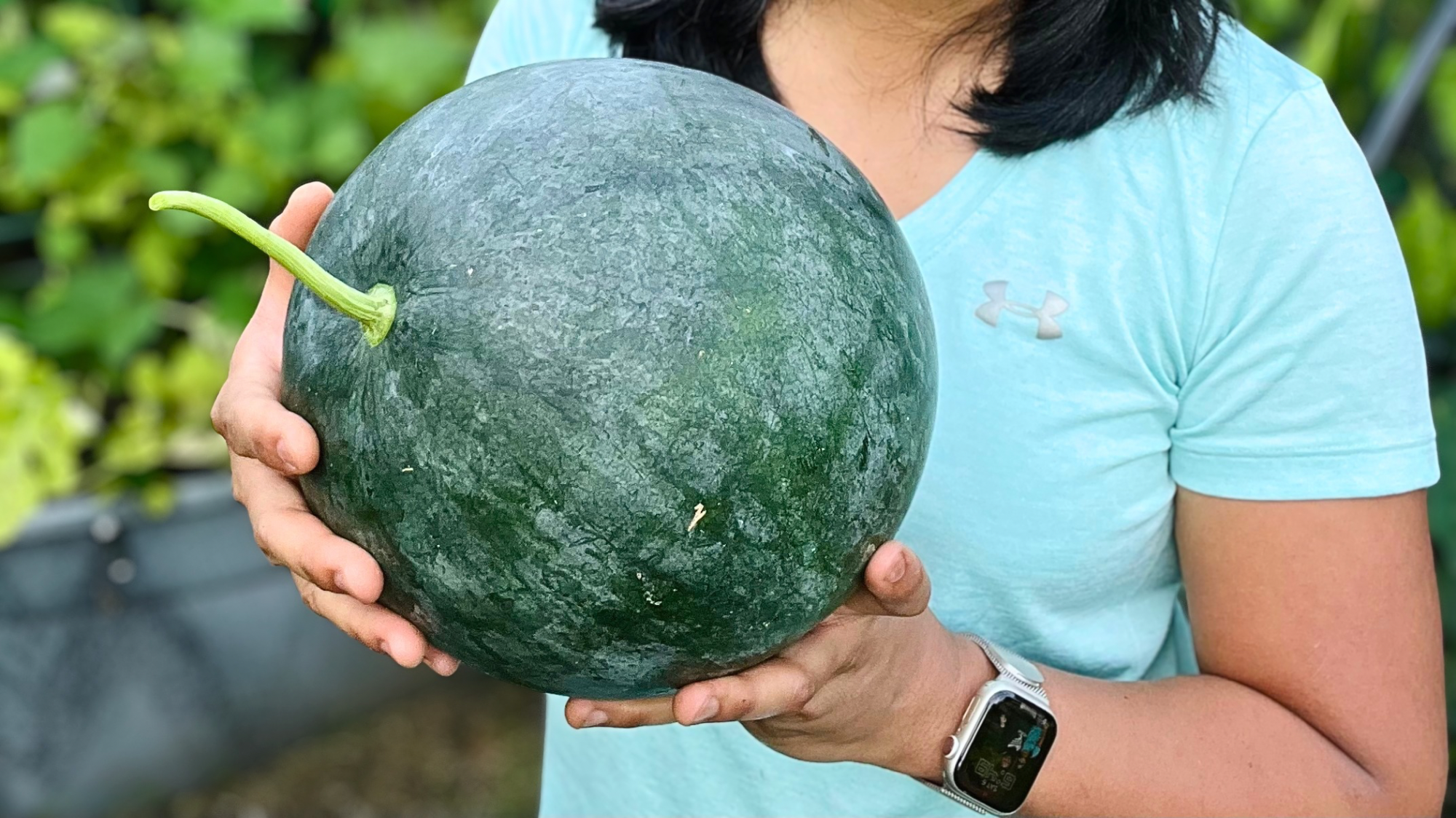
Growing a watermelon takes patience.
After weeks of watching the vines spread, the flowers bloom, and tiny fruits begin to swell, it’s tempting to pick the first large watermelon you see. But harvesting too early can leave you with pale, firm flesh that lacks sweetness. Harvest too late, and the fruit may become overripe, mealy, or begin to split.
Unlike some fruits, watermelons do not become sweeter after they’re picked. That’s why learning how to recognize the signs of ripeness is one of the most valuable skills for any gardener.

In my Maryland Zone 7 garden, I grow watermelons vertically on an A-frame trellis, and I’ve found that looking for several signs together—not just one—gives me the best chance of harvesting perfectly ripe fruit.
Here’s how to know when your watermelon is ready.
Why Harvest Timing Matters
Harvesting at the right time means:
- Sweeter fruit
- Better texture
- More juice
- Better flavor
- Less waste
Since watermelons don’t continue ripening after harvest, picking them too early usually results in disappointing fruit.

Use this chart alongside the detailed signs below for best results.
1. The Tendril Closest to the Fruit Turns Brown
One of the most reliable indicators is the small curly tendril growing from the vine nearest the watermelon stem.
When the fruit is still developing, the tendril is green.
As the watermelon ripens, the tendril gradually dries and turns brown.
Look for it to be:
- Brown
- Dry
- Crispy
rather than green and flexible.

While this is one of the best clues, don’t rely on it alone.
2. The Ground Spot Changes Color
The ground spot is the area where the watermelon rests against the ground—or where it would rest if grown on the ground.
When immature, it’s usually:
- White
- Pale green
As the fruit ripens, it changes to:
- Creamy yellow
- Rich yellow
A bright white ground spot usually indicates the watermelon needs more time.
When growing vertically, this spot can be harder to see, but it’s still worth checking carefully.
3. The Rind Becomes Dull
Young watermelons often have shiny skin.
As they mature, the rind becomes:
- Less glossy
- More matte
- Slightly dull

This subtle change is another helpful clue that ripening is nearly complete.
4. The Fruit Reaches Its Mature Size
Every variety has an expected size.
For example:
- Icebox varieties stay relatively small
- Crimson Sweet grows much larger
- Royal Golden develops medium-sized fruit with distinctive golden skin
Knowing the expected mature size of the watermelon variety you’re growing can help keep you from harvesting too early. 🍉
But don’t rely on size alone.
The final size of a watermelon can vary depending on growing conditions, including sunlight, water, nutrients, available root space, and whether you’re growing in the ground or in a container. Sometimes a perfectly mature watermelon simply ends up smaller than what the seed packet says.
I’ve had watermelon fruits stay surprisingly small, so I’ve learned to keep my expectations realistic and look for multiple signs of ripeness instead.
5. Check the Days to Maturity
Seed packets usually list the expected number of days to maturity.
This isn’t an exact harvest date, but it provides a helpful estimate.
Keep in mind that:
- Cool weather may delay ripening
- Warm weather may speed it up
- Growing conditions affect maturity

I like to begin checking for ripeness once my plants approach the expected maturity window.
6. The Watermelon Sounds Different
Many gardeners gently tap their watermelon.
A ripe fruit often produces a:
- Deep
- Hollow
- Full sound
An immature watermelon may sound:
- Sharp
- Metallic
- Higher pitched
This method takes practice and works best when combined with other signs.
7. The Stem Begins Drying
As harvest approaches, the stem connecting the watermelon to the vine may begin drying.
A completely green, vigorous stem often suggests the fruit still has more time to mature.
As with the other signs, use this as part of the overall picture rather than a standalone test.
Don’t Rely on Just One Sign
No single sign guarantees ripeness.

Instead, look for several indicators together:
- Brown tendril
- Creamy yellow ground spot
- Dull rind
- Mature size
- Appropriate days to maturity
- Deep hollow sound
- Slightly drying stem


The more signs that match, the better your chances of harvesting a perfectly ripe watermelon.
Common Mistakes
Harvesting Too Early
This is probably the most common mistake.
An underripe watermelon may have:
- Pale flesh
- Firm texture
- Less sweetness
- Mild flavor
Unfortunately, it won’t improve after picking.
Waiting Too Long
Leaving a watermelon on the vine too long can lead to:
- Mealy texture
- Splitting
- Reduced flavor
- Insect damage
Regularly checking ripening fruit helps avoid this.
Growing Watermelons Vertically
I grow my watermelons on an A-frame trellis, which saves valuable garden space.
One advantage of vertical growing is that it’s often easier to inspect each fruit for signs of ripeness because the melons are more visible.

As the fruit enlarges, I support it with slings made from netting so the weight doesn’t strain the vine.
How to Harvest Watermelon
Once the fruit is ripe:
- Use clean pruning shears or a sharp knife.
- Cut the stem a few inches above the fruit.
- Avoid pulling or twisting the watermelon from the vine.
- Handle it carefully to prevent bruising.
Harvesting during the cool morning hours can also help preserve fruit quality.
Can Watermelon Ripen After Harvest?
No.
Unlike bananas, peaches, or tomatoes, watermelons do not become sweeter after they’re picked.
They may soften slightly during storage, but their sugar content will not increase.
That’s why it’s worth waiting until the fruit is fully ripe before harvesting.
How to Store Watermelon
Whole ripe watermelons can be kept at room temperature for a short period if they will be eaten soon.
Once cut:
- Refrigerate promptly
- Cover the cut surface or store in an airtight container
- Enjoy within several days for the best flavor and texture
My Experience Harvesting Watermelons
Over the years, I’ve learned that patience pays off.
It’s easy to become excited when a watermelon reaches a good size, but I’ve found that waiting for several ripeness signs gives much better results.
In my Maryland garden, I’ve grown Crimson Sweet, Yellow Baby Doll, and Royal Golden on an A-frame trellis. Watching the tendril dry, checking the ground spot, and waiting until the fruit reaches full maturity has consistently given me sweeter, more flavorful harvests.
Watermelon Harvest Checklist
Before harvesting, check for:
□ Brown, dry tendril closest to the fruit
□ Creamy yellow ground spot
□ Dull rind
□ Mature size for the variety
□ Correct days to maturity
□ Deep, hollow sound when tapped
□ Slightly drying stem
The more boxes you can check, the more likely your watermelon is ready.
Final Thoughts
Harvesting watermelon at the right time is one of the most rewarding moments of the gardening season.
While there isn’t a single foolproof test, combining several signs—especially the tendril, ground spot, rind appearance, and days to maturity—will help you confidently pick sweet, juicy fruit.
When in doubt, it’s often worth waiting another day or two rather than harvesting too soon. Your patience is usually rewarded with better flavor.
Frequently Asked Questions
How do I know when a watermelon is ripe?
Look for several signs together, including a dry brown tendril near the fruit, a creamy yellow ground spot, a dull rind, mature size, and the expected days to maturity.
Can watermelon ripen after it’s picked?
No. Watermelons do not continue to sweeten or ripen after harvest, so it’s important to let them mature fully on the vine.
What color should the ground spot be?
A ripe watermelon usually has a creamy yellow or golden-yellow ground spot. A white or pale green spot often means the fruit needs more time.
What happens if I harvest too early?
An underripe watermelon will usually have pale flesh, firm texture, and less sweetness. It won’t improve after harvest.
Should the watermelon tendril be brown?
Yes. The tendril closest to the fruit should usually be brown and dry before harvesting, although it’s best to use this sign along with several others.
Can I leave a watermelon on the vine too long?
Yes. Overripe watermelons may become mealy, split, lose flavor, or attract insects, so don’t wait too long once the fruit is fully mature.
Related Articles
- How to Grow Watermelon
- How to Grow Melons
- How to Grow Vertically in Small Spaces
- How to Hand-Pollinate Melons
- Best Fruits for Small-Space Gardens
- How to Build Healthy Garden Soil from the Start
- How to Mulch Your Garden Properly
- How Often Should You Water Your Garden?
- What to Plant in Summer Zone 7 Guide
- How to Freeze Fresh Fruits
This page contains affiliate links to my brand partners like Vego Garden, GreenStalk, Walmart & Amazon at no extra cost to you.
Your support helps me create free gardening content. Thank you!



Leave a Reply