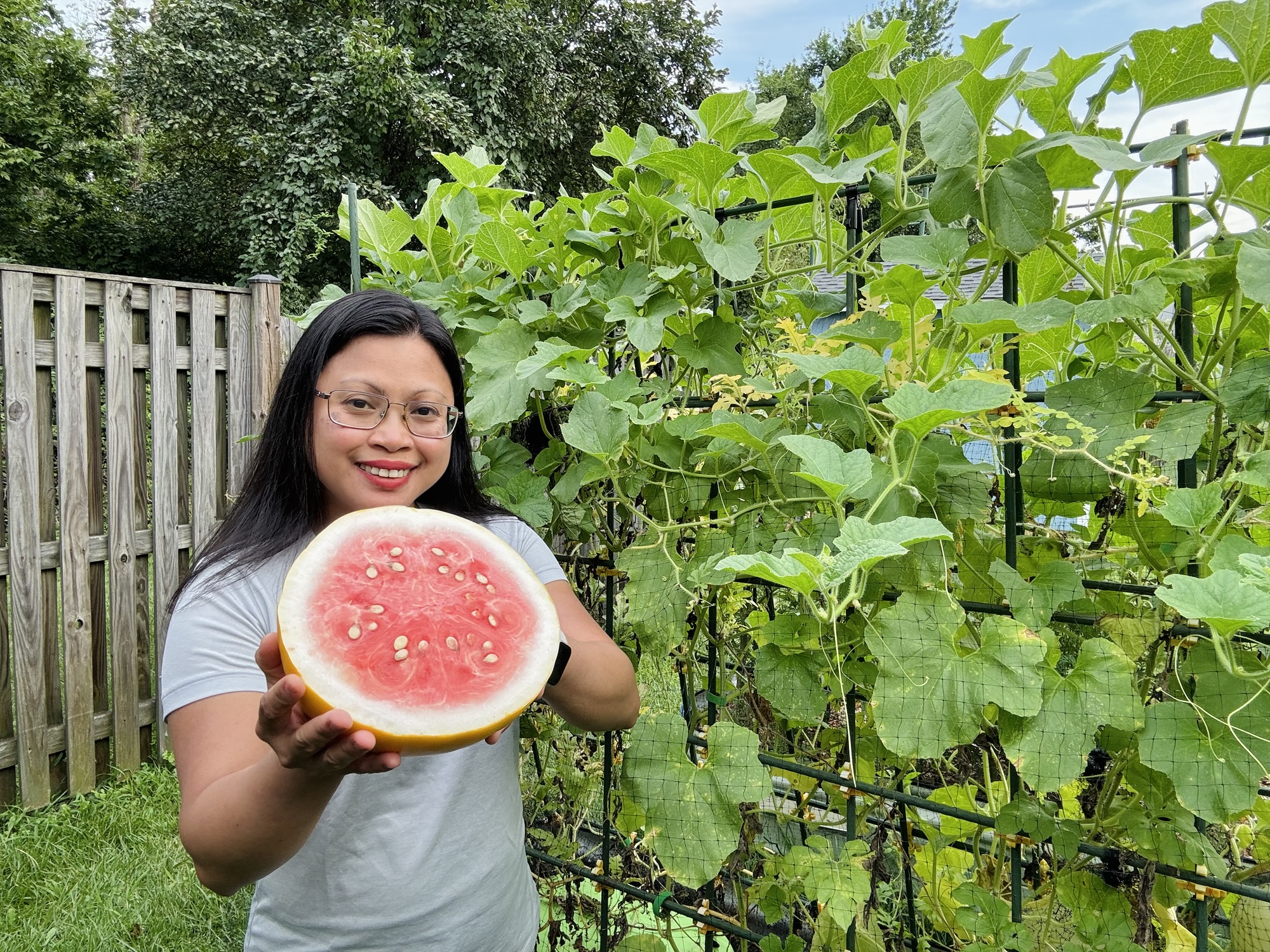
There’s nothing quite like summer than cutting open a homegrown watermelon.
After months of watching the vines grow, waiting for flowers to be pollinated, and checking the fruit as it gets bigger, finally slicing into one feels like such a reward.
And that first bite of a sweet, juicy watermelon you grew yourself? That’s summer in the garden.
The crisp texture, sweet flavor, and refreshing juice make watermelon one of the most rewarding crops you can grow. While many people think they need a huge garden, it’s absolutely possible to grow watermelons in smaller spaces by choosing the right varieties and growing vertically.

In my Maryland Zone 7 garden, I grow watermelons on an A-frame trellis to save space. Some of my favorite varieties include Crimson Sweet and Royal Golden. Training the vines upward has allowed me to grow watermelons without sacrificing valuable garden space, and it’s become one of my favorite ways to maximize a small backyard.
If you’ve been dreaming of harvesting your own watermelon, here’s everything you need to know.
Why Grow Watermelon?
Watermelons are worth growing because they:
- Taste sweeter when vine-ripened
- Come in many sizes and colors
- Grow well in raised beds and gardens
- Can be grown vertically
- Produce impressive summer harvests
- Are fun for the whole family to grow
- Thrive in warm climates
Nothing compares to picking a watermelon you’ve grown yourself.
Choosing the Right Variety
Not all watermelons are the same.
When selecting a variety, consider:
- Days to maturity
- Fruit size
- Vine length
- Disease resistance
- Space available
- Growing season length
Smaller or “icebox” varieties are often the easiest choice for small gardens and vertical growing.
Some favorites in my garden include:
- Crimson Sweet
- Royal Golden
Both have produced delicious fruit in my Zone 7 garden.
When to Plant Watermelon
Watermelon is a warm-season crop.

Wait until:
- All danger of frost has passed.
- Soil temperatures have warmed.
- Nighttime temperatures remain consistently warm.
Cold soil delays germination and slows growth significantly.
In Central Maryland, that usually means planting after the average last frost, once the weather has truly settled into spring.
Starting Seeds Indoors
Because watermelon dislikes root disturbance, many gardeners prefer direct sowing.
However, if your growing season is short, you can start seeds indoors about 3 to 4 weeks before transplanting.
Use:
- Individual pots
- Soil blocks
Handle seedlings carefully during transplanting to minimize root disturbance.
Direct Sowing
Direct sow seeds:
- About 1 inch deep
- Into warm soil
- After frost danger has passed
Plant several seeds together, then thin to the strongest seedling.
Direct sowing often produces the healthiest plants.
How Much Sun Does Watermelon Need?
Watermelon loves sunshine.
Provide:
At least 8 hours of direct sunlight each day.
More sun generally results in:
- Stronger vines
- Better flowering
- Sweeter fruit
- Faster ripening
Choose one of the sunniest spots in your garden.
The Best Soil
Watermelons prefer soil that is:
- Well-drained
- Rich in organic matter
- Fertile
- Loose
Before planting:
- Add compost.
- Remove weeds.
- Loosen compacted soil.
- Improve drainage if needed.
Healthy soil supports healthy vines.
Growing Watermelon in Raised Beds
Raised beds work beautifully because they:
- Warm earlier in spring
- Drain well
- Improve soil quality
- Make maintenance easier
Many gardeners find raised beds produce healthier watermelon plants than heavy clay soils.
Growing Watermelon Vertically
One of my favorite ways to grow watermelon is vertically.
A sturdy trellis:
- Saves space
- Improves airflow
- Makes harvesting easier
- Keeps fruit cleaner
- Allows better inspection for pests and disease
I grow mine on a strong A-frame trellis, which has worked wonderfully in my small backyard.
Supporting the Fruit
As the fruit grows, larger watermelons need additional support.
You can create slings using:
- Old T-shirts
- Mesh produce bags
- Nylon stockings
- Soft fabric
Attach the sling securely to the trellis—not to the vine—so it supports the fruit’s weight as it grows.
Can Watermelon Grow in Containers?
Yes, if you choose:
- Compact varieties
- Large containers (15–20 gallons or larger)
- Excellent drainage
- A sturdy trellis
Container plants require more frequent watering than those in raised beds.
Watering
Consistent watering is essential during:
- Vine growth
- Flowering
- Fruit development
Water deeply rather than frequently.
Avoid wetting the foliage whenever possible.
As harvest approaches, avoid large fluctuations in soil moisture, which may contribute to fruit cracking.
Mulching
Mulch helps:
- Conserve moisture
- Suppress weeds
- Keep fruit clean
- Moderate soil temperature
Good mulch options include:
- Straw
- Shredded leaves
- Compost
Wait until the soil has warmed before applying a thick layer.
Fertilizing
Watermelons benefit from fertile soil.
Before planting:
- Incorporate compost.
- Apply a balanced fertilizer if needed.
Avoid excessive nitrogen after flowering begins, as it can encourage vine growth at the expense of fruit production.
Understanding Watermelon Flowers
Watermelon plants produce separate:
- Male flowers
- Female flowers
Male flowers appear first.
Female flowers can be recognized by the tiny watermelon behind the blossom.
Pollination
Watermelons depend on bees and other pollinators.
Poor pollination can result in:
- Misshapen fruit
- Small fruit
- Fruit that stops growing
- Fruit that drops prematurely
Growing flowers nearby helps attract pollinators.
Hand-Pollinating Watermelons
If pollinators are scarce:
- Pick a freshly opened male flower.
- Remove the petals.
- Touch the pollen-covered center to the female flower.
A small paintbrush can also be used.
Hand-pollination is especially useful if plants are growing beneath insect netting.
Common Problems
Fruit Doesn’t Develop
Possible causes include:
- Poor pollination
- Water stress
- Heat stress
- Young plants
Yellow Leaves
Possible causes include:
- Overwatering
- Underwatering
- Nutrient deficiency
- Aging foliage
Cracked Fruit
Often caused by sudden changes in soil moisture after dry conditions.
Consistent watering helps reduce this problem.
Common Pests
Watch for:
- Cucumber beetles
- Aphids
- Squash bugs
- Spider mites
Inspect plants regularly throughout the season.
Common Diseases
Possible diseases include:
- Powdery mildew
- Downy mildew
- Fusarium wilt
- Anthracnose
Good spacing and airflow help reduce disease pressure.
Protecting Young Plants
Insect netting can help protect seedlings from cucumber beetles early in the season.
Remove the cover when flowering begins unless you plan to hand-pollinate every female flower.
When Is Watermelon Ready to Harvest?
Unlike cantaloupes, watermelons do not slip from the vine when ripe.
Instead, watch for several signs together:
- The curly tendril closest to the fruit turns brown and dries.
- The ground spot changes from white to creamy yellow.
- The rind becomes dull rather than shiny.
- The fruit sounds deeper when tapped.
- The expected days to maturity have passed.
No single sign is perfect, so use several indicators before harvesting.
How to Harvest
Use clean pruning shears.
Cut the stem rather than pulling the fruit.
Handle carefully to avoid bruising.
Storing Watermelon
Whole watermelons can be stored at room temperature for a short time if fully ripe.
After cutting:
- Refrigerate promptly.
- Cover the cut surface.
- Eat within several days.
Saving Seeds
Open-pollinated varieties can be saved for future planting.
Choose:
- Fully mature fruit
- Healthy plants
Wash the seeds, dry them thoroughly, and store them in a cool, dry place.
Hybrid varieties may not grow true from saved seed.
My Experience Growing Watermelon
Growing watermelons vertically has completely changed how I use my garden space.
Instead of allowing vines to spread across the ground, my A-frame trellis lets them climb upward while freeing space underneath for other crops.
I’ve had wonderful success growing both Crimson Sweet and Royal Golden, and watching the melons develop in their slings is one of my favorite parts of summer gardening.
It proves that even gardeners with modest spaces can enjoy harvesting homegrown watermelons.
Watermelon Growing Checklist
- Choose a variety suited to your growing season.
- Wait for warm soil.
- Plant in full sun.
- Improve soil with compost.
- Install a sturdy trellis if growing vertically.
- Support heavy fruit.
- Water consistently.
- Encourage pollinators.
- Watch for pests and disease.
- Harvest only when fully ripe.
Final Thoughts
Watermelon may take a little patience, but it’s one of the most rewarding summer crops you can grow.
With warm weather, fertile soil, and plenty of sunshine, you’ll be well on your way to harvesting sweet, juicy fruit.
If you’re gardening in a small space, don’t let the vines discourage you. Growing vertically on a sturdy trellis can make watermelon surprisingly manageable while adding a beautiful focal point to your garden.
Frequently Asked Questions
Are watermelons difficult to grow?
Not particularly. They need warm weather, full sun, consistent watering, and good pollination, but they’re manageable for most home gardeners.
Can watermelon grow on a trellis?
Yes. Many varieties grow very well vertically. Larger fruit should be supported with fabric or mesh slings.
How much sun does watermelon need?
Watermelon grows best with at least 8 hours of direct sunlight daily.
Can I grow watermelon in containers?
Yes. Choose a compact variety, a large container, and provide a sturdy trellis.
How do I know when a watermelon is ripe?
Look for several signs together, including a dry tendril near the fruit, a creamy yellow ground spot, a dull rind, and the appropriate days to maturity.
Do I need more than one watermelon plant?
No. Watermelon plants produce both male and female flowers, but they do require pollinators—or hand-pollination—for successful fruit set.
Why are my baby watermelons falling off?
The most common cause is poor pollination, though environmental stress and inconsistent watering can also contribute.
Related Articles
- How to Grow Melons
- How to Grow Cucumbers
- How to Grow Vertically in Small Spaces
- Vertical Gardening with Trellises
- How to Build Healthy Garden Soil from the Start
- How to Mulch Your Garden Properly
- Best Fruits for Small-Space Gardens
- How to Hand-Pollinate Melons
- When to Harvest Watermelon
- Container Gardening for Beginners
This page contains affiliate links to my brand partners like Vego Garden, GreenStalk, Walmart & Amazon at no extra cost to you.
Your support helps me create free gardening content. Thank you!


Leave a Reply