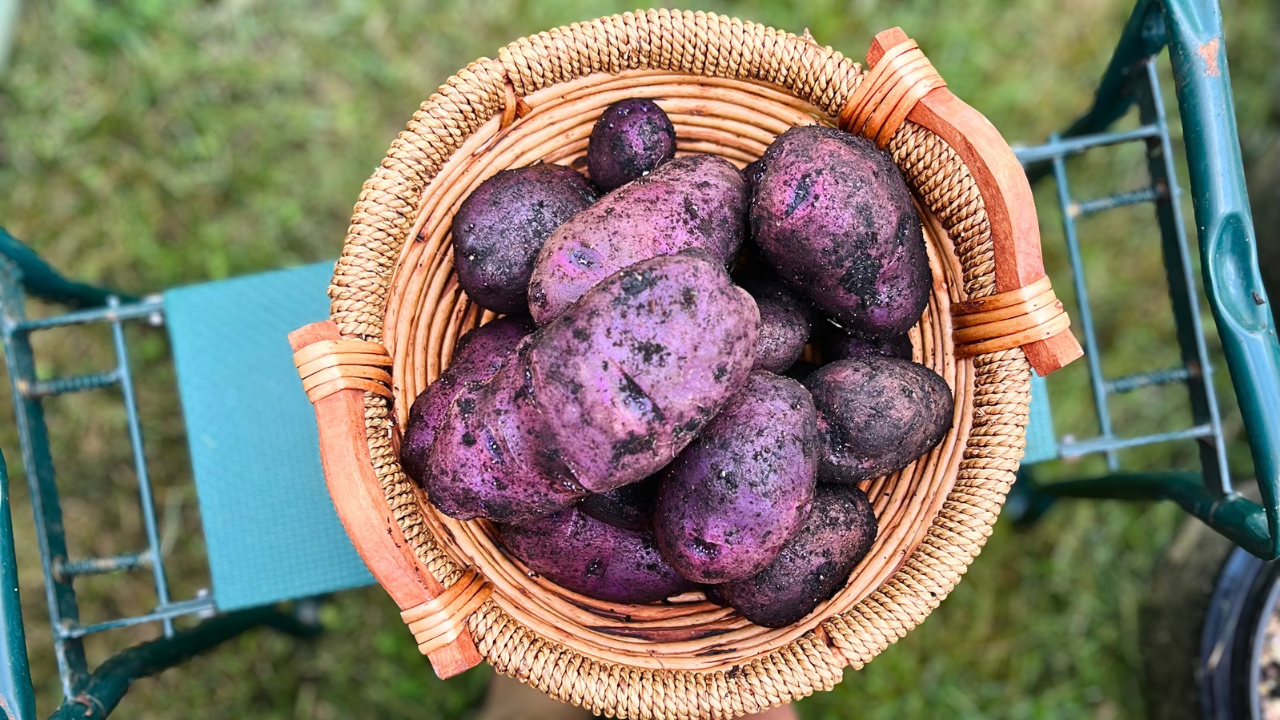
There’s nothing quite like harvesting potatoes you’ve grown yourself.
Unlike many vegetables where the harvest is visible every day, potatoes stay hidden beneath the soil until harvest time. Every time I dig beneath a plant, it feels like uncovering buried treasure. You never know exactly how many potatoes you’ll find until you lift the plant.

The good news is that potatoes are surprisingly easy to grow, even if you don’t have a traditional vegetable garden. They thrive in raised beds, containers, and grow bags, making them a great crop for gardeners with limited space.
Here’s everything you need to know about growing potatoes successfully.
Why Grow Your Own Potatoes?
Homegrown potatoes offer several advantages:
- Incredible fresh flavor
- Dozens of varieties unavailable in grocery stores
- Excellent storage potential
- High yields from a small space
- Easy to grow for beginners
- Fun to harvest with children and family

Growing your own also lets you experiment with colorful potatoes, fingerlings, and gourmet varieties.
Choosing the Right Potato Variety
Potatoes are generally grouped into three categories based on how quickly they mature.
Early Potatoes
- Ready in about 70–90 days
- Smaller plants
- Earlier harvests
- Great for fresh eating
Mid-Season Potatoes
- Mature in about 90–110 days
- Good balance of yield and storage
Late Potatoes
- Mature in about 110–135 days
- Larger harvests
- Best for long-term storage
Choose varieties that fit your growing season and how you plan to use them.
Seed Potatoes vs. Grocery Store Potatoes
Always grow potatoes from certified seed potatoes whenever possible.

Seed potatoes are:
- Disease-free
- Intended for planting
- Less likely to introduce problems into your garden
Grocery store potatoes are often treated to reduce sprouting and may carry diseases.
When to Plant Potatoes
Potatoes prefer cool weather.
Plant them in early spring once:
- The soil can be worked.
- The danger of extremely hard freezes has passed.
- Soil temperatures are around 45–50°F (7–10°C) or warmer.
In my Maryland Zone 7 garden, potatoes are typically planted in early spring for a summer harvest.
Chitting Seed Potatoes
Many gardeners “chit” potatoes before planting.

This simply means allowing seed potatoes to sprout indoors for a few weeks before planting.
To chit potatoes:
- Place them in a bright, cool location.
- Allow short, sturdy sprouts to develop.
- Plant carefully without breaking the sprouts.
While not required, chitting can give potatoes a head start.
Cutting Seed Potatoes
Large seed potatoes can be cut into smaller pieces.


Each piece should have:
- At least one or two healthy eyes
- Enough potato attached to support early growth
Allow freshly cut pieces to dry for a day or two before planting to help reduce the risk of rot.
Small seed potatoes can be planted whole.
How Much Sun Do Potatoes Need?
Potatoes grow best in:
Full sun (6–8 hours or more)
More sunlight encourages:
- Stronger plants
- Better tuber production
- Healthier foliage
The Best Soil
Potatoes prefer soil that is:
- Loose
- Well-draining
- Rich in organic matter
- Slightly acidic
Loose soil allows the tubers to expand easily.
Heavy clay soil can produce misshapen potatoes.
Adding compost before planting greatly improves soil quality.
Planting Potatoes
Plant seed potatoes:
- About 4 inches deep
- Eyes facing upward
- 10–12 inches apart
Space rows about 24–36 inches apart if growing in the ground.
Water thoroughly after planting.
Growing Potatoes in Raised Beds
Raised beds are one of my favorite ways to grow potatoes because they provide:
- Excellent drainage
- Loose soil
- Easier harvesting
- Better soil control
Harvesting is also much easier than digging in compacted ground.
Growing Potatoes in Grow Bags
Grow bags are another excellent option.


Advantages include:
- Easy harvesting
- Great drainage
- Ideal for patios
- Perfect for small spaces
Simply dump out the bag at harvest time to collect your potatoes.
Do Potatoes Need Hilling?
Yes.
As potato plants grow, gradually mound soil around the stems.
This process is called hilling.


Hilling helps:
- Prevent potatoes from turning green
- Encourage additional tuber production
- Protect developing potatoes from sunlight
Hill the plants every few weeks as they grow until the mound reaches several inches high.
Watering
Potatoes need consistent moisture, especially during:
- Tuber formation
- Flowering
- Dry weather
Avoid allowing the soil to completely dry out.
Deep watering is better than frequent shallow watering.
Mulching
Mulch helps:
- Retain moisture
- Reduce weeds
- Moderate soil temperature
Good mulch choices include:
- Straw
- Shredded leaves
- Compost

Mulching can also reduce the amount of hilling needed.
Fertilizing
Potatoes benefit from fertile soil.
Before planting:
- Add compost.
- Incorporate a balanced fertilizer if needed.
Avoid excessive nitrogen, which encourages leafy growth instead of potato production.
Potato Flowers
Many potato plants produce attractive flowers.
Some gardeners assume flowering means harvest time.

While flowering indicates tubers are developing, it doesn’t necessarily mean they’re fully mature.
Use the foliage as your harvest guide instead.
Common Problems
Green Potatoes
Potatoes exposed to sunlight turn green.
Green potatoes contain increased levels of solanine and should not be eaten.
Prevent this by:
- Hilling
- Mulching
- Keeping tubers covered
Small Harvest
Possible causes include:
- Poor soil
- Inadequate watering
- Overcrowding
- Lack of sunlight
- Insufficient fertility
Common Pests
Watch for:
- Colorado potato beetles
- Aphids
- Flea beetles
- Wireworms
Inspect plants regularly throughout the growing season.
Common Diseases
Possible diseases include:
- Early blight
- Late blight
- Scab
- Blackleg
- Soft rot
Crop rotation and healthy soil help reduce disease pressure.
When to Harvest New Potatoes
New potatoes are harvested while still young.
You can gently dig around the plant and remove a few small potatoes once flowering begins, leaving the rest to continue growing.
These tender potatoes have thin skins and are best eaten fresh.
When to Harvest Mature Potatoes
For storage potatoes, wait until:
- The foliage turns yellow.
- The vines die back.
- The skins have thickened.
This usually happens several weeks after flowering.
Avoid harvesting immediately after heavy rain.
How to Harvest Potatoes
Choose a dry day.
Using a garden fork:
- Loosen the soil several inches away from the plant.
- Lift carefully.
- Search gently through the soil for hidden potatoes.
- Avoid stabbing or bruising the tubers.
Even small potatoes are delicious and worth saving.
Curing Potatoes
Before long-term storage:
- Brush off excess soil.
- Do not wash them.
- Cure them in a cool, dark, well-ventilated location for about 1–2 weeks.
Curing toughens the skins and improves storage life.
Storing Potatoes
Store cured potatoes in:
- A cool location
- Darkness
- Good airflow
Avoid storing potatoes in the refrigerator, which can affect their flavor and texture.
Regularly inspect stored potatoes and remove any that begin to spoil.
Saving Seed Potatoes
Healthy potatoes from open-pollinated varieties can often be saved for planting the following season.
Choose:
- Disease-free plants
- Healthy tubers
- Medium-sized potatoes
Proper storage is essential until planting time.
My Experience Growing Potatoes
One of my favorite parts of growing potatoes is the harvest itself.
There’s always a sense of anticipation as I dig into the soil, wondering what’s hidden beneath each plant. Some years the harvest is bigger than expected, while other years teach me valuable lessons about watering, spacing, or soil preparation.
No matter the outcome, harvesting potatoes never gets old. It’s one of the most rewarding experiences in the vegetable garden.
Potato Growing Checklist
- Choose certified seed potatoes.
- Plant in cool spring weather.
- Provide full sun.
- Improve soil with compost.
- Plant with eyes facing up.
- Hill plants regularly.
- Water consistently.
- Mulch to conserve moisture.
- Watch for pests and diseases.
- Harvest after the foliage dies back.
- Cure before long-term storage.
Final Thoughts
Potatoes are one of the easiest and most satisfying vegetables to grow.
Whether you’re planting in raised beds, grow bags, or containers, they reward a little patience with an exciting harvest hidden beneath the soil.
If you’ve never grown potatoes before, give them a try. Digging up your first homegrown potatoes is a gardening experience you’ll never forget.
Frequently Asked Questions
Are potatoes easy to grow?
Yes. Potatoes are beginner-friendly and grow well in raised beds, containers, and grow bags with proper care.
Can I grow potatoes in containers?
Absolutely. Large containers and grow bags are excellent choices for growing potatoes in small spaces.
Should I hill potatoes?
Yes. Hilling protects developing potatoes from sunlight, helps prevent greening, and can encourage better tuber production.
How long do potatoes take to grow?
Depending on the variety, potatoes usually mature in 70 to 135 days.
Can I plant grocery store potatoes?
It’s best to use certified seed potatoes because they’re less likely to carry diseases and are intended for planting.
Why are my potatoes green?
Green potatoes have been exposed to sunlight. Cover developing tubers with soil or mulch to prevent greening, and avoid eating green portions because they may contain elevated levels of solanine.
When should I harvest potatoes?
Harvest new potatoes shortly after flowering for tender, thin-skinned potatoes. Wait until the foliage dies back for mature storage potatoes.
Related Articles
- When to Harvest Potatoes
- How to Store Potatoes After Harvest
- Raised Beds vs. Containers: Which Is Better?
- Best Vegetables for Beginners
- How to Build Healthy Garden Soil from the Start
- How to Mulch Your Garden Properly
- Understanding Frost Dates
- What to Plant in Spring (Zone 7 Guide)
- Container Gardening for Beginners
- How to Grow Sweet Potatoes
This page contains affiliate links to my brand partners like Vego Garden, GreenStalk, Walmart & Amazon at no extra cost to you.
Your support helps me create free gardening content. Thank you!


Leave a Reply