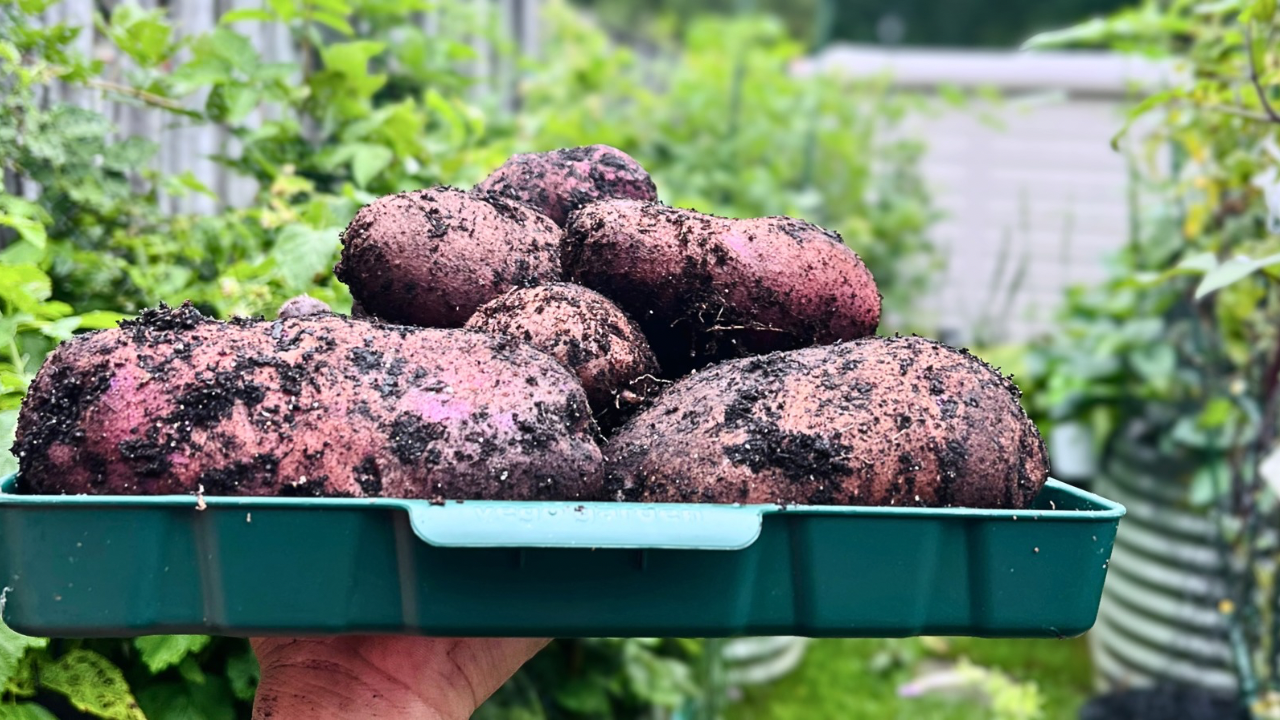
Harvesting potatoes is one of the most exciting moments in the vegetable garden.
Unlike tomatoes, peppers, or cucumbers, you can’t see the harvest as it develops. The potatoes grow quietly beneath the soil, and you won’t know exactly what you’ve grown until you carefully dig them up.
The challenge is knowing when to harvest.

Dig too early, and you’ll end up with small potatoes that haven’t reached their full potential. Wait too long, and you may risk damage from pests, disease, or wet weather.
Fortunately, potato plants give several clear signs when they’re ready.
Why Harvest Timing Matters
Harvesting at the right time helps you enjoy:
- Larger potatoes
- Better flavor
- Thicker skins for storage
- Longer shelf life
- Better overall quality
The timing depends on whether you want new potatoes or mature storage potatoes.
New Potatoes vs. Mature Potatoes
New Potatoes
New potatoes are:
- Small and tender
- Thin-skinned
- Moist and creamy
- Best eaten fresh
They’re perfect for roasting, boiling, and steaming.
Mature Potatoes
Storage potatoes are:
- Fully grown
- Thick-skinned
- Better for long-term storage
- Ideal for baking, mashing, frying, and roasting
Knowing which type you want determines when to harvest.
When to Harvest New Potatoes
You don’t have to wait until the plant dies.
Most gardeners begin harvesting new potatoes:
- Shortly after flowering
- About 2 to 3 weeks after blooms appear
- Once the tubers are large enough to eat

You can gently dig beside the plant and remove a few potatoes while leaving the rest to continue growing.
This allows you to enjoy fresh potatoes while still getting a later harvest.
Keep in mind that not all potato varieties flower. If your plants don’t bloom, you can still carefully check beneath the soil once the plants are well established and producing healthy foliage.
When to Harvest Mature Potatoes
For the biggest harvest and longest storage life, wait until the plants begin naturally finishing their growing season.

Look for these signs:
1. The Foliage Turns Yellow
One of the first signs is yellowing leaves.
The plant begins directing its energy away from the foliage and into finishing the tubers.
2. The Vines Die Back
Eventually the stems and leaves turn brown and collapse.
This is one of the clearest indicators that the potatoes have reached maturity.
3. The Skins Have Toughened
After the vines die back, many gardeners wait about one to two weeks before harvesting.
This extra time allows the potato skins to thicken, improving storage life.
You can test one potato by gently rubbing the skin with your thumb.
If the skin rubs off easily, give the crop a little more time.
If it stays firmly attached, they’re ready to harvest.
Days to Maturity
Your seed potato supplier will usually list the expected days to maturity.

Use these as estimates rather than exact harvest dates.
Weather and growing conditions can affect maturity.
Don’t Harvest Immediately After Rain
Wet soil can:
- Make harvesting difficult
- Increase the chance of damaging potatoes
- Encourage rot during storage
Whenever possible, choose a dry day for harvesting.
How to Harvest Potatoes
Instead of pulling on the stems:
- Use a garden fork or digging fork.
- Start several inches away from the plant.
- Loosen the soil carefully.
- Lift the entire plant.
- Search through the soil for hidden potatoes.


Work slowly to avoid puncturing the tubers.
Even small potatoes are worth saving.
Handle Potatoes Gently
Freshly harvested potatoes bruise easily.
Avoid:
- Throwing them into buckets
- Dropping them
- Scraping them against tools
Damaged potatoes should be eaten first because they don’t store well.
Should You Wash Potatoes After Harvest?
No—not if you’re storing them.
Instead:
- Brush off loose soil.
- Leave the skins dry.
- Wash only before cooking.
Moisture shortens storage life.
Cure Potatoes Before Storage
Freshly harvested potatoes benefit from curing.
Place them in a:
- Cool location
- Dark place
- Well-ventilated area
for about 1 to 2 weeks.
Curing allows:
- Minor scratches to heal
- Skins to toughen
- Better long-term storage
Storing Potatoes
After curing, store potatoes in:
- Cool temperatures (around 45–50°F / 7–10°C)
- Darkness
- Good air circulation
Avoid:
- Direct sunlight
- Warm rooms
- Plastic bags
- Refrigerators
Check stored potatoes regularly and remove any that begin to spoil.
Common Harvest Mistakes
Harvesting Too Early
Potatoes may be:
- Small
- Thin-skinned
- Difficult to store
Waiting Too Long
Leaving potatoes in the ground too long can expose them to:
- Rot
- Rodents
- Insects
- Wet weather
- Freezing temperatures in colder climates
Can You Leave Potatoes in the Ground?
For a short time, yes.
However, once the plants have died back, it’s generally better to harvest before prolonged rain or cold weather arrives.
Leaving mature potatoes in wet soil increases the risk of rot.
My Experience Harvesting Potatoes
Harvesting potatoes never gets old.
Every season feels a little like a treasure hunt because you never know exactly how many potatoes are hiding beneath the soil.
I’ve learned that waiting for the foliage to naturally die back—and giving the skins time to toughen—results in potatoes that store much better through the months ahead.
The anticipation of lifting each plant is one of my favorite parts of growing potatoes.
Potato Harvest Checklist
Before harvesting mature potatoes, check for:
□ Foliage has turned yellow
□ Vines have died back
□ Potato skins don’t rub off easily
□ Dry weather for harvesting
□ Garden fork ready
□ Storage area prepared
Final Thoughts
Harvesting potatoes is one of the most rewarding experiences in the garden.
Whether you’re digging tender new potatoes for dinner or harvesting mature potatoes for winter storage, paying attention to the plants’ natural signals will help you harvest at just the right time.
A little patience at the end of the season often results in larger potatoes, tougher skins, and a crop that stores beautifully for months.
Frequently Asked Questions
How do I know when potatoes are ready to harvest?
Look for yellowing foliage, dying vines, and skins that no longer rub off easily. These are the best signs that mature potatoes are ready.
Can I harvest potatoes before the plant dies?
Yes. New potatoes can be harvested shortly after flowering or once the tubers are large enough to eat.
How long after flowering are potatoes ready?
New potatoes are often ready about 2 to 3 weeks after flowering, while mature potatoes usually need several more weeks until the foliage dies back.
Should I wash potatoes after harvesting?
No. Brush off loose soil and wash them only before cooking, especially if you plan to store them.
Why are my potatoes small?
Small potatoes can result from harvesting too early, overcrowding, inconsistent watering, poor soil, or insufficient sunlight.
How long should potatoes cure before storage?
Allow potatoes to cure for 1 to 2 weeks in a cool, dark, well-ventilated area before storing them.
Related Articles
- How to Grow Potatoes
- How to Store Potatoes After Harvest
- How to Grow Sweet Potatoes
- How to Build Healthy Garden Soil from the Start
- How to Mulch Your Garden Properly
- Best Vegetables for Beginners
- Understanding Frost Dates
- What to Plant in Spring (Zone 7 Guide)
- Raised Beds vs. Containers: Which Is Better?
- Container Gardening for Beginners
This page contains affiliate links to my brand partners like Vego Garden, GreenStalk, Walmart & Amazon at no extra cost to you.
Your support helps me create free gardening content. Thank you!



Leave a Reply