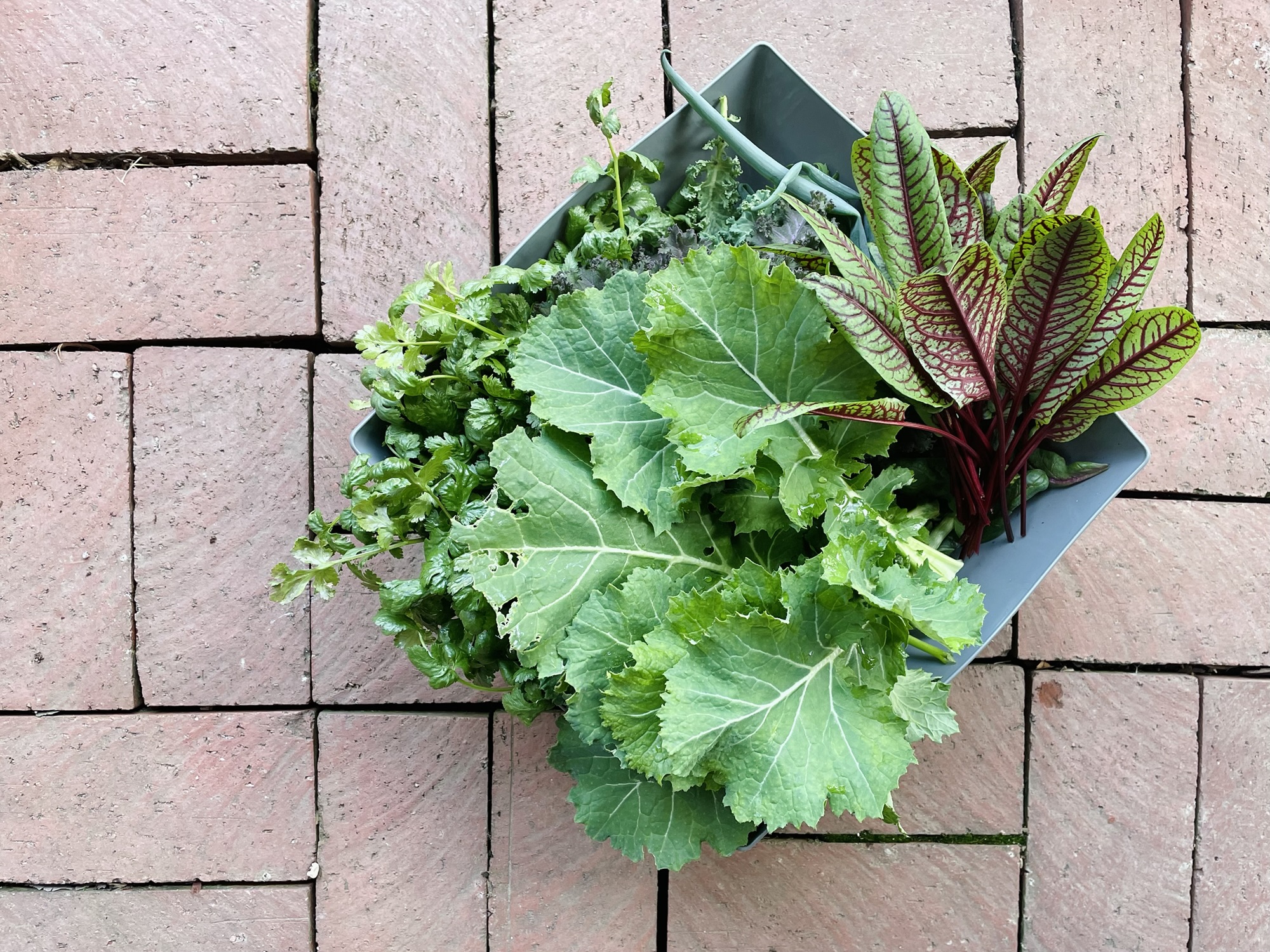
When most people think of gardening, they picture spring. Garden centers are full, seed packets fly off the shelves, and everyone is eager to plant tomatoes, peppers, and cucumbers.
But ask many experienced gardeners what their favorite season is, and you might be surprised by the answer.
For many of us, it’s fall.
In fact, I look forward to my fall garden every year. After months of battling heat, humidity, weeds, and relentless pests in my Maryland Zone 7 garden, the arrival of cooler weather feels like a fresh start. My leafy greens thrive, brassicas grow beautifully, and working outside becomes enjoyable again.

Fall gardening has a special place in my heart because the first official start of my garden was in the fall of 2020.
That summer, I had started learning a few things about gardening, collecting containers, and slowly building my soil. When I learned that I could keep growing into the fall, I decided to give it a try—and I’m so glad I did.

That first fall garden gave me the confidence to keep going. I couldn’t believe how many vegetables my little space produced, and it made me realize just how rewarding gardening could be.
I’ve been hooked ever since.
If you’ve only gardened in spring and summer, here’s why you’re missing one of the most rewarding seasons of the year.
Cooler Weather Means Happier Plants
Many vegetables simply perform better in cool weather.
Unlike tomatoes, peppers, and eggplants that love summer heat, crops like lettuce, spinach, kale, and broccoli often struggle when temperatures climb into the 90s.
Fall brings:
- Cooler days
- Crisp nights
- Less heat stress
- More consistent growth
Instead of racing to maturity before bolting, cool-season vegetables can focus on producing tender, flavorful leaves and heads.
Better-Tasting Vegetables
One of the biggest surprises for new fall gardeners is how much better many vegetables taste.
Cool temperatures help convert starches into natural sugars, making many crops sweeter.
You’ll notice this especially with:
Some gardeners even wait until after the first light frost to harvest certain vegetables because the flavor improves so much.
Fewer Garden Pests
By late summer and early fall, many insect populations begin to decline.
While you’ll still need to monitor your plants, you may notice fewer problems with:
- Aphids
- Squash bugs
- Squash vine borers
- Tomato hornworms
- Cucumber beetles
That doesn’t mean pests disappear entirely, but the pressure often becomes much more manageable than it was in midsummer.
Less Frequent Watering
Summer gardens often require daily watering, especially during heat waves.
As temperatures cool and daylight hours shorten, soil stays moist longer.
This means:
- Less watering
- Healthier root systems
- Lower water bills
- Less stress for gardeners
Your plants—and you—get a welcome break.
Weeds Slow Down Too
Warm weather encourages weeds to grow just as fast as vegetables.
As fall approaches, weed growth naturally slows, making garden maintenance much easier.
That means you can spend more time harvesting and less time pulling weeds.
You Can Grow a Whole New Garden
One of the biggest misconceptions is that gardening ends after summer.
In Zone 7, August and early September are actually the beginning of another growing season.
Many vegetables thrive when planted for fall, including:
- Lettuce
- Spinach
- Bok choy
- Napa cabbage
- Kale
- Swiss chard
- Arugula
- Radishes
- Turnips
- Carrots
- Beets
- Cilantro
- Dill
Instead of empty garden beds, you can enjoy fresh harvests well into autumn—and in some cases, even through winter with protection.
Fall Harvests Often Last Longer
Unlike lettuce planted in late spring that may bolt within weeks, fall-grown vegetables often remain productive much longer.
Leafy greens can be harvested repeatedly using the “cut-and-come-again” method, and many root vegetables can stay in the ground until you’re ready to use them.
With row covers or cold frames, your harvest season can stretch weeks or even months beyond your first frost.
It’s More Comfortable to Garden
Let’s be honest—gardening in July and August isn’t always pleasant.
Working in:
- 95°F temperatures
- High humidity
- Intense sunshine
can be exhausting.
Fall gardening often means:
- Comfortable mornings
- Pleasant afternoons
- Longer working sessions
- More enjoyable time outdoors
For many gardeners, that’s reason enough to love the season.
It’s the Perfect Time to Improve Your Soil
As summer crops finish, fall is an excellent opportunity to invest in next year’s garden.
You can:
- Add compost
- Spread shredded leaves
- Apply mulch
- Plant cover crops
- Build new raised beds
- Improve soil structure
These small efforts pay off with healthier, more productive plants in spring.
It’s Time to Plant Garlic
One of my favorite parts of fall gardening is planting garlic.
Garlic is planted in autumn, develops roots before winter, and rewards you with one of the first harvests of the following summer.
Preparing your garlic beds in fall is one of the easiest ways to set yourself up for success next season.
The Garden Feels New Again
By the end of summer, many gardeners are tired.
Tomato vines are sprawling, cucumber plants are fading, weeds have taken over, and the excitement of spring can feel like a distant memory.
Then fall arrives.
Suddenly you’re sowing seeds again, watching fresh seedlings emerge, and filling empty beds with new life.
There’s something incredibly encouraging about realizing the gardening season isn’t ending—it’s simply changing.
My Favorite Fall Crops
If I had to choose just a few vegetables to grow every fall, these would be at the top of my list:
- Bok choy
- Napa cabbage
- Lettuce
- Spinach
- Kale
- Garlic
- Cilantro
These crops have become staples in my Maryland Zone 7 garden because they thrive in cooler weather and provide fresh harvests long after my summer vegetables begin to fade.
Tips for a Successful Fall Garden
- Start planning while summer crops are still producing.
- Check your average first frost date.
- Choose fast-maturing varieties.
- Keep seedlings well-watered during hot weather.
- Use shade cloth if planting during heat waves.
- Refresh garden beds with compost before planting.
- Protect young seedlings from hungry insects with insect netting or row covers.
Starting early gives your vegetables plenty of time to establish before cooler temperatures arrive.
Final Thoughts
Fall may not receive as much attention as spring, but it’s one of the most productive and enjoyable times to grow food at home. Cooler temperatures, fewer pests, sweeter vegetables, and the opportunity to start a second growing season make autumn a favorite among experienced gardeners.
If you’ve never planted a fall garden before, this is the year to try it. You don’t need a large space or dozens of crops. Start with a few cool-season favorites like lettuce, spinach, or bok choy, and you may find yourself looking forward to fall gardening just as much as spring.
For me, fall isn’t the end of the gardening season—it’s the beginning of another beautiful chapter.
Frequently Asked Questions
Is fall really a good time to start gardening?
Absolutely. In many climates, including Zone 7, fall offers ideal growing conditions for cool-season vegetables. The soil is still warm from summer, encouraging quick root growth, while the cooler air reduces plant stress.
What vegetables grow best in a fall garden?
Some of the best choices include lettuce, spinach, kale, collard, bok choy, carrots, Swiss chard, cabbage, broccoli, cauliflower and cilantro.
When should I start planting a fall garden in Zone 7?
Many fall crops are planted from late July through September, depending on the vegetable and its days to maturity. Starting while summer is still in full swing ensures your crops have enough time to mature before hard frosts. If your planting cauliflower, broccoli, beets and cabbages I recommend starting those earlier than the leafy veggies.
Do I need to water a fall garden as much as a summer garden?
Usually not. As temperatures cool and days become shorter, soil stays moist longer. Young seedlings still need consistent watering while they establish, but mature fall crops often require less frequent irrigation than summer vegetables.
Can vegetables survive frost?
Many cool-season vegetables tolerate light frosts, and some—such as kale, spinach, carrots, and Brussels sprouts—often develop sweeter flavors after exposure to chilly temperatures.
Related Articles
Keep readers exploring your site with these helpful guides:
- What to Do in Your Garden in August (Zone 7 Guide)
- What to Plant in August (Zone 7 Guide)
- When to Start a Fall Garden in Zone 7
- Best Vegetables to Grow in a Fall Garden
- How to Transition Your Garden from Summer to Fall
- Succession Planting for Continuous Harvests
- How to Grow Bok Choyin a Small Garden: Tender Greens, Big Rewards
- How to Grow Kale in Raised Beds and Containers: What every gardener Should Know
- How to Grow Spinach
- How to Prepare Garden Beds for Fall Planting
- How to Grow Garlic
- Understanding Your USDA Hardiness Zone
This page contains affiliate links to my brand partners like Vego Garden, GreenStalk, Walmart & Amazon at no extra cost to you.
Your support helps me create free gardening content. Thank you!


Leave a Reply