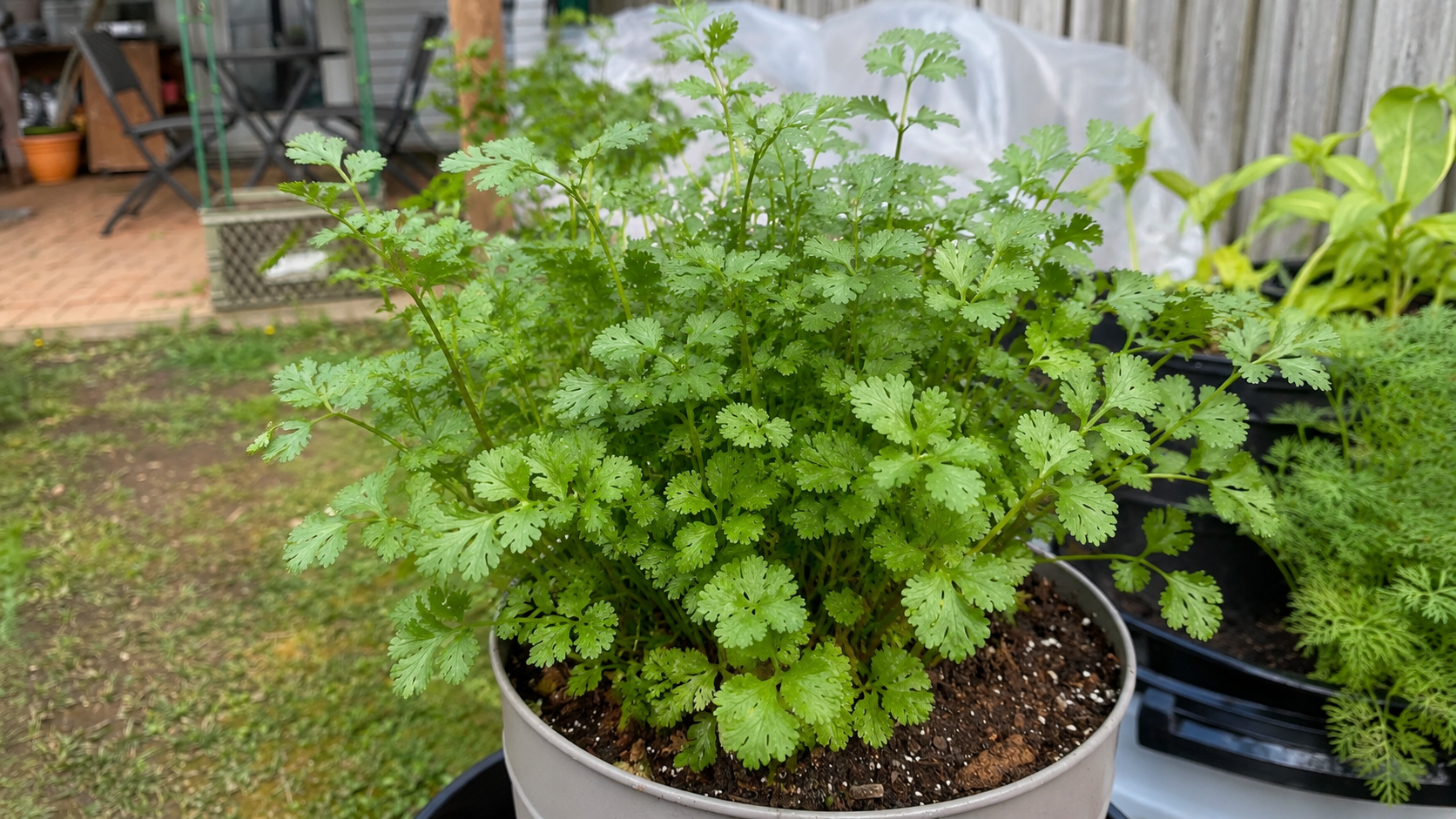
Cilantro is one of those herbs that gardeners either can’t get enough of—or struggle to keep alive.
Unlike basil, cilantro prefers cool weather and often bolts as soon as temperatures begin to rise. Once I understood this, growing it became much easier.
As someone who enjoys cooking Filipino and Asian dishes, cilantro is a staple in my kitchen. Its fresh leaves add bright flavor to soups, salsas, curries, salads, and noodle dishes, while its seeds—known as coriander—offer another useful spice from the same plant.

Here’s everything I’ve learned about growing healthy, productive cilantro.
Choose the Right Variety
Not all cilantro varieties perform the same, especially when it comes to bolting.
Some popular options include:
- Santo
- Calypso
- Cruiser
- Leisure
- Slow Bolt
If you garden in a warmer climate or want to extend your harvest, choosing a slow-bolting variety can make a noticeable difference. So far, I’ve tried the Calypso and Slow Bolt varieties.
Start from Seed
Cilantro grows best when direct-sown.
Because it develops a long taproot, it doesn’t transplant well. For best results, sow seeds directly into the garden about ¼ inch deep in well-prepared soil.
To speed up germination, gently crush the seed husk and soak the seeds overnight before planting. Under cool conditions, seeds typically sprout within 7–14 days.
You can technically buy cilantro starts from a nursery, but it’s usually not the best option. Transplanted cilantro often becomes stressed, which can cause it to bolt quickly and produce fewer leaves. If you do purchase starts, try to plant them as soon as possible and disturb the roots as little as you can.
In most cases, starting from seed is easier, more reliable, and more cost-effective—especially since cilantro grows quickly and benefits from succession planting.
Plant During Cool Weather
Timing is key when growing cilantro.
It thrives in:
- Early spring
- Fall
- Mild winters in warmer climates

As temperatures rise, cilantro naturally shifts into flowering and seed production. In my Maryland Zone 7 garden, I get the best results by planting in early spring and again in fall.
Give It Morning Sun
Cilantro enjoys sunlight, but too much afternoon heat can shorten its growing season.
I’ve found that planting it where it receives morning sun and afternoon shade helps extend its productivity. In smaller gardens, cilantro also does well beneath taller plants that provide light shade during the hottest part of the day.
This simple adjustment can significantly delay bolting.
Plant in Rich, Well-Draining Soil
Healthy soil makes a big difference in cilantro growth.
Before planting, I mix compost into the soil to improve fertility and moisture retention. Well-draining soil keeps roots healthy while supporting steady growth.
Water Consistently
Cilantro prefers evenly moist soil.
Allowing it to dry out repeatedly can stress the plants and trigger early flowering. Water whenever the top inch of soil feels dry.
Adding mulch around the plants helps retain moisture, keeps the soil cool, and reduces evaporation.
Succession Sow for Continuous Harvests
To enjoy cilantro over a longer period, succession planting is essential.
Instead of sowing all your seeds at once, plant a small batch every two to three weeks during the cool season. This ensures you always have fresh plants ready as older ones begin to bolt.
It’s a simple habit that keeps your harvest going.
Harvest Often
Regular harvesting encourages new growth.
Rather than picking a few leaves at a time, cut entire outer stems near the base. Leave the center intact so the plant can continue producing.


Harvesting early and often also helps maintain better flavor.
Let Some Plants Go to Seed
Even after cilantro bolts, it still has plenty to offer.
The flowers attract beneficial insects and pollinators, and once the seeds mature, you can:
- Harvest coriander seeds for cooking
- Save seeds for next season
- Let some seeds fall naturally
In my Maryland garden, cilantro has reseeded itself, giving me volunteer plants the following season—though I’ve learned those volunteers can sometimes become a snack for slugs.
Growing Cilantro in Containers
Cilantro grows well in containers, especially during spring and fall.
Choose a pot that’s deep enough for its taproot and has good drainage. In my experience, 2–3 gallon pots work well.
Place containers where they receive morning sun and some afternoon shade. One advantage of container gardening is the ability to move plants if temperatures suddenly rise.
Common Problems
Once you understand its preference for cool weather, cilantro is generally easy to grow.
Here are a few common issues:
Bolting
The most frequent challenge. Heat, drought stress, and long days naturally trigger flowering.
Yellow Leaves
Often caused by inconsistent watering or nutrient deficiencies.
Slow Growth
Usually due to poor soil, overcrowding, or insufficient sunlight.
Most problems can be avoided by planting at the right time of year.
Ways to Use Fresh Cilantro
Cilantro is incredibly versatile in the kitchen.
Some of my favorite uses include:
- Salsa
- Soups
- Curries
- Stir-fries
- Noodle dishes
- Tacos
- Salads
- Rice dishes
- Fresh spring rolls
- Homemade sauces
The seeds can also be harvested and used as coriander in spice blends and cooking.
What Works in My Maryland Garden
Over time, I’ve learned not to fight cilantro’s natural growing cycle.
Instead of trying to keep it alive through the heat of summer, I focus on growing it during the cooler months when it thrives. Providing morning sun, rich soil, and consistent moisture has given me the best results in my Maryland Zone 7 garden.
If you’re new to growing herbs, cilantro is a great place to start. Once you understand that it’s a cool-season plant, it becomes much easier to grow than many people expect.
If this guide helped you feel more confident about growing cilantro, save it for later and share it with another gardener. I’d love to know—do you harvest your cilantro before it flowers, or do you let some plants go to seed for coriander and volunteer seedlings?
This page contains affiliate links to my brand partners like Vego Garden, GreenStalk, Walmart & Amazon at no extra cost to you.
Your support helps me create free gardening content. Thank you!


Leave a Reply