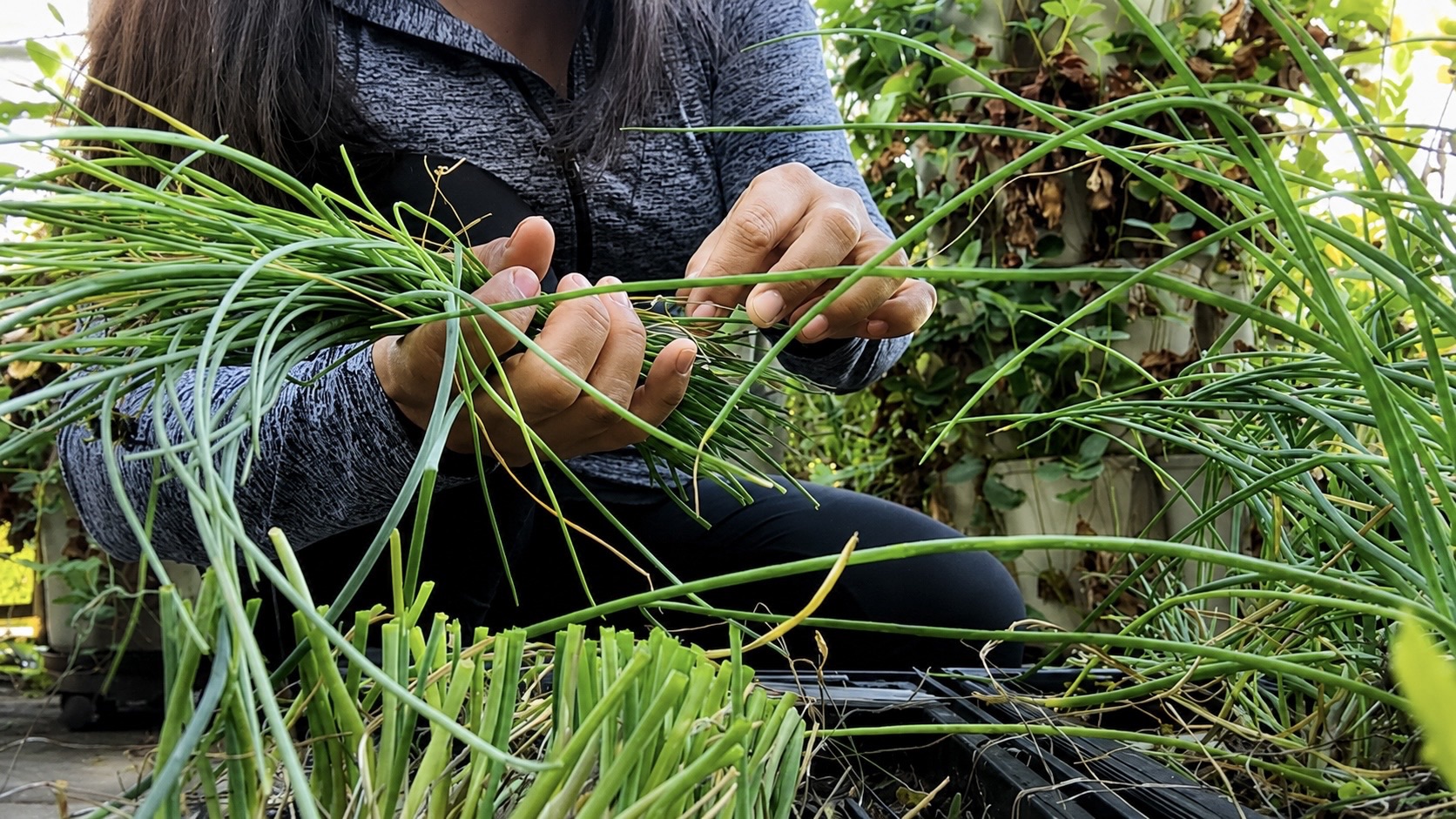
If I could only grow a handful of herbs, chives would definitely make the list.
They’re one of the first herbs to wake up in spring, incredibly easy to grow, and provide fresh harvests for months with very little effort. Their mild onion flavor makes them a wonderful addition to eggs, baked potatoes, soups, salads, stir-fries, and so many other dishes.

Best of all, chives are one of the most forgiving herbs for beginner gardeners.
Here’s everything I’ve learned about growing healthy, productive chives.
Choose the Right Type of Chives
There are two common types of chives that gardeners grow.
Common Chives
These produce hollow, grass-like leaves with a mild onion flavor and beautiful purple flowers.
They’re perfect for fresh cooking and garnishing dishes.
Garlic Chives
Garlic chives have flat leaves and a mild garlic flavor.
They produce attractive white flowers later in the season and are especially popular in many Asian dishes.

So far I only have common chives but I’m looking forward to growing both because they each bring something different to the kitchen.
Grow Chives from Seeds, Divisions, or Nursery Plants
Chives are easy to start in several ways.
From Seed
Start seeds indoors about 6–8 weeks before your last frost date or sow them directly outdoors after frost has passed.
Seeds germinate slowly, so be patient.
From Divisions
The fastest way to establish a productive clump is by dividing an existing plant.
Simply dig up a mature clump, separate it into smaller sections, and replant.
Nursery Plants
Young plants establish quickly and can usually be harvested within a few weeks of planting.
Give Chives Plenty of Sun
Chives grow best with at least 6 hours of sunlight each day.
In my Maryland garden, they also tolerate a little afternoon shade during the hottest part of summer.
Whether growing in containers or raised beds, choose a bright location for the healthiest plants.
Plant in Rich, Well-Draining Soil
Chives appreciate fertile soil with plenty of organic matter.
Before planting, I like to mix compost into the soil to improve both fertility and moisture retention.
Unlike Mediterranean herbs such as rosemary and thyme, chives prefer soil that stays evenly moist rather than drying out completely.
Water Consistently
Consistent moisture helps produce tender, flavorful leaves.
Water whenever the top inch of soil begins to dry.

Container-grown chives usually require more frequent watering than those growing in raised beds because containers dry out faster during summer. I love growing mine in self-watering planters.
Adding mulch around the plants also helps conserve moisture and suppress weeds.
Fertilize Lightly
Chives don’t require heavy feeding.
A yearly application of compost is often enough for garden-grown plants.
For containers, I occasionally use a balanced liquid fertilizer during the growing season to replenish nutrients lost through watering.
Harvest Often
Regular harvesting is the secret to productive chive plants.
Instead of pulling individual leaves, use clean scissors to cut leaves about 1–2 inches above the soil.


Leaving a small portion of the plant allows it to regrow quickly.
The more frequently you harvest, the more fresh growth you’ll encourage.
Don’t Forget the Flowers
One of my favorite things about growing chives is their beautiful blooms.
The purple flowers aren’t just ornamental—they’re also edible and attract bees and other beneficial pollinators to the garden.
I usually leave some flowers for the pollinators and harvest the rest before they begin producing seed.

If you don’t want chives self-seeding throughout your garden, remove the flowers after they’ve finished blooming.
Divide Plants Every Few Years
Over time, mature chive clumps become crowded.
Dividing them every 3–4 years helps rejuvenate the plants and keeps them producing plenty of fresh leaves.
It’s also an easy way to create more plants to grow elsewhere or share with friends.
Growing Chives in Containers
Chives are one of my favorite herbs for containers.
Their compact size makes them perfect for:
- Patio planters
- Raised beds
- Kitchen herb gardens
- Deck containers
- Window boxes

Ok As long as the container has drainage holes and receives plenty of sunlight, chives perform beautifully.
Common Problems
Fortunately, chives are one of the easiest herbs to grow.
However, you may occasionally encounter a few minor issues.
Yellow Leaves
Often caused by older foliage, overwatering, or nutrient deficiencies.
Slow Growth
Usually the result of overcrowded clumps that need dividing or insufficient sunlight.
Brown Leaf Tips
Can develop during periods of drought or inconsistent watering.
Fortunately, most problems are easily corrected with proper care.
Ways to Use Fresh Chives
Fresh chives add a mild onion flavor without overpowering a dish.
Some of my favorite ways to use them include:
- Scrambled eggs
- Omelets
- Baked potatoes
- Soups
- Broth
- Salads
- Stir-fries
- Cream cheese spreads
- Compound butter
- Dumplings
- Asian noodle dishes


Extra chives can be chopped and frozen for later use, making it easy to enjoy your harvest year-round.
What Works in My Maryland Garden
Chives have become one of the most dependable herbs in my Maryland Zone 7 garden.
Every spring they return with very little attention, and once they begin growing, I harvest them regularly throughout the season. I’ve found they perform especially well in raised beds and big containers where the soil stays consistently moist but drains well.
One of my favorite things about chives is how low maintenance they are. They don’t ask for much beyond sunshine, regular watering, and an occasional trim. In return, they provide months of fresh harvests and beautiful flowers that pollinators absolutely love.
If you’re looking for a hardy, productive herb that’s perfect for beginners and small-space gardens, chives are an excellent choice. Plant them once, care for them well, and they’ll reward you for years to come.
If this guide helped you feel more confident about growing chives, save it for future reference and share it with another gardener. I’d also love to know—do you prefer common chives or garlic chives in your kitchen?
This page contains affiliate links to my brand partners like Vego Garden, GreenStalk, Walmart & Amazon at no extra cost to you.
Your support helps me create free gardening content. Thank you!



Leave a Reply