Why I’ll Be Growing Little Jade Napa Cabbage Again
This isn’t my first year growing Little Jade Napa cabbage, but I still remember the first time I tried it. It was one of the varieties Renee’s Seeds sent for me to grow, and I was immediately impressed by how beautiful the seedlings were, along with their growth habit and overall performance in the garden.

I’d grown other types of cabbage before, but this compact Napa cabbage stood out with its beautiful heads, crisp texture, and productivity. By the end of that first season, I already knew I’d be growing it again.
If you’re looking for a cabbage that’s well-suited to raised beds and small gardens, here’s why I think Little Jade Napa cabbage deserves a place in your spring or fall garden.
What Is Little Jade Napa Cabbage?
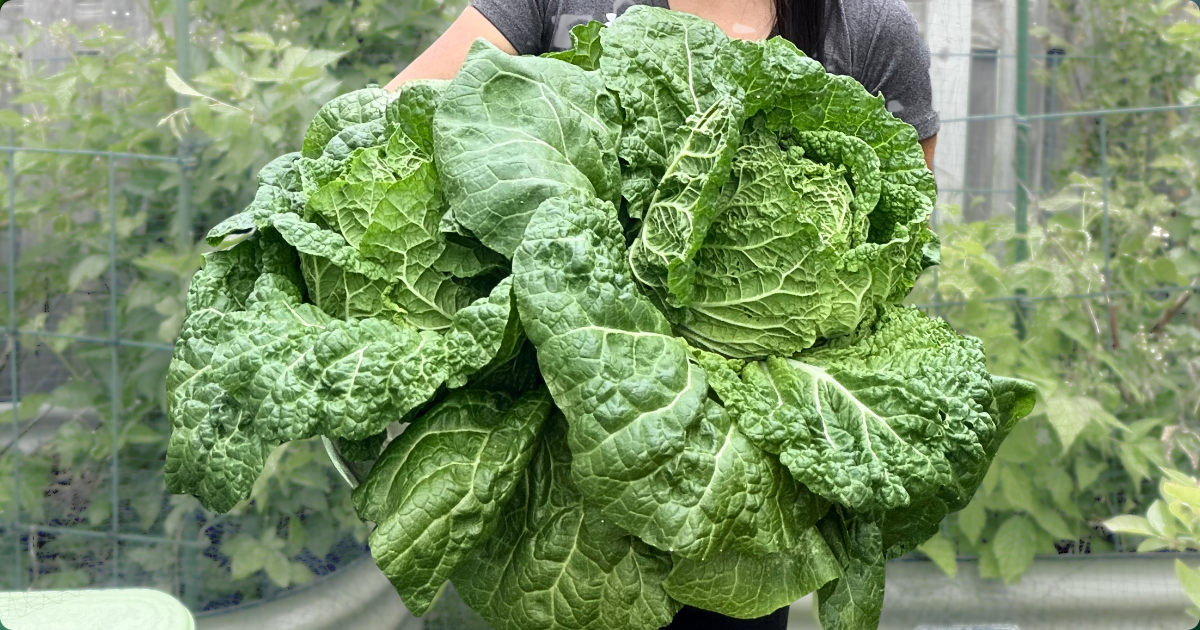
Little Jade is a compact variety of Napa cabbage that produces dense, upright heads with tender green leaves and crisp white stems.
Unlike traditional round cabbages, Napa cabbage has an elongated shape and a sweeter, more delicate flavor.

Because Little Jade stays relatively compact, it’s an excellent option for gardeners with limited growing space or anyone wanting a more manageable-sized cabbage.
It’s also perfect if you don’t need a giant cabbage all at once.
My Experience Growing Little Jade Napa Cabbage
The first time I grew Little Jade, it exceeded my expectations.
Despite the unpredictable spring weather here in Maryland, the plants grew steadily and formed beautiful, dense heads.
One thing I appreciated most was how well they fit into my raised beds without taking up as much space as larger cabbage varieties. I’ve also grown it in a 15-gallon container, where it produced a nice head, although I’ve found the heads tend to be larger when grown in raised beds, just like this year.

As someone who gardens in a relatively small backyard, I always appreciate vegetables that produce well while using space efficiently.
Little Jade checked all those boxes.
By harvest time, it had easily become one of my favorite brassicas of the season.
Why I Loved Growing It
It’s Perfect for Small-Space Gardens
One of the biggest advantages of Little Jade is its size.
The heads are compact enough to fit comfortably into raised beds, containers, and intensive planting layouts without feeling overcrowded.
For gardeners trying to maximize every square foot, that’s a huge benefit.
The Heads Were Beautiful and Dense
There’s something incredibly satisfying about harvesting a firm, tightly packed head of cabbage.
After weeks of watching the plants grow, seeing those heads finally come together made all the patience worthwhile.
Even after a spring with fluctuating temperatures, the plants produced impressive harvests.
It Was Delicious in the Kitchen
One of my favorite things about Little Jade was how versatile it was.
The leaves were tender enough to use fresh while still holding up well in cooked dishes.
I enjoyed using it in:
- Stir-fries
- Soups
- Fresh salads
- Egg rolls
- Kimchi
- Noodle dishes
Because the heads are smaller than standard Napa cabbage, they’re also easier to use before they lose freshness.

This year, I grew about six plants, which was quite a bit to use all at once—but I planned for the abundance. I cooked some fresh and froze most of the rest after blanching, using Souper Cubes trays to save space and make storage easier. I find this method especially convenient since I often use Napa cabbage in soups and stir-fries. I prefer the texture of frozen cabbage over dehydrated, so freezing has become my go-to way to preserve and enjoy the harvest beyond the season.
Tips for Growing Little Jade Napa Cabbage
Start Seeds Early
Little Jade is a cool-season crop that performs best in spring and fall.


Here in Maryland (Zone 7), I start seeds indoors in early to mid-January. I begin hardening off the seedlings in late February to early March and transplant them into the garden in early to mid-March.
Growing them under a hoop cover helps protect them from frost while also keeping cabbage worms and other pests from becoming a problem.
Starting early allows the plants to mature before the summer heat arrives.
Give It Rich Soil
Like most brassicas, Napa cabbage appreciates fertile soil.

Before planting, I amend my beds with compost or worm castings to improve soil health.
Healthy soil supports strong leaf growth and better head development throughout the season.
Keep Watering Consistent
Consistent moisture is one of the keys to growing beautiful cabbage.
Allowing the soil to repeatedly dry out can slow growth and reduce the quality of the heads.
Mulching around the plants helps conserve moisture and keeps the soil cooler as temperatures begin to warm.
Protect Against Pests
If there’s one challenge with growing brassicas, it’s pests.
Cabbage worms, flea beetles, and other insects can quickly damage leaves if left unchecked.
I grow my brassicas under insect netting for most of the season, which has made a tremendous difference in reducing pest damage while avoiding unnecessary sprays.
When to Harvest Little Jade Napa Cabbage
Harvest once the heads feel firm when gently squeezed.
Waiting too long can cause the heads to split or begin bolting as temperatures rise.
Use a sharp knife to cut the cabbage at the base, leaving the outer leaves behind to add to the compost pile.
Will I Grow It Again?
Without a doubt.
Every season, I look for vegetables that perform well, taste great, and make good use of my limited growing space.
Little Jade Napa cabbage checked every one of those boxes.
It produced beautiful heads, handled spring weather well, and became one of the vegetables I looked forward to harvesting the most.
It’s definitely earned a permanent place in my cool-season garden.
Final Thoughts
Little Jade Napa cabbage was one of my favorite discoveries this spring.
It reminded me that you don’t need giant vegetables to have a productive harvest. Sometimes the smaller, more compact varieties are exactly what a small-space garden needs.
From its crisp texture and mild flavor to its manageable size and dependable performance, this variety exceeded my expectations in nearly every way.
If you’re looking for a Napa cabbage that’s beginner-friendly, productive, and well-suited to raised beds or smaller gardens, I highly recommend giving Little Jade a try.
I’m already looking forward to growing it again next season.
Let’s Grow Together
Have you ever grown Napa cabbage or tried Little Jade in your garden?
I’d love to hear about your experience! Share your favorite cabbage varieties, growing tips, or recipes in the comments below.
If you enjoyed this review, be sure to explore my other garden journals, variety reviews, and seasonal growing guides as we continue learning and growing together.
This page contains affiliate links to my brand partners like Vego Garden, GreenStalk, Walmart & Amazon at no extra cost to you.
Your support helps me create free gardening content. Thank you!


Leave a Reply