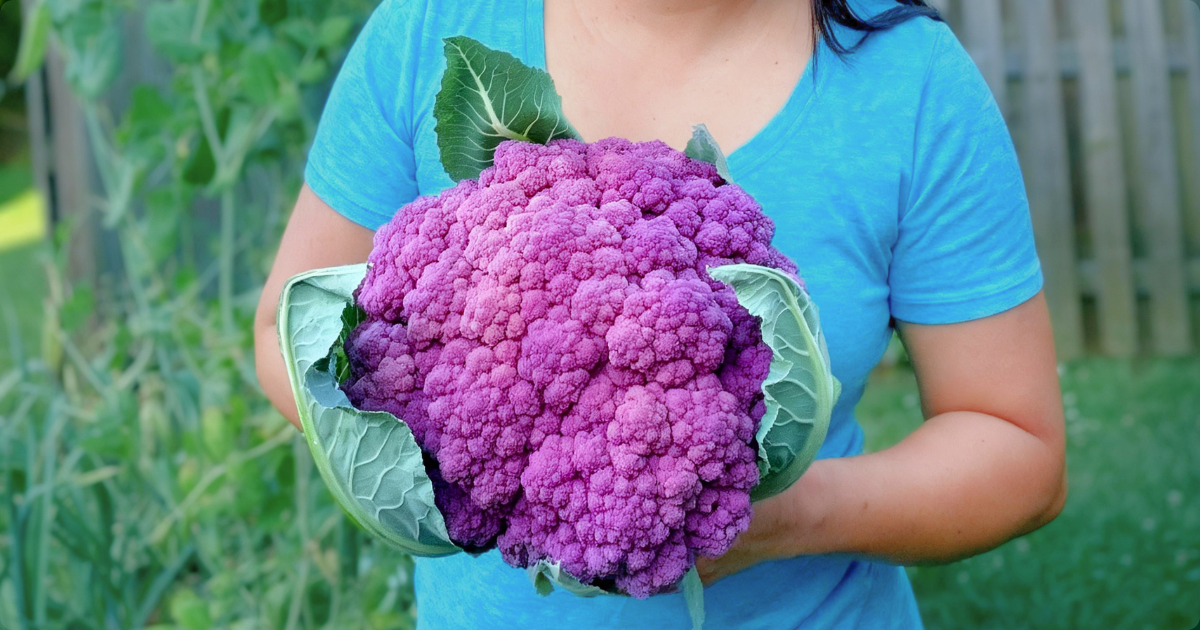
Why It Was the Star of My Spring Garden
Every gardening season brings at least one surprise.
Sometimes it’s a crop that produces more than expected. Other times, it’s one that thrives despite less-than-ideal conditions.

This spring, that standout was DePurple cauliflower.
Despite fluctuating temperatures, rainy stretches, and the usual unpredictability of spring weather, this vibrant purple cauliflower became the highlight of my cool-season garden.
If you’re considering growing DePurple cauliflower, here’s what my experience was like—and why I’ll definitely be planting it again.
What Is DePurple Cauliflower?
DePurple is a striking purple-headed cauliflower variety that stands out from traditional white types thanks to its rich color.
That deep purple hue comes from anthocyanins—the same antioxidants found in blueberries, purple cabbage, and eggplant.

Beyond its visual appeal, it’s also a great addition to the kitchen.
The flavor is mild, slightly sweet, and very similar to traditional cauliflower, making it easy to use in a wide range of dishes.
My Experience Growing DePurple Cauliflower
This spring wasn’t the easiest growing season.
Maryland weather kept shifting between chilly nights, warm spells, and rainy days, making it a bit unpredictable for brassicas.

Some of my other cauliflower varieties struggled and produced smaller heads than expected.


DePurple, however, stood out.
Watching those deep purple heads slowly develop after weeks of patience made the effort worthwhile. By harvest time, it had clearly earned its place as the star of my spring garden—not just for its beauty, but for its resilience.
Sometimes a crop surprises you in the best possible way, and this was one of those moments.
Why I Loved Growing It
The Color Is Absolutely Stunning
It’s hard not to admire a bright purple cauliflower growing in the garden.
It adds visual interest to raised beds and makes harvesting even more exciting. It’s also a great conversation starter—people always ask what it is.
It Tastes Just Like Regular Cauliflower
If you’ve never tried purple cauliflower before, there’s no need to worry.
The flavor is very similar to traditional cauliflower—mild and versatile.


I used mine for riced cauliflower, coleslaw or salad, loaded cauliflower, stir-fries, soups, and side dishes just like I would with any other variety.
It Made the Wait Worth It
Cauliflower can be a bit particular.
It prefers cool temperatures, consistent moisture, and steady growth conditions. That’s why harvesting a well-formed head always feels rewarding.
DePurple reminded me that patience truly pays off in the garden.
Tips for Growing DePurple Cauliflower
If you’re planning to grow this variety, here are a few tips based on my experience.
Start Early
Like most cauliflower, DePurple thrives in cool weather.
For a spring harvest, start seeds indoors several weeks before your last expected frost so plants are ready to transplant while temperatures are still mild.
Here in Maryland, I start seeds indoors in early to mid-January. By late February to early March, I begin hardening them off and transplant in early to mid-March. I grow them under a hoop cover for protection from frost and pests like cabbage worms. This setup allows me to plant earlier and make the most of the short spring season.


Keep the Soil Consistently Moist
Cauliflower doesn’t like dramatic swings between dry and wet soil.
Consistent watering helps plants develop strong leaves and larger heads. Adding mulch can help retain moisture and regulate soil temperature.
Feed Your Plants
Cauliflower is a heavy feeder.
Healthy soil rich in organic matter, along with regular feeding, supports strong growth. I use fish fertilizer early in the season and stop once plants reach about two feet tall and become bushy.
I also amend my beds with compost or worm castings and continue feeding throughout the season to ensure my brassicas have the nutrients they need.
Be Patient
One of the biggest lessons with cauliflower is patience.
At times, it may seem like the plant is only producing leaves. Then suddenly, a small head begins to form—and from there, it grows quickly.
Trust the process and give it time.
Harvesting DePurple Cauliflower
Harvest when the head is firm and compact, before the florets begin to separate.
Waiting too long can reduce both quality and appearance.
Use a sharp knife to cut the stem below the head, leaving a few leaves attached to help protect it during handling.
Will I Grow It Again?
Absolutely.
Each season, I evaluate which crops earn a spot in next year’s garden—and DePurple cauliflower made that decision easy.
It performed well, tasted great, and added something unique to my garden.
When a vegetable combines beauty, flavor, and reliability, it’s hard not to grow it again.
Final Thoughts
This season reminded me that every garden has its standout crop—and for me, DePurple cauliflower was it.
Even with unpredictable weather, it delivered beautiful, vibrant heads that were just as enjoyable to harvest as they were to eat. It also reinforced an important lesson: success in the garden isn’t always about perfect conditions—it’s about choosing the right varieties and giving them the care they need.
If you’re looking to add color, flavor, and a bit of excitement to your cool-season garden, DePurple cauliflower is definitely worth trying.
Let’s Grow Together
Have you ever grown purple cauliflower or tried DePurple in your garden?
I’d love to hear about your experience—what worked, what didn’t, and what you’d do differently next time. Drop a comment below or share your garden photos!
If you found this review helpful, consider sharing it with a fellow gardener or saving it for your next planting season. And if you want more tips, seasonal guides, and real garden experiences, be sure to follow along for future posts.
This page contains affiliate links to my brand partners like Vego Garden, GreenStalk, Walmart & Amazon at no extra cost to you.
Your support helps me create free gardening content. Thank you!



Leave a Reply