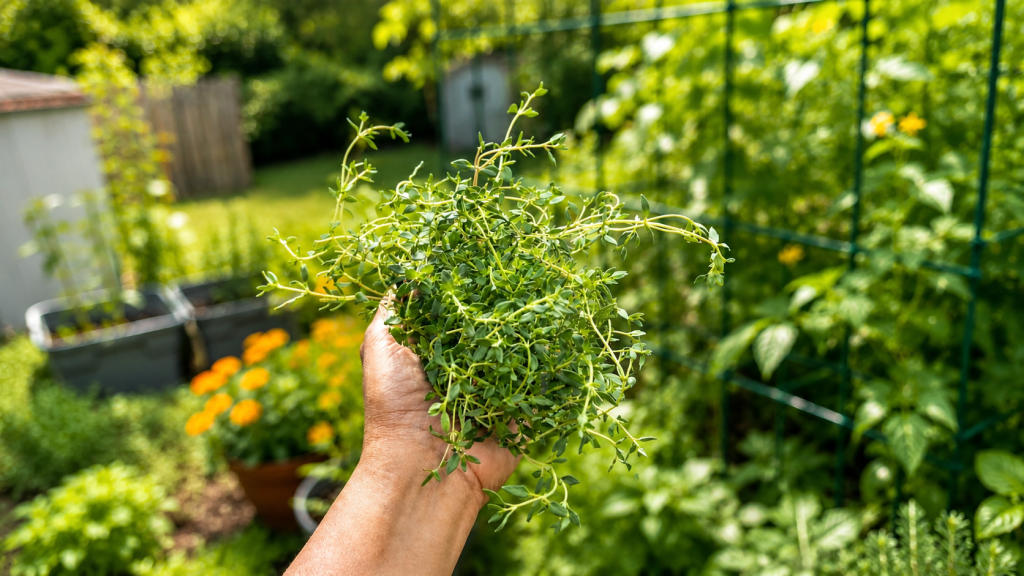
Thyme may be one of the smallest herbs in the garden, but it’s certainly one of the most useful.
This hardy perennial is packed with flavor, requires very little maintenance, and can provide fresh harvests for years. Whether you’re seasoning roasted vegetables, soups, meats, or homemade bread, fresh thyme is an herb you’ll likely find yourself reaching for again and again.
If you’re looking for an easy herb that’s beginner-friendly and well suited for small-space gardens, thyme is an excellent choice.
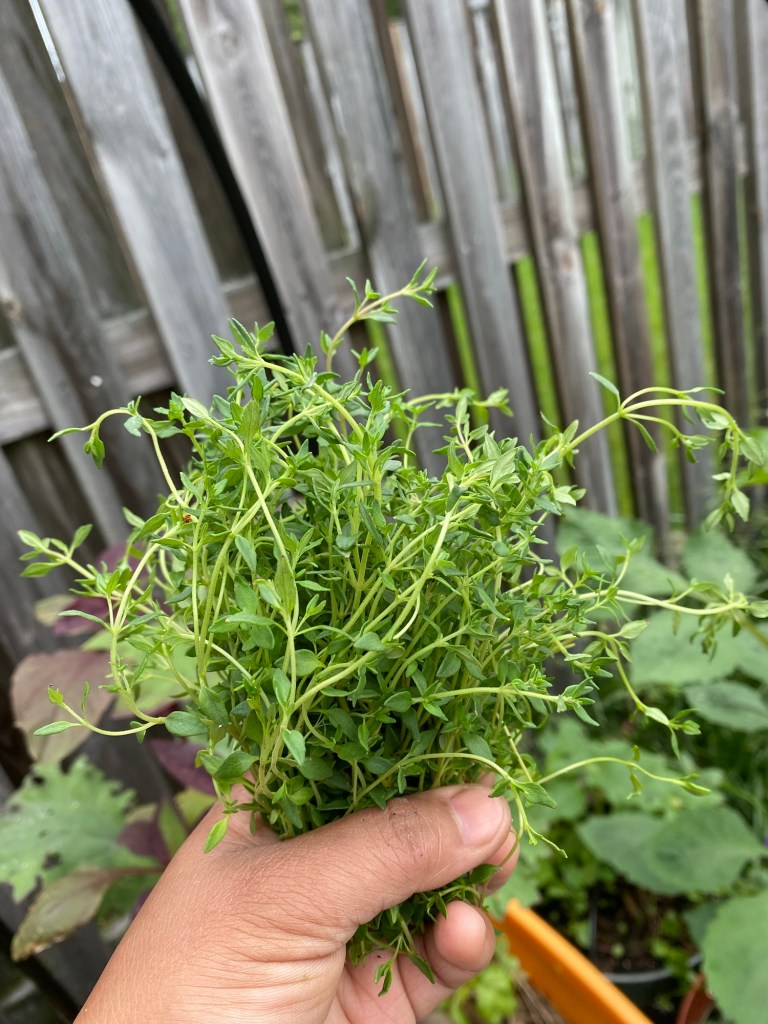
Here’s everything I’ve learned about growing healthy, productive thyme.
Choose the Right Variety
There are many different types of thyme, each offering its own unique flavor, fragrance, and appearance.
Some popular varieties include:
- English thyme (Common)
- French thyme
- Lemon thyme
- Creeping thyme
- Woolly thyme
- Caraway thyme
English thyme is one of the most common culinary varieties and a great choice if you’re growing thyme for cooking.
Lemon thyme adds a bright citrus aroma and works beautifully with chicken, seafood, vegetables, and teas.
Give Thyme Plenty of Sun
Thyme loves sunshine.
For the healthiest plants, provide at least 6–8 hours of direct sunlight each day.
The more sun thyme receives, the stronger its aroma and flavor tend to be.
If you’re growing thyme indoors, place it in your brightest window or use a grow light to supplement natural light.
Plant in Well-Draining Soil
Good drainage is the key to growing thyme successfully.
Like rosemary, thyme prefers soil that drains quickly rather than staying constantly wet.
Heavy, soggy soil can lead to root rot and weak growth.
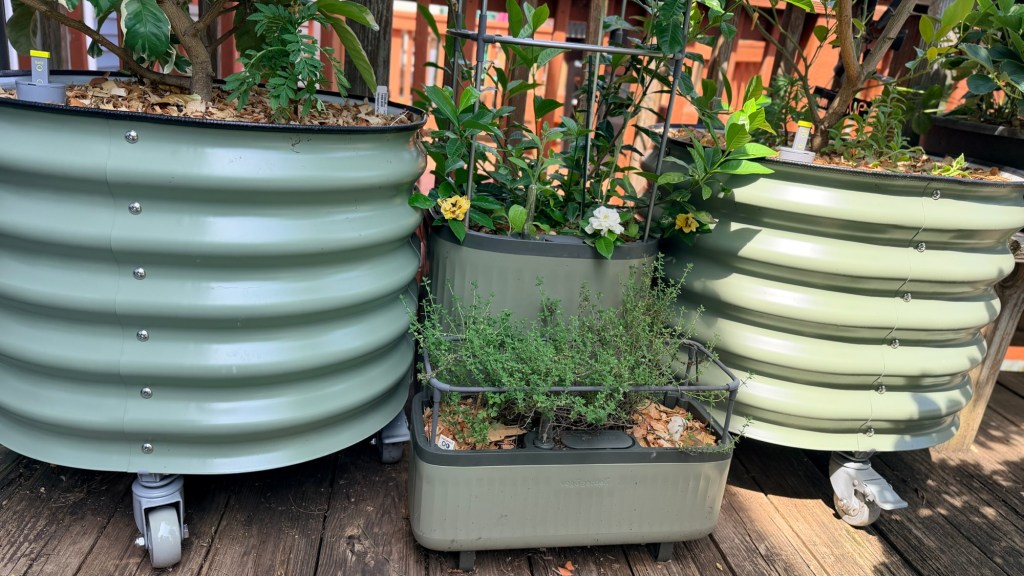
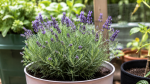
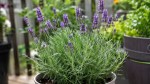
I’ve been growing thyme in a Vego Self-Watering Planter for the last couple of years, and it’s been working really well for me. The key is not letting it sit in water for too long, since thyme hates wet feet. I keep the reservoir water level low and let the planter drain well.
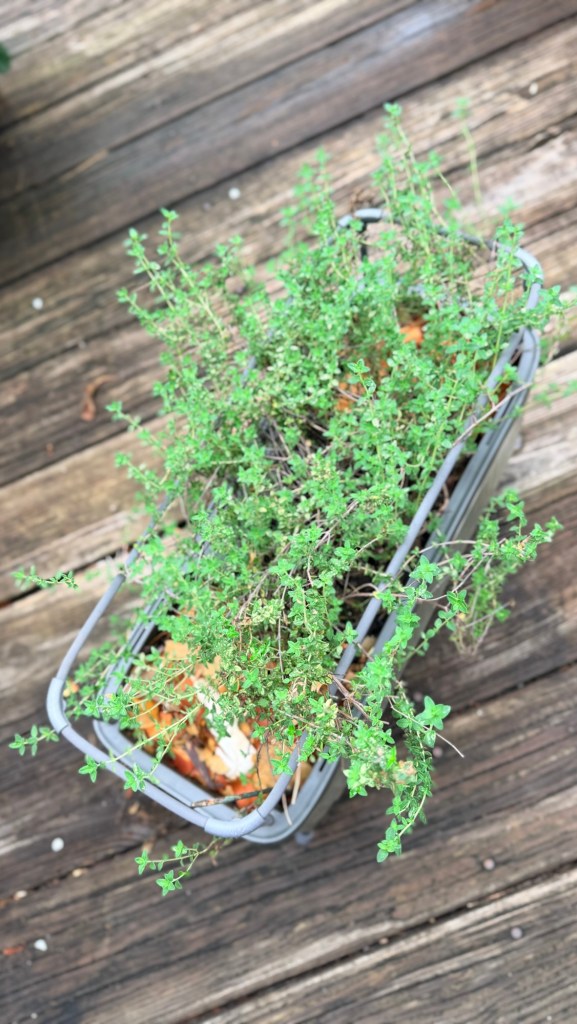
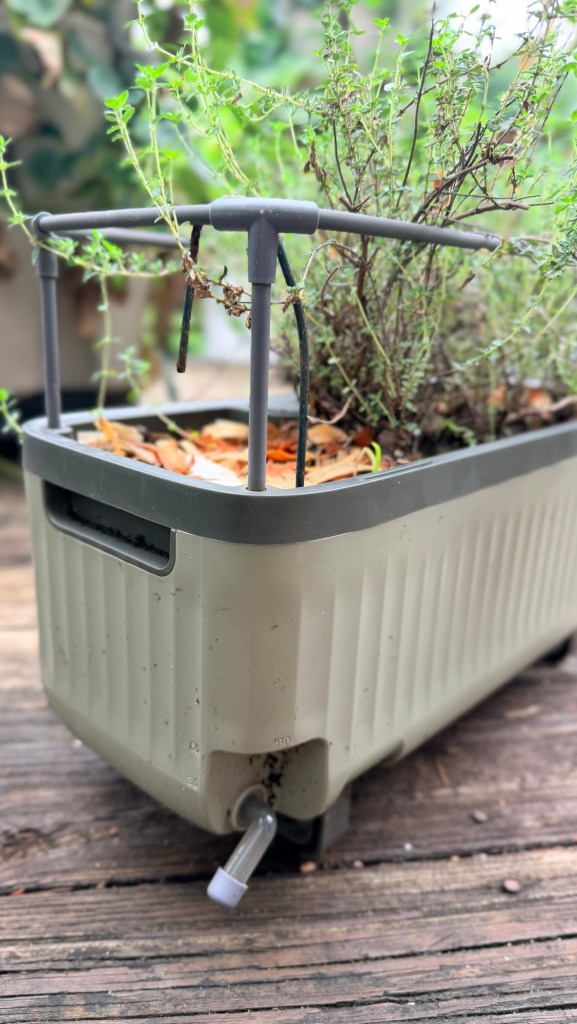
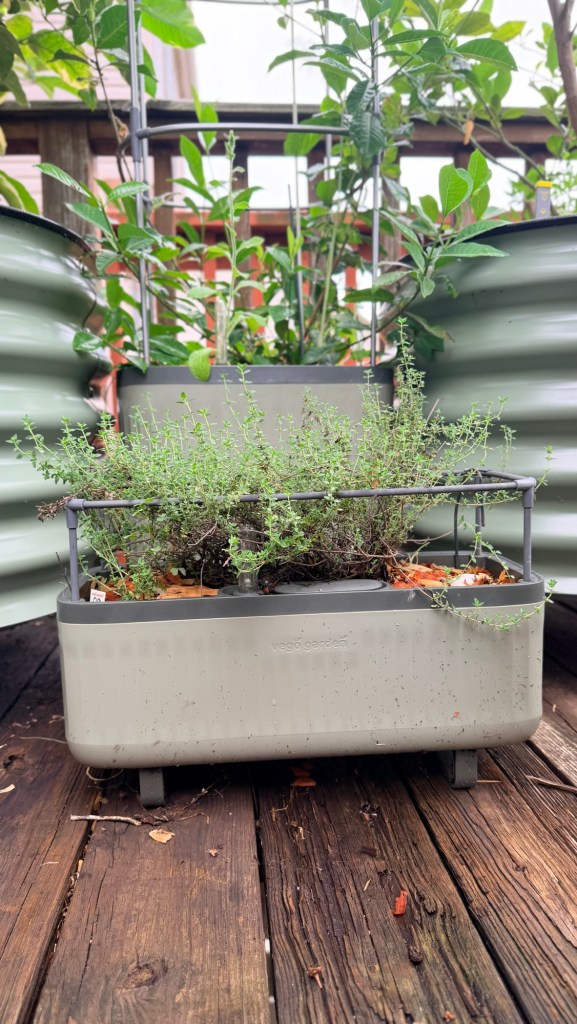
When I water the rest of the plants on my deck, I actually skip this one. I mostly let the rain take care of it and only water during long stretches without rain or when we’re experiencing extreme summer heat. I always check the soil first before watering. Growing it in a container also makes it easy to bring indoors during the extreme freezing Maryland winters, so I can keep enjoying fresh thyme year after year. 💚
If you’re growing thyme in containers, use a high-quality potting mix with added perlite or coarse sand to improve drainage.
Healthy roots start with well-draining soil.
Water Sparingly
One of the easiest ways to damage thyme is by overwatering it.
Once established, thyme is quite drought tolerant.
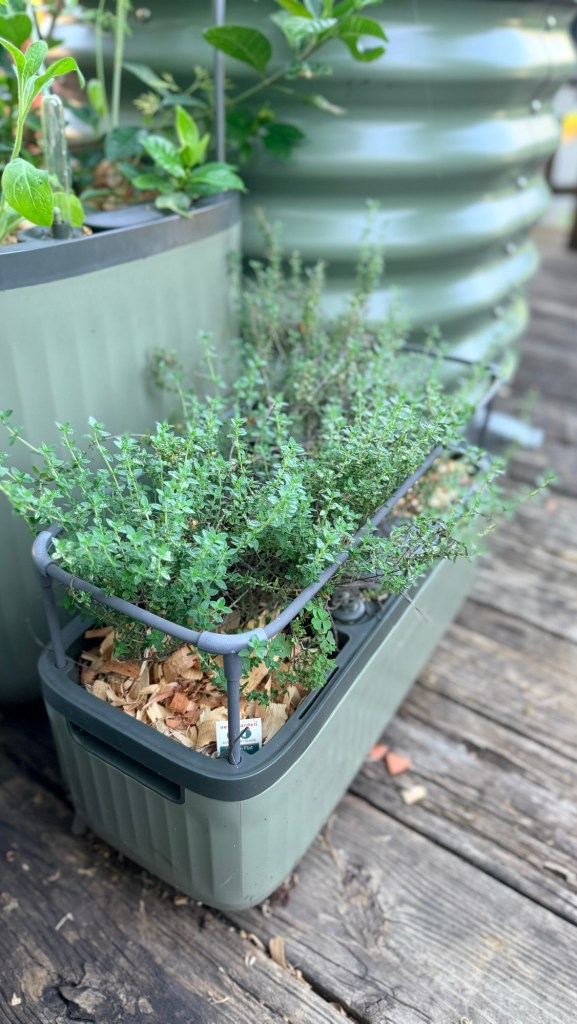
Allow the soil to dry slightly between waterings before watering deeply again.
Container-grown thyme may need water a little more often than plants growing in the ground, especially during hot summer weather, but it’s still better to underwater slightly than keep the soil constantly wet.
Fertilize Lightly
Thyme isn’t a heavy feeder.
In fact, growing it in overly rich soil can reduce its flavor.
Adding a little compost when planting is usually all that’s needed.
If your thyme is growing in a container, a light feeding with a balanced fertilizer once or twice during the growing season is enough.
Harvest Regularly
Frequent harvesting encourages thyme to stay compact and bushy.
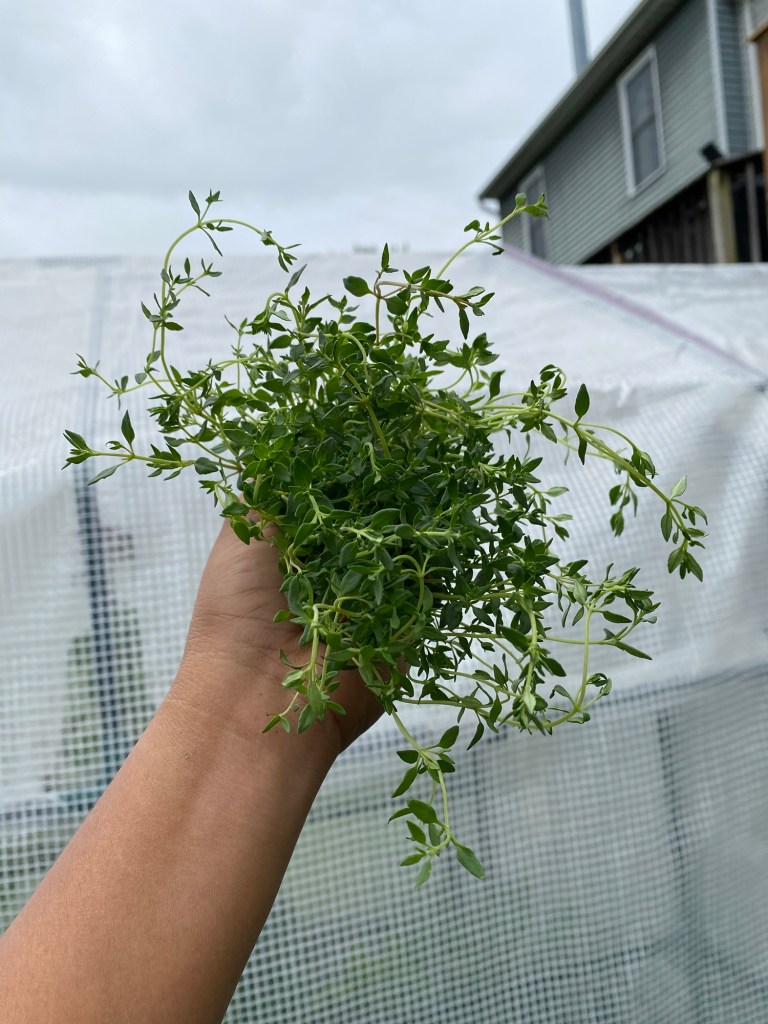
Use clean scissors to trim young stems whenever you need fresh herbs.
Avoid removing more than one-third of the plant at one time.
Regular harvesting also helps prevent plants from becoming too woody.
Prune to Encourage New Growth
As thyme matures, the lower stems naturally become woody.
Each spring or after flowering, lightly trim the plant to encourage fresh new growth.
Avoid cutting back into thick, leafless woody stems because they may not produce new shoots.
Instead, prune just above healthy green growth.
Growing Thyme in Containers
Thyme grows beautifully in containers.
Its compact size makes it ideal for:
- Patio herb gardens
- Deck containers
- Window boxes
- Raised beds
- Kitchen herb gardens
Choose a pot with drainage holes and avoid oversized containers that hold too much moisture.
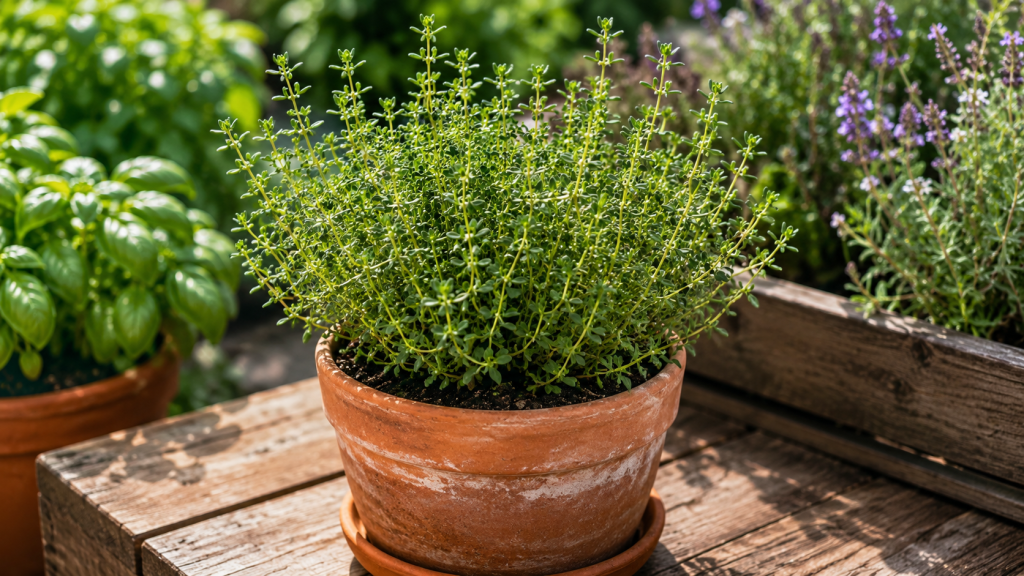
Terracotta pots are an excellent option because they allow the soil to dry more naturally between waterings.
Growing Thyme Indoors
Thyme can also be grown indoors year-round.
Place it in a bright, sunny window where it receives at least six hours of sunlight daily.
If natural light is limited, a grow light can help maintain healthy growth.
Indoor thyme generally needs less water than outdoor plants because growth slows during winter.
Common Problems
Fortunately, thyme is one of the easiest herbs to grow.
However, a few problems can occasionally appear.
Yellow Leaves
Usually caused by overwatering or poor drainage.
Root Rot
Constantly wet soil is the most common cause.
Good drainage prevents most issues.
Woody Growth
Older plants naturally become woody over time.
Regular harvesting and light pruning help keep plants productive.
Ways to Use Fresh Thyme
Fresh thyme is incredibly versatile in the kitchen.
Some of my favorite ways to use it include:
- Roasted vegetables
- Chicken dishes
- Beef and lamb
- Soups and stews
- Homemade bread
- Marinades
- Herb butter
- Stuffing
- Roasted potatoes
Extra thyme can be dried or frozen so you can enjoy your harvest throughout the year.
What Works in My Maryland Garden
One thing I’ve learned about thyme is that it performs best when I don’t fuss over it too much.
Giving it plenty of sunshine, well-draining soil, and avoiding overwatering has kept it healthy year after year.
Because thyme stays relatively compact, it’s easy to tuck into containers, raised beds, or herb planters without taking up much space. It also pairs beautifully with other Mediterranean herbs like rosemary, oregano, and sage, since they all enjoy similar growing conditions.
If you’re just starting an herb garden, thyme is one of the best herbs you can grow. It’s hardy, low-maintenance, and rewards you with flavorful harvests for years with very little effort.
If this guide helped you feel more confident about growing thyme, save it for later and share it with another gardener. I’d also love to hear which variety of thyme you’re growing and how you like to use it in your favorite recipes.









 Gingerfoot Garden
Leave a comment