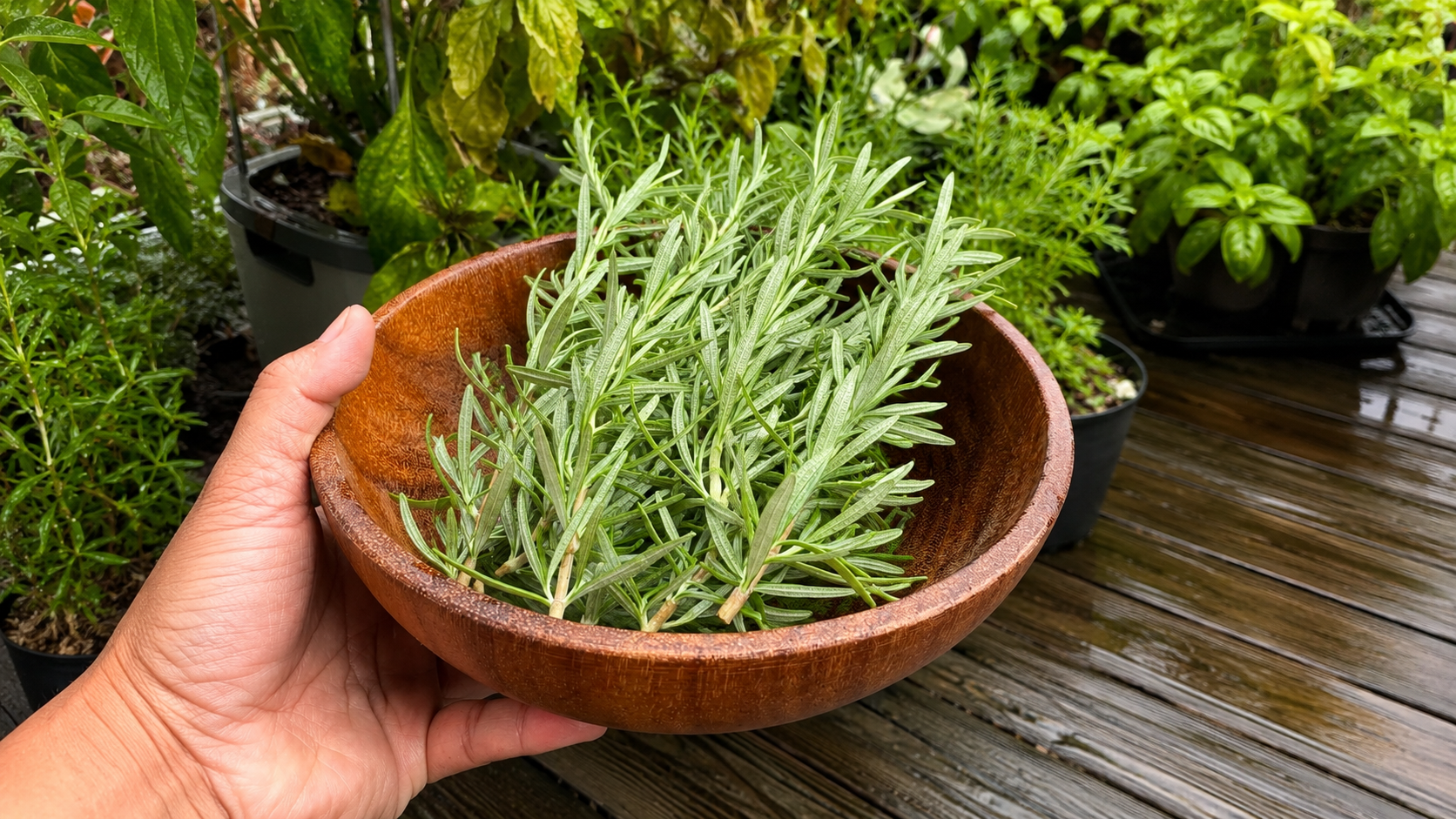
Rosemary is one of those herbs that earns its place in the garden year after year.
It’s beautiful, fragrant, drought tolerant once established, and incredibly useful in the kitchen. Whether you’re infusing oil, seasoning roasted vegetables, chicken, potatoes, or homemade bread, having fresh rosemary just a few steps from your kitchen is a wonderful convenience.

Unlike softer herbs like basil or cilantro, rosemary has a woody growth habit and slightly different care requirements. Once you understand what it likes, it’s surprisingly easy to grow.
Here’s everything I’ve learned about growing healthy rosemary.
Choose the Right Variety
There are several types of rosemary available.
Some are upright, making them perfect for containers and herb gardens, while others have a trailing habit that’s ideal for hanging baskets or spilling over the edges of raised beds.
When selecting a variety, consider:
- Mature size
- Growth habit
- Cold hardiness
- Whether you’ll grow it in a container or in the ground
If you’re gardening in a colder climate, growing rosemary in a container makes winter protection much easier.
Give Rosemary Plenty of Sun
Rosemary thrives in sunshine.
For the healthiest plants, provide at least 6–8 hours of direct sunlight each day.
The more sun rosemary receives, the stronger its growth and fragrance will be.

If you’re growing it indoors during winter, place it in your brightest window or supplement with a grow light.
Well-Draining Soil Is Essential
If there’s one thing rosemary dislikes, it’s wet feet.
Good drainage is far more important than rich soil.
I use a loose, well-draining potting mix when growing rosemary in containers. If planting in the garden, amend heavy clay soil with compost and coarse materials like perlite and sand that improve drainage.
Avoid locations where water tends to collect after rain.
Healthy roots begin with healthy drainage.
Water Less Than You Think
One of the biggest mistakes new gardeners make is overwatering rosemary.
Once established, rosemary is fairly drought tolerant.
Rather than watering on a schedule, check the soil first.
Allow the top couple of inches of soil to dry before watering deeply.
Container-grown rosemary usually needs water more often than plants growing in the ground, but it still prefers drying slightly between waterings.
Too much moisture can quickly lead to root rot.
Fertilize Sparingly
Rosemary doesn’t require heavy feeding.
Too much fertilizer encourages soft, weak growth with less concentrated flavor.
Mixing compost into the soil when planting is often enough.
If your rosemary is growing in a container, a light feeding with a balanced fertilizer once or twice during the growing season is usually sufficient.
Harvest Regularly
Regular harvesting encourages rosemary to become fuller over time.
Use clean scissors or pruners to snip young stems as needed.

Avoid removing more than one-third of the plant at a time.
Frequent harvesting helps maintain a compact, attractive shape while providing plenty of fresh herbs for cooking.
Prune to Keep Plants Healthy
Rosemary naturally becomes woody as it ages.
A light pruning after the main growing season helps maintain its shape and encourages fresh new growth.
Avoid cutting deep into old woody stems that have little or no green growth, as they may not regrow.
Instead, focus on trimming the younger, leafy stems.
Growing Rosemary in Containers
I think rosemary is one of the best herbs for container gardening.
Growing it in a pot allows you to:
- Improve drainage
- Move it to the best sunlight
- Protect it during severe weather
- Bring it indoors during winter if needed
Choose a container with drainage holes, and avoid oversized pots that stay wet for long periods.
Terracotta pots are an excellent choice because they allow excess moisture to evaporate more easily than plastic containers.
Overwintering Rosemary in Maryland
In my Maryland Zone 7 garden, rosemary can sometimes survive mild winters outdoors, but harsh winters can be unpredictable.
For that reason, many gardeners—including me—prefer growing rosemary in containers so it can be moved to a protected location if necessary.
Before bringing it indoors:
- Check carefully for insects.
- Reduce watering.
- Place it in the brightest location possible.
- Avoid placing it near heating vents that create very dry air.
With proper care, rosemary can continue growing through winter and be moved back outside in spring.
Common Problems
Rosemary is generally low maintenance, but you may occasionally encounter a few issues.
Yellow Leaves
Often caused by overwatering or poor drainage.
Brown Branches
Usually the result of root problems, winter damage, or prolonged drought.
Powdery Mildew
Can develop when airflow is poor and humidity is high.
Good spacing and proper pruning help reduce disease pressure.
Ways to Use Fresh Rosemary
Fresh rosemary is one of the most versatile herbs in the kitchen.
Some of my favorite uses include:
- Roasted potatoes
- Chicken dishes
- Beef and pork
- Homemade bread
- Roasted vegetables
- Herb-infused olive oil
- Marinades
- Soups
- Compound butter
Extra rosemary can be dried or frozen, allowing you to enjoy your harvest year-round.
What Works in My Maryland Garden
I’ve found that rosemary is happiest when I don’t overcomplicate things.
Giving it plenty of sunshine, excellent drainage, and resisting the urge to overwater has produced the healthiest plants in my Maryland garden.
Because our winters can vary so much from year to year, I prefer growing rosemary in containers. It gives me the flexibility to move the plant if severe cold is forecast while also keeping it close to the kitchen, where I can easily snip fresh sprigs whenever I’m cooking.
If you’re looking for an herb that’s beautiful, fragrant, drought tolerant, and useful almost every day in the kitchen, rosemary is an excellent choice. Once established, it’s one of the easiest herbs to maintain and rewards you with fresh harvests for years.
If this guide helped you feel more confident about growing rosemary, save it for future reference and share it with a fellow gardener. I’d also love to hear how you use fresh rosemary in your own kitchen!
This page contains affiliate links to my brand partners like Vego Garden, GreenStalk, Walmart & Amazon at no extra cost to you.
Your support helps me create free gardening content. Thank you!



Leave a Reply