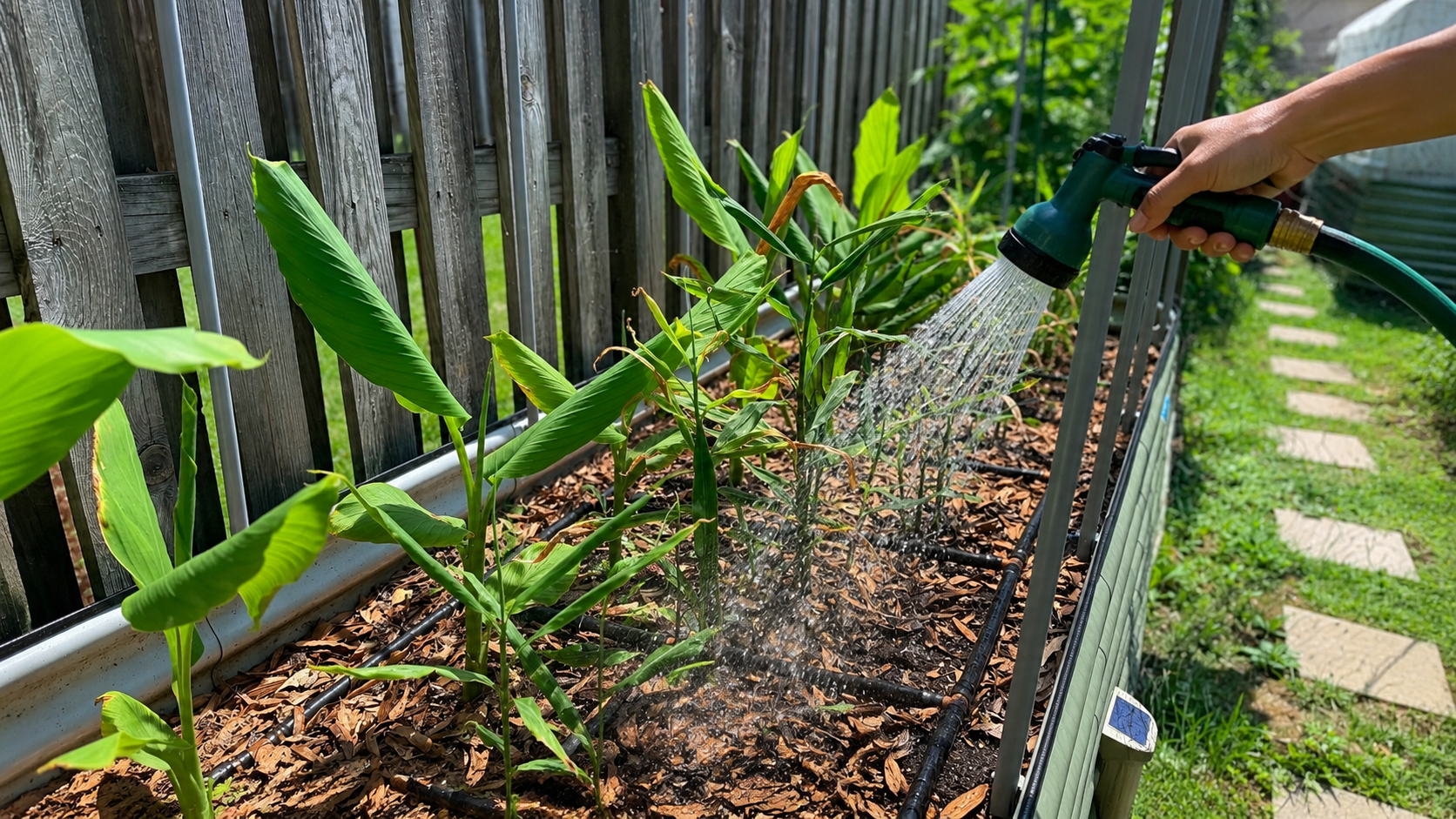
Every summer, it happens.
The forecast suddenly calls for several days of temperatures in the 90s, sometimes even over 100°F. A long stretch of heat like this can put serious stress on most plants. The garden that looked lush just a few days ago starts drooping by lunchtime, and it’s easy to assume everything just needs more water.
Living in Maryland Zone 7, I’ve learned that helping a garden survive summer heat isn’t about doing more—it’s about doing the right things consistently.
It’s also about knowing when to step back. During extreme heat, plants are often in survival mode, and too much intervention can actually do more harm than good.
Here are the strategies that have worked well in my own vegetable garden.
1. Mulch Is One of the Best Things You Can Do
If I could recommend just one thing for summer gardening, it would be mulch.
A layer of mulch helps:
- Keep the soil cooler
- Slow down evaporation
- Reduce watering frequency
- Suppress weeds that compete for moisture
- Protect soil life from extreme temperatures


I like using dry fall leaves, cedar wood shavings pet bedding, or untreated wood mulch around my vegetables. Even an inch can make a noticeable difference during a heat wave.
Without mulch, the top layer of soil dries out much faster, especially in raised beds.
2. Water Early in the Morning
Morning watering has made a huge difference in my garden. However, I completely understand if the only time you have is in the evening—I’ve been there too. Still, during the hottest days, early morning is truly the best and most comfortable time to water.

By watering early, the soil has time to absorb moisture before the hottest part of the day. Plants are fully hydrated before temperatures climb, and the foliage dries quickly, reducing the risk of fungal diseases.
I try to avoid watering during the hottest part of the afternoon unless a plant is truly struggling.
Deep watering is also more effective than giving plants a light sprinkle every day. Encouraging roots to grow deeper helps plants handle dry conditions much better.
3. Installing a Watering System
This requires a bit of planning, but investing in a watering system has been a game changer in my garden. It makes watering much easier and saves a lot of time. I use the Garden in Minutes watering grid in a couple of my beds, and I love how the square-foot grid doubles as a planting guide.

This year, I’m also installing Vego Garden’s watering system. I like that it can target specific plants and allows me to control the water flow, which is helpful for different growth stages. The materials are sturdy and work perfectly within the Vego system. The connectors are easy to assemble, and the quick-connect feature makes it simple to reconfigure as needed.
That said, using a hose is still one of the best ways to water plants deeply. I enjoy using the Vego Hi-flow Retractable Hose Reel because I no longer have to deal with tangled hoses. It swivels easily thanks to the quick-connect attachment, and the nozzle offers nine different settings. It’s truly a must-have in the garden.

4. Don’t Forget About Containers and Grow Bags
Container gardens dry out much faster than plants growing in the ground or in raised beds. Dark containers, in particular, tend to retain heat longer and can stress plant roots.
Grow bags also dry out quickly because of their porous material. One way to help retain moisture is by grouping them close together to reduce the amount of surface area exposed to heat and drying air.


On especially hot days, I check my containers every morning and again in the evening if temperatures are extreme.
I’ve also found that larger containers stay moist longer than smaller pots because they hold more soil.
Moving some plants to areas that receive partial shade during the hottest part of the day can also help. The less direct sun exposure the container gets, the better for the roots. I often move some of my pots to a sheltered spot near a railing, fence, or even next to other pots.
5. Slow Watering with Terracotta Reservoirs Spikes or Olla
For some of my containers, I use terracotta watering spikes with upside-down water bottles to provide a backup water source during the hottest days. I also use ollas from Grow Oya, where the soil slowly absorbs water through the porous material, helping keep plants hydrated as needed.


I just make sure to check and refill the reservoirs regularly.
6. Use Self-Watering Planters
Self-watering planters have been especially helpful for some of my larger plants. They provide a consistent moisture supply while reducing how often I need to water—they’re practically plant babysitters.

I like using Vego Garden self-watering planters and the citrus rolling planter. They include a water gauge, which takes the guesswork out of knowing when to water. They also have overflow holes that allow excess water to drain during heavy rain. These features save time and help conserve water, as it remains in the reservoir and is absorbed through capillary action.
7. Use Shade Cloth When Necessary
People often assume vegetables need full sun all day, but during prolonged heat waves, too much intense afternoon sun can actually stress plants.


For sensitive crops, I sometimes use shade cloth to reduce the intensity of the afternoon sun while still allowing plenty of light through.
This is especially helpful for:
- Cool-season crops
- Young transplants and newly planted seedlings
- Herbs that struggle in extreme heat, like basil
Even some fruiting crops appreciate a little relief during extended periods of extreme temperatures.
Shade cloth won’t stop the heat, but it can reduce plant stress enough to help them recover more quickly.
8. Learn to Recognize Heat Stress
Not every wilted plant needs immediate watering.
One lesson I’ve learned is that many healthy plants temporarily wilt during the hottest part of the afternoon, even when the soil has plenty of moisture.
Before reaching for the hose, I check the soil a few inches below the surface.

Signs of heat stress may include:
- Wilting during the day
- Leaf curl
- Flower drop
- Sunscald on fruits
- Slower growth
If plants perk back up by evening, they’re often doing exactly what they’re supposed to do—reducing water loss until temperatures cool down.
Overwatering can actually create more problems than the heat itself.
9. Harvest Frequently
Summer vegetables grow quickly.
Cucumbers, zucchini, beans, and peppers are much happier when harvested regularly.
Leaving fruits on the plant too long slows down future production and places additional stress on the plant.

Spending a few minutes harvesting every couple of days helps many crops continue producing for much longer.
10. Accept That Some Crops Will Slow Down
One of the hardest lessons I’ve learned is that you can’t completely control the weather.
Cool-season crops like lettuce, spinach, and bok choy naturally struggle once temperatures stay high.
Rather than fighting nature, I let my warm-season crops take center stage while I begin planning for my fall garden.
Gardening becomes much more enjoyable when we work with the seasons instead of against them.
11. Avoid Adding Extra Stress During Heat Waves
When temperatures are consistently high, it’s important to resist the urge to “fix” everything in the garden.
During the hottest days, plants are focused on survival. Activities like pruning or fertilizing can push them to put out new growth when they’re already stressed, which can do more harm than good.
I avoid pruning unless absolutely necessary, and I hold off on fertilizing until temperatures moderate. Even something as simple as transplanting can be too much for plants during extreme heat.
Instead, I focus on maintaining consistent moisture, providing shade when needed, and letting the plants conserve their energy.
What Works in My Maryland Garden
Maryland summers can be unpredictable. One week we have soaking rain, and the next we’re dealing with intense heat and humidity.
Over the years, I’ve found that a combination of mulching, watering early in the morning, using shade cloth when needed, installing watering system, using terracotta reservoirs for slow watering and paying extra attention to containers has helped my garden stay productive even during difficult weather.
Just as importantly, I’ve learned that sometimes the best thing you can do is less—avoiding unnecessary stress like pruning or fertilizing during extreme heat can make a big difference in how well plants recover.
I don’t try to create a perfect garden—I simply try to reduce stress on my plants so they can keep growing.
Some summers are tougher than others, but these simple habits have helped me harvest tomatoes, peppers, cucumbers, beans, herbs, squash, and other vegetables well into late summer.
If your garden looks a little tired during a heat wave, don’t panic. Give it consistent care, observe how your plants respond, and remember that even experienced gardeners adjust their routines when the weather changes.
Sometimes the goal isn’t to have a flawless garden—it’s simply to help it make it through another hot Maryland summer.
If you found these tips helpful, don’t stop here—save this guide for later, share it with a fellow gardener, and start putting these strategies into action today so your garden can thrive even in the toughest summer heat.
This page contains affiliate links to my brand partners like Vego Garden, GreenStalk, Walmart & Amazon at no extra cost to you.
Your support helps me create free gardening content. Thank you!


Leave a Reply