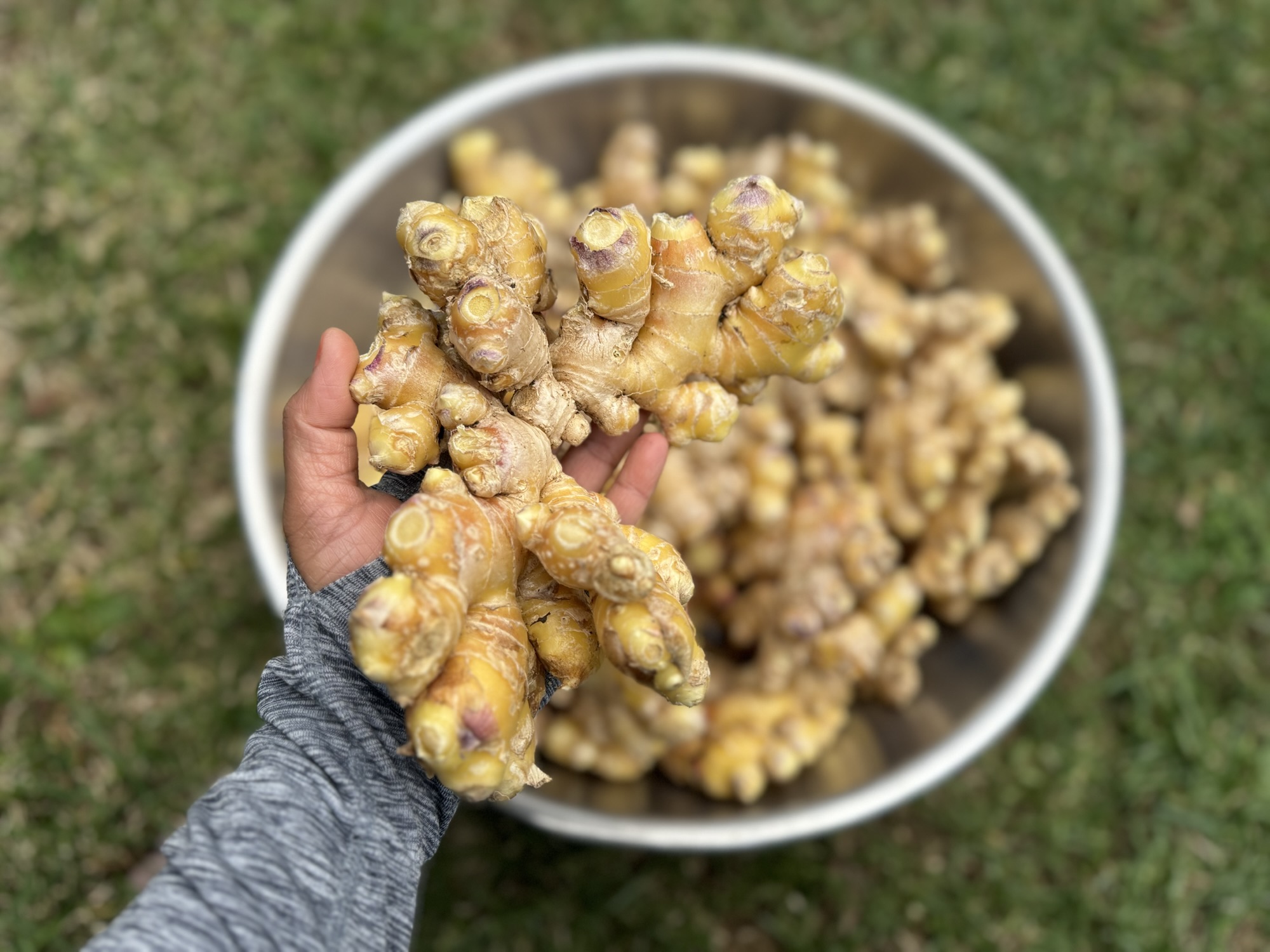
Growing ginger was something I never imagined doing until I started gardening.
As someone who grew up using fresh ginger in many Filipino dishes, being able to harvest it from my own garden has been incredibly rewarding. While ginger is a tropical plant, I’ve learned that you don’t have to live in the tropics to grow it successfully.

Living in Maryland Zone 7, I grow ginger in containers although this year I’m also growing some in a raised bed. I start it indoors during winter and move it outside once the weather warms up. With a little patience, you can enjoy your own homegrown harvest too.
Here’s everything I’ve learned about growing ginger.
Choose Healthy Seed Rhizomes
Unlike many vegetables, ginger isn’t grown from seeds. Instead, it’s grown from pieces of rhizome—the same part you buy at the grocery store.

When selecting ginger for planting, look for rhizomes that are:
- Firm and plump
- Free from mold or soft spots
- Covered with several healthy growth buds or “eyes”

Organic ginger is often the best choice because it’s less likely to have been treated with growth inhibitors.
Even better, once you’ve harvested your own ginger, you can save the healthiest rhizomes to plant again the following year.
Start Ginger Early Indoors
One of the biggest lessons I’ve learned is that ginger takes a long time to grow.
Because of our shorter growing season in Maryland, I start mine indoors in early to mid winter, usually around January. I place the rhizomes in pots filled with a loose potting mix, keeping the buds facing upward.


Keep the soil lightly moist—not soaking wet—and provide warmth. Ginger sprouts slowly, sometimes taking several weeks before you see any growth, so don’t give up too soon.
Patience is key when growing ginger.
Wait for Warm Weather Before Moving Outdoors
Ginger thrives in warm conditions.
I don’t move mine outside until nighttime temperatures are consistently above 55°F 13°C. It really begins to take off once temperatures climb even higher.

Like any plants that were started indoors, remember to harden off your young ginger plants. Slowly acclimate them to the outdoor conditions by placing them under a shaded area like a patio under a deck, a tree or any structure that filters sunlight. After a day or two expose it to morning or afternoon sunlight for about an hour and slowly increase as the days go by. Ideally, you want to do this for at least a week.


Cold soil can dramatically slow growth, so waiting for warm weather makes a noticeable difference.
Choose the Right Location
Although ginger is tropical, it doesn’t necessarily want intense afternoon sun all day.

I’ve found it grows best with:
- Morning sun
- Afternoon shade
- Bright, filtered light
- Protection from intense summer heat
This makes ginger a great crop for patios, decks, or partially shaded areas of the garden.
Grow Ginger in Large Containers
I prefer growing ginger in containers because it gives me more control over its environment.

Large containers provide:
- Better drainage
- Easier harvesting
- Flexibility to move plants as needed
- Protection from cooler temperatures
Ginger spreads horizontally beneath the soil, so I usually choose wide containers rather than deep ones. I’ve grown ginger in 10-gallon totes for several years, and they’ve consistently produced excellent harvests.

This year, I’m also experimenting with growing some in raised beds alongside turmeric.
Plant in Rich, Loose Soil
Healthy soil leads to healthy rhizomes.
I use a loose, well-draining potting mix enriched with compost. Heavy clay soil can make harvesting difficult and increase the risk of rot.
Adding compost improves both fertility and soil structure, giving ginger the best conditions to thrive.
Water Consistently
Ginger prefers consistently moist soil but doesn’t like sitting in water.
Water whenever the top inch of soil begins to dry. Mulching around the plants helps retain moisture and keeps the soil cooler during the summer.

During periods of active growth, regular watering is especially important.
Fertilize During the Growing Season
Since ginger grows for 8–10 months, occasional feeding helps support both foliage and rhizome development.
I use compost along with a balanced fertilizer throughout the growing season. It’s best to avoid excessive nitrogen, which can encourage leafy growth without improving the harvest below ground.
Be Patient
Ginger isn’t a quick crop.
It spends much of the season producing lush green foliage while developing underground. Young “baby ginger” can often be harvested after about 4–6 months and has thin, tender skin with a mild flavor.

For fully mature ginger suitable for long-term storage, allow the plants to grow for 8–10 months or until the foliage naturally begins turning yellow and dying back.
The longer you wait, the larger your harvest is likely to be.
Harvesting Ginger
Harvesting is one of the most exciting parts of growing ginger.


Brush away the soil to reveal the network of fresh rhizomes.

Before using all of your harvest, set aside several healthy pieces for planting next season. That’s one of my favorite parts of growing ginger—it becomes a crop that can keep producing year after year.
Common Problems
Thankfully, ginger is relatively trouble-free. However, you may occasionally encounter a few issues.
Slow Sprouting
This is usually caused by cool temperatures. Providing warmth can significantly speed up germination.
Yellow or Crispy Leaves
This can result from environmental stress, especially during the transition from indoors to outdoors when conditions fluctuate. I’ve noticed this often in spring, but the plants usually recover quickly.
Overwatering, underwatering, or nutrient deficiencies can also cause yellowing.
Soft Rhizomes
Soft rhizomes typically indicate excessive moisture or poor drainage. Improving drainage usually resolves the issue.
What Works in My Maryland Garden
Growing ginger has become one of my favorite gardening traditions.
Every winter, I start new rhizomes indoors while it’s still cold outside. The sprouts take their time, but once summer arrives and temperatures rise, they begin growing steadily.
I grow mine in large containers filled with rich, loose soil and place them where they receive morning sun with protection from the hottest afternoon heat. With consistent watering, occasional feeding, and plenty of patience, I’ve been rewarded with healthy harvests year after year.
One of the most satisfying moments is harvesting fresh ginger in the fall and setting aside a few of the best rhizomes to grow again next season. It feels like the garden is providing not only this year’s harvest but also next year’s beginning.
If you’ve never tried growing ginger before, don’t let your climate discourage you. Even in a Maryland Zone 7 garden, it’s entirely possible to grow this tropical crop with a little planning and patience.
If this guide helped you feel more confident about growing ginger, save it for later and share it with another gardener. I’d also love to hear—have you ever grown ginger, or will this be your first season trying it?
This page contains affiliate links to my brand partners like Vego Garden, GreenStalk, Walmart & Amazon at no extra cost to you.
Your support helps me create free gardening content. Thank you!



Leave a Reply