One of the best things you can do for your tomato plants has nothing to do with fertilizer, watering, or pruning.
It’s giving them the support they need.
Every season, I’m reminded just how quickly tomato plants can grow. One week they’re small transplants, and the next they’re covered with flowers, fruit, and branches reaching in every direction.
Without proper support, those branches can bend under the weight of the fruit, break during summer storms, or sprawl across the ground where they’re more vulnerable to pests and diseases.
Whether you’re growing tomatoes in raised beds, containers, or a small backyard garden, supporting your plants early makes a huge difference.
Why Tomato Plants Need Support
Tomatoes naturally want to sprawl.
Left unsupported, stems can flop onto the ground where leaves stay wet longer, airflow is reduced, and fruit is more likely to rot or become damaged.
Supporting your plants offers several benefits:
- Keeps fruit off the ground
- Improves airflow around the plant
- Reduces the risk of fungal diseases
- Makes harvesting easier
- Keeps branches from breaking under heavy fruit
- Makes pruning and inspecting plants much simpler
It also helps your garden stay organized, especially when you’re growing several tomato plants in a limited space.
Install Supports Early
One mistake I made when I first started gardening was waiting until the plants became large before adding support.
By then, branches had already spread in every direction, making it difficult to install cages or stakes without damaging the plant.
Now I install supports shortly after transplanting.

The plants quickly grow into their support, and I don’t have to wrestle with tangled vines later in the season.
It’s much easier to guide a young tomato plant than a mature one.
Tomato Cages
Tomato cages are one of the easiest support methods, especially for beginner gardeners.
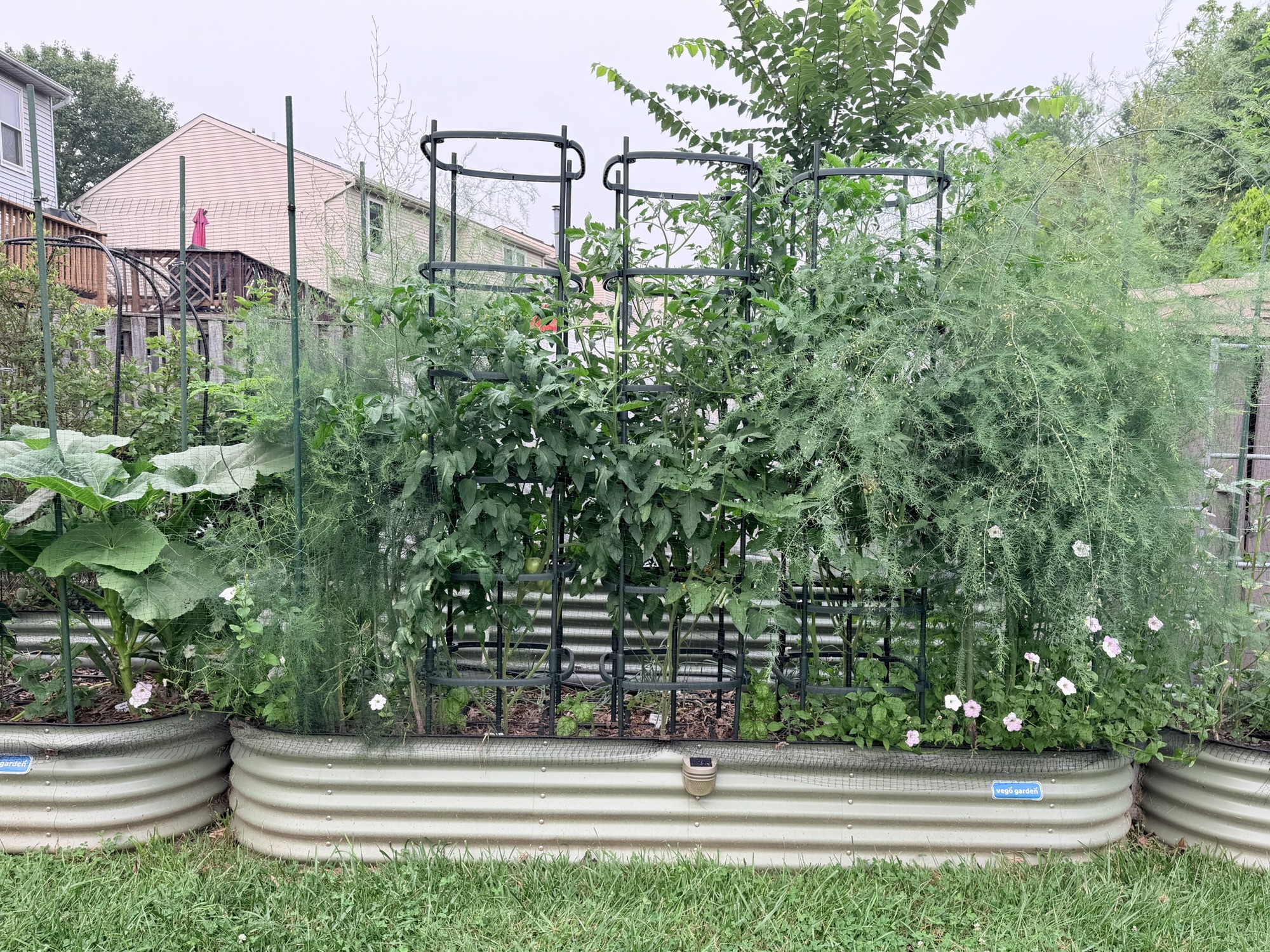
I use sturdy cages that can handle the weight of mature plants throughout the season. Flimsy wire cages often work for small plants but tend to bend once tomatoes become heavy with fruit.

My Vego Garden MaxGrow tomato cages have become one of my favorite supports because they’re tall, sturdy, and easy to adjust as the plants grow.
I especially like using them for my indeterminate tomatoes, which continue producing until frost.
For my dwarf tomatoes, I sometimes use shorter cages or simple stakes since they naturally stay more compact.
Stakes
Staking is another popular option.
This method works especially well if you’re growing tomatoes in rows or want to keep plants growing more upright.
After placing a sturdy stake beside the plant, gently tie the main stem using soft garden ties, clips, or cloth strips.

As the plant grows, continue tying it every few inches to prevent the stem from bending or breaking.
Staking also pairs well with regular pruning on indeterminate tomatoes.
Trellises
If you’re growing tomatoes in a small space, a trellis can be an excellent solution.
String trellises, cattle panel trellises, and other vertical systems allow tomato plants to grow upward instead of outward.

Vertical growing improves airflow, simplifies harvesting, and helps maximize limited garden space.
I’ve found this especially useful when combining tomatoes with companion plants underneath, such as basil.
Choosing the Right Support
The best support depends on the type of tomato you’re growing.
Determinate Tomatoes
Determinate tomatoes grow to a set size and generally stay more compact.
A sturdy tomato cage or stake is usually enough to support the plant through harvest.
Indeterminate Tomatoes
Indeterminate tomatoes continue growing all season and often become quite tall.
These plants usually benefit from taller cages, strong stakes, or trellis systems that can support months of continuous growth.
Dwarf Tomatoes
Many of the tomatoes I grow are dwarf varieties.
Even though they stay shorter than traditional indeterminate tomatoes, they can still become surprisingly heavy once loaded with fruit.
I still support them with cages or stakes because the branches can bend under the weight of the tomatoes.
The support doesn’t need to be as tall, but it should still be sturdy.
Check Your Supports Throughout the Season
Installing supports is only the beginning.
As tomato plants grow, I check them regularly to:
- Add new ties if needed
- Guide stems back inside the cage
- Secure heavy branches
- Adjust clips or supports before branches become crowded
A few minutes every week can prevent broken branches later in the season.
Common Mistakes to Avoid
Here are a few tomato support mistakes I’ve learned to avoid:
- Waiting too long to install cages or stakes
- Using supports that are too small for mature plants
- Tying stems too tightly, which can damage them as they grow
- Forgetting to check and adjust supports during the season
- Letting fruit-bearing branches hang unsupported
Giving plants the right support from the beginning saves a lot of work later.
Final Thoughts
Supporting tomato plants is one of those simple tasks that pays off all season long.
Healthy support systems keep plants upright, improve airflow, protect developing fruit, and make harvesting much easier.
Whether you choose cages, stakes, or a trellis, the most important thing is to install your support early and continue guiding the plants as they grow.
For me, supporting tomatoes isn’t just about preventing broken branches—it’s about creating a healthier, more productive garden where every plant has the best chance to thrive.
A little support at the beginning of the season can lead to a much bigger harvest by the end.
Let’s Grow Together
How do you support your tomato plants?
Do you prefer tomato cages, stakes, trellises, or another method?
I’d love to hear what works in your garden! Share your favorite tomato-growing tips or support systems in the comments below.
If you enjoyed this guide, be sure to explore my other tomato-growing articles, seasonal garden updates, and practical gardening tips for growing more food at home.
This page contains affiliate links to my brand partners like Vego Garden, GreenStalk, Walmart & Amazon at no extra cost to you.
Your support helps me create free gardening content. Thank you!


Leave a Reply