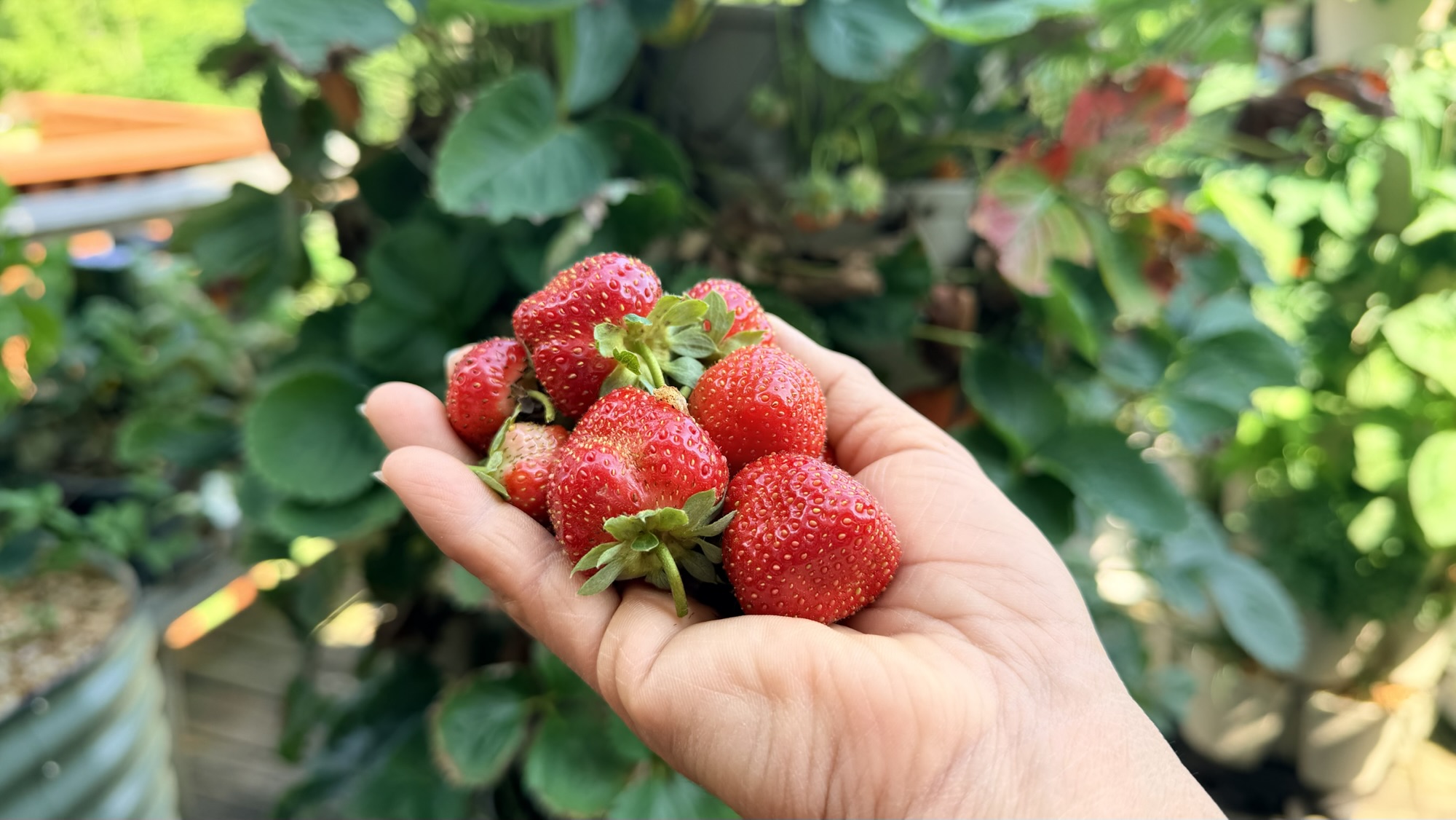
Few things feel more rewarding than walking into the garden and picking a ripe strawberry straight from the plant.
Freshly harvested strawberries are sweet, fragrant, and far more flavorful than many berries found at the grocery store. They also grow well in surprisingly small spaces, making them a practical fruit for raised beds, containers, patios, hanging baskets, and vertical planters.
In my Maryland Zone 7 garden, I grow strawberries in several places, including GreenStalk planters, dishpans, and beneath my blueberry plants. One of my favorite varieties has been Seascape, an everbearing strawberry that gives me harvests over a longer part of the growing season.

Strawberries are not completely maintenance-free, but once you understand how they grow, they can return year after year and provide plenty of fruit from a relatively small area.
Here is everything you need to know about growing strawberries successfully.
Why Grow Strawberries at Home?
Strawberries are an excellent choice for home gardeners because they:
- Grow well in small spaces
- Produce quickly compared with many fruits
- Can be grown in containers
- Return for multiple years
- Multiply through runners
- Work well in vertical planters
- Are easy to harvest
- Taste best when fully ripened on the plant
They are also one of the most enjoyable fruits for children and beginner gardeners because the berries are easy to recognize and pick.
Understanding How Strawberries Grow
Strawberries are low-growing perennial plants.
A mature plant has:
- A crown at the center
- Shallow roots
- Leaves growing from the crown
- Flowers that develop into fruit
- Runners that can produce new plants

The crown is especially important because it is the main growing point of the plant. If it is buried too deeply, it may rot. If it is planted too high, the roots may dry out.
Strawberries spread through stems called runners, or stolons. These grow outward from the main plant and form small daughter plants where they touch the soil.
Types of Strawberry Plants
Strawberries are generally divided into three main groups.
June-Bearing Strawberries
June-bearing varieties produce one large crop, usually over several weeks in late spring or early summer.
They are a good choice if you want:
- A concentrated harvest
- Berries for jam or freezing
- Strong runner production
- A traditional strawberry patch
Although the name suggests June, the exact harvest period depends on your climate.
Everbearing Strawberries
Everbearing strawberries usually produce two or more smaller harvests during the growing season.
They often fruit in:
- Late spring
- Summer
- Early fall
They are useful for gardeners who prefer smaller harvests spread over a longer period.
Day-Neutral Strawberries
Day-neutral strawberries can flower and fruit whenever temperatures are favorable, regardless of day length.
They may produce berries from spring into fall, although production often slows during extreme summer heat.
Seascape, one of my favorite varieties, is commonly grown as a day-neutral strawberry. It has performed well for me because it provides fruit over a longer period rather than producing everything at once.
Which Type Is Best?
Choose according to how you want to harvest.
Choose June-bearing strawberries if you want a large crop for preserving.
Choose everbearing or day-neutral strawberries if you want smaller harvests throughout the season.
For containers and vertical planters, day-neutral and everbearing varieties are often practical because they usually produce fewer runners and focus more energy on fruiting.
When to Plant Strawberries
Strawberries are usually planted in early spring, once the soil is workable.
In Zone 7, this may be from late winter through early spring, depending on the weather.
You can also plant strawberries in fall, giving them time to develop roots before winter. Fall-planted strawberries may need protection during their first cold season.
Avoid planting during extreme heat unless you can provide consistent moisture and temporary shade.
Choosing Healthy Strawberry Plants
Strawberries may be purchased as:
- Bare-root crowns
- Potted plants
- Plug plants
- Runner plants from an existing patch

Choose plants that are:
- Free from disease
- Firm at the crown
- Not dried out
- Free from mold
- Not severely root-bound
Bare-root plants may look lifeless when they arrive, but healthy crowns often begin growing soon after planting.
How Much Sun Do Strawberries Need?
Strawberries grow and fruit best with at least 6 to 8 hours of direct sunlight per day.
More sunlight generally leads to:
- More flowers
- Sweeter berries
- Better fruit production
- Faster drying after rain
Plants can tolerate partial shade, but they may produce fewer berries.
In very hot climates, light afternoon shade can help reduce stress.
The Best Soil for Strawberries
Strawberries prefer soil that is:
- Loose
- Fertile
- Well-drained
- Rich in organic matter
- Slightly acidic
A soil pH of approximately 5.5 to 6.5 is generally suitable.
Before planting in a garden bed:
- Remove weeds.
- Loosen the soil.
- Add finished compost.
- Improve drainage if necessary.
- Level the planting area.
Avoid planting strawberries in soil that remains wet after rain. Constantly saturated roots can lead to crown and root rot.
How to Plant Strawberries Correctly
Correct planting depth is one of the most important parts of growing strawberries.
The crown should sit at soil level.
The roots should be:
- Fully covered
- Spread downward
- Not bent tightly upward
- Surrounded by moist soil
Do not bury the crown.
Do not leave the roots exposed.
After planting, gently firm the soil and water thoroughly.
Strawberry Spacing
For garden beds, space individual plants approximately:
- 12 to 18 inches apart for compact varieties
- 18 to 24 inches apart for vigorous runner-producing varieties
Allow enough room for airflow and future runners.

Spacing may be closer in containers or vertical planters because runners are often removed and plants are managed more intensively.
Growing Strawberries in Raised Beds
Raised beds can be an excellent place to grow strawberries.
They provide:
- Loose soil
- Good drainage
- Easier weed control
- Cleaner fruit
- Convenient harvesting
Strawberries may be planted as a dedicated bed or used along the edges of beds containing other crops.

Remember that they are perennial. Choose a location you are willing to dedicate to them for several seasons.
Growing Strawberries in Containers
Strawberries are among the best fruits for container gardening.
Choose a container with:
- Drainage holes
- At least 6 to 8 inches of soil depth
- Enough width for the roots
- High-quality potting mix


Possible containers include:
- Traditional pots
- Grow bags
- Window boxes
- Hanging baskets
- Tubs
- Dishpans with drainage holes
I have successfully grown strawberries in dishpans because their shallow root systems do not require extremely deep containers. The wider surface gives plants room to spread while keeping the setup manageable.
I’ve also grown they in 1 gallon containers but I found that they dry out too fast in that size. They do better in containers with at least 3 gallons capacity.
Containers dry out faster than garden beds, so check moisture regularly.
Growing Strawberries in GreenStalk Planters
Strawberries are one of the best crops for GreenStalk planters.
Each pocket can hold an individual strawberry plant, allowing many plants to grow in a small footprint.
The benefits include:
- Fruit stays elevated
- Berries are easier to see
- Harvesting is convenient
- Plants cascade attractively
- Less fruit touches wet soil
- Runners are easy to find and manage

My Original GreenStalk planters, which about 10 inch deep, stay filled with strawberries year-round.
The biggest challenges are:
- Keeping every tier evenly watered
- Maintaining fertility
- Managing runners
- Protecting roots during winter
- Making sure all sides receive enough sunlight
Rotating the planter helps distribute sunlight more evenly.
Growing Strawberries Beneath Blueberries
Strawberries can also work as a living groundcover beneath container-grown or raised-bed blueberries.
I have grown strawberries underneath my blueberry plants to make use of the open soil surface.
Blueberries require more acidic soil while strawberries plants prefer slightly acidic conditions, which makes them potentially compatible. However, they still compete for moisture and nutrients.
If growing them together:
- Give the blueberry enough root space.
- Keep the soil consistently moist.
- Feed according to each plant’s needs.
- Avoid allowing strawberries to overcrowd the blueberry crown.
- Remove excessive runners.
This combination works best in a generously sized bed or planter.
How Often Should You Water Strawberries?
Strawberries have shallow roots and need consistent moisture.
Provide approximately 1 inch of water per week, adjusting for:
- Rainfall
- Temperature
- Wind
- Soil type
- Container size
- Fruit production
Container-grown plants may need water much more often during summer.
Water near the soil when possible. Constantly wet foliage and fruit may increase disease problems.
The goal is evenly moist soil—not constantly soggy soil.
Mulching Strawberry Plants
Mulch is especially useful around strawberries.
It helps:
- Conserve moisture
- Reduce weeds
- Keep berries clean
- Protect fruit from soil contact
- Moderate soil temperatures
- Protect roots during winter
Good mulch choices include:
- Clean straw
- Shredded leaves
- Wood shavings (Cedar pet bedding)
- Pine needles
- Fine organic mulch
Straw is traditionally used around strawberries, which is one reason for the fruit’s name.
Keep mulch from burying the crown.
Fertilizing Strawberries
Strawberries benefit from fertile soil, but too much nitrogen can lead to excessive leaves and fewer berries.
Before planting, add compost or a balanced fertilizer if needed.
Established plants may benefit from:
- Compost
- Worm castings
- A balanced berry fertilizer
- Light feeding after the main harvest
- Regular diluted fertilizer in containers
Avoid heavy fertilization while plants are flowering and fruiting unless they show signs of deficiency.
Always follow product instructions.
Should You Remove Flowers the First Year?
Traditional advice often recommends removing the first flowers from newly planted June-bearing strawberries so the plants can focus on roots and runners.
For day-neutral varieties, some gardeners remove flowers only during the first few weeks after planting, then allow later fruit to develop.
However, not every gardener chooses to remove flowers.
I prefer to allow my new plants to produce some fruit rather than removing the entire first flush. For a home garden, enjoying a small first-year harvest can be part of the experience.
The best choice depends on:
- The type of strawberry
- Plant health
- Planting time
- Whether your priority is immediate fruit or maximum future production
Weak or recently transplanted plants may benefit more from early flower removal than strong, established ones.
Managing Strawberry Runners
Runners or stolons are long stems that produce daughter plants.
You can either remove them or use them to create new plants.

Remove Runners If:
- You are growing in containers.
- You want the plant to focus on fruit.
- The bed is becoming overcrowded.
- You grow day-neutral varieties intensively.
Keep Runners If:
- You want to expand your strawberry patch.
- You need replacement plants.
- You are renovating a June-bearing bed.
- You want free plants for additional containers.


To root a runner:
- Leave it attached to the mother plant.
- Place the small daughter plant on moist soil.
- Hold it in place with a pin or small rock.
- Keep it moist.
- Wait until it develops roots.
- Cut the connection to the mother plant.
Should You Grow Strawberries From Seed?
You can grow strawberries from seed, but it is slower and less predictable than planting crowns or runners.
Seed-grown strawberries may:
- Take longer to produce
- Vary from the parent plant
- Need cold stratification
- Require careful seed-starting conditions
Alpine strawberries are commonly grown from seed and produce small, flavorful berries with few or sometimes no runners.

I’ve grown a beautiful pink-flowering variety called Tarpan, and starting it from seed was the best option I found because it isn’t something I typically see available as a plant in local stores.
Growing strawberries from seed definitely taught me patience. 😅 The seedlings are so tiny in the beginning, and over time I learned to recognize exactly what their little cotyledon leaves look like.
That actually paid off this year when I spotted what looked like a strawberry seedling volunteering in my seed-starting mix. Because I had grown them from seed before, I recognized it and decided to let it grow.
I still have no idea exactly how that strawberry seed ended up there, but I was thrilled to find it.
For most beginners, purchasing plants or rooting runners is easier.
Pollination
Strawberry flowers are self-fertile, but pollinators help improve fruit shape and size.
Poorly pollinated berries may appear:
- Small
- Misshapen
- Unevenly developed
Encourage bees and other pollinators by growing flowers nearby and avoiding unnecessary insecticide use.
Even container strawberries benefit from outdoor pollinator activity.
Protecting Strawberries From Birds and Deer
Birds often notice ripe strawberries before we gardeners do.
I’ve heard so many stories about gardeners waiting patiently for their strawberries to ripen, only to discover that the birds got to them first. Because of that, I always try to protect my berries once the fruits start developing.
In my backyard, though, birds aren’t my only concern. The deer love strawberries too, mostly the leaves.
Thankfully, the netting and covers I use can serve double duty—helping keep birds away from the ripening berries while also making it harder for deer to reach the plants.
Protect fruit using:
- Bird netting
- Lightweight mesh
- A simple frame
- Individual fruit bags
- A berry cage

Support netting above the plants rather than allowing it to rest directly on the leaves and fruit.
Secure the edges so birds do not become trapped underneath.
Protecting Strawberries From Other Pests
Other common strawberry pests include:
- Slugs
- Snails
- Aphids
- Spider mites
- Tarnished plant bugs
- Squirrels
- Chipmunks
- Deer
Keeping fruit off the soil and harvesting promptly reduces some problems.
Inspect plants regularly, especially beneath leaves and around the crown.
Common Strawberry Diseases
Strawberries may be affected by:
- Gray mold
- Leaf spot
- Powdery mildew
- Anthracnose
- Crown rot
- Root rot
Reduce disease risk by:
- Providing good airflow
- Avoiding overcrowding
- Watering near the soil
- Removing damaged berries
- Harvesting regularly
- Using well-drained soil
- Replacing severely diseased plants
Do not leave rotten fruit around the plants.
Why Are My Strawberries Small?
Small berries may result from:
- Young plants
- Variety
- Poor pollination
- Inconsistent moisture
- Nutrient stress
- Excessive runners
- Overcrowding
- Heat stress
- Aging plants
Removing excess runners and maintaining consistent moisture can improve berry size.
Some varieties naturally produce smaller fruit with excellent flavor.
Why Are My Strawberry Leaves Turning Red?
Leaves may turn red because of:
- Cold weather
- Natural aging
- Nutrient stress
- Disease
- Root problems
Some color change in fall is normal.
If new growth is also weak, inspect the roots, moisture, and soil fertility.
When Are Strawberries Ready to Harvest?
Harvest strawberries when they are fully colored.
Unlike some fruits, strawberries do not continue ripening significantly after they are picked.
Look for berries that are:
- Fully red or their mature variety color
- Fragrant
- Slightly soft but not mushy
- Colored near the stem
White shoulders usually indicate the fruit was harvested too early.
How to Harvest Strawberries
Pick during the cool part of the day when possible.

To avoid bruising:
- Hold the stem above the berry.
- Pinch or snip the stem.
- Leave a small cap and short stem attached.
- Place the berry gently into a shallow container.
Do not pile too many berries on top of one another.
Harvest every day or two during peak production.
How to Store Fresh Strawberries
Strawberries are highly perishable.
For the best storage:
- Do not wash until ready to use.
- Refrigerate promptly.
- Remove damaged berries.
- Store in a shallow, ventilated container.
- Use within a few days.
One moldy berry can quickly affect nearby fruit, so inspect the container regularly.
Can You Freeze Strawberries?
Yes.
To freeze:
- Wash the berries.
- Remove the caps.
- Dry thoroughly.
- Arrange in a single layer on a tray.
- Freeze until firm.
- Transfer to freezer bags or containers.
Flash freezing keeps the berries from forming one solid block.
Frozen strawberries work well in:
- Smoothies
- Sauces
- Baking
- Jam
- Desserts
Renovating a Strawberry Bed
June-bearing strawberry beds may become crowded after harvest.
Renovation can include:
- Removing old leaves
- Thinning crowded plants
- Narrowing rows
- Removing weeds
- Adding fertilizer
- Refreshing mulch
Everbearing and day-neutral plants are usually managed differently and may not need the same renovation process.
Container plants benefit from replacing old, declining plants with younger rooted runners every few years.
How Long Do Strawberry Plants Live?
Strawberry plants can live for several years, but production often declines as they age.
Many gardeners replace plants every:
- 3 to 4 years for June-bearing beds
- 2 to 3 years for intensively grown day-neutral plants
Rooting runners makes replacement inexpensive.
Regularly adding young plants helps maintain strong production.
Winter Care for Strawberries
In Zone 7, strawberries usually survive winter, but container plants need more protection than those growing in the ground.
For in-ground or raised-bed plants:
- Wait until plants become dormant.
- Apply several inches of clean straw or shredded leaves.
- Avoid burying them too early while the weather is still warm.
- Pull mulch back gradually in spring.
For container and GreenStalk strawberries:
- Mulch the soil surface.
- Group containers together.
- Move them near a protected wall.
- Shield them from strong winter wind.
- Water occasionally when the soil is dry and not frozen.
- Use frost cloth during severe cold if needed.
The roots in elevated containers experience colder temperatures than roots insulated by the ground.
Spring Strawberry Care
As temperatures begin warming:
- Remove heavy winter mulch gradually.
- Trim dead leaves.
- Inspect the crowns.
- Add compost or fertilizer if needed.
- Check irrigation.
- Replace dead plants.
- Protect early flowers from severe frost.
A late frost can damage open flowers and reduce the first harvest.
Growing Strawberries in Small Spaces
Strawberries are one of the best fruits for small-space gardens.
You can grow them in:
- GreenStalk planters
- Dishpans
- Window boxes
- Hanging baskets
- Raised-bed edges
- Patio containers
- Beneath suitable perennial fruit plants
A few healthy plants can provide fresh berries, while runners allow you to expand gradually without buying new plants every year.
My Tips for Growing Strawberries
These practices have worked well in my Maryland Zone 7 garden:
- Grow a day-neutral variety such as Seascape for an extended harvest.
- Use vertical planters to fit more plants into a small footprint.
- Rotate GreenStalk planters for balanced sunlight.
- Keep container soil consistently moist.
- Mulch to protect fruit and roots.
- Root selected runners for replacement plants.
- Remove excess runners when fruit production is the priority.
- Protect ripening berries from birds.
- Group and protect containers during winter.
- Check flowers after late frosts.
Strawberries can take a little trial and error, but they are worth the space they occupy.
Strawberry Growing Checklist
- Choose the right strawberry type.
- Plant in full sun.
- Use fertile, well-drained soil.
- Keep the crown at soil level.
- Water consistently.
- Mulch around the plants.
- Feed lightly as needed.
- Manage runners.
- Protect berries from birds and slugs.
- Harvest only fully ripe fruit.
- Replace aging plants.
- Protect container roots during winter.
Final Thoughts
Strawberries are one of the most rewarding fruits to grow at home.
They do not require an orchard or a large backyard. A raised-bed edge, wide container, dishpan, hanging basket, or vertical planter can provide enough room for a meaningful harvest.
The most important steps are simple: give the plants plenty of sunlight, plant the crowns at the correct depth, maintain consistent moisture, and protect the ripening fruit.
Once established, strawberry plants can return for several years and provide runners that become future plants.
For me, strawberries have earned a permanent place in my small garden. Whether they are cascading from a GreenStalk pocket or growing beneath my blueberries, finding a ripe berry in the garden always feels like a small reward.
Frequently Asked Questions
Are strawberries easy to grow?
Yes. Strawberries are beginner-friendly when grown in full sun, well-drained soil, and consistent moisture. Containers may require more frequent watering and winter protection.
Do strawberries come back every year?
Yes. Strawberries are perennial plants and can return for several years when protected and cared for properly.
How long does it take strawberries to produce fruit?
Potted plants and crowns may produce some berries during their first season. The timing depends on the strawberry type, planting time, and plant health.
Can strawberries grow in containers?
Yes. Strawberries grow very well in pots, hanging baskets, window boxes, dishpans, and vertical planters.
How many strawberry plants do I need?
For fresh snacking, a few plants may be enough. For larger harvests or preserving, grow more plants. Individual production varies by variety and growing conditions.
Should I remove strawberry runners?
Remove runners when you want the plant to focus on fruit or when container space is limited. Keep selected runners when you want replacement or additional plants.
Should I remove the first strawberry flowers?
You may remove early flowers from weak or newly planted strawberries to encourage stronger roots. However, healthy home-garden plants can also be allowed to produce a small first-year harvest.
Why are my strawberry plants flowering but not producing fruit?
Possible causes include poor pollination, frost damage, high temperatures, nutrient imbalance, or pest damage.
Do strawberries need full sun?
Strawberries produce best with six to eight hours of direct sunlight. Partial shade may reduce the size of the harvest.
Can strawberries survive winter in Zone 7?
Yes. In-ground plants are generally hardy in Zone 7. Container and vertical-planter strawberries need extra root protection because they are more exposed to freezing temperatures.
Related Articles
- Vertical Gardening With GreenStalk Planters
- How to Grow Strawberries in Containers
- When to Harvest Strawberries
- How to Freeze Fresh Strawberries
- How to Mulch Your Garden Properly
- How Often Should You Water Your Garden?
- How to Grow Blueberries in Containers
- Best Fruits for Small-Space Gardens
- How to Protect Fruit From Birds
- How to Build Healthy Garden Soil from the Start
This page contains affiliate links to my brand partners like Vego Garden, GreenStalk, Walmart & Amazon at no extra cost to you.
Your support helps me create free gardening content. Thank you!



Leave a Reply