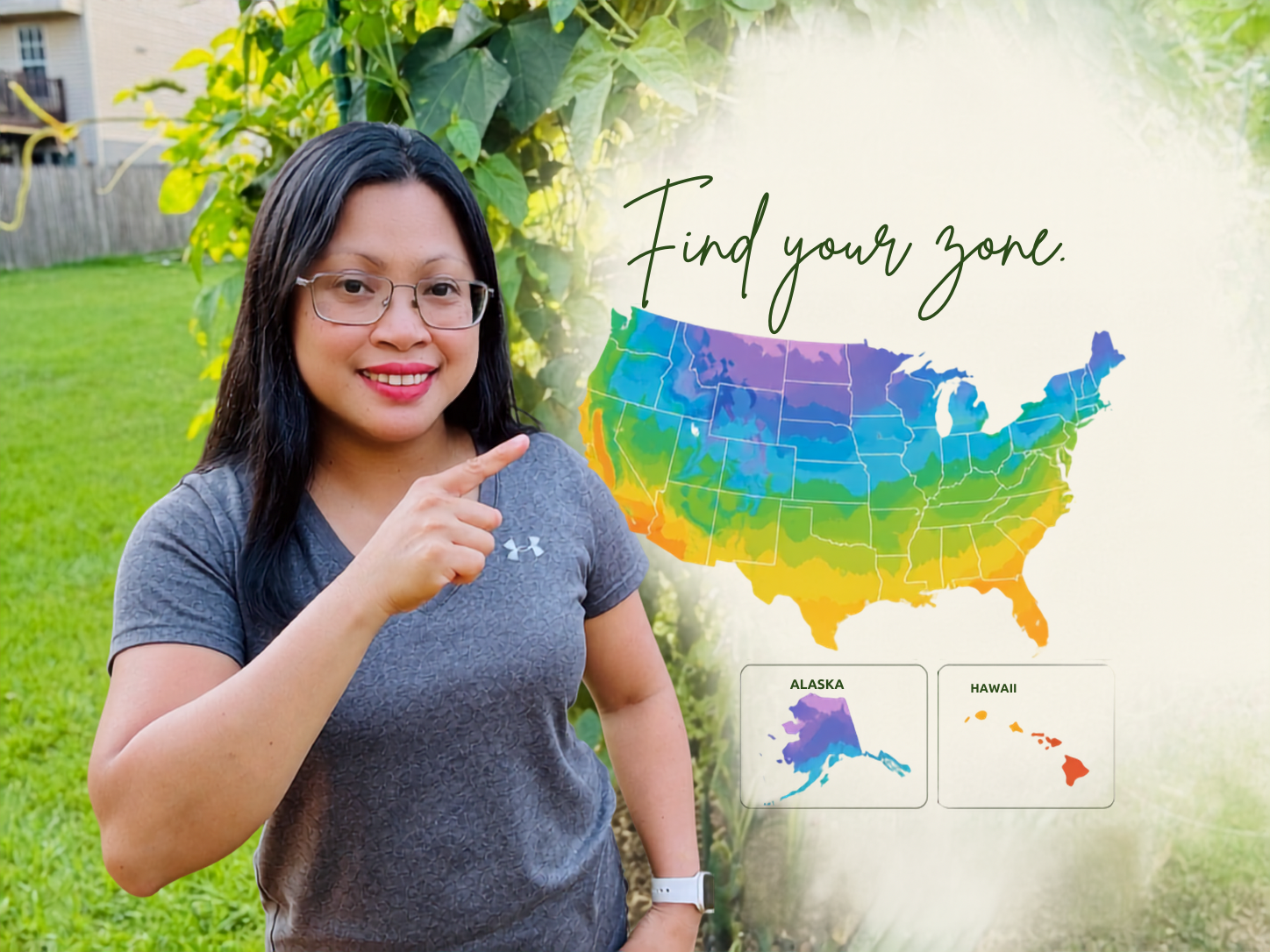
If you’ve ever looked at a plant tag or seed catalog, you’ve probably seen something like “Hardy in Zones 5–9.”
When I first started gardening, I assumed that meant I could plant everything in Zone 7 at the same time.
It didn’t take long to realize that wasn’t true.
One of the most common misunderstandings among beginner gardeners is confusing USDA Hardiness Zones with planting calendars. While they’re related, they serve very different purposes.
Understanding your hardiness zone will help you choose plants that can survive your winters, but it won’t tell you exactly when to sow your vegetable seeds.
Let’s break down what USDA Hardiness Zones actually mean and how you can use them to become a more confident gardener.
What Is a USDA Hardiness Zone?
The USDA Plant Hardiness Zone Map divides the United States into regions based on the average annual extreme minimum winter temperature.
In simple terms, it tells you:
“How cold does it typically get during winter where you live?”
Each zone represents a 10°F temperature range and is divided into two smaller sections:
- “a” (the colder half)
- “b” (the warmer half)
For example:
- Zone 7a is colder than Zone 7b.
- Zone 8a is colder than Zone 8b.
This information helps gardeners determine whether a perennial plant, shrub, tree, or fruit plant is likely to survive the winter outdoors.
How to Find Your USDA Hardiness Zone
The easiest way is to enter your ZIP code into the official USDA Plant Hardiness Zone Map.
Your zone may change over time as updated climate data becomes available.
If you live near the edge of two zones, your growing conditions may be influenced by both.
What Zone Am I In?
I garden in Central Maryland, which is generally USDA Zone 7.
Knowing this helps me choose perennial fruits, herbs, flowers, and landscape plants that are likely to survive our winters.
However, it’s only one piece of the gardening puzzle.
What Hardiness Zones Are Used For
Hardiness zones are especially useful for choosing plants that live for multiple years, including:
- Fruit trees
- Berry bushes
- Roses
- Perennial flowers
- Shrubs
- Trees
- Perennial herbs
- Hardy ornamental plants
When a plant label says it’s hardy in Zones 5–9, it means the plant can generally survive winters within those temperature ranges.
What Hardiness Zones Are Not Used For
This is where many new gardeners become confused.
Hardiness zones do not tell you:
- When to plant tomatoes
- When to sow lettuce
- When to start seeds indoors
- When to harvest vegetables
- Your last frost date
- Your first frost date
- Your growing season length
Those decisions are based on frost dates, soil temperature, weather conditions, and the specific crop you’re growing.
Hardiness Zones vs. Frost Dates
These two concepts are often confused.
Hardiness Zone
Tells you:
- Average winter low temperatures
- Which perennial plants survive winter
Frost Dates
Tell you:
- When to plant warm-season vegetables
- When to start seeds
- When to transplant seedlings
- How long your growing season is
For example, two gardeners can both live in Zone 7 but have different last frost dates because they live in different parts of the country.
That’s why I rely on both my hardiness zone and my local frost dates when planning my garden.
Why Two Zone 7 Gardens Can Look Completely Different
This surprises many beginner gardeners.
A gardener in Maryland and a gardener in Albuquerque, New Mexico might both live in Zone 7, but their gardens can behave very differently.
Factors such as:
- Summer heat
- Humidity
- Rainfall
- Wind
- Elevation
- Soil type
- Growing season length
all influence what grows well.
That’s why it’s helpful to follow gardeners who live in a climate similar to yours.
Understanding Microclimates
Even within the same yard, growing conditions can vary.
You might notice:
- One area warms earlier in spring.
- A fence blocks cold wind.
- A brick wall reflects heat.
- A low spot collects frost.
- A patio stays warmer at night.
These small differences create microclimates.
Learning your own garden’s microclimates is often just as valuable as knowing your USDA zone.
Hardiness Zones and Vegetable Gardening
Most vegetables are annuals, meaning they complete their life cycle in one growing season.
For annual vegetables, your hardiness zone is much less important than:
- Frost dates
- Soil temperature
- Day length
- Air temperature
- Seasonal weather
For example:
Tomatoes grow beautifully in Zones 5 through 10—but only after the danger of frost has passed.
Likewise, spinach thrives in cool weather regardless of whether you’re gardening in Zone 5 or Zone 9, as long as it’s planted during the appropriate season.
Hardiness Zones and Fruit Trees
Hardiness zones become much more important when choosing fruit trees.
Before planting:
- Apples
- Peaches
- Pears
- Cherries
- Persimmons
- Citrus
always check whether the tree is hardy in your zone.
Some trees may survive winter but require more chilling hours than your climate provides.
Others may bloom too early and lose flowers to late frosts.
Hardiness Zones and Citrus
This is a great example from my own garden.
Although I garden in Zone 7, I still grow citrus.
How?
I grow them in containers and move them indoors before freezing weather arrives.
Knowing my hardiness zone helps me understand that my citrus trees cannot remain outdoors year-round.
Instead of trying to fight my climate, I work with it.
Hardiness Zones Can Change
The USDA periodically updates the hardiness map using new weather data.
As average temperatures change over time, some locations may move into warmer or cooler zones.
That’s why it’s helpful to check your zone occasionally instead of assuming it never changes.
Don’t Let Your Zone Limit You
One of the biggest lessons I’ve learned is that your hardiness zone doesn’t determine everything you can grow.
It simply tells you what can usually survive outdoors through winter.
With techniques like:
- Container gardening
- Frost covers
- Cold frames
- Greenhouses
- Indoor seed starting
- Season extension
you can grow far more than your zone alone might suggest.
My Gardening Philosophy
While I know my garden is in Zone 7, I don’t let that be the only thing guiding my decisions.
I pay close attention to:
- Weather forecasts
- Soil temperature
- Seasonal changes
- Frost dates
- Rainfall
- What has worked in previous years
Every growing season teaches me something new.
Keeping notes from year to year has become just as valuable as any gardening chart.
Common Mistakes Beginners Make
Avoid these common misconceptions:
- Assuming everyone in the same hardiness zone has identical growing conditions.
- Using hardiness zones instead of frost dates for vegetables.
- Planting tender crops simply because the calendar says it’s spring.
- Ignoring microclimates within your own yard.
- Choosing perennial plants without checking their hardiness range.
- Assuming your zone never changes.
Tips for Gardening Success
- Learn your USDA hardiness zone.
- Know your average first and last frost dates.
- Watch local weather forecasts.
- Learn your garden’s microclimates.
- Keep a gardening journal each season.
- Choose varieties suited to your climate.
- Be willing to experiment.
Gardening becomes much easier when you understand how these pieces fit together.
Final Thoughts
Understanding USDA Hardiness Zones gives you a valuable starting point, but it isn’t the entire story.
Think of your hardiness zone as a guide for choosing plants that can survive your winters—not as a planting calendar for your vegetable garden.
Successful gardening comes from combining your hardiness zone with your frost dates, local weather, soil conditions, and your own observations.
The more seasons you spend in your garden, the more you’ll learn how your unique space behaves.
And that’s one of the most rewarding parts of gardening.
Frequently Asked Questions
What is a USDA Hardiness Zone?
A USDA Hardiness Zone is a geographic area based on the average annual extreme minimum winter temperature. It helps gardeners choose perennial plants that can survive winter in their location.
What USDA Zone is Maryland?
Most of Maryland falls within Zones 6, 7, and 8, depending on the region. Much of Central Maryland is in Zone 7.
Do hardiness zones tell me when to plant vegetables?
No. Vegetable planting is based primarily on frost dates, soil temperature, and seasonal weather—not hardiness zones.
Can I grow plants outside my hardiness zone?
Sometimes. Container gardening, greenhouses, frost protection, and other season-extension techniques allow gardeners to grow many plants that wouldn’t survive outdoors year-round.
Why do two gardeners in Zone 7 have different planting dates?
Because hardiness zones measure winter temperatures, not frost dates. Local climate, elevation, weather patterns, and growing conditions all influence planting schedules.
How often are USDA Hardiness Zones updated?
The USDA periodically updates the map using new climate data, so your zone may change over time.
Related Articles
- Understanding Frost Dates
- How to Plan Your First Vegetable Garden
- Choosing the Best Location for Your Vegetable Garden
- Raised Beds vs. Containers: Which Is Better?
- What to Plant in August (Zone 7 Guide)
- Gardening for Beginners: Everything You Need to Know to Get Started
- How to Start Seeds Indoors Successfully
- How to Build Healthy Garden Soil from the Start
- Best Vegetables for Beginners
- How to Grow Citrus Trees in Cold Climates
This page contains affiliate links to my brand partners like Vego Garden, GreenStalk, Walmart & Amazon at no extra cost to you.
Your support helps me create free gardening content. Thank you!


Leave a Reply