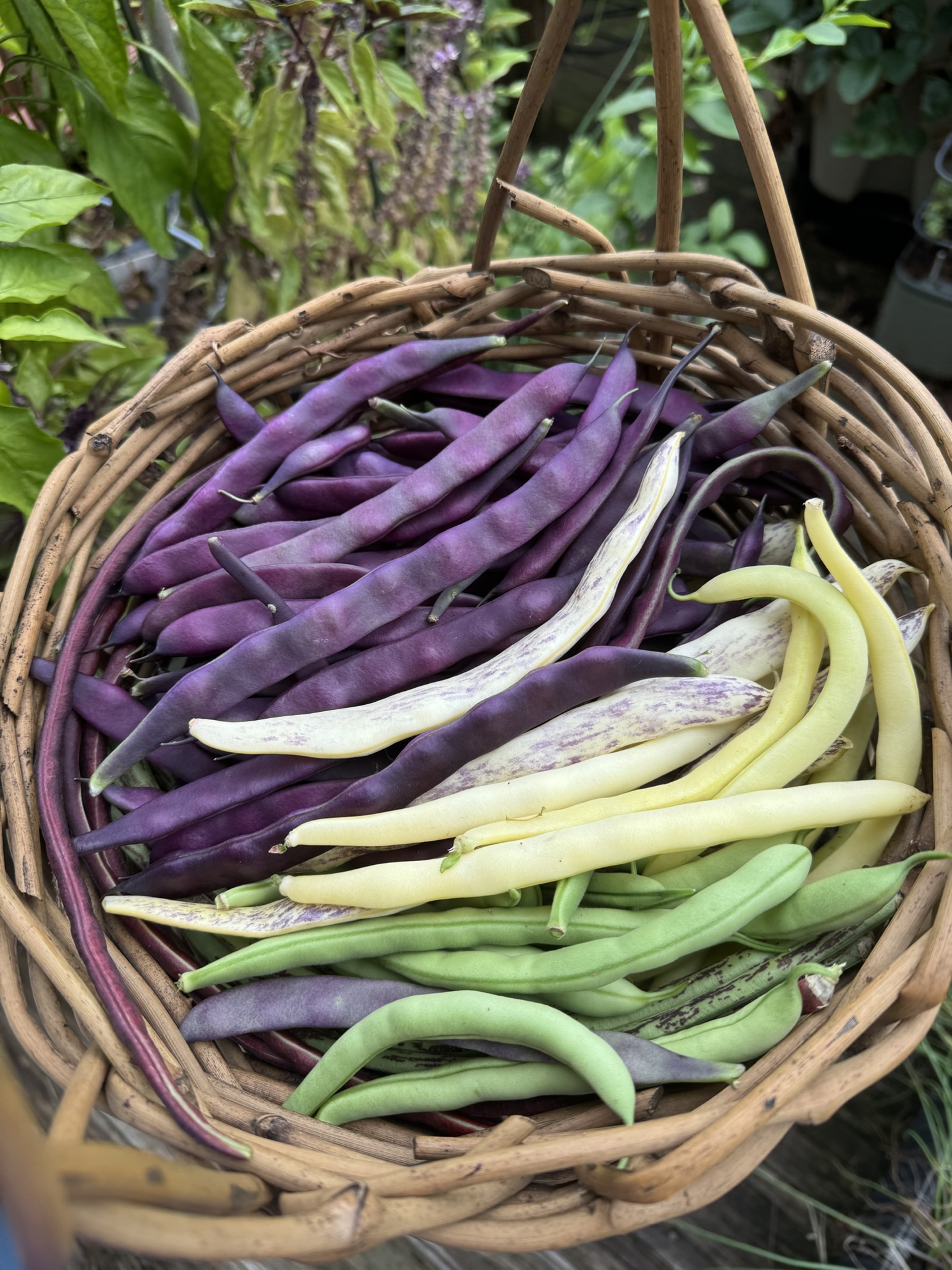
Beans are one of the easiest and most rewarding vegetables you can grow.
Whether you’re harvesting handfuls of bush beans or watching pole beans climb high above your garden, beans produce generously while asking for very little in return. They’re beginner-friendly, highly productive, and one of the best vegetables for maximizing space in a home garden.

Over the years, I’ve grown several types of beans in my Maryland Zone 7 garden, including Blauhilde, Thai Soldier, yardlong beans sitaw, Dragon Tongue, Yellow Cherokee Wax, and purple bush beans. Each variety has brought something unique to both the garden and the kitchen.
Here’s everything I’ve learned about growing healthy, productive bean plants.
Choose the Right Type of Bean
Before planting, it’s important to choose the type of bean that best fits your space and gardening style.
Bush Beans
Bush beans grow on compact plants that don’t require support, making them a great choice for smaller spaces.
They’re ideal for:
- Raised beds
- Containers
- Small gardens
- Successive plantings
Bush beans typically produce one large harvest over a few weeks.
Some of my favorites include:
- Dragon Tongue
- Yellow Cherokee Wax
- Purple Bush Beans
Pole Beans
Pole beans grow as long vines that climb supports and continue producing for months.
They require:
- Trellises
- Arbors
- A-frames
- Cattle panels
- Wall trellises
Because they grow vertically, pole beans are perfect for maximizing limited space.
Some of my favorites include:
- Blauhilde
- Thai Soldier
- Yardlong Beans Sitaw
Plant Seeds Directly
Beans grow quickly, so there’s usually no need to start them indoors.
Wait until:
- All danger of frost has passed
- Soil temperatures reach at least 60°F 16°C
Plant seeds about 1 inch deep and water well.
In warm soil, beans germinate quickly—often within a week.
Give Beans Plenty of Sunshine
Beans thrive in full sun.
Choose a location that receives at least 6–8 hours of direct sunlight each day. The more sun they get, the better they’ll flower and produce.
Plant in Well-Draining Soil
Beans aren’t particularly demanding, but they grow best in loose, fertile, well-draining soil.
Before planting, I mix compost into my raised beds to improve soil structure and provide slow-release nutrients.
Because beans work with nitrogen-fixing bacteria, they generally don’t need as much nitrogen fertilizer as leafy vegetables. While they don’t actively feed nearby plants during the growing season, they can help improve soil fertility after the season ends—especially if the roots are left in place.
Water Consistently
Beans prefer consistent moisture, especially once they begin flowering.
Rather than watering lightly every day, I water deeply whenever the top few inches of soil begin to dry out.
Mulching around the plants helps:
- Retain moisture
- Suppress weeds
- Keep the soil cooler
- Reduce soil splash during rain
Whenever possible, avoid overhead watering to reduce the risk of disease.
Support Pole Beans Early
If you’re growing pole beans, install supports before planting.
I like using:
- A-frame trellises
- Wall trellises
- String trellises
- Cattle panels
Young vines quickly begin wrapping themselves around supports, making vertical gardening simple and efficient. Growing upward also improves airflow and makes harvesting easier.
Fertilize Lightly
Beans don’t require heavy feeding.
Too much nitrogen can lead to lush leafy growth with very few beans. I usually rely on compost and a balanced fertilizer at planting, then let the plants do the rest.
Healthy soil is typically enough to support a strong harvest.
Harvest Often
One of the keys to growing productive bean plants is harvesting frequently.
Pick beans while they’re still young, crisp, and tender. Leaving mature pods on the plant signals it to shift energy toward seed production instead of producing more flowers.
During peak season, I harvest every couple of days to keep the plants producing.
Save Seeds
If you’re growing open-pollinated varieties, saving seeds is simple.
Allow a few pods to remain on the plant until they dry completely.
Once dry:
- Remove the beans
- Let them dry further if needed
- Store them in a cool, dry place
Saving seeds is a great way to preserve your favorite varieties and reduce gardening costs.
Common Problems
Beans are generally easy to grow, but a few issues can arise.
Mexican Bean Beetles
These insects chew holes in leaves.
Hand-picking adults and larvae early usually keeps them under control.
Japanese Beetles
They may feed on bean leaves during summer.
Morning hand-picking works well in small gardens.
Poor Germination
This is usually caused by planting in cold, wet soil.
Waiting for warm soil greatly improves success.
Flower Drop
Extreme heat or drought stress can temporarily reduce production.
Consistent watering helps plants recover once conditions improve.
Growing Beans in Containers
Many bean varieties grow beautifully in containers.
For best results:
Bush Beans
- Container at least 5 gallons
- Rich potting mix
- Full sun
- Consistent watering
- Mulching
Pole Beans
- Container at least 10–15 gallons
- Strong trellis
- Rich potting mix
- Regular watering
- Mulching
Beans are one of the easiest vegetables to grow on patios, decks, and balconies.
What Works in My Maryland Garden
Beans have become one of the most reliable crops in my Maryland Zone 7 garden.
I enjoy growing both bush and pole beans because they serve different purposes. Bush beans provide quick harvests that are perfect for fresh eating and freezing, while pole beans reward me with continuous harvests throughout the summer.
Some of my favorite bush varieties are Dragon Tongue and Yellow Cherokee Wax because they’re dependable and easy to spot among the foliage. I also love growing Thai Soldier and yardlong beans sitaw because they remind me of vegetables I grew up eating in the Philippines. Another standout is Blauhilde, which produces beautiful purple pods that turn green when cooked and is incredibly productive.
Growing beans vertically has been one of the best ways to maximize my small garden. With sturdy trellises, healthy soil, regular harvesting, and consistent watering, beans continue producing long after many other crops begin to slow down.
If you’re looking for a productive, beginner-friendly vegetable that works well in small spaces, beans are an excellent choice. They’re easy to grow, rewarding to harvest, and one of the most satisfying plants to watch climb toward the sky.
If this guide helped you feel more confident about growing beans, save it for later and share it with another gardener. I’d love to hear—which bean variety is your favorite to grow?
This page contains affiliate links to my brand partners like Vego Garden, GreenStalk, Walmart & Amazon at no extra cost to you.
Your support helps me create free gardening content. Thank you!


Leave a Reply