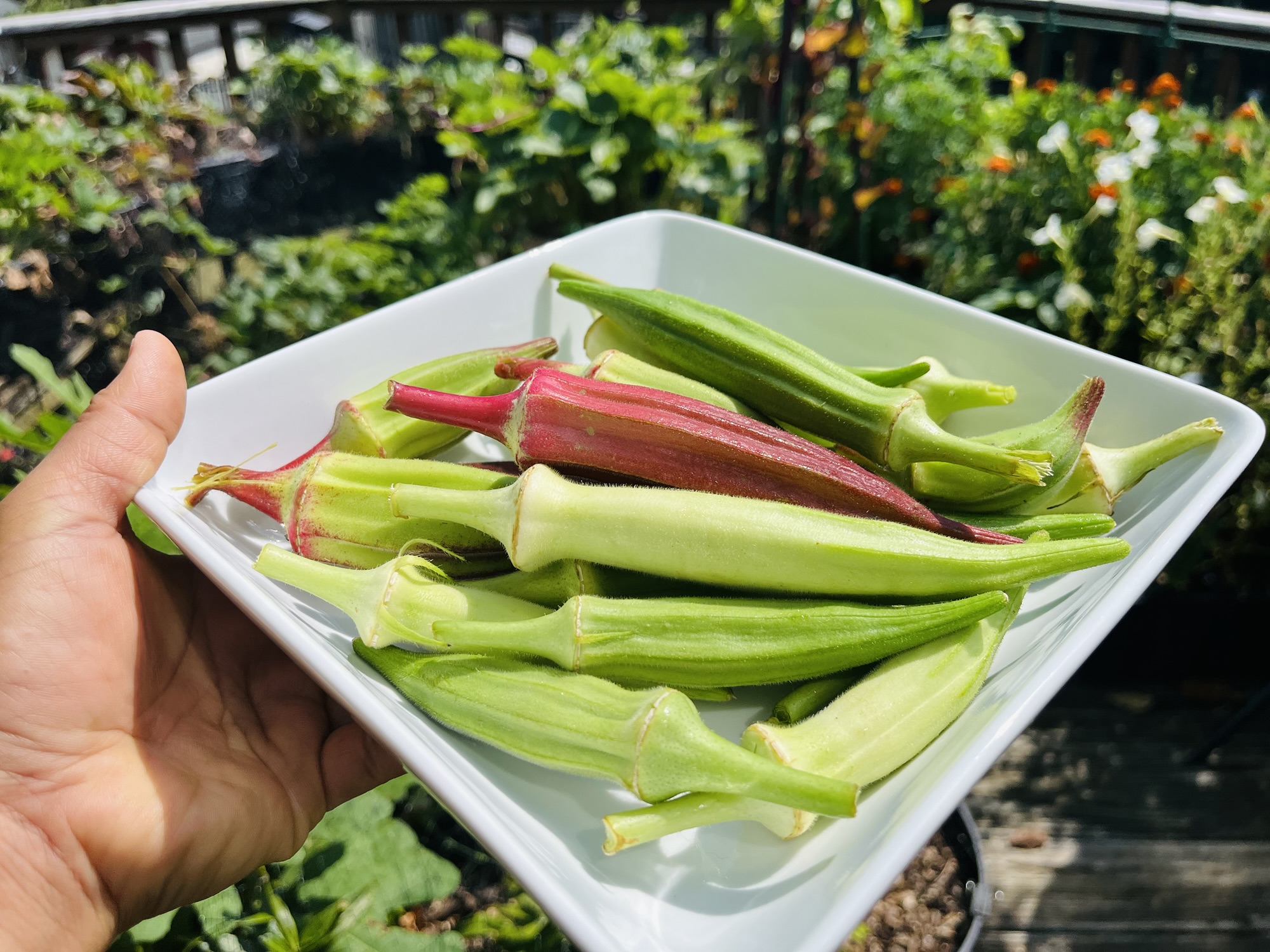
If you love warm weather, chances are you’ll love growing okra.
Okra is one of the few vegetables that truly thrives during the hottest part of summer. While many crops begin to struggle when temperatures climb into the 90s, okra seems to grow even faster. It’s productive, beautiful, and surprisingly easy to grow once the weather warms up.
Whether you enjoy it fried, grilled, roasted, added to soups, or cooked in gumbo, fresh-picked okra has a tenderness and flavor that’s hard to find at the grocery store.

Here’s everything I’ve learned about growing healthy, productive okra.
Choose the Right Variety
Okra comes in several varieties that differ in height, pod color, and maturity.
Some popular varieties include:
- Clemson Spineless
- Jambalaya
- Burgundy
- Emerald
- Cajun Delight
- Baby Bubba compact

If you’re gardening in a small space, compact varieties like Baby Bubba or Dwarf Blondy are excellent for containers. Taller varieties, on the other hand, tend to produce abundant harvests in raised beds.
Choose a variety that fits both your available space and how you enjoy cooking.
Start from Seed
Okra is usually direct sown because it develops a deep taproot and doesn’t like having its roots disturbed.
Plant seeds after:
- All danger of frost has passed
- Soil temperatures reach at least 70°F 21°C
- The weather has become consistently warm
Sow seeds about ½ to 1 inch deep and keep the soil evenly moist until they germinate.

If you have a shorter growing season, you can start seeds indoors about 3–4 weeks before your last frost. Using biodegradable pots can help reduce transplant shock when moving them outside.
Give Okra Full Sun
Okra absolutely loves sunshine.

Choose a location that receives at least 8 hours of direct sunlight each day. The hotter and sunnier the spot, the happier your plants will be.
Plant in Rich, Well-Draining Soil
Although okra can tolerate less-than-perfect soil, it performs best in fertile, well-draining conditions.

Before planting, I work compost into my raised beds and add a balanced slow-release fertilizer. Healthy soil supports vigorous growth and continuous pod production throughout the summer.
Water Deeply
Once established, okra is fairly drought tolerant. However, consistent watering leads to healthier plants and more tender pods.
Instead of watering lightly every day, water deeply whenever the top few inches of soil begin to dry out.

Mulching around the plants helps:
- Retain soil moisture
- Reduce weeds
- Moderate soil temperatures
- Keep developing pods clean
Fertilize Throughout the Season
Okra isn’t as heavy a feeder as tomatoes, but it still benefits from occasional feeding.
I start with compost and a balanced fertilizer at planting. As flowering begins, an additional feeding helps support continuous pod production.
Be careful not to overdo nitrogen, as too much encourages leafy growth instead of flowers and pods.
Give Plants Plenty of Space
Okra grows larger than many gardeners expect, so proper spacing is important.
Adequate spacing improves:
- Airflow
- Disease prevention
- Sunlight penetration
- Harvesting access
Giving plants enough room also helps reduce humidity around the leaves during Maryland’s hot summers.
Harvest Frequently
This is one of the most important parts of growing okra.
Harvest pods while they’re young and tender, usually about 2–4 inches long depending on the variety. If left too long, pods quickly become tough and fibrous.
During warm weather, I check my plants almost every day because the pods can grow remarkably fast. Regular harvesting encourages the plants to keep producing for weeks.
Wear Gloves if Needed
One thing new gardeners often don’t expect is that many okra plants have tiny hairs along their stems and pods that can irritate sensitive skin.
If your skin is easily irritated, wearing lightweight gardening gloves and long sleeves during harvest can make the experience much more comfortable. I personally like using Farmer’s Defence gloves and sleeves.
Common Problems
Okra is generally one of the easiest warm-season vegetables to grow, but you may occasionally encounter a few issues.
Aphids
These insects often gather on tender new growth. A strong spray of water or encouraging beneficial insects usually keeps them under control.
Japanese Beetles
These beetles sometimes feed on okra leaves during summer. Hand-picking them early in the morning is often effective.
Poor Germination
Cold soil is usually the cause. Waiting until the soil has thoroughly warmed will greatly improve germination.
Tough Pods
Pods become tough if left on the plant too long. Harvesting every day or two produces the best quality.
Growing Okra in Containers
Okra grows surprisingly well in containers.
For best results, choose:
- A container at least 10–15 gallons
- Rich, well-draining potting mix
- Full sun
- Regular watering
- Balanced fertilizer during the growing season
Compact varieties are especially well suited for patios, balconies, and decks.
Saving Okra Seeds
If you’d like to save seeds for next season, simply allow a few pods to fully mature on the plant.
The pods will become large, dry, and brown. Once completely dry, split them open and collect the seeds.
Store them in a cool, dry place until planting time the following spring. Saving seeds is an easy way to grow your favorite varieties year after year.
What Works in My Maryland Garden
Okra has taught me that not every vegetable struggles during the hottest part of summer.
While many of my cool-season crops are long finished—and even tomatoes can slow down during extended heat waves—okra continues growing with enthusiasm. In my Maryland Zone 7 garden, I’ve found that waiting until the soil is thoroughly warm before planting makes a tremendous difference.
Rich soil, full sun, mulch, and deep watering have consistently produced the healthiest plants. I also make it a habit to harvest frequently, since tender pods quickly become oversized if left on the plant too long.
If you’re looking for a vegetable that embraces the heat instead of merely surviving it, okra is an excellent choice. It’s productive, beginner-friendly, and one of the easiest vegetables to grow during the hottest months of the gardening season.
If this guide helped you feel more confident about growing okra, save it for later and share it with another gardener. I’d love to hear—what’s your favorite way to cook fresh okra?
This page contains affiliate links to my brand partners like Vego Garden, GreenStalk, Walmart & Amazon at no extra cost to you.
Your support helps me create free gardening content. Thank you!



Leave a Reply