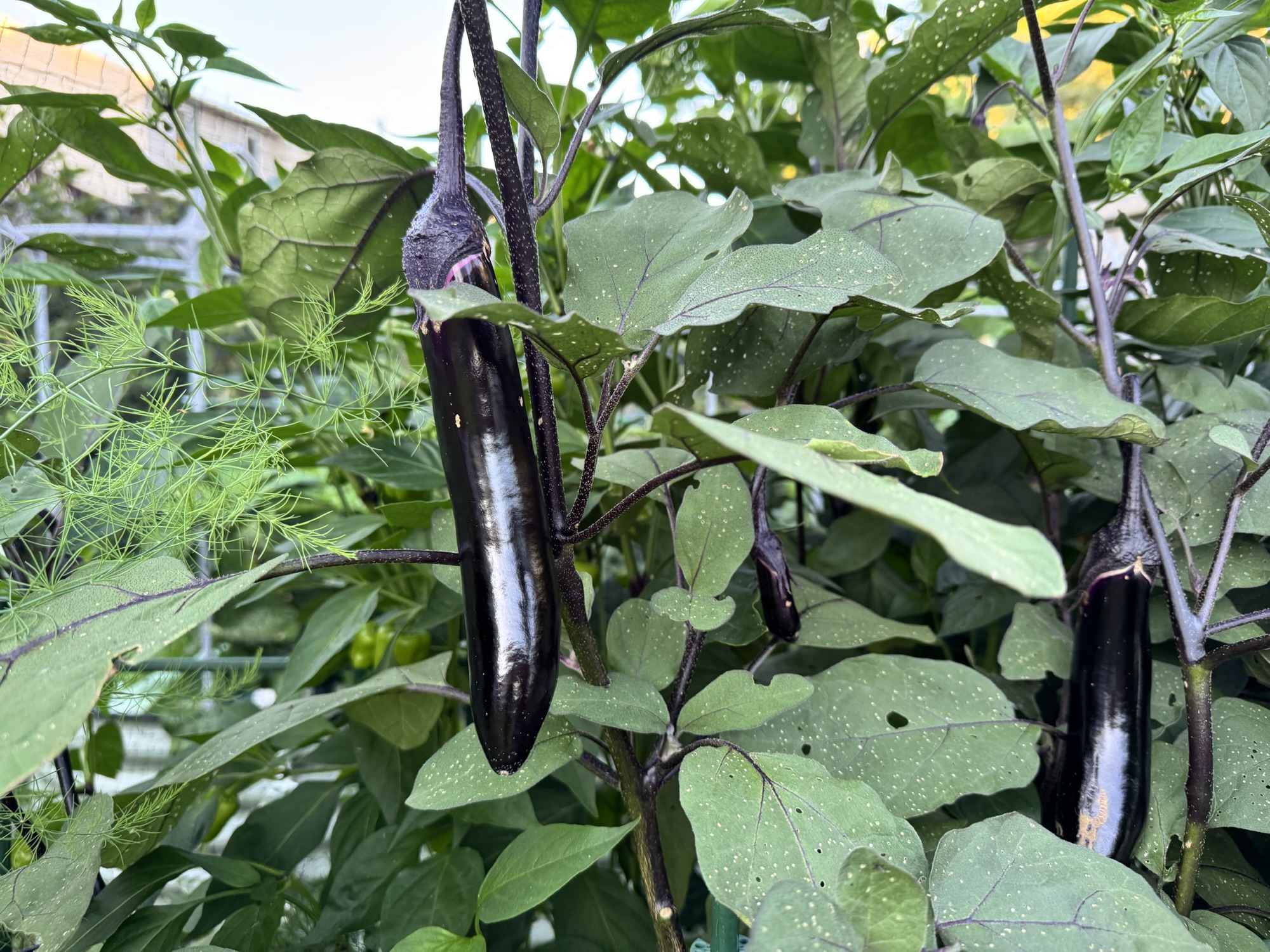
Eggplant is one of those vegetables that truly deserves a place in more home gardens.
With its glossy fruits, striking purple flowers, and productive growth, eggplant is just as ornamental as it is edible. Whether you’re making eggplant parmesan, stir-fries, grilled vegetables, curries, or Filipino tortang talong, there’s something especially satisfying about harvesting fresh eggplants from your own garden.

Like tomatoes and peppers, eggplants thrive in warm weather and reward gardeners who are patient enough to wait for summer’s heat.
Here’s everything I’ve learned about growing healthy, productive eggplants.
Choose the Right Variety
Eggplants come in a wide range of shapes, sizes, and colors, giving you plenty of options to suit your garden and kitchen.
Some popular types include:
- Globe eggplants
- Italian eggplants
- Japanese eggplants
- Chinese eggplants
- White eggplants
- Graffiti eggplants
- Mini eggplants

In my garden, I’ve especially enjoyed growing Patio Baby, a compact variety perfect for containers, Chinese varieties and Listada de Gandia, a beautiful striped Italian heirloom known for its tender, flavorful fruits.
Choose a variety that fits both your available space and how you like to cook.
Start Seeds Indoors
Because eggplants need a long growing season, it’s best to start seeds indoors about 8–10 weeks before your last expected frost.
To grow strong, healthy seedlings, provide:
- Warm soil for germination
- Bright grow lights or a sunny window
- Good airflow
- Consistent moisture
Eggplant seeds germinate best when soil temperatures stay between 75–85°F 24–29°C.
Wait for Warm Weather
One of the most common mistakes gardeners make is planting eggplants too early.
Eggplants love heat and struggle in cool conditions, so timing is important. I wait until:
- All danger of frost has passed
- Soil temperatures reach at least 65°F 18°C
- Nighttime temperatures stay above 55°F 13°C
The warmer the weather, the better your eggplants will grow.
Give Eggplants Full Sun
Eggplants need plenty of sunlight to thrive.
Choose a location that receives at least 6–8 hours of direct sunlight each day. More sun leads to stronger plants, more flowers, and ultimately larger harvests.
Plant in Rich, Well-Draining Soil
Healthy soil makes a big difference in how well your eggplants perform.
Before planting, I mix compost into my raised beds and add a balanced slow-release fertilizer. Eggplants prefer loose, fertile soil that drains well while still holding enough moisture for steady growth.
Water Deeply and Consistently
Consistent watering is key, especially once plants begin flowering and setting fruit.
Instead of watering lightly every day, I water deeply whenever the soil starts to dry out. Adding mulch around the plants helps:
- Retain soil moisture
- Reduce weeds
- Keep roots cooler during hot weather
- Prevent soil from splashing onto leaves
Keep in mind that container-grown eggplants may need more frequent watering during the hottest parts of summer.
Fertilize Throughout the Season
Eggplants are fairly heavy feeders and benefit from regular nutrition.
I start with compost and a balanced fertilizer at planting, then continue feeding once flowering begins to support fruit production. Be careful not to overdo nitrogen later in the season, as it can lead to leafy growth at the expense of fruit.
Support Your Plants
Although often overlooked, eggplants benefit from support as they grow.
As fruits develop, branches can become surprisingly heavy. I like to use:
- Tomato cages
- Stakes
- Plant ties
Providing support early helps prevent broken branches and keeps fruit off the ground.
Harvest at the Right Time
For the best flavor and texture, harvest eggplants while they’re still young and glossy.
Avoid waiting until the skin becomes dull or the fruit feels hard. Use clean pruners or scissors to cut the fruit rather than pulling it from the plant.
Regular harvesting encourages the plant to keep producing throughout the season.
Common Problems
Eggplants are generally easy to grow, but a few issues can arise.
Flea Beetles
Young seedlings are especially vulnerable to flea beetles. Using floating row covers early in the season can protect plants until they become established.
Blossom Drop
High temperatures or inconsistent watering can cause flowers to drop before fruit forms. Keeping the soil evenly moist usually helps prevent this.
Sunscald
Fruit exposed to intense afternoon sun may develop pale, damaged patches. Healthy foliage naturally helps shade developing fruit.
Spider Mites
Hot, dry conditions can encourage spider mites. Regular inspection and maintaining plant health can help prevent serious infestations.
Growing Eggplants in Containers
Eggplants grow very well in containers, making them a great option for small spaces.
Compact varieties like Patio Baby are especially suited for patios, balconies, and decks.
For best results, choose:
- A container at least 5–10 gallons for compact varieties
- A container at least 15–20 gallons for larger varieties
- Rich, well-draining potting mix
- Regular watering
- Balanced fertilizer throughout the season
- A stake or cage for support
Growing in containers also allows you to move plants to the sunniest spot available.
What Works in My Maryland Garden
Eggplants have become one of my favorite warm-season vegetables because they’re productive, beautiful, and surprisingly easy to grow once summer arrives.
In my Maryland Zone 7 garden, I grow them in raised beds alongside peppers, beans, and herbs. I’ve also had great success with compact varieties in containers. Patio Baby has been a fantastic choice for small spaces, while Chinese varieties and Listada de Gandia have earned a place in my garden for their flavor and striking appearance.
Over time, I’ve learned that patience is one of the biggest keys to success. Waiting until the soil is truly warm before planting, giving plants plenty of sunshine, watering consistently, and harvesting fruits while they’re still glossy has led to healthier plants and better harvests year after year.
If you’ve never grown eggplant before, don’t let it intimidate you. Once the summer heat settles in, it’s one of the most rewarding vegetables you can grow—and well worth making space for in your garden.
If this guide helped you feel more confident about growing eggplants, save it for later and share it with another gardener. I’d love to hear—which eggplant variety is your favorite to grow or cook with?
This page contains affiliate links to my brand partners like Vego Garden, GreenStalk, Walmart & Amazon at no extra cost to you.
Your support helps me create free gardening content. Thank you!


Leave a Reply