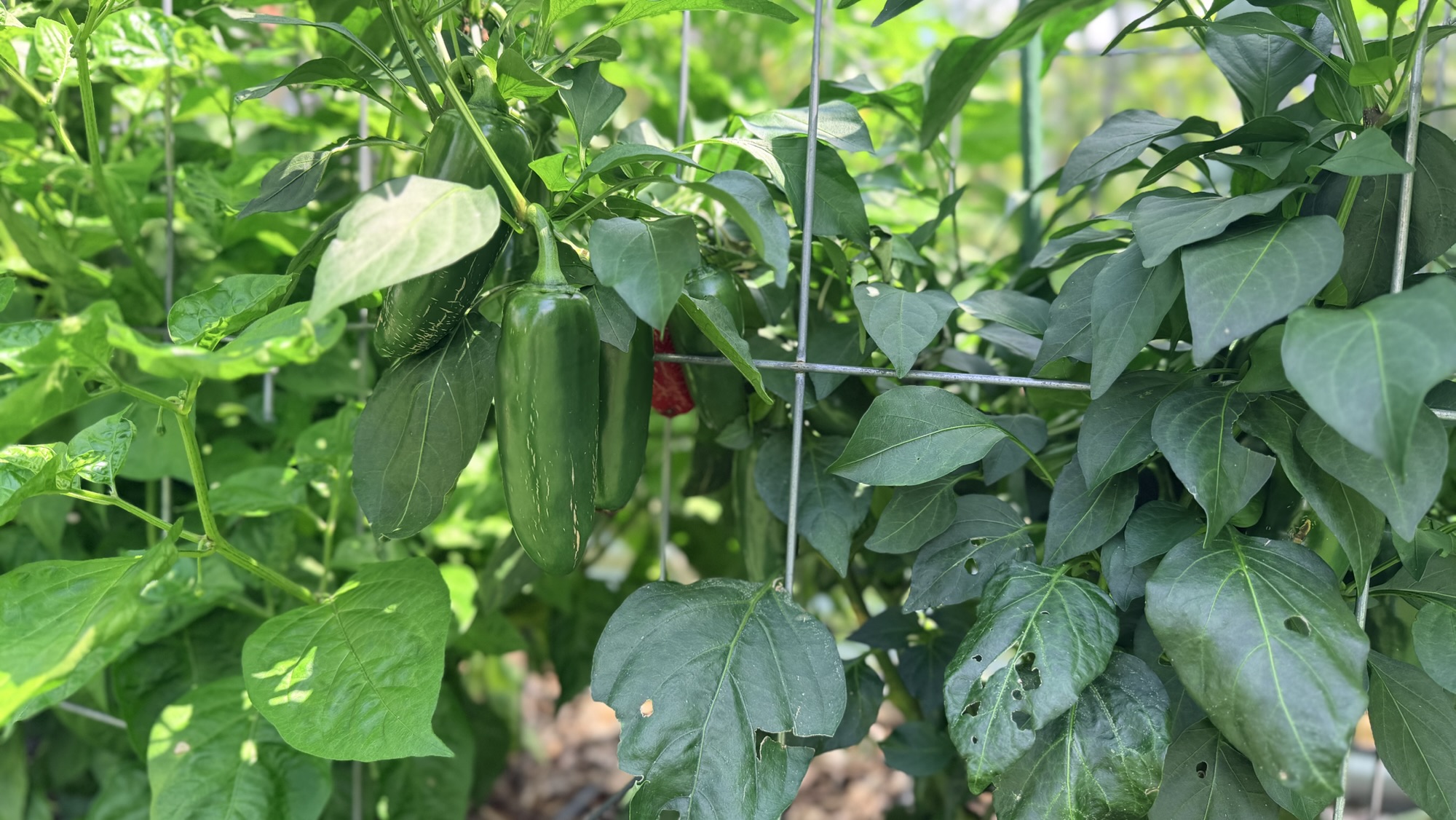
One of the best things about growing peppers is that you don’t have to wait for them to turn their final color before harvesting. Unlike some vegetables that have a short harvest window, peppers can be picked at several stages depending on how you plan to use them.
Whether you’re growing crisp green bell peppers, fiery jalapeños, sweet banana peppers, or colorful lunchbox peppers, knowing when to harvest can make a big difference in flavor, texture, and future production.

In my Maryland Zone 7 garden, peppers are one of my favorite summer crops. I grow mostly sweet peppers along with Whopper Jalapeños for their large, flavorful fruits. Harvesting regularly keeps my plants producing throughout the season.
Here’s how to know when your peppers are ready.
How Long Do Peppers Take to Mature?
Most pepper plants begin producing harvestable fruits:
- Sweet peppers: 60–90 days after transplanting
- Hot peppers: 70–100+ days after transplanting
The exact timing depends on:
- Variety
- Weather
- Sunlight
- Soil fertility
- Watering

Always check the expected days to maturity listed on your seed packet or plant tag.
Can You Harvest Peppers While They’re Green?
Yes!
Many peppers are fully mature while still green.
Examples include:
- Bell peppers
- Jalapeños
- Banana peppers
- Poblano peppers
- Shishito peppers


Young peppers aren’t always green. Some varieties begin as purple, including Buena Mulata, Purple Beauty, Murasaki Purple, and Lilac Bell. As they mature, these peppers eventually ripen to red.
Leaving peppers on the plant longer simply allows them to change color and develop a sweeter or more complex flavor.
Signs Your Peppers Are Ready to Harvest
Look for these signs:
Full Size
Harvest peppers once they’ve reached the typical size for their variety.
A pepper that is still small may not have developed its best flavor.
Firm Skin
The fruit should feel:
- Firm
- Crisp
- Smooth
- Heavy for its size
Soft peppers are usually overripe or beginning to decline.
Glossy Appearance
Most peppers develop a shiny surface when they’re ready to pick.
As fruits age, they may become dull and eventually wrinkle.
Desired Color
Many peppers change color as they ripen.
Common color progression:
- Green
- Yellow
- Orange
- Red
- Purple
- Chocolate (depending on variety)
The color you choose depends on your personal preference.
I harvest peppers at different stages depending on what I’m using them for.

Most of the time, I harvest peppers as soon as they start blushing or changing color. Peppers ripen from the inside out, so by that stage they’ve already developed everything they need to continue ripening indoors at room temperature.
Harvesting them a little earlier also frees up the plant to focus on sizing up and ripening the remaining peppers, helping it stay productive throughout the season.
When to Harvest Bell Peppers
Bell peppers can be harvested:
Green
Harvest when:
- Full size
- Firm
- Glossy
Green peppers have a fresh, slightly bitter flavor and encourage the plant to produce more fruits.
Red, Yellow, Orange, or Purple
Allow peppers to remain on the plant until they reach their mature color.
Colored bell peppers are:
- Sweeter
- More flavorful
- Higher in vitamin C
- Rich in antioxidants
Keep in mind that leaving fruits on the plant longer may slow the development of new peppers.
When to Harvest Jalapeños
Jalapeños are typically harvested:
- 3–5 inches long
- Firm
- Dark green
Some gardeners, including me, wait until they turn red for a sweeter flavor and more heat.

For jalapeño poppers, I usually pick them green. But for fresh eating or preserving, I prefer letting my jalapeños ripen until they turn red because I love their sweeter, more developed flavor.
Personally, I love growing Whopper Jalapeños because they produce large fruits that are perfect for poppers, grilling, and making sauces.
When to Harvest Banana Peppers
Banana peppers may be picked:
- Pale yellow
- Bright yellow
- Orange
- Red
Most people harvest them while yellow for fresh eating and pickling but I personally love it more when they fully ripe.
When to Harvest Poblano Peppers
Harvest poblanos when they are:
- About 4–6 inches long
- Dark green
- Firm
For making ancho chiles, allow them to fully ripen to deep red before drying.
Should You Pick Peppers Early?
Yes.
Harvesting peppers regularly encourages plants to:
- Produce more flowers
- Set more fruit
- Continue growing throughout the season
If you leave every pepper to fully ripen, the plant may slow down because it focuses on maturing existing fruit.
A good strategy is to harvest some peppers green or at blushing stage while allowing the rest to continue developing their sweeter flavor.
How to Harvest Peppers
Avoid pulling peppers off by hand without supporting the stem.
Instead:
- Use clean pruning shears or garden scissors.
- Cut the stem about ½ inch above the pepper.
- Handle branches gently to avoid breaking them.
Pepper plants have brittle stems that can snap if fruits are pulled too hard.
How Often Should You Harvest?
During peak summer, check plants every few days.
Frequent harvesting:
- Encourages continuous production
- Prevents overripe fruit
- Reduces branch breakage from heavy peppers
What Happens If You Leave Peppers on the Plant Too Long?
Overripe peppers may:
- Become soft
- Develop wrinkles
- Split after heavy rain
- Attract insects
- Slow future production
They’re often still edible but are usually best harvested before reaching this stage.
Storing Fresh Peppers
Fresh peppers store well in the refrigerator.
For best quality:
- Do not wash until ready to use.
- Store in the crisper drawer.
- Use within 1–2 weeks.
If you have a large harvest, peppers can also be:
- Frozen
- Pickled
- Dehydrated
- Roasted and frozen
Final Thoughts
Peppers are one of the most forgiving vegetables to harvest because there’s no single “perfect” time. Whether you prefer crisp green peppers or sweet, fully colored fruits, the choice depends on how you plan to use them in the kitchen.
I like harvesting a mix throughout the season. Green peppers keep my plants producing, while allowing a few to fully ripen gives me sweeter flavors for fresh eating and cooking. With regular harvesting and proper care, your pepper plants can reward you with an abundant harvest from summer into fall.
Frequently Asked Questions
Can you eat peppers while they’re green?
Yes. Green peppers are fully edible and are often harvested before they change to their mature color.
Will peppers continue to ripen after picking?
Depending on when you harvest your peppers, they may continue changing color after you pick them. If you harvest them at the breaker stage—when they just begin to blush—they’ll usually continue ripening indoors at room temperature. If you pick them earlier, while they’re still dull green and underdeveloped, they may gain a little color after harvest, but they won’t develop the same sweetness or fully ripen.
For the best flavor, I like to let peppers blush or fully ripen on the plant whenever possible. But if I need green peppers for a recipe, I’ll harvest them earlier.
Do peppers get hotter as they turn red?
For many hot pepper varieties, yes. As peppers mature and change color, they often develop a sweeter flavor along with increased heat, though this varies by variety.
Should I harvest peppers before the first frost?
Absolutely. Even immature peppers should be picked before a frost, as freezing temperatures can damage both the fruit and the plant.
How do I know if my peppers are overripe?
Overripe peppers may feel soft, wrinkle, split, or show signs of decay. Harvesting regularly helps you avoid this while encouraging continued production.
Related Articles
Continue the harvest season with these helpful guides:
- Growing Peppers: A Complete Beginners Guide to Bigger Healthier Harvest
- How to Fertilize Peppers Naturally
- Why Your Pepper Plants Aren’t Producing
- Signs Your Plants Need Water
- When to Plant Tomatoes, Peppers and Warm Season Crops in Zone 7 Guide
- 10 Must Know Tips to Grow Peppers in a Small Space Garden
- How to Freeze Peppers
- How to Support Pepper Plants
- How to Harvest Without Damaging the Plant
This page contains affiliate links to my brand partners like Vego Garden, GreenStalk, Walmart & Amazon at no extra cost to you.
Your support helps me create free gardening content. Thank you!


Leave a Reply