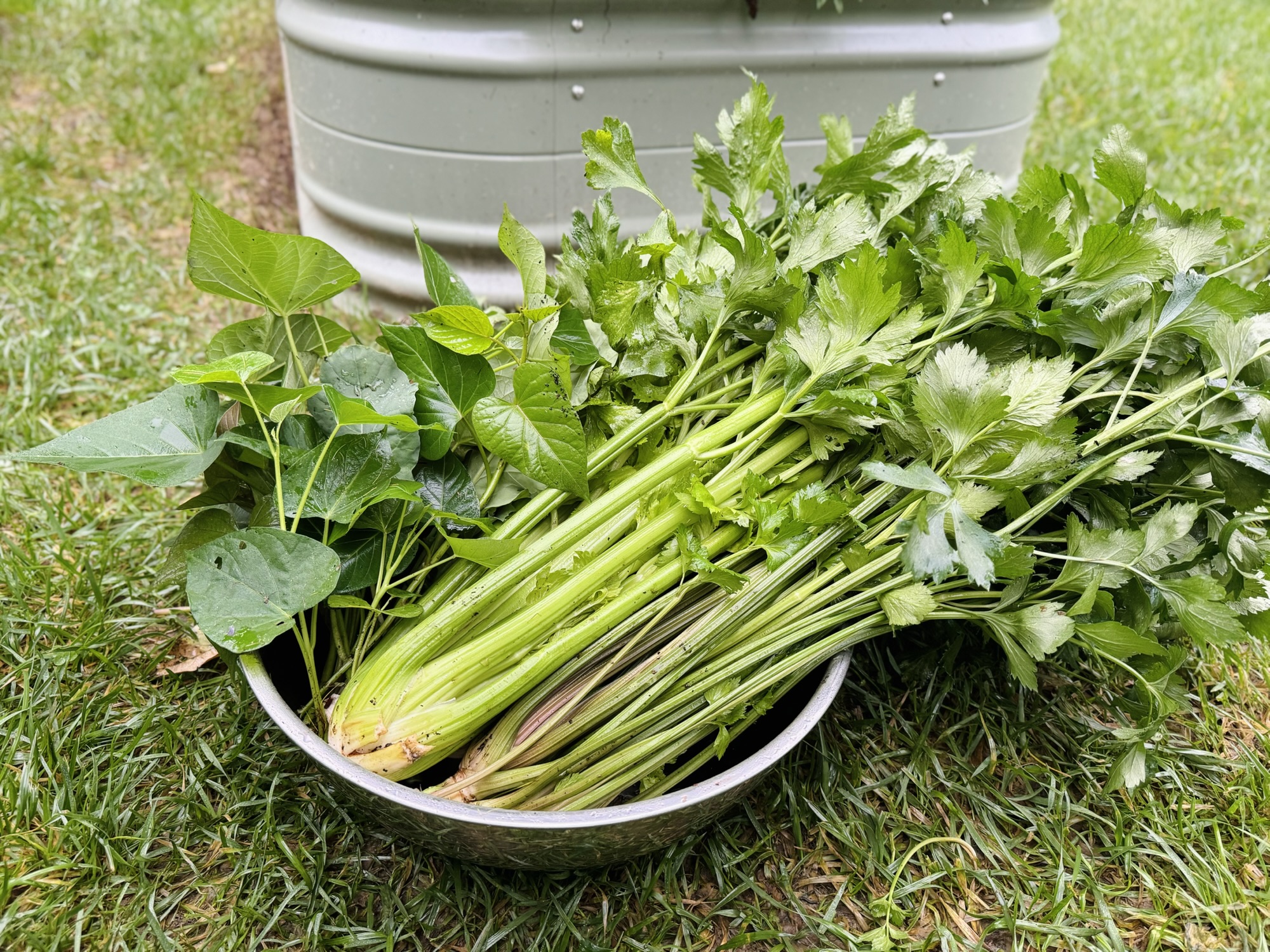
Celery isn’t usually the first vegetable people think about growing, but it has become one of my favorite cool-season crops to grow throughout the summer.
Homegrown celery has a richer flavor than what you’ll typically find at the grocery store, and I love being able to harvest individual stalks whenever I need them for soups, stir-fries, salads, or homemade stock.

Many gardeners think celery is difficult to grow, but I’ve found that once you understand what it needs—protection from intense heat, consistent moisture, and a bit of patience—it’s actually very rewarding.
Here’s everything I’ve learned about growing healthy, productive celery.
Choose the Right Variety
There are several excellent celery varieties to choose from.
Some of my favorites include:
- Tall Utah
- Red Celery
- Chinese Pink Celery Kinchay

Tall Utah is my go-to for producing thick, crisp stalks that are perfect for everyday cooking. This is the variety I grow each year.
Red celery adds beautiful color while offering a slightly stronger flavor. This variety tends to produce more side shoots and slightly thinner stalks.
Chinese Pink Celery, also known as kinchay in the Philippines, produces thinner stalks and fragrant leaves that are commonly used in many Asian dishes like lumpia and pansit.
Choose the variety that best fits how you plan to use it in the kitchen.
Start Seeds Early
Celery has one of the longest growing seasons of any cool-season vegetable.
I usually start seeds indoors about 10–12 weeks before my last expected frost.
The seeds are tiny and need light to germinate.

Instead of covering them deeply, gently press them onto the surface of moist seed-starting mix. I lightly cover them with vermiculite and mist with water.
Keep the soil consistently moist and provide plenty of light once seedlings emerge.
Celery germinates slowly, so don’t be discouraged if it takes two to three weeks.
Harden Off Before Transplanting
Before moving celery outdoors, gradually introduce it to outdoor conditions over the course of a week.
This process helps reduce transplant shock.
Because celery tolerates cool temperatures better than many vegetables, it can usually be transplanted earlier than warm-season crops.
However, avoid exposing very young plants to extended freezing temperatures.
Plant in Rich, Moist Soil
Celery is a heavy feeder that thrives in fertile soil.
Before planting, I mix compost into my raised beds and add a balanced fertilizer.
Unlike Mediterranean herbs, celery is a thirsty plant and prefers soil that stays consistently moist.
Adding organic matter helps improve both fertility and water retention.
Give It Plenty of Water
Consistent watering is one of the most important parts of growing celery.
If the soil dries out repeatedly, the stalks can become tough, stringy, or bitter.
I water deeply whenever the soil begins to dry and apply mulch around the plants to help conserve moisture.
Celery performs best with evenly moist soil rather than cycles of drought followed by heavy watering.
Feed Throughout the Season
Because celery grows for several months and produces lots of foliage, it benefits from regular feeding.
In addition to compost, I occasionally apply a balanced fertilizer during the growing season.
Proper nutrition helps produce thick, tender stalks.
Give Plants Enough Space
Good spacing improves airflow and reduces disease pressure.
It also allows the stalks to develop properly.
Most celery plants need about 8–10 inches between plants, although spacing can vary slightly depending on the variety.
Do You Need to Blanch Celery?
Some gardeners blanch celery by wrapping the stalks to block sunlight before harvest.
This produces lighter-colored, milder stalks.oppooo
Personally, I don’t find it necessary for home gardening especially for the Tall Utah celery, which is a self-blanching variety.
I prefer letting the plants grow naturally and harvesting them as needed.
Homegrown celery is flavorful whether it’s blanched or not.
Harvesting Celery
One of my favorite things about celery is that you don’t have to harvest the whole plant at once.
I usually harvest the outer stalks first while allowing the center to continue producing.
This gives me fresh celery over a much longer period.
If needed, you can also harvest the entire plant by cutting it at the base.
The leaves are edible too and make an excellent addition to soups, stocks, salads, and seasoning blends.
Growing Celery in Raised Beds
Growing celery in raised beds is my preferred method, and it’s where I’ve had the most consistent success.
Raised beds allow me to create the rich, fertile soil that celery thrives in. I can easily mix in compost and organic matter to improve both nutrient levels and moisture retention, which are two of the most important factors for healthy celery growth.
Another big advantage is drainage. While celery loves moisture, it doesn’t do well in waterlogged soil. Raised beds strike the perfect balance by holding enough moisture while still allowing excess water to drain away.
I also find it much easier to maintain consistent watering in raised beds compared to containers. The soil volume is larger, so it doesn’t dry out as quickly, which helps prevent the stress that leads to tough or bitter stalks.
Compared to containers, raised beds give celery more room to develop strong root systems and produce thicker, more vigorous stalks. I don’t have to water as frequently, and the plants tend to be more resilient during hot or dry periods.
For me, raised beds offer the ideal combination of moisture control, soil quality, and growing space, making them the best choice for growing productive, flavorful celery.
Growing Celery in Containers
Celery grows surprisingly well in containers.
Choose a large pot with good drainage and fill it with rich, moisture-retentive potting mix. I recommend planting one plant per 5-gallon container or larger.
Container-grown celery dries out much faster than plants growing in raised beds, so you’ll need to monitor watering more closely.
With consistent moisture and regular feeding, container-grown celery can be just as productive.
Common Problems
Celery is generally healthy when grown under the right conditions.
However, a few problems may appear.
Thin Stalks
Usually caused by insufficient water, poor fertility, or overcrowding.
Bitter Flavor
Often the result of drought stress or hot weather.
Yellow Leaves
May indicate nutrient deficiencies, overwatering, or natural aging of older leaves.
Maintaining steady moisture helps prevent many of these issues.
What Works in My Maryland Garden
Celery has become a dependable crop in my Maryland Zone 7 garden.
I’ve had great success growing Tall Utah, Red Celery, and Chinese Pink Celery in raised beds. While celery prefers the cooler temperatures of spring and fall, it can tolerate midsummer heat if given some protection. I take advantage of natural microclimates in the garden or create my own. Here are two ways I grow it:
- I plant celery under taller plants or near structures like fences or walls. Under larger plants like squash, celery thrives in partial shade. Just remember to mulch and check moisture regularly, as both squash and celery are heavy water users.
- I use shade cloth, or in my setup this year, Vego’s insect netting, which provides about 30% shade.
Celery takes time to grow, and learning the timing has been a game changer. For me, the biggest keys to success are starting seeds early, enriching the soil with compost, watering consistently, and harvesting the outer stalks as needed instead of pulling the entire plant.
I also enjoy growing Chinese Pink Celery because its leaves add wonderful flavor to many Filipino and Asian recipes, making it a versatile crop that earns its place in my garden every year.
If you’ve been hesitant to grow celery because you’ve heard it’s difficult, I’d encourage you to give it a try. Once you understand its love for cool weather and consistent moisture, it becomes an incredibly rewarding vegetable that provides fresh harvests for months.
If this guide helped you feel more confident about growing celery, save it for later and share it with another gardener. I’d love to hear—which celery variety are you planning to grow this season?
This page contains affiliate links to my brand partners like Vego Garden, GreenStalk, Walmart & Amazon at no extra cost to you.
Your support helps me create free gardening content. Thank you!



Leave a Reply