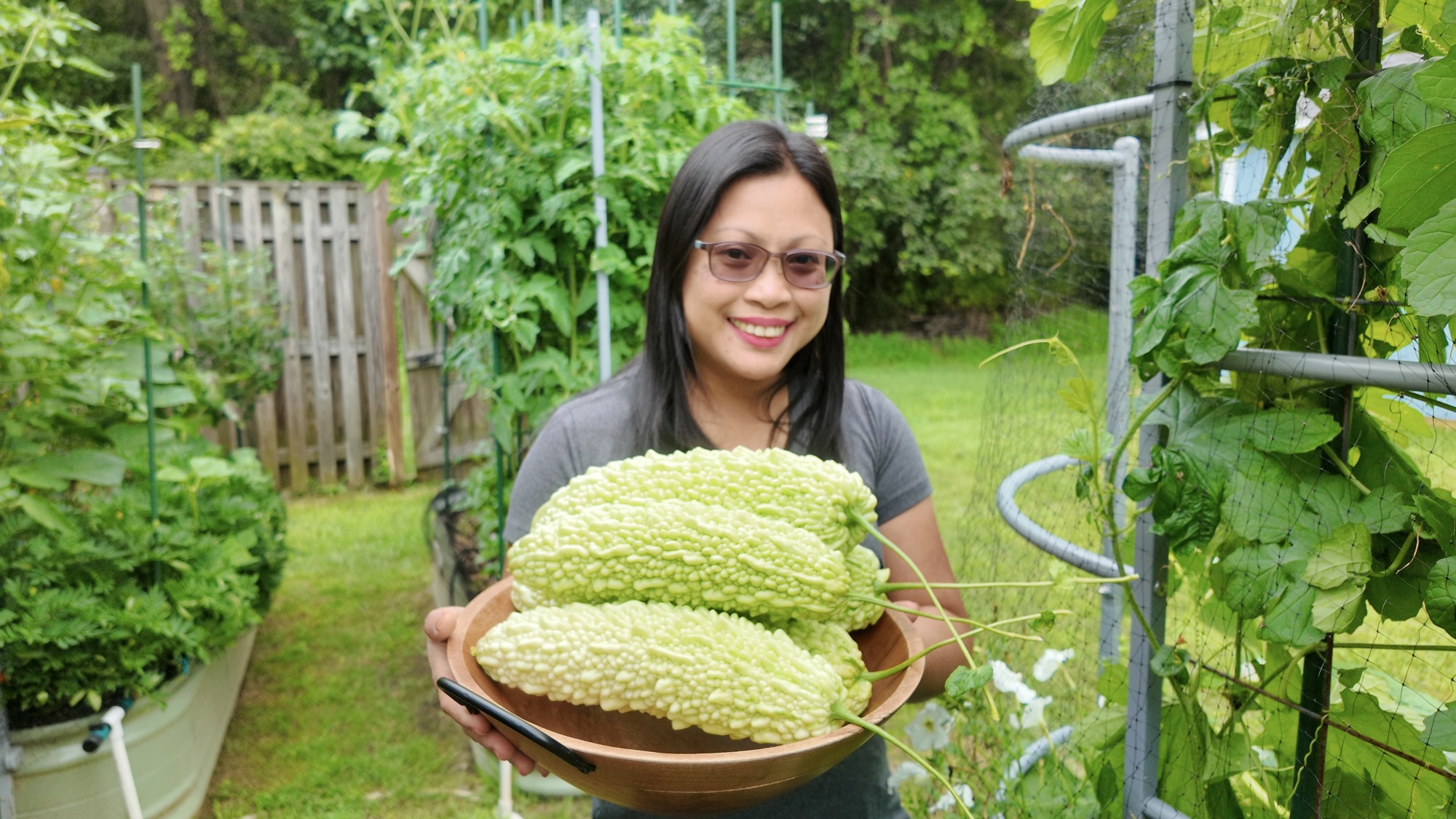
Bitter melon is one of those vegetables that instantly reminds me of the Philippines.
Also known as bitter gourd, ampalaya, or Momordica charantia, bitter melon is a warm-season climbing vegetable grown throughout many tropical and subtropical regions. In the Philippines, we call it ampalaya, and it is a familiar ingredient in Filipino cooking.
If you’ve never tasted bitter melon before, its name is very accurate—it really is bitter! But that distinctive flavor is exactly what makes it special, particularly when it’s prepared with other vegetables, eggs, meat, or seafood.
Bitter melon also happens to be an excellent crop for gardeners who want to maximize vertical space. The vines love heat, climb vigorously, and can produce an impressive number of fruits from a relatively small footprint.

In my Maryland Zone 7 garden, I grow bitter melon as a summer crop and give it a sturdy trellis to climb. I’ve grown varieties such as Taiwan White and Jyunpaku, which produce beautiful light-colored fruits that look almost ornamental hanging from the vines.
If you’d like to grow ampalaya at home—even if you don’t live in a tropical climate—here’s everything you need to know.
What Is Bitter Melon?
Bitter melon (Momordica charantia) is a member of the cucurbit family, making it related to:
- Cucumbers
- Squash
- Pumpkins
- Watermelons
- Melons

Unlike those crops, however, bitter melon produces elongated fruits with distinctive bumpy or ridged skin.
Depending on the variety, fruits may be:
- Dark green
- Light green
- Nearly white
- Short and thick
- Long and slender
The plants produce vigorous vines with delicate leaves, curling tendrils, and small yellow flowers.
Bitter Melon, Bitter Gourd, or Ampalaya?
They’re different names for the same general crop.
You may see it called:
- Bitter melon
- Bitter gourd
- Balsam pear
- Bitter cucumber
- Ampalaya
In the Philippines, ampalaya is the name I grew up knowing.
Different varieties can look dramatically different, so don’t be surprised if one bitter melon looks nothing like another.
Why Grow Bitter Melon?
Bitter melon is especially useful for warm-climate and small-space gardens because it:
- Thrives in summer heat
- Grows vertically
- Produces repeatedly
- Takes up relatively little ground space when trellised
- Has beautiful ornamental-looking vines
- Offers varieties that can be difficult to find fresh locally
- Is an important vegetable in many Asian cuisines
If you enjoy growing vegetables connected to your culture or the foods you actually cook, bitter melon is particularly rewarding.
My Bitter Melon Varieties
Two varieties I’ve grown are Taiwan White and Jyunpaku.
Taiwan White
Taiwan White produces beautiful pale fruits rather than the dark green bitter melons many gardeners are familiar with.
The fruits are striking against the green foliage and are easy to spot when harvesting.
Jyunpaku
Jyunpaku is another light-colored bitter melon variety.
Growing different varieties is one of the things I enjoy most about gardening because it gives me access to vegetables and cultivars I might not easily find at a regular grocery store.
When to Plant Bitter Melon
Bitter melon loves heat.
This isn’t a crop to rush into the garden during cool spring weather.
Wait until:
- All danger of frost has passed.
- Soil has warmed considerably.
- Nighttime temperatures are consistently warm.
Bitter melon grows best when temperatures are roughly 75–85°F (24–29°C), although established plants can tolerate hotter summer conditions.
In Zone 7, starting seeds indoors can be especially helpful because our growing season is much shorter than the tropical conditions bitter melon naturally prefers.
When to Start Bitter Melon Seeds Indoors
Start seeds approximately 4 to 6 weeks before you expect to transplant them outside.
You don’t necessarily want to start extremely early because cucurbits can become difficult to transplant once their root systems become large.
The goal is to produce a healthy young plant that’s ready to take off once warm weather arrives.
How to Grow Bitter Melon From Seed
Bitter melon seeds have a hard seed coat and sometimes take a little patience to germinate.
Step 1: Soak the Seeds
You can soak seeds in warm water for approximately 12 to 24 hours before planting.
This helps soften the seed coat.
Step 2: Plant the Seeds
Plant seeds approximately ½ to 1 inch deep.
I prefer starting them in individual pots rather than tiny seed cells so the roots have room to develop.
Step 3: Keep Them Warm
Warmth is extremely important.
A heat mat can help maintain consistently warm conditions during germination.
Step 4: Keep the Soil Moist
Keep the growing medium evenly moist but not saturated.
Cold, soggy soil can cause seeds to rot.
Step 5: Provide Strong Light
Once seedlings emerge, place them under strong grow lights or another very bright location.
How Long Does Bitter Melon Take to Germinate?
Germination can take approximately 7 to 21 days, depending on:
- Seed freshness
- Temperature
- Moisture
- Variety
Warm conditions usually produce faster, more consistent germination.
Don’t give up too quickly if your seeds don’t emerge immediately.
Harden Off Seedlings
Before transplanting bitter melon outdoors, gradually acclimate seedlings to:
- Direct sunlight
- Wind
- Outdoor temperatures
Harden them off over approximately 7 to 10 days.
Bitter melon seedlings started indoors can easily become stressed if they’re suddenly moved into intense outdoor sunlight.
How Much Sun Does Bitter Melon Need?
Give bitter melon:
At least 6 to 8 hours of direct sunlight daily.
Full sun encourages:
- Vigorous vines
- More flowers
- Better fruit production
Choose one of the sunniest areas in your garden.
The Best Soil for Bitter Melon
Bitter melon prefers soil that is:
- Fertile
- Loose
- Well-draining
- Rich in organic matter
Before planting, incorporate finished compost into the growing area.
A soil pH around 5.5 to 6.7 generally works well.
The vines can grow vigorously, so healthy soil gives them a strong foundation for the season.
Bitter Melon Needs a Trellis
If there’s one thing I recommend doing before planting bitter melon, it’s installing a strong trellis.
Bitter melon is a vigorous climber.
Without support, the vines will sprawl across the garden and fruits may rest against the soil.
Growing vertically:
- Saves space
- Improves airflow
- Makes fruit easier to find
- Keeps fruit off the soil
- Makes harvesting easier
For a small garden, this is one of the biggest advantages of growing bitter melon.
The Best Trellises for Bitter Melon
Good options include:
- A-frame trellises
- Garden arches
- Cattle panels
- Remesh panels
- String trellises
- Strong fencing
- Trellis netting
I prefer tall, sturdy structures because mature vines can become surprisingly vigorous.
Aim for a support around 6 feet tall or more if possible.
Growing Bitter Melon on an A-Frame Trellis
An A-frame works especially well for vigorous vining crops.
The structure is sturdy, provides plenty of climbing surface, and lets fruit hang freely from the vines.
In a wide raised bed, you may also be able to use the space beneath the trellis for shorter crops.
Just make sure anything planted underneath can tolerate the shade created as the bitter melon canopy fills in.
Training Bitter Melon Vines
Young plants sometimes need help finding their support.
Gently guide the vine toward the trellis.
Once the tendrils attach, the plant generally climbs without much help.
As the vines grow, you can redirect them to empty sections of the trellis to prevent one area from becoming overly crowded.
Growing Bitter Melon in Raised Beds
Bitter melon grows beautifully in raised beds.
The biggest consideration is placement.
Because the vines can create a dense wall of foliage, position the trellis where it won’t shade sun-loving vegetables unnecessarily.
In many gardens, placing tall crops toward the north side of the bed helps minimize shading.
Growing Bitter Melon in Containers
Yes, you can grow bitter melon in containers.
Choose a container that is:
- At least 5 gallons, though larger is better
- Deep enough for healthy roots
- Filled with high-quality potting mix
- Equipped with drainage holes
I would personally choose a larger container whenever possible because a vigorous vine uses considerable water and nutrients during summer.
You’ll also need a sturdy trellis that won’t topple over when the plant becomes heavy.
Watering Bitter Melon
Consistent moisture is important, especially during flowering and fruit production.
Water deeply whenever the upper soil begins drying.
Avoid alternating between extremely dry and saturated soil.
Mulching can help keep moisture levels more consistent during hot summer weather.
Container-grown plants may need watering much more frequently.
Fertilizing Bitter Melon
Bitter melon is a productive vine and benefits from fertile soil.
Before planting:
- Add compost.
- Incorporate a balanced fertilizer if your soil needs it.
Once flowering begins, avoid repeatedly applying excessive nitrogen.
Too much nitrogen can encourage enormous vines while reducing flower and fruit production.
Mulching
Add mulch once the soil is thoroughly warm.
Mulching helps:
- Conserve moisture
- Reduce weeds
- Moderate soil temperatures
- Protect soil from heavy rain
Shredded leaves, straw, and other organic materials work well.
Bitter Melon Flowers
Like cucumbers and squash, bitter melon produces separate male and female flowers on the same plant.
Male flowers usually appear first.
So if your vine is covered in flowers but you’re not seeing fruit yet, don’t panic.
Female flowers will eventually appear.
How to Identify Female Bitter Melon Flowers
Look directly behind the flower.
A female flower has a tiny immature bitter melon at its base.
A male flower grows on a thin stem without this miniature fruit.
Once the female flower is successfully pollinated, that tiny fruit begins growing.
Does Bitter Melon Need Pollinators?
Yes.
Bees and other insects normally transfer pollen from male flowers to female flowers.
Poor pollination can cause tiny fruits to:
- Stop growing
- Turn yellow
- Shrivel
- Fall from the vine
If pollinator activity is low, you can hand-pollinate.
How to Hand-Pollinate Bitter Melon
Hand-pollination is simple.
- Find a freshly opened male flower.
- Remove it from the vine.
- Peel back the petals.
- Gently touch the pollen-covered center against the center of a female flower.
You can also transfer pollen using a small paintbrush.
Morning is usually the best time because the flowers are fresh and open.
Should You Prune Bitter Melon?
You don’t necessarily need to prune bitter melon heavily.
However, some pruning can help manage extremely vigorous vines.
You can:
- Remove damaged leaves.
- Redirect long vines.
- Pinch excessive growth if the plant outgrows the trellis.
- Remove crowded foliage if airflow becomes poor.
Don’t remove so much foliage that the developing fruits suddenly become exposed to intense sunlight.
Common Bitter Melon Pests
Because bitter melon belongs to the cucurbit family, it can experience some familiar garden pests.
Watch for:
- Cucumber beetles
- Aphids
- Spider mites
- Squash bugs
- Whiteflies
Inspect both sides of the leaves regularly.
Young plants are particularly vulnerable, so catching pests early can prevent major damage.
Using Insect Netting
Insect netting can protect young bitter melon plants from pests.
However, remember:
Once female flowers begin opening, pollinators need access to the flowers.
At that point, remove the netting during flowering or hand-pollinate the flowers yourself.
Common Bitter Melon Diseases
Possible problems include:
- Powdery mildew
- Downy mildew
- Leaf spots
- Mosaic viruses
Reduce disease pressure by:
- Growing vertically
- Providing adequate spacing
- Watering near the soil
- Avoiding unnecessary leaf wetness
- Removing badly diseased foliage
- Rotating cucurbit crops
Why Are Bitter Melon Leaves Turning Yellow?
Yellow leaves can have several causes.
Possible reasons include:
- Natural aging
- Overwatering
- Underwatering
- Nutrient deficiencies
- Root stress
- Disease
If only a few older leaves near the bottom are yellowing while the vine is vigorously growing, it may simply be normal aging.
If yellowing spreads quickly, inspect the plant more carefully.
Why Are My Bitter Melons Turning Yellow?
This question has two very different answers.
Tiny Fruits Turning Yellow and Falling Off
This can indicate poor pollination.
Try hand-pollinating female flowers.
Mature Fruits Turning Yellow or Orange
This usually means the bitter melon is becoming overripe.
Bitter melon changes dramatically as it matures.
Eventually the fruit may turn yellow or orange and split open, revealing bright red seed coverings inside.
If you’re harvesting for cooking, don’t wait this long.
When to Harvest Bitter Melon
Harvest bitter melon while the fruits are:
- Firm
- Fully developed
- Still green, pale green, or white according to the variety
- Before they begin turning yellow or orange
The exact size depends heavily on the variety.
Rather than relying only on fruit length, learn what mature-but-young fruit looks like for the cultivar you’re growing.
How Long Does Bitter Melon Take to Grow?
Many varieties begin producing approximately 55 to 75 days after planting, although climate and cultivar make a significant difference.
In colder climates, starting plants indoors can help maximize the available growing season.
Once production begins, vines may continue producing until temperatures cool.
Harvest Frequently
Check your vines often.
Bitter melon can go from perfectly harvestable to overripe surprisingly quickly during hot weather.
Frequent harvesting also encourages the plant to continue producing.
Use scissors or pruning shears rather than pulling aggressively on the vine.
What Happens When Bitter Melon Gets Overripe?
This is one of the most fascinating parts of growing bitter melon.
As fruit matures beyond the ideal eating stage, it may:
- Change from green or white to yellow or orange.
- Become softer.
- Split open.
- Reveal bright red arils surrounding mature seeds.
It’s beautiful—but it’s no longer at the stage I would normally harvest it for cooking.
If you’re saving seeds, however, allowing selected fruits to fully mature is exactly what you want.
Saving Bitter Melon Seeds
To save seeds:
- Choose a healthy fruit.
- Allow it to fully mature on the vine.
- Collect the mature seeds.
- Remove the red coating around them.
- Wash the seeds.
- Allow them to dry thoroughly.
- Store somewhere cool and dry.
Choose open-pollinated varieties if you want future plants to closely resemble the parent.
How to Make Bitter Melon Less Bitter
You can’t completely remove the bitterness—and that’s part of what makes ampalaya what it is.
But preparation can make it more approachable.
A common method is to:
- Slice the fruit.
- Remove the seeds and pith.
- Sprinkle the pieces lightly with salt.
- Let them rest briefly.
- Rinse before cooking.
Avoid squeezing the slices excessively, which can affect their texture.
How Bitter Melon Is Used in Filipino Cooking
One of the dishes I immediately associate with ampalaya is Ginisang Ampalaya.
The sliced bitter melon is commonly sautéed with ingredients such as:
- Garlic
- Onion
- Tomato
- Egg
Ampalaya is also an important ingredient in Pinakbet, another familiar Filipino vegetable dish.
Growing bitter melon at home means I can harvest it fresh from the vine and bring a vegetable I grew up with directly into my kitchen.
That’s one of my favorite things about growing culturally meaningful crops.
Growing Bitter Melon in Zone 7
You absolutely can grow bitter melon in Zone 7, but timing matters.
Unlike tropical climates where bitter melon enjoys a long growing season, our warm season is limited.
My approach would be:
- Start seeds indoors in spring.
- Keep seedlings warm.
- Harden them off carefully.
- Transplant only after genuinely warm weather arrives.
- Give them full sun.
- Provide a trellis immediately.
- Keep plants consistently watered through summer.
- Harvest frequently once production begins.
Eventually, cool autumn weather and frost will end the season.
Is Bitter Melon Good for Small Gardens?
Absolutely.
The vines themselves can become large, but their ground footprint can remain relatively small when they’re trained vertically.
That’s an important distinction.
A vegetable doesn’t necessarily need to be a small plant to work in a small garden.
Sometimes the best small-space crops are vigorous plants that can be trained upward.
Bitter melon is a perfect example.
Bitter Melon Growing Checklist
- Start seeds indoors in colder climates.
- Soak seeds before planting if desired.
- Keep seeds warm during germination.
- Harden seedlings off before transplanting.
- Wait until frost danger has passed.
- Plant in full sun.
- Add compost to the soil.
- Install a tall, sturdy trellis.
- Train young vines upward.
- Water consistently.
- Avoid excessive nitrogen fertilizer.
- Watch for male and female flowers.
- Hand-pollinate if necessary.
- Inspect regularly for pests and disease.
- Harvest fruits before they turn yellow or orange.
- Save fully mature fruits if you want seeds.
Final Thoughts
Bitter melon is one of those crops that brings together several things I love about gardening.
It’s productive, it grows vertically, it loves summer heat, and it allows me to grow a vegetable that connects me to the food I grew up eating in the Philippines.
And that’s something I think is easy to overlook when we’re planning a vegetable garden.
We don’t always have to grow the crops everyone else is growing.
Our gardens can reflect our families, our cultures, and the foods we actually love to eat.
For me, that includes vegetables like ampalaya.
And even in a small Maryland garden thousands of miles from the Philippines, I can still make room for it by simply letting it grow up.
Frequently Asked Questions
Is bitter melon easy to grow?
Once temperatures are consistently warm, bitter melon can be vigorous and productive. The biggest challenges are usually germination, providing enough warmth, pollination, and managing the vines.
What is bitter melon called in the Philippines?
Bitter melon is called ampalaya in the Philippines and is used in dishes such as Ginisang Ampalaya and Pinakbet.
Does bitter melon need a trellis?
Yes. Bitter melon is a vigorous climbing vine and performs best on a tall, sturdy trellis.
Can bitter melon grow in containers?
Yes. Use a large container with good drainage and provide strong vertical support.
Does bitter melon need full sun?
Yes. Give the plants at least 6 to 8 hours of direct sunlight for strong growth and fruit production.
Why is my bitter melon flowering but not producing fruit?
Male flowers commonly appear before female flowers. Poor pollination can also prevent fruit development. Look for female flowers with tiny fruits behind them and hand-pollinate if necessary.
Why are tiny bitter melons turning yellow and falling off?
This is often a sign that the female flower wasn’t successfully pollinated.
When should I harvest bitter melon?
Harvest when fruits have reached the appropriate size for their variety but are still firm and haven’t begun turning yellow or orange.
Can you eat yellow bitter melon?
Yellow or orange color indicates that the fruit is becoming fully mature. For typical savory cooking, bitter melon is usually harvested earlier while still firm and immature.
Can bitter melon grow in Zone 7?
Yes. Start it indoors to extend the season, transplant after the weather becomes warm, and grow it as a summer annual.
Related Articles
- How to Grow Yardlong Beans (Sitaw)
- How to Grow Water Spinach (Kang Kong)
- How to Grow Malabar Spinach (Alugbati)
- How to Grow Egyptian Spinach (Saluyot)
- How to Grow Moringa
- How to Grow Pole Beans
- How to Grow Vertically in Small Spaces
- How to Grow Vegetables in Containers
- Understanding Frost Dates
- Best Vegetables to Grow in Summer



Leave a Reply