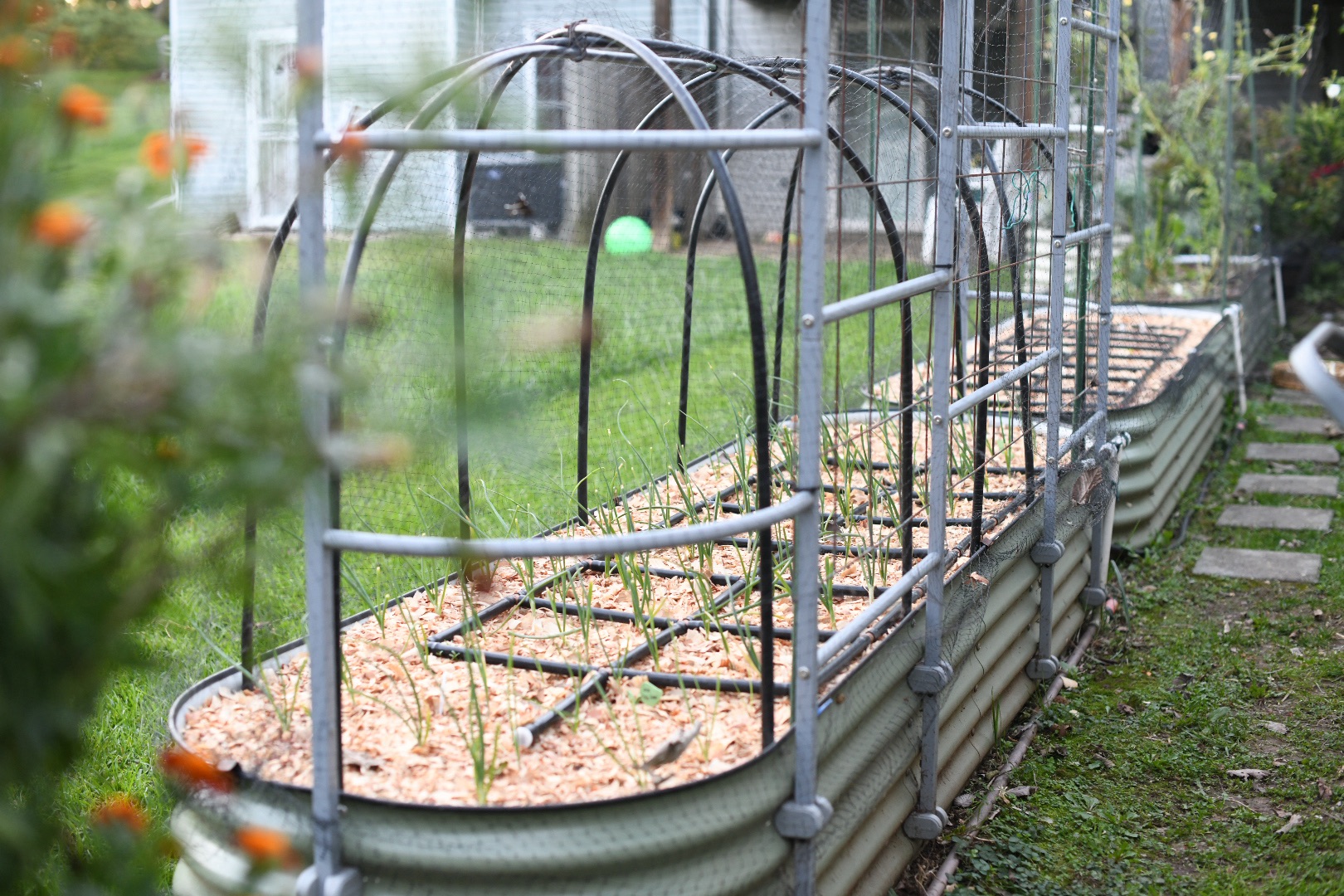
By November, my garden looks very different from the garden I was tending in July.
The tomatoes and peppers are winding down or gone. Many of the containers that were overflowing with plants during summer are empty. There are fewer vegetables to harvest, the days are noticeably shorter, and growth has slowed considerably.
If you’re a beginner gardener, this can make it feel like the gardening season is over.
But a slower garden isn’t necessarily a finished garden.

Here in my Maryland Zone 7 garden, November is more of a transition month. There may still be cool-season vegetables growing, garlic settling into the soil, leaves waiting to become compost, and garden beds that need a little attention before winter.
You don’t have to keep gardening at the same pace you did during summer.
You just have to focus on what still matters.
Accept That Your Garden Is Supposed to Slow Down
One of the biggest adjustments in November is simply changing your expectations.
Your vegetables aren’t going to grow the way they did when the days were long and temperatures were warm.
Even cold-hardy vegetables slow down as temperatures drop and daylight decreases.

A bok choy plant that seemed to grow noticeably from one week to the next earlier in fall may suddenly appear to barely change.
That doesn’t necessarily mean something is wrong.
Plants need light for photosynthesis, and November gives them considerably less daylight than they received during summer. Cooler soil and air temperatures can slow growth even further.
Instead of expecting rapid growth, I start looking at my fall garden differently.
The goal becomes maintaining what I already have, harvesting when appropriate, and protecting crops that are worth keeping.
Keep Harvesting What the Garden Gives You
November harvests may be smaller, but they still count.
Depending on what you planted and your weather, you may still have vegetables such as:
- Bok choy
- Kale
- Collard greens
- Spinach
- Lettuce
- Napa cabbage
- Broccoli
- Carrots
- Green onions
- Other cold-tolerant greens

Bok choy is one of my favorite cool-season vegetables, and this is one reason I enjoy growing it in fall.
You don’t need a huge harvest every time you walk outside.
A few leaves for dinner, a head of bok choy for stir-fry, or some greens for soup are still food your garden produced.
Small harvests are one of the advantages of gardening at home. You can harvest what you need and leave the rest growing.
Watch the Forecast More Closely
During November, nighttime temperatures become increasingly important.
There’s a difference between cool weather, frost, and a harder freeze.
Some established cool-season vegetables can tolerate a light frost quite well. Others may be damaged as temperatures drop further.
This is why I don’t automatically cover every plant simply because the forecast looks cold.
Instead, I consider what I’m growing and how cold it’s expected to get.
Frost cloth, row covers, low tunnels, and other protective structures can help extend the season, but they aren’t magic. Every covering method provides only a certain amount of protection.
Eventually, there comes a point when protecting a particular plant isn’t worth the effort anymore.
Learning where that point is in your own garden comes with experience.
Don’t Forget to Check Under Your Covers
One mistake that’s easy to make is covering a garden for cold weather and then forgetting about it.
Covered vegetables still need attention.
On warmer days, check underneath your frost protection.
Look for:
- Dry soil
- Pest damage
- Diseased leaves
- Slugs
- Aphids
- Damaged plants
- Vegetables ready to harvest
Some covers may also need to be opened or removed temporarily when temperatures warm significantly.
Think of frost protection as a tool—not a way to put the garden completely on autopilot.
Check the Soil Before You Water
Your garden usually needs much less water in November than it did in July.
But less water doesn’t mean no water.
Cooler temperatures reduce evaporation, and plants are generally growing more slowly. That means soil can stay moist much longer.
Instead of following the same watering schedule you used during summer, check the soil.
If it’s still moist, wait.
This is especially important with containers because drainage, container size, rainfall, and temperature can all affect how quickly the soil dries.
Overwatering simply because you’re used to watering frequently can create unnecessary problems.
Pay Attention to Your Containers
Container gardens need a little extra attention as winter approaches.
The roots of plants growing in containers are more exposed to temperature changes than roots growing in the ground.
If you have perennial plants, berries, fruit trees, herbs, or other plants you hope to overwinter in containers, November is a good time to decide where they’re going to stay.
Depending on the plant, that may mean:
- Leaving it outside
- Moving it against a protected wall
- Grouping containers together
- Adding mulch
- Moving it into an unheated protected area
- Bringing a tender plant indoors
Don’t assume every container needs to come inside.
The right choice depends on the plant and its cold tolerance.
Bring Tender Plants Indoors
Tender plants are a different story.
Citrus trees, for example, need protection from the cold in my Maryland garden.

Before bringing plants inside, inspect them carefully for pests.
Check:
- The tops and bottoms of leaves
- Leaf joints
- Stems and branches
- The surface of the soil
- Around the rim and bottom of the container
You don’t want to unintentionally bring an outdoor pest problem into your house.
Once plants are indoors, remember that their growing conditions have changed dramatically. They may receive less light, experience drier indoor air, and use water more slowly.
Adjust your care accordingly instead of continuing your summer routine.
Keep an Eye on Fall-Planted Garlic and Onions
If you’ve planted garlic this fall, November is mostly about letting it establish.
You may see some green growth above the soil, especially if the weather stays mild.
Don’t panic if your garlic sprouts before winter.
The important growth is happening underneath the soil as the cloves establish roots.
A layer of mulch can help moderate soil temperatures and protect the bed through winter.

Fall-planted onions also deserve an occasional check.
The goal is for them to become established before severe winter weather arrives—not to produce enormous plants before winter.
Don’t Leave Every Empty Bed Bare
Once you remove your summer vegetables, it can be tempting to forget about the empty garden bed until spring.
But the soil is still part of your garden.
If I’m not immediately planting something else, I like to think about protecting and improving that soil.
Depending on the bed, you might add:
- Finished compost
- Shredded leaves
- Mulch
- Other organic matter appropriate for your garden
Covering the soil can help protect it from erosion and weather while organic materials gradually break down.
An empty raised bed isn’t wasted space.
It can spend the winter becoming better soil.
Fall Leaves Are a Garden Resource
November usually gives gardeners one thing in abundance:
Leaves.

Instead of thinking of fallen leaves only as yard waste, think of them as future soil.
Dry leaves are especially useful as a carbon-rich “brown” material for compost.
I like having brown materials available because kitchen scraps and fresh garden materials tend to provide plenty of greens.
Leaves can be:
- Added to compost
- Shredded and used as mulch
- Stored for later composting
- Allowed to break down into leaf mold
If you don’t have enough brown material later in the year, you’ll probably wish you had saved some of those November leaves.
Keep Composting Even When the Pile Slows Down
Your garden isn’t the only thing slowing down.
Your compost probably is too.
Decomposition happens more slowly as temperatures drop, but that doesn’t mean you have to stop adding appropriate materials.

Continue balancing nitrogen-rich greens with carbon-rich browns.
November is a great time to add materials such as:
- Dry garden debris
- Shredded cardboard
- Cut-up cardboard egg cartons
- Dry leaves
- Used plain paper towels or napkins when appropriate
You don’t need your compost pile to work at summer speed.
You’re simply continuing to build the materials that will eventually become something useful for your garden.
Clean Up—but Don’t Feel Like Everything Has to Be Perfect
Fall garden cleanup doesn’t have to mean removing every leaf and making every bed look empty.
Remove plants that are diseased or badly pest-infested and clean up materials that could create problems.
But don’t feel pressured to make your garden look like nothing ever grew there.
Some organic material can be useful.
Some plants can remain.
Some areas can wait until spring.
A garden doesn’t have to look perfectly clean to be cared for.
Take Care of the Things That Took Care of Your Garden
As your workload decreases, November is also a good opportunity to deal with garden equipment you’ve been too busy to think about.
Clean your hand tools.
Empty and store anything that shouldn’t remain outside all winter.
Wash reusable seed-starting supplies.
Drain hoses if freezing weather is approaching.
Clean containers you won’t use again until spring.
You don’t have to do everything in one afternoon.
Do a little at a time as different parts of the garden finish for the year.
Start Thinking About Next Year’s Garden
November is also a wonderful time to reflect because this year’s successes and frustrations are still fresh in your mind.
Ask yourself:
What did we actually eat?
What produced well?
What took up too much space?
What did I grow too much of?
What did I wish I had planted more of?
Which pests gave me trouble?
Which containers worked well?
What would I do differently?
For a small-space gardener, these questions matter.
I don’t have unlimited room, so every season teaches me more about what deserves space in my garden.
Sometimes the best garden planning doesn’t begin with a seed catalog.
It begins by paying attention to what happened in the garden you just grew.
A Slower Garden Can Still Be Productive
November gardening doesn’t look like June gardening—and it shouldn’t.
You may not be harvesting bowls of tomatoes or watching vines grow several inches in a matter of days.
Instead, you’re protecting a few greens from frost.
You’re harvesting a handful of vegetables for dinner.
You’re covering the soil.
You’re collecting leaves.
You’re checking garlic.
You’re making compost.
You’re protecting plants you want to keep for another year.
And you’re learning.
Those quieter tasks may not feel as exciting as planting a new garden in spring, but they’re still part of growing food at home.
So if your garden seems like it’s slowing down, don’t assume there’s nothing left to do.
Slow down with it.
Pay attention to what still needs you, let go of what has finished its job, and take care of the garden you’re leaving behind for winter.
Because even when very little appears to be happening above the soil, you’re already laying the groundwork for another growing season.
Related Posts
Continue preparing your garden for the colder months with these Gingerfoot Garden guides:
- What to Do in Your Small Vegetable Garden in November
- Can You Still Plant Garlic in November? What to Consider
- Frost or Freeze? Understanding the Forecast Before Covering Your Plants
- Don’t Leave Your Raised Bed Soil Bare All Winter
- Fall Leaves in a Small Garden: Keep Them, Shred Them, or Compost Them?


Leave a Reply