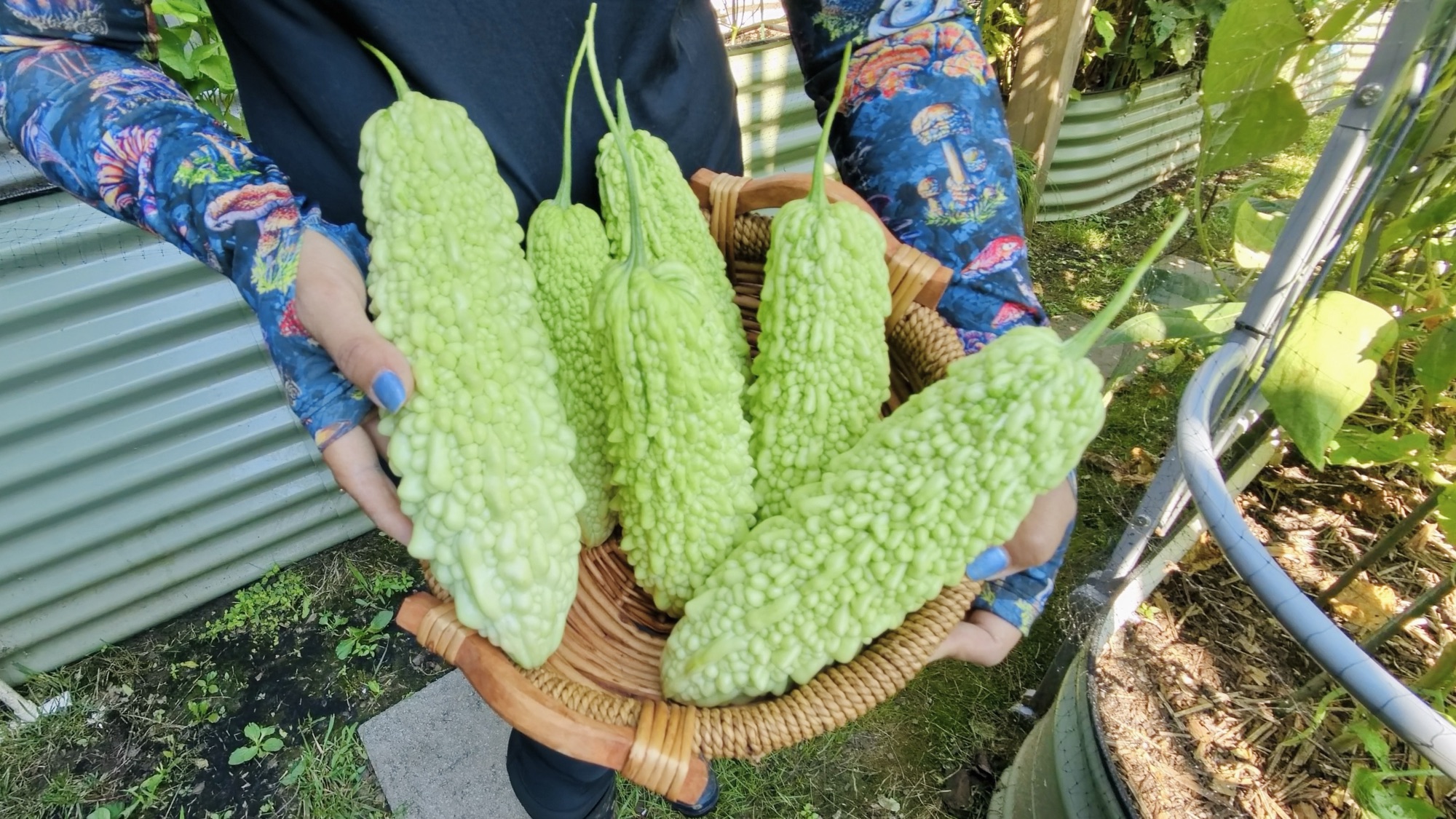
Bitter melon (also called bitter gourd, balsam pear, or ampalaya in the Philippines) isn’t everyone’s favorite vegetable—but for those of us who grew up eating it, it’s one of the most rewarding crops to grow.
This vigorous climbing vine thrives during the hottest months of summer, often when other vegetables begin to slow down. Once it starts producing, a single healthy plant can provide dozens of fruits throughout the season.
I really enjoyed growing bitter melon, especially last year in my Maryland Zone 7 garden, although I skipped it this year (2026). 💚

It loves climbing a sturdy trellis and quickly covers it with beautiful vines. One of my favorite things about this plant is that the fruits, tender shoots, tendrils, and leaves are all edible.
When I grow bitter melon, I always look forward to harvesting the young fruits for traditional Filipino dishes like ampalaya with eggs and ground pork. I also love using the leaves in munggo (mung bean soup)—one of my favorite comfort meals.
Whether you’re growing it for the first time or hoping for a bigger harvest, here’s everything you need to know.
What Is Bitter Melon?
Bitter melon (Momordica charantia) is a tropical vine in the cucumber family.

It produces:
- Deeply lobed leaves
- Bright yellow flowers
- Long climbing vines
- Distinctive bumpy fruits
Although the fruits are famous for their bitterness, harvesting them young results in a milder flavor and better texture.
Best Growing Conditions
Bitter melon grows best when provided with plenty of warmth.
It prefers:
- USDA Zones: 7–11 (grown as an annual in colder climates)
- Sunlight: 6–8+ hours of full sun
- Soil: Rich, well-drained soil
- Soil pH: 6.0–6.8
- Temperature: 75–95°F (24–35°C)
Unlike peas or spinach, bitter melon absolutely loves hot weather.
When to Plant Bitter Melon
Wait until:
- Frost danger has passed.
- Soil has warmed to at least 70°F (21°C).
- Nighttime temperatures remain consistently warm.
In Zone 7, this is usually from late April through May.
Because bitter melon grows quickly in warm weather, direct sowing often works just as well as transplanting.
Starting Seeds
Bitter melon seeds have a hard outer shell, which can slow germination.
To improve germination:
- Soak seeds in warm water for 12–24 hours or scratch the seed coat a little bit.
- Plant ½–1 inch deep.
- Keep soil consistently moist.
- Maintain warm temperatures.
Seeds typically germinate within 7–14 days.
Give It a Strong Trellis
This is one crop that truly benefits from vertical growing.
Use:
- Vego Wall Trellis with remesh wire painted with cold galvanizing paint
- Wire Fencing & stakes secured with cable zip ties
- Cattle panel trellises
- A-frame trellises
- Garden arches
- Netting designed for climbing vegetables


Growing vertically:
- Saves space
- Improves airflow
- Reduces disease
- Produces straighter fruit
- Makes harvesting much easier
The vines can easily grow 10–15 feet long in a single season.
Watering
Keep plants evenly watered, especially during flowering and fruit production.
Aim to:
- Water deeply.
- Allow the top inch of soil to dry slightly between waterings.
- Avoid constantly soggy soil.
Mulching around the base helps retain moisture during summer heat.
Fertilizing
Before planting:
- Mix compost into the soil.
Throughout the season:
- Apply a balanced vegetable fertilizer or tomato Fertilizer every few weeks.
- Avoid excessive nitrogen, which encourages leafy vines instead of fruit.
Healthy plants produce plenty of flowers followed by a continuous harvest.
Pollination
Bitter melon produces separate male and female flowers.


Bees usually handle pollination naturally.
If fruit production seems low:
- Encourage pollinators by planting flowers nearby.
- Hand-pollinate using a small paintbrush or by transferring pollen directly from male to female flowers.
Common Growing Problems
Poor Germination
Usually caused by:
- Cold soil
- Old seeds
- Insufficient moisture
Warm soil dramatically improves success.
Lots of Vines but No Fruit
Possible causes include:
- Too much nitrogen
- Poor pollination
- Immature plants
Once temperatures rise and pollination improves, fruit production often increases rapidly.
Yellow Leaves
Yellowing can result from:
- Underwatering
- Nutrient deficiencies
- Aging leaves
- Root stress
Check moisture before adding fertilizer.
Pests
Watch for:
- Aphids
- Cucumber beetles
- Leaf-footed bugs
- Squash bugs (occasionally)
Inspect vines regularly so small problems don’t become major infestations.
When to Harvest Bitter Melon
Harvest while fruits are:
- Firm
- Bright green (or white, depending on the variety)
- Still immature
Don’t wait until fruits turn yellow or orange.
Overripe fruits become:
- Extremely bitter
- Soft
- Less enjoyable to eat
Most varieties are harvested when they’re about 4–8 inches long, depending on the type.
Harvest every few days to encourage more fruit production.
Growing Bitter Melon in Containers
Bitter melon grows surprisingly well in large containers.
Choose:
- A container at least 10–15 gallons
- High-quality potting mix
- Strong vertical support
- Full sun
Container plants usually require more frequent watering during hot weather.
My Favorite Variety
One of my favorite varieties is Taiwan White Bitter Melon.
Unlike traditional green bitter melons, the fruits are creamy white with a milder bitterness and crisp texture. It has become one of my favorite varieties to grow because it’s productive, beautiful, and excellent in many dishes.
If you’re new to growing bitter melon, a white variety can be a great introduction because many people find it slightly less bitter than green types.
Tips for a Bigger Harvest
- Plant in full sun.
- Grow vertically on a sturdy trellis.
- Keep soil consistently moist.
- Harvest frequently.
- Feed plants regularly.
- Encourage pollinators.
- Pick fruits while they’re still young and tender.
Final Thoughts
Bitter melon may not be the most common vegetable in North American gardens, but it’s one of the easiest and most productive warm-season crops you can grow. Once summer heat arrives, the vines take off, covering trellises with lush foliage, cheerful yellow flowers, and an abundance of fruit.
For me, growing bitter melon is also a way to stay connected to my Filipino roots. There’s something incredibly satisfying about stepping into the garden, harvesting fresh ampalaya, and bringing it straight to the kitchen. Whether you’re growing it for cultural traditions, its unique flavor, or simply to try something new, bitter melon is a rewarding addition to any home vegetable garden.
Frequently Asked Questions
How long does bitter melon take to grow?
Most varieties begin producing about 55–70 days after planting, depending on growing conditions and the variety.
Does bitter melon need a trellis?
While it can grow along the ground, a sturdy trellis is highly recommended. Vertical growing saves space, improves airflow, reduces disease pressure, and makes harvesting much easier.
Can you grow bitter melon in containers?
Yes. Use a container that holds at least 10–15 gallons, fill it with a well-draining potting mix, and provide a strong trellis or other support for the vines.
Why is my bitter melon not producing fruit?
Common reasons include too much nitrogen fertilizer, poor pollination, or plants that are still immature. Once the weather becomes consistently warm and pollinators are active, production usually improves.
Is bitter melon difficult to grow?
Not at all. Once the weather is warm, bitter melon is relatively low-maintenance. Give it full sun, consistent moisture, fertile soil, and something sturdy to climb, and it will reward you with an abundant harvest.
Related Articles
- How to Build a Simple Vegetable Trellis
- How to Grow Cucumbers
- How to Water Your Vegetable Garden Properly
- Understanding Vegetable Garden Fertilizers
- How to Compost for a More Productive Garden
- How to Grow Yardlong Beans
- Growing Filipino Vegetables at Home
- What to Plant in May (Zone 7 Guide)
- Summer Vegetable Garden Checklist
- How to Harvest Vegetables for Continuous Production
This page contains affiliate links to my brand partners like Vego Garden, GreenStalk, Walmart & Amazon at no extra cost to you.
Your support helps me create free gardening content. Thank you!



Leave a Reply