

If there’s one thing gardening has taught me, it’s that you learn just as much from the experiments as you do from the planned successes. This year, one of those experiments was elephant garlic.
Elephant garlic has a much milder, sweeter flavor than regular garlic—often described as a cross between garlic and shallots—making it a great option for those who prefer a gentler taste in their dishes. You’ve probably seen it at the grocery store—massive garlic-like bulbs with oversized cloves.
🧄 Fun fact: Despite the name, elephant garlic isn’t actually true garlic. It belongs to the leek family (Allium ampeloprasum), not the garlic family (Allium sativum), though it shares many of the same growth habits.

I remember holding one in my hand and asking myself, “Can I actually grow this?” Well, I gave it a shot. And now I’m here to share the full journey—from soaking grocery store bulbs to harvesting scapes and surprises in my small space garden.
🛒 Starting with Grocery Store Bulbs: A Curious Experiment
The idea began on a simple trip to the grocery store. I spotted a beautiful bulb of elephant garlic and thought, Why not try planting it? I wasn’t sure if it had been treated with growth inhibitors or chemicals (since it wasn’t labeled organic), so I soaked the cloves in water overnight before planting, hoping that might increase my chances of success.
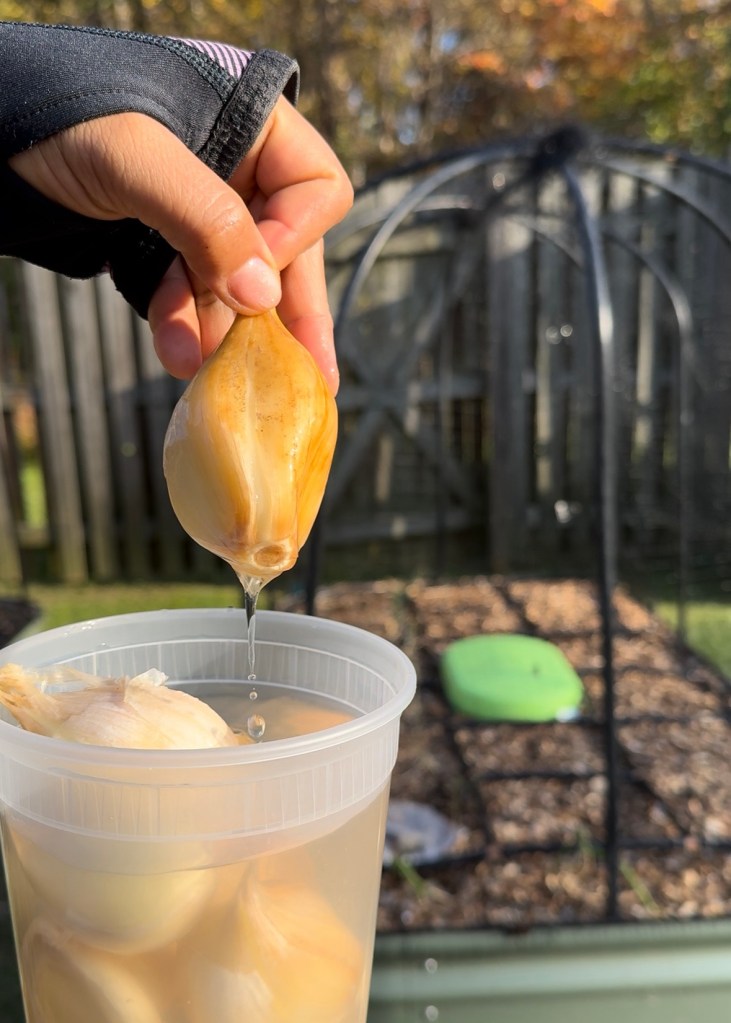
This wasn’t a carefully planned garlic plot. It was a gardening experiment—one that I hoped would turn out better than expected. A week later, I bought two more bulbs of certified organic elephant garlic online, just for comparison, and planted those too.
This wasn’t my first time planting elephant garlic from the grocery store. I know many professional gardeners and horticulturists discourage this method of sourcing “seed” elephant garlic because of the risk of introducing viruses or diseases into your garden. So I always recommend caution—whenever possible, try to source from a local organic grower.
That said, I was discouraged by the high price of certified “seed” elephant garlic from the reputable seed companies I usually shop with. So when I spotted some beautiful bulbs at my local grocery store, I couldn’t resist the opportunity to experiment.
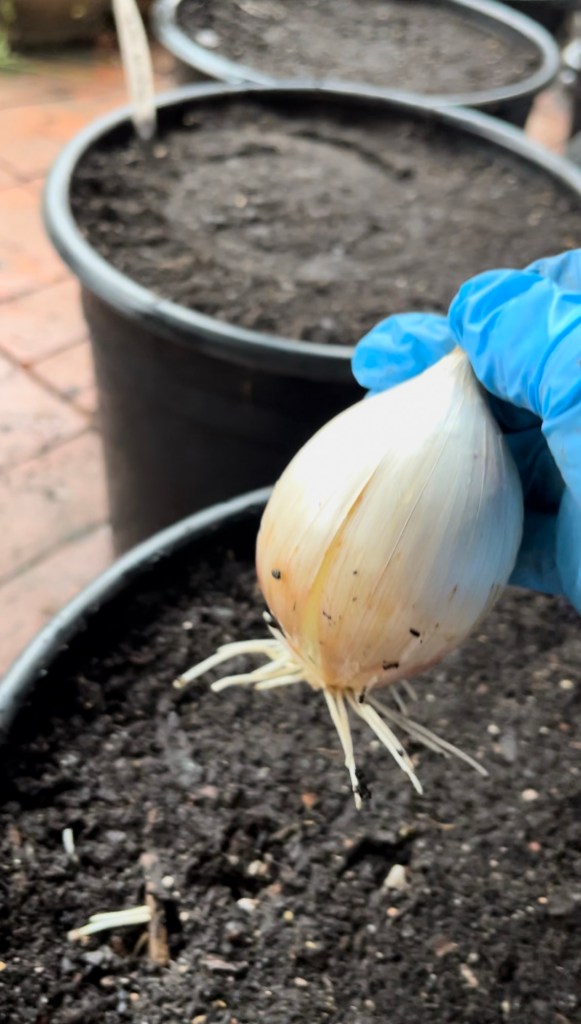
In the past, I tried planting grocery store elephant garlic in containers. While they rooted well, they never progressed beyond that stage and eventually rotted. That seems to be a common pattern for me—just like when I try growing regular garlic in pots. Based on that, I’ve decided not to plant bulb-forming crops in plastic containers anymore.
I suspect the combination of our wet Maryland weather and persistent allium pests, like leaf miners, makes it difficult to grow garlic successfully in pots here. Thankfully, garlic—including elephant garlic—has performed much better for me in grow bags and raised beds, where the drainage and airflow are far superior.
🌱 Planting and Growing: Surprises in the Soil
I planted all the cloves in my raised beds—it felt like the obvious choice since I’ve seen so many fellow gardeners successfully grow regular garlic that way. I gave them plenty of spacing, 8 inches apart and 4 inches deep. I also made sure the soil drains well, and layered it with mulch to get them through the winter.
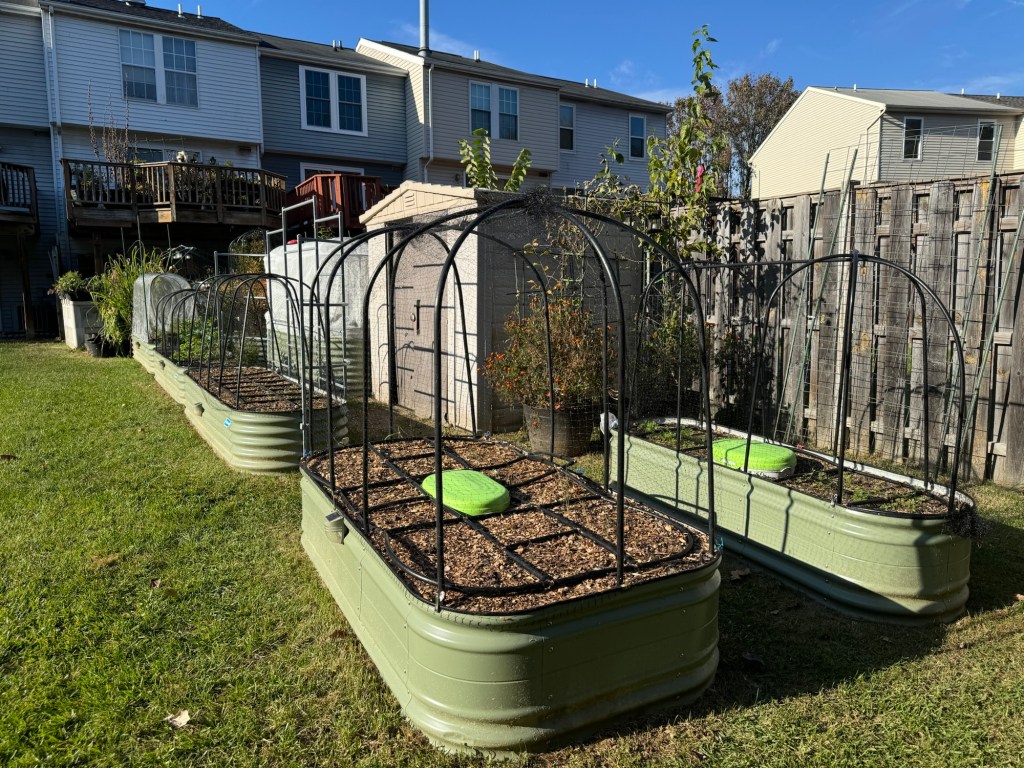
I prioritized planting the largest cloves, since they’re more likely to produce bigger bulbs—but I also planted some medium-sized ones, just to see what would happen. To my surprise, the medium cloves sprouted first, popping up earlier than the larger ones. But they were also the ones that mostly rotted. In the end, about 25% of the cloves didn’t make it, and I still don’t know exactly why. Thankfully, the majority survived, and by early spring, I had strong green shoots rising above the soil.
The organic cloves sent up beautiful garlic scapes—those curly flower stalks you can harvest and cook with. The ones from the grocery store? No scapes at all. It was fascinating to see how elephant garlic grows so much like true garlic. True garlic falls into two main types: softneck varieties, which don’t produce flower stalks (called scapes), and hardneck varieties, which do.
✂️ Harvest Time: Mixed Results, Valuable Lessons
By the time harvest rolled around in early summer, I was eager—and a little nervous—to see what was hiding underground.
Here’s what I ended up with:
- A few fully formed bulbs with medium size cloves
- A couple of single-clove “round”elephant garlic bulbs (which look like giant pearl garlic)
- Quite a few tiny bulblets or corms (little garlic seeds that form at the base of the plant.)
While the harvest wasn’t nearly as impressive as the size of the original grocery store bulb, I was genuinely thrilled. I grew elephant garlic—some from store-bought produce and some from organic cloves. That in itself felt like a win.
I’d definitely choose the organic option next time, just to be on the safe side—but I do think that initial soaking helped improve the chances of success.
Now, I have bulblets or corms to plant in the fall, which may take 2–3 years to grow into full-sized elephant garlic. I also plan to replant the single-clove garlic to see if it will split into multiple cloves next season.
💬 So… Was It Worth It?
It depends on your goal.
👉 If you’re just looking to eat elephant garlic, I’d say buy the bulbs and enjoy them fresh. After factoring in what rotted, I probably ended up with about the same amount I started with.
👉 But if you love learning through gardening—and don’t mind being patient—growing elephant garlic is a deeply rewarding experiment.
Watching it grow, seeing how the organic and non-organic batches behaved differently, and now having my own little stash of future seed garlic and bulbils—it’s all part of what makes this garden feel alive with possibility.
Even the things that didn’t go perfectly taught me something new. And as always, the garden grew me too.
🧄 Final Thoughts: A Gardener’s Joy
Elephant garlic isn’t true garlic—it’s more closely related to leeks—but in the garden, it behaves a lot like its pungent cousin.
It’s also an easygoing crop to grow. Compared to other vegetables, elephant garlic is low-maintenance and fairly cold-hardy, making it ideal for fall planting. In most climates, including Zone 7, it can overwinter without the need for frost protection.
I’m excited to try growing the elephant garlic bulblets—often called corms—this fall. I found a few at the base of nearly every bulb I harvested, which means I’ve got a whole new experiment to look forward to. If all goes well, they’ll grow into single-clove elephant garlic by next year. While I can harvest it in the first year, letting it grow a second season often results in larger bulbs with more developed cloves. Plus, it can produce edible scapes (flower stalks), which can be harvested in spring and used in stir-fries, pestos, or grilled like asparagus.
Whether you’re a beginner wondering if you can try this yourself, or an experienced gardener looking for a fun challenge, elephant garlic is absolutely worth exploring.
💬 I’d love to hear from you!
Have you ever grown garlic from the grocery store? Would you try elephant garlic in your own garden? Drop a comment below and share your story—I’d love to hear how your garlic experiments go!








 Gingerfoot Garden
Leave a comment