

Growing carrots might seem simple—sow, water, wait—but any seasoned gardener knows that even the humblest crops come with challenges. Carrots have been one of my favorite cool-season vegetables to grow, and I’ve had great success in pots in the past. But over the last couple of years, things didn’t go as planned. In fact, they went sideways.
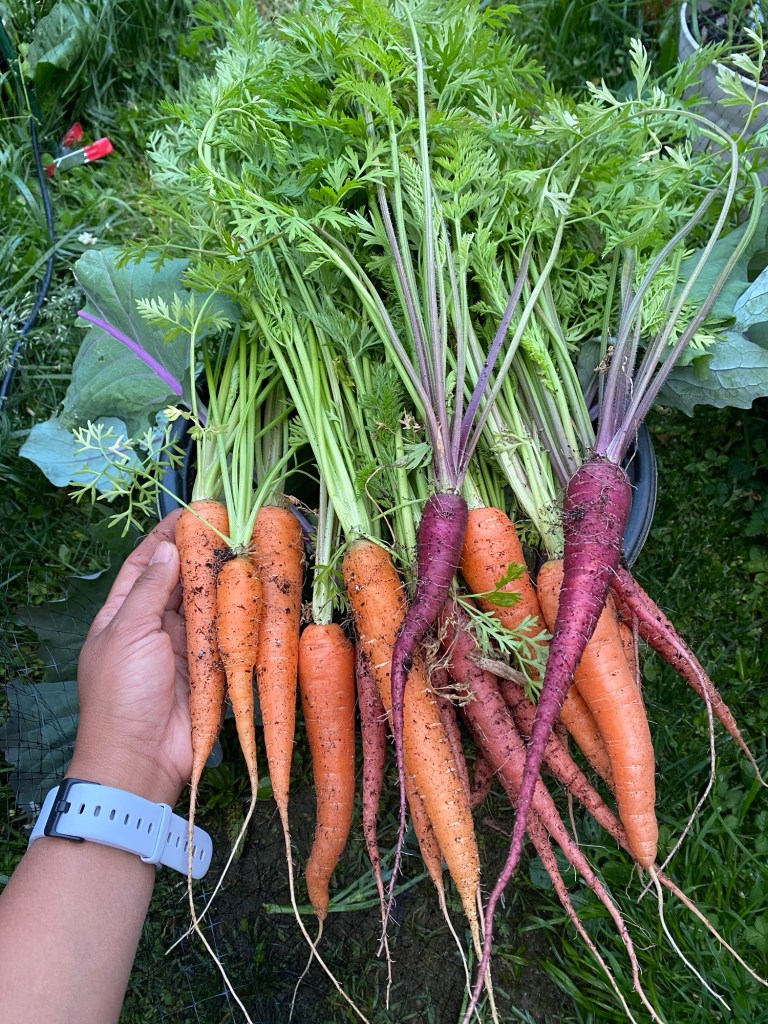
Despite careful planning and proper setup, I faced pest attacks, unexpected weather, and missed timing. But recently, one carrot gave me a small but powerful reminder: that something beautiful can still grow after failure.
The Setback Season: Cutworms and Garden Chaos
Last fall, I had high hopes for a good carrot harvest. I sowed seeds in both my 17 inch tall raised beds and a few in one of my extra tall Vego Garden raised beds—one of my favorite places to grow deep-rooted crops like Manpukuji carrots.
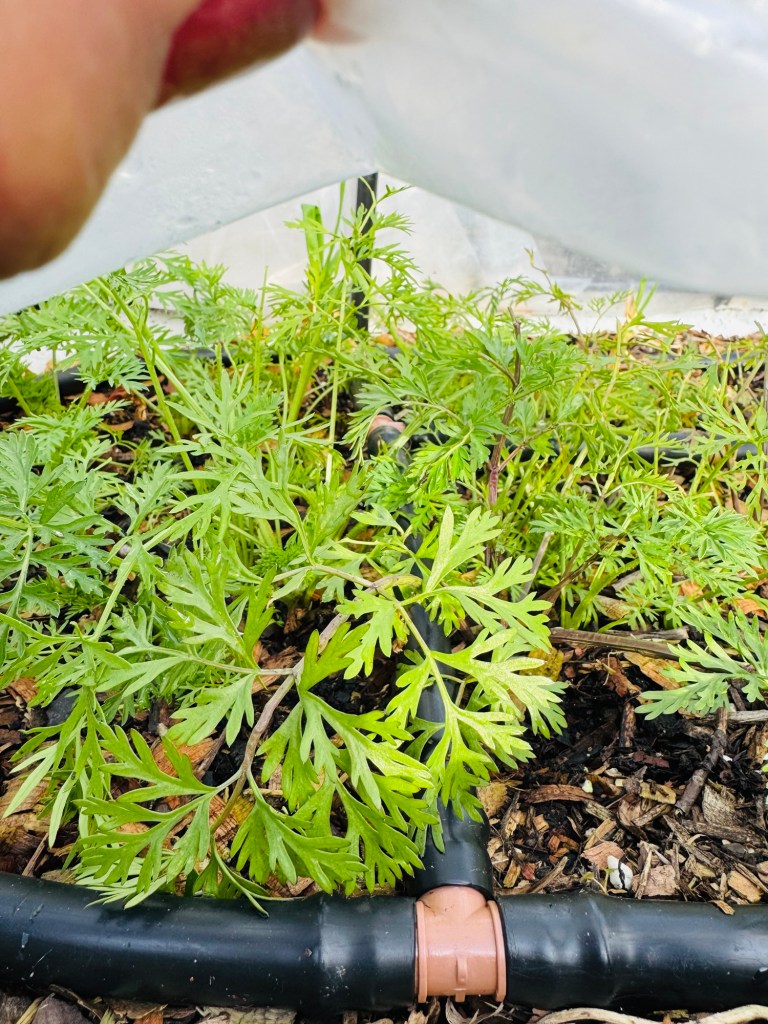
I even made sure to protect them early with a hoop cover, expecting them to thrive through the cool season.
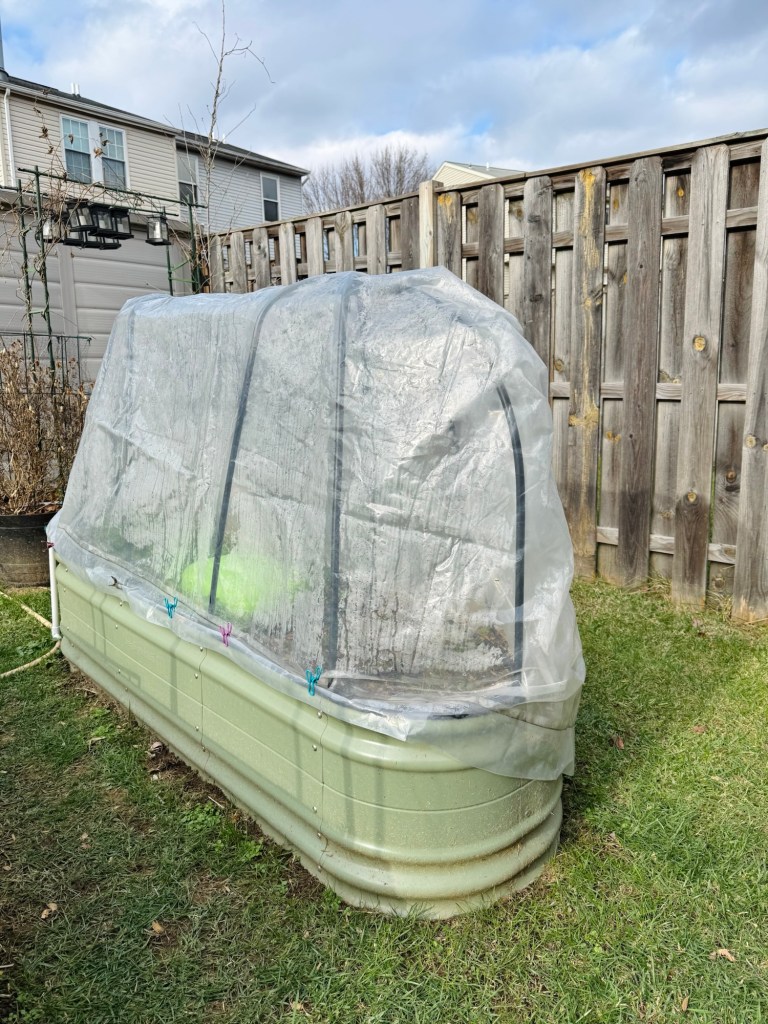
And they did germinate beautifully but that initial joy didn’t last long, though.
Enter: cutworms—the stealthy, frustrating garden villains that blend in so well with mulch and soil that you can barely find them. They chewed down every single carrot top. The leaves were gone before the roots even had a chance to grow.
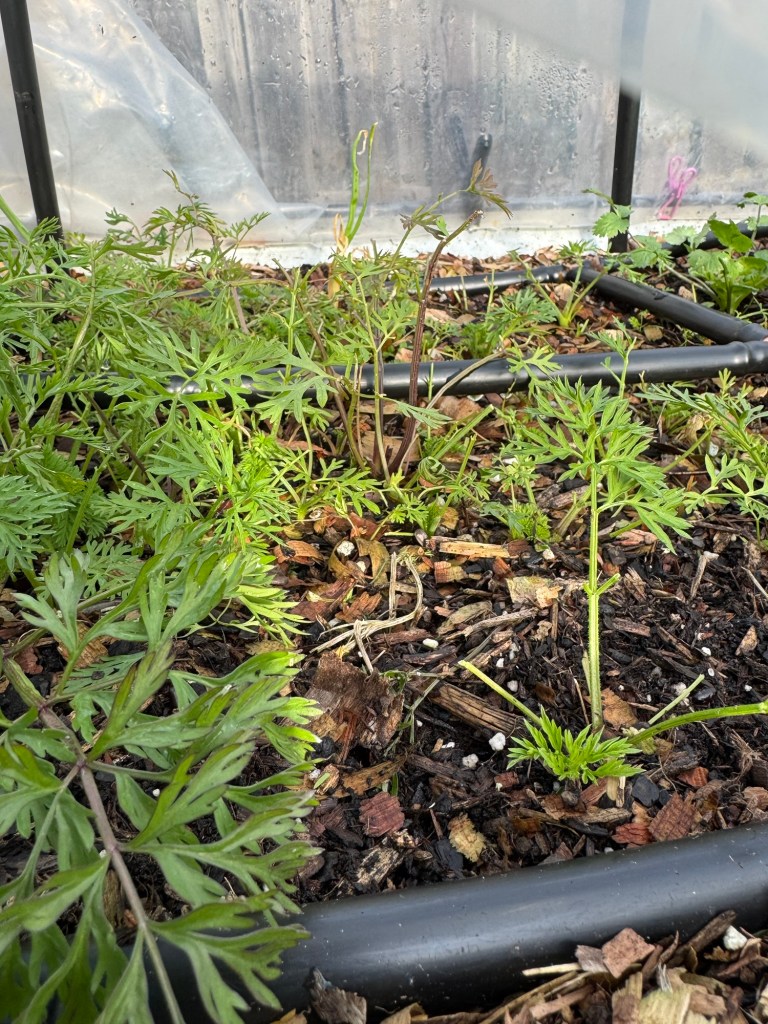
It was frustrating. All that work. All that time. I had done everything “right.” I even made sure the soil was amended with bone meals for a healthier root crop.
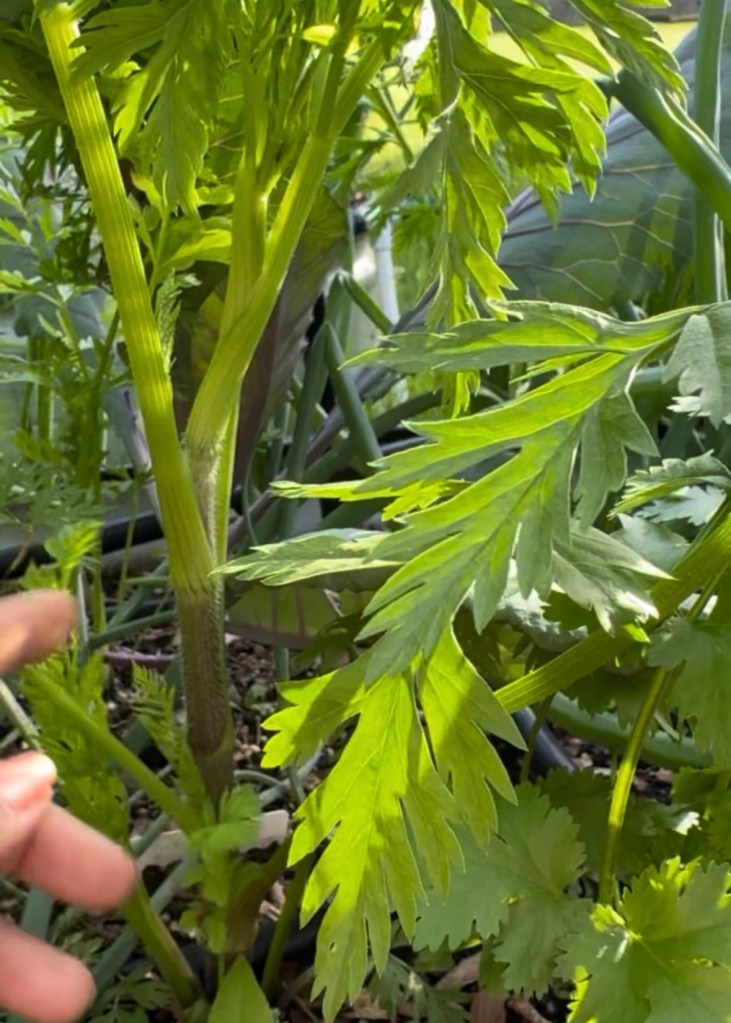
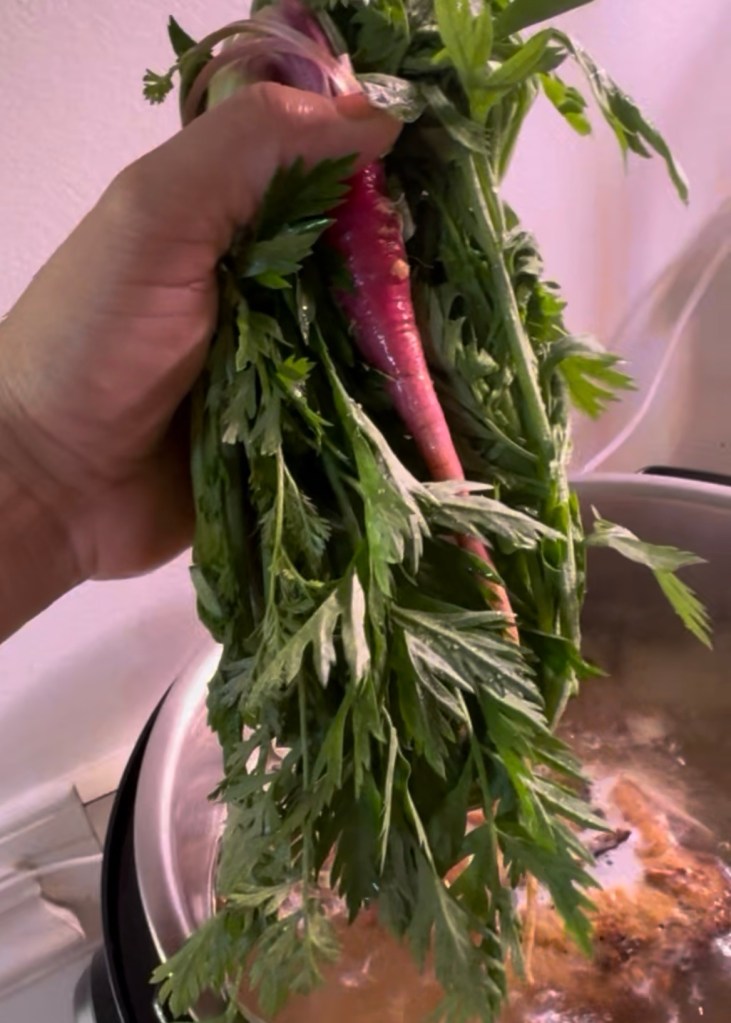
Some of the carrots tried to make a comeback. But the temperature began to shift, and the plants, already stressed, began to bolt—sending up flower stalks instead of focusing on root growth. I refused to let them go to waste. I harvested what I could and used the bolting carrots—tops and all—to make homemade broth, which I freeze and use for soups and stews. It wasn’t the harvest I’d hoped for, but it wasn’t a total loss either.
What Went Wrong?
I did some digging—literally—and found the culprit. While preparing to install a Wall Trellis System in the bed where my carrots had been, I uncovered a few cutworms. They had likely overwintered in the reused mulch, which I’d placed back into the bed without knowing it might harbor pests.
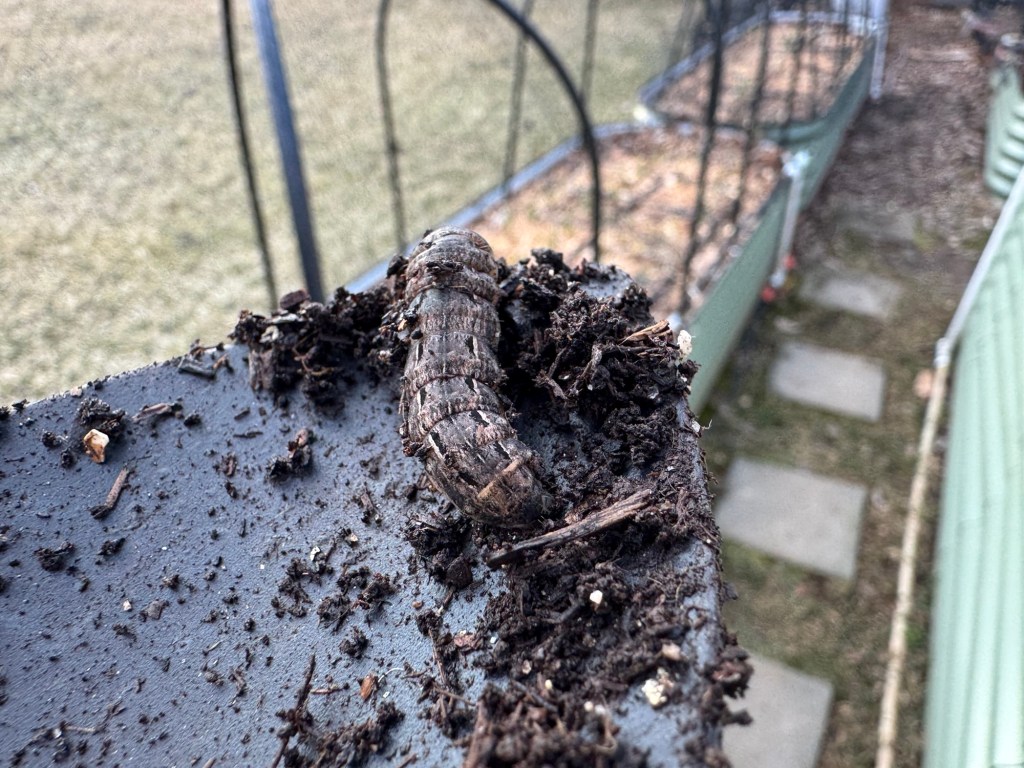
Cutworms are sneaky garden pests that hide in the soil or plant debris during the day and come out at night to feed. They get their name from their habit of chewing through the stems of young seedlings at or just below the soil surface, causing the plants to collapse or die. These caterpillars are common in both gardens and farm fields and can damage a wide variety of plants.
In hindsight, I realized that while reusing mulch can be beneficial for soil life and structure, it’s also a risk if pests are already present. I also hadn’t applied any pest control like BT for caterpillars (a natural microbial insecticide), mostly because life got busy.
I garden with intention, but I also live a full life. And sometimes, I just don’t have the bandwidth to do it all—and that’s okay. My family, after all, matters more than perfect carrots.
A Spring Surprise: One Carrot That Waited
Fast forward to spring.
While tending to the cool-season crops I planted after returning from a month-long trip to the Philippines, I noticed something odd—a few carrot tops popping up in the bed where I thought everything had failed.
I knew these must have come from seeds that didn’t germinate in the fall. Maybe the conditions weren’t right then—but with the warmer soil and longer days, they were finally ready.
One in particular looked promising. It had survived the pests. It was lush. It felt like it had potential. I gently brushed the soil to feel around the top, and sure enough, I could feel a firm, rounded shoulder just under the surface.
Before the heat of summer could stress it out, I decided to pull it. And what I found? A beautiful 12-inch long carrot—vibrant, sweet, and full of life.
About the Variety: Manpukuji Carrots
This carrot wasn’t just any carrot—it was a Manpukuji, a Japanese heirloom known to grow up to six feet long under ideal conditions. I was fascinated when I read about it and had to try growing it in my extra tall raised bed.
While I didn’t get a six-foot root (this one came out to around a foot long), it was a huge success considering all the challenges I faced. Growing heirloom varieties like this is one of the joys of gardening—getting to experience something truly unique that you’d never find at a grocery store.
How I Handle Cutworms Now
Cutworms are tricky. They hide in the soil and mulch and are almost impossible to spot unless you dig. Here’s how I manage them now:
- Check the mulch and soil carefully.
Mulching is great for soil health, but if reusing it harbors pests like cutworms, it can lead to recurring issues. Inspect it, especially before planting root crops or seedlings. - Use physical barriers.
Try protective covers (like this repurpose DIY collar from a plastic cup) or cardboard collars or around the base of seedlings. Row covers help—but they can also trap pests inside, as I learned the hard way. - Apply BT for caterpillars.
BT (Bacillus thuringiensis) is a natural microbial insecticide. When sprayed on the foliage, it affects caterpillars once they feed on it. It doesn’t harm beneficial bugs, but it needs to be applied proactively. Life got busy and I missed that step last fall—I can’t promise that I won’t make that mistake again, but I’ll try to be more proactive next time. - Practice crop rotation and soil refresh.
Don’t plant the same crops in the same place season after season. Pest eggs and larvae can overwinter in the soil and strike when you least expect it. - Accept the setbacks—but don’t give up.
Not every crop will be a success, and that’s okay. But every season teaches us something new, and even a single carrot can be a big win.
Using Bolting Carrots and Tops
When a carrot bolts, the root turns woody and bitter—but it’s still useful! Here’s what I do:
- Bone Broth: I freeze whole bolted carrots and carrot tops and add them to my broth bags.
- Compost: When I have more than I can use, I toss them into the compost bin to feed the next generation of plants.
- Carrot Top Pesto: I’ve heard carrot tops make a great pesto. I haven’t tried it yet (maybe one day!), but it’s a fun option to explore.
Final Thoughts: Growth Takes Time (and Patience)
This one carrot might not seem like a big deal, but it represents something important. It’s about not giving up. It’s about celebrating even the smallest wins in the garden.
Whether it’s one foot-long heirloom carrot or a handful of bolted roots used for broth, every harvest tells a story. Every season teaches a lesson. And this season taught me to trust the process—because even when things don’t go the way you planned, life still finds a way to grow.
💬 Let’s Talk in the Comments:
Have you ever had a crop fail and then surprise you with a comeback?
What’s your favorite way to use up bolting carrots?
Share your thoughts below—I’d love to hear your garden stories!













 Gingerfoot Garden
Leave a comment