
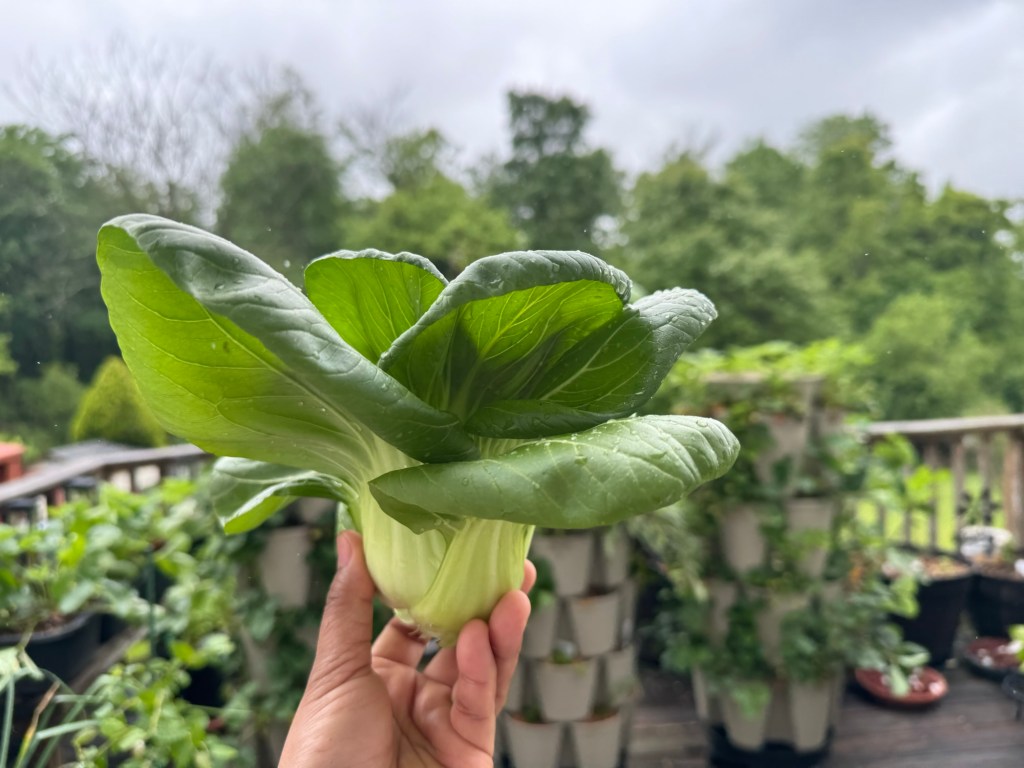
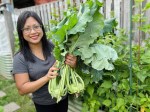
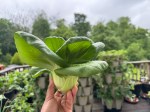
There’s something deeply rewarding about harvesting bok choy straight from your garden. The glossy leaves, the crunchy white stems, the ease of growing it—it’s one of those plants that never fails to impress, especially in a small space garden like mine here at Gingerfoot Garden.
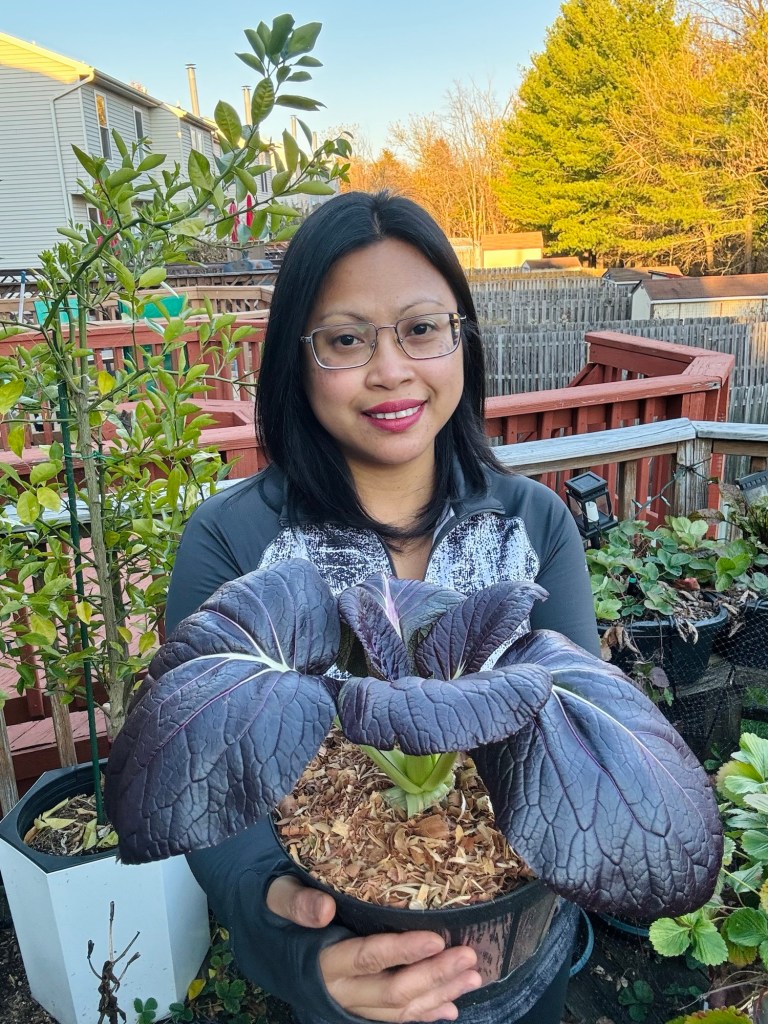
Whether you call it bok choy, pak choi, or pechay (as we say back in the Philippines), this versatile Asian green deserves a spot in every home garden. Today, I want to share not only how to grow bok choy successfully, but also some of my personal wins and lessons growing it in raised beds and containers. Whether you’re a beginner gardener or a seasoned grower, I hope this guide brings a little joy and a lot of clarity to your gardening journey.
Why Grow Bok Choy?
Bok choy is a cool-season crop, which means you can grow it in both spring and fall. It grows fast—ready to harvest in as little as 30 to 45 days, depending on the variety. It’s packed with vitamins A, C, and K, and has a mild, sweet flavor that works in so many dishes.
But most of all, it’s just fun to grow. Every year, I make space for bok choy not just because it’s useful in the kitchen, but because watching those little green heads form feels like a small victory every single time.
When to Plant Bok Choy
Timing is everything with bok choy. It’s sensitive to heat and will bolt (go to flower) if the temperatures get too warm too quickly.
Spring planting: Sow seeds 2–4 weeks before your last expected frost. Fall planting: Sow seeds in late summer, around 8–10 weeks before your first expected fall frost.
Here in Maryland (Zone 7), I’ve found great success sowing bok choy in mid-March for spring, and again around mid-August for a fall harvest.
Where to Plant Bok Choy
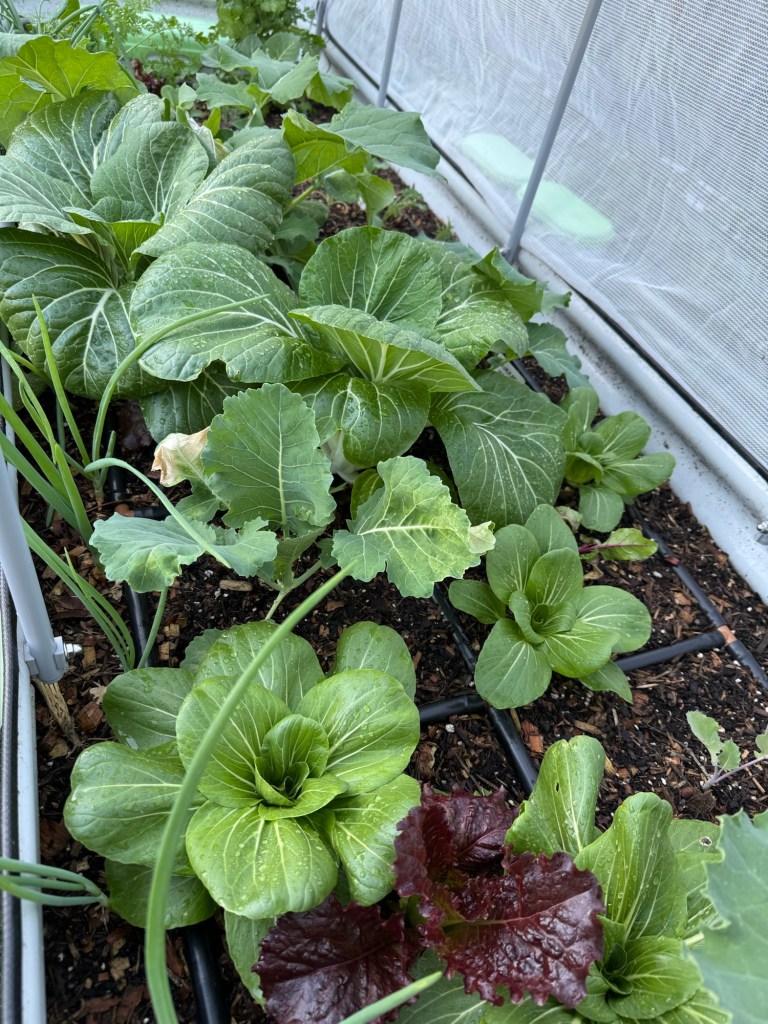
Bok choy is one of those wonderfully adaptable plants that thrives in both containers and raised beds. I’ve grown them in everything from ½-gallon pots to full raised beds and even in vertical planters like my GreenStalk. Because bok choy is shallow-rooted, it does surprisingly well in small containers—but the key is to stay on top of feeding and watering. Small pots dry out quickly and have limited space for nutrients, so I always use a well-draining potting mix and amend it with a nitrogen-rich fertilizer to support leafy growth.
I follow the same fertilizing approach in my raised beds, but it’s especially crucial in containers since the plants can’t reach deeper or wider for food like they would in the ground. As for sunlight, bok choy can grow in partial to full sun, but it truly shines in full sun during the cooler seasons. Keep an eye on temperature swings, though—extreme heat or unexpected cold snaps can cause the plants to bolt, sending up flower stalks before you get a chance to harvest those tender leaves. Still, when the timing is right, bok choy grows fast and abundantly, making it one of the most rewarding greens to grow in a small space.
Choosing the Right Variety
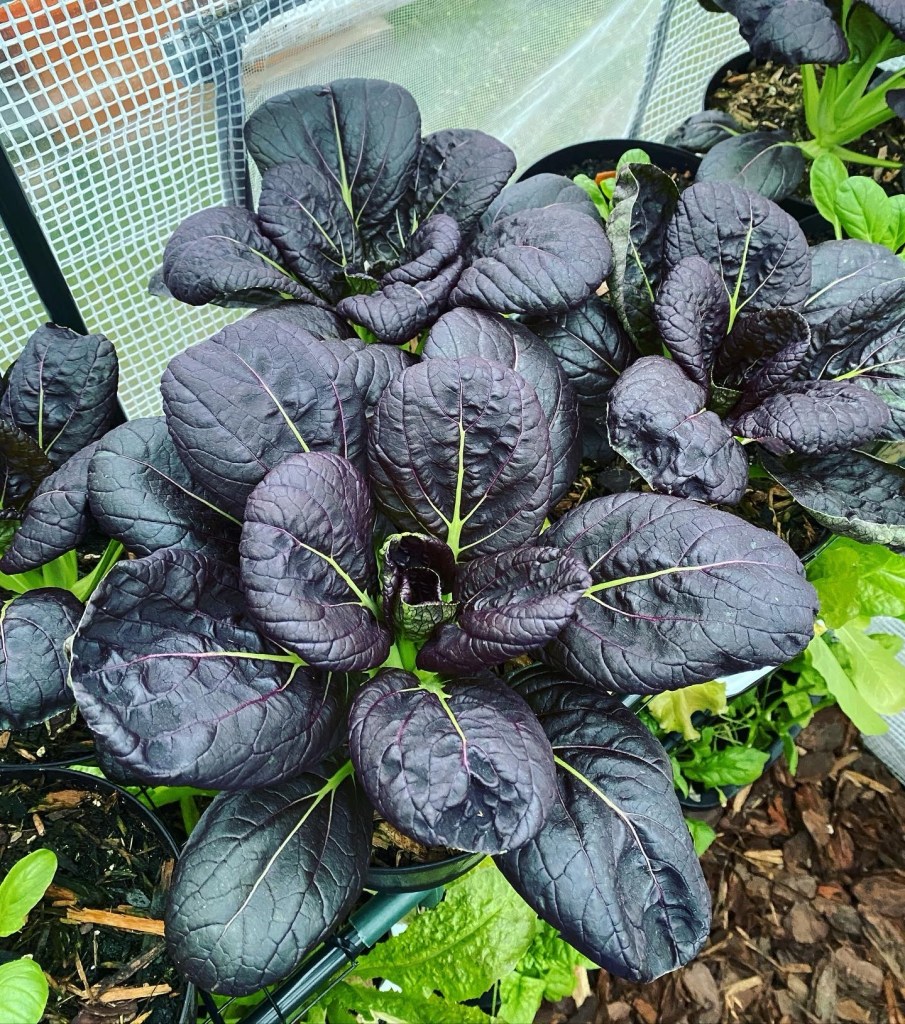
There are so many types of bok choy to choose from, and each has its charm:
- Baby bok choy: Tender, fast-growing, great for containers.
- Full-size bok choy: Bigger and bolder; needs more space but very satisfying.
- Joi Choi: A bolt-resistant hybrid that does well in spring and fall.
- Dwarf varieties: Great for close planting in raised beds or GreenStalk planters.

Growing Bok Choy from Seed
You can start bok choy indoors or sow directly in the garden.
Option 1: Starting Indoors
Start seeds indoors 4–6 weeks before transplanting. Use seed starting mix and grow under lights if you don’t get much natural light.
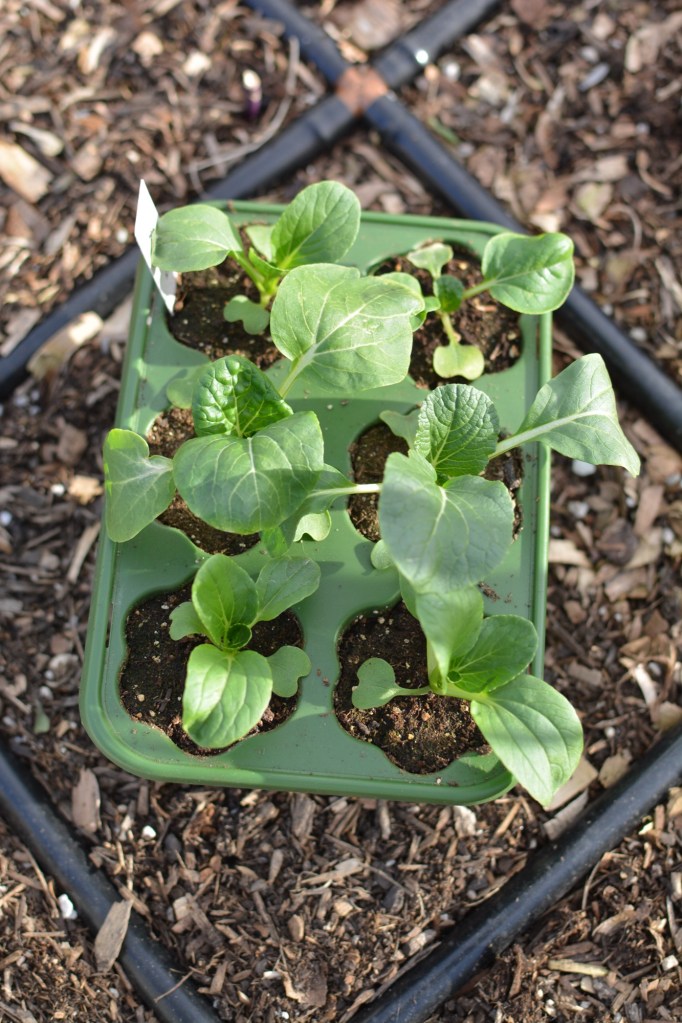
Sow seeds ¼ inch deep. Keep soil moist and warm (60–70°F). Harden off before transplanting outside.
Option 2: Direct Sowing
In my fall garden, I often direct sow into raised beds and containers. It’s quick and easy.
Sow seeds ½ inch apart. Thin (or transplant) to 6 inches apart when seedlings have 2 true leaves. For baby bok choy, you can space them closer—3 to 4 inches apart.
Best Conditions for Growing Bok Choy
Bok choy loves:
✅ Cool weather
✅ Rich, well-drained soil with plenty of compost
✅ Consistent moisture
✅ Partial to full sun (about 4–6 hours of sun is ideal)
Because bok choy is shallow-rooted, it does really well in containers, raised beds, or GreenStalk planters. I’ve even grown them under taller plants like peppers for partial shade in the fall.
Fertilizing and Care Tips
Bok choy grows fast, so it benefits from steady nutrition.
Add compost before planting. Use a balanced organic fertilizer or worm castings once plants are established. Avoid letting the soil dry out. Consistent watering is key to tender, juicy stalks.
I also mulch around the base of the plants to retain moisture and suppress weeds. It makes a big difference!
Common Pests and Problems
Like many leafy greens, bok choy can attract pests, especially early in the season.
Watch for:
- Flea beetles: Use row covers or Diatomaceous Earth if needed.
- Cabbage worms: Check the undersides of leaves often and get rid of the eggs or any green worms.
- Slugs: Slug baits can help.
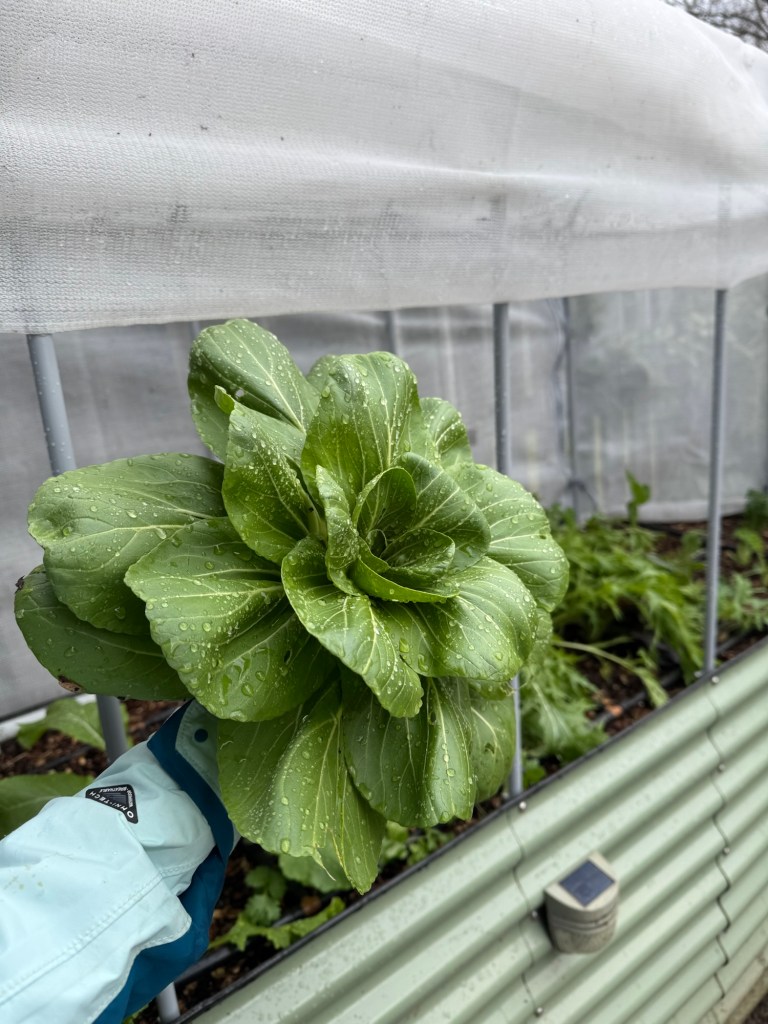
And remember, bolting can happen if there’s a sudden heat wave. Some varieties resist bolting better than others, but planting at the right time makes all the difference.
Harvesting Bok Choy
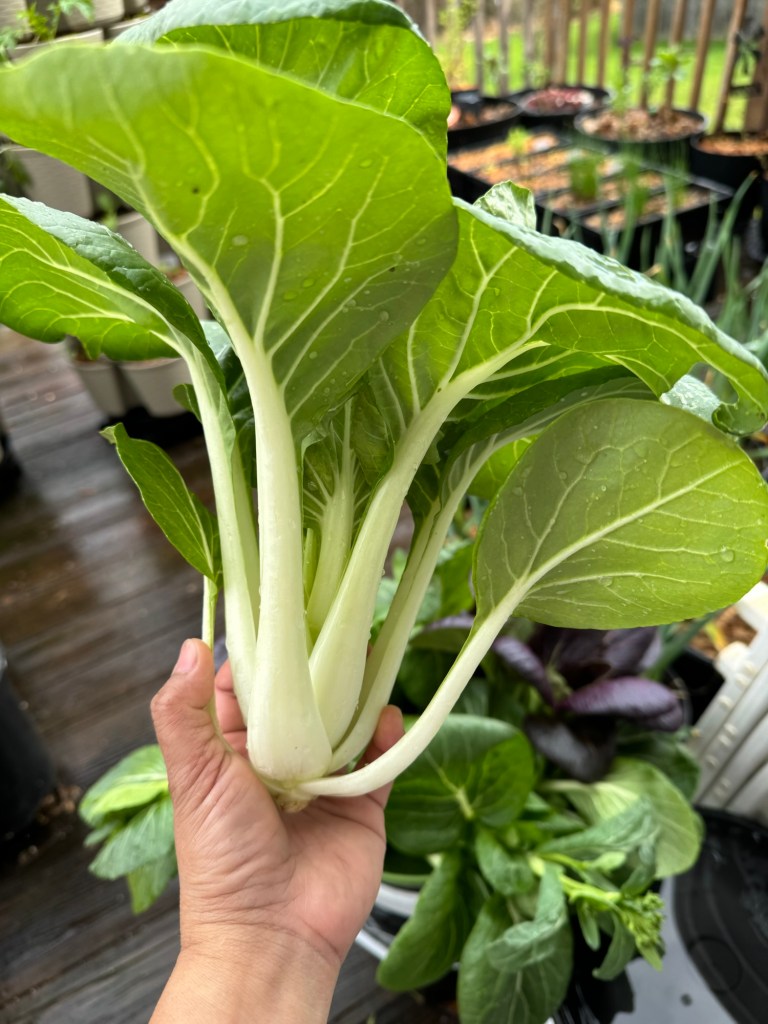
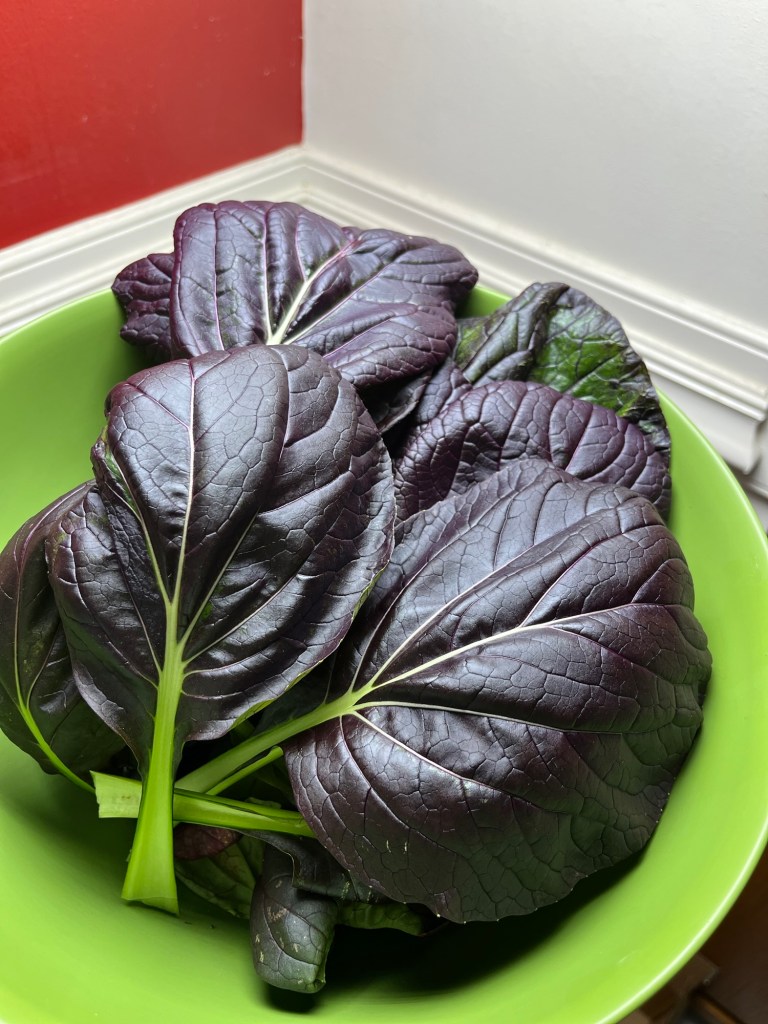
This is the fun part. When the plant reaches maturity (about 6–8 inches tall for baby varieties or 10–12 inches for full-sized ones), you can harvest in one of two ways:
- Cut-and-come-again: Harvest outer leaves and let the center regrow.
- Full head harvest: Cut the plant at the base with a sharp knife.
In cooler fall weather, I’ve even harvested bok choy through early frosts by covering the plants with garden fabric or a tote cloche. They’re surprisingly cold-tolerant!
My Favorite Ways to Cook Bok Choy
One of the reasons I love growing bok choy is because it connects me to the flavors of home. It’s a staple in so many Asian dishes and not surprisingly, one of my absolute favorites. It also holds up beautifully in noodle soups, miso broth, or even chopped raw in salads.
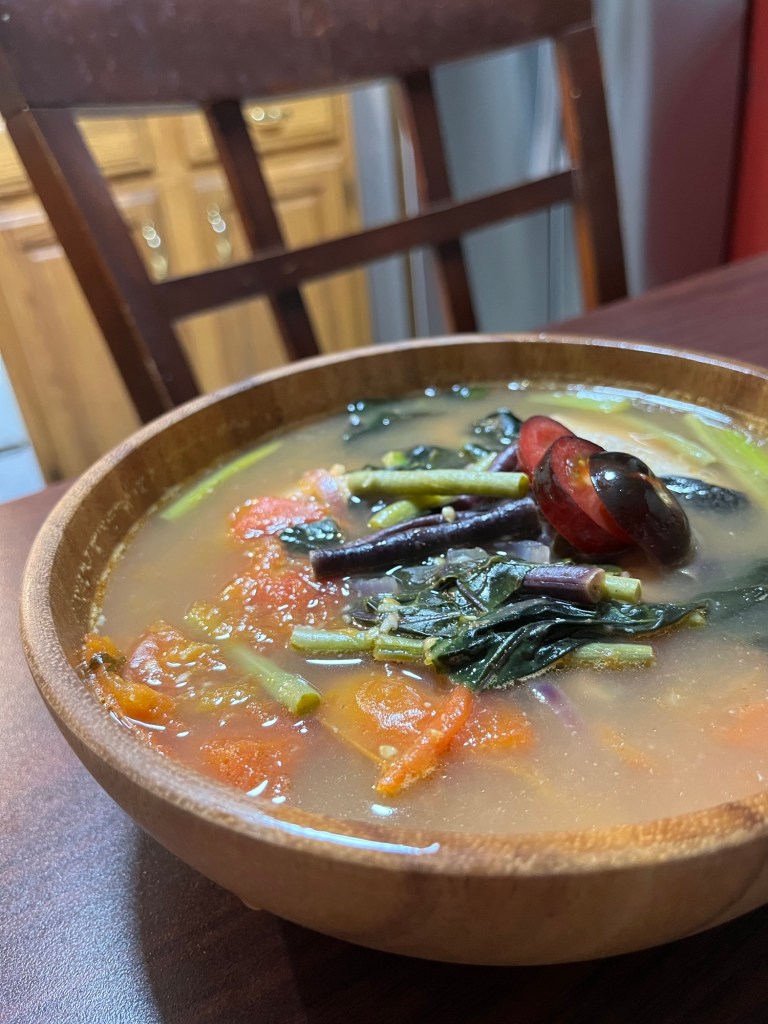
I especially love it in “Kare-Kare,” a rich and comforting Filipino peanut stew, and in “Sinigang,” our beloved sour soup that reminds me of rainy days and warm bowls around the table. But honestly, even a simple sauté with garlic, splash of soy sauce and chili oil brings out its delicate sweetness and satisfying crunch. It also holds up beautifully in noodle soups, miso broth, or even chopped raw in salads.
Whether as a main ingredient or a supporting green, bok choy always brings something special to the dish—and growing it makes every dish feel more personal, like bringing a piece of home to the table.
Lessons I’ve Learned Growing Bok Choy
Every season is different—and that’s okay.
There were years when cabbage worms got the upper hand, or when my frost cover just wasn’t enough and the bok choy turned wimpy and withered away. Disappointing? Yes. But each of those moments taught me something. And that’s one of the beautiful truths about gardening—it doesn’t just grow food, it grows you, too.
Even if only a few heads make it, even if all you get is a small harvest—it’s still a win. You planted something. You showed up. You nurtured it. And you got to experience the reward, no matter how big or small. That, to me, is always worth it.
Let’s Grow Together
Have you grown bok choy in your garden before? What worked well for you—and what didn’t? Share your tips or questions in the comments—I’d love to hear about your gardening journey. And if this guide helped you, consider sharing it with a friend who might love growing greens too!
Happy planting,
Lannie @gingerfootgarden 🌱



 Gingerfoot Garden
Leave a comment