
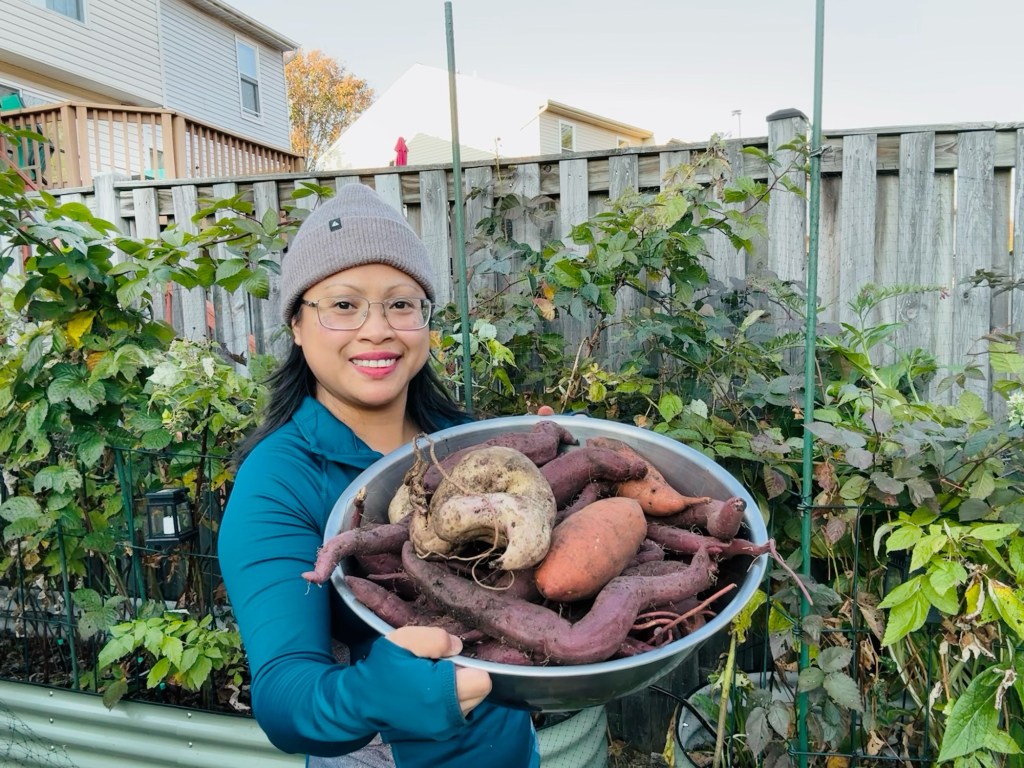
Sweet potatoes were one of the first crops I experimented with early in my gardening journey. I was inspired by the vegetables I grew up eating back in the Philippines. Although sweet potatoes weren’t my favorite growing up, I wanted to challenge myself—to see if I could grow something familiar in a completely different environment.
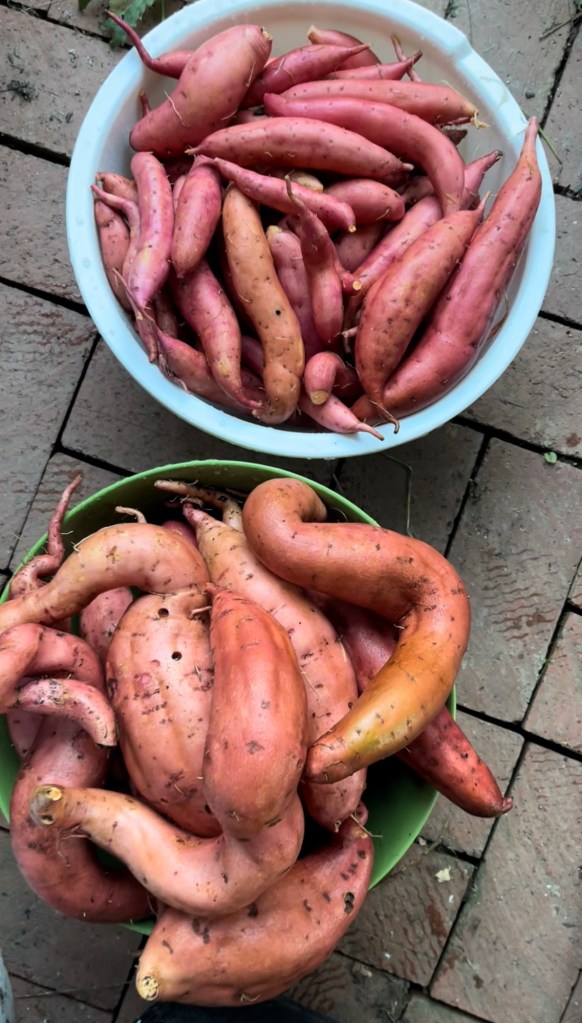
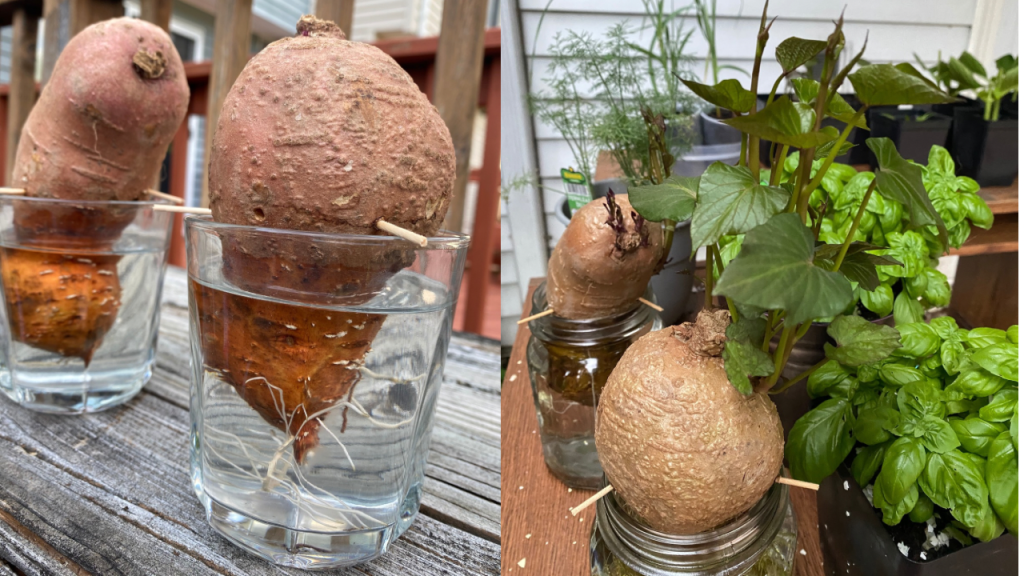
In the Philippines, a tropical country where sweet potatoes thrive year-round, we grow them from vine cuttings. You can easily buy the tops at the market, cook the leaves (Yes! The leaves are edible,) and plant the vines directly into the ground. But here in the United States, it’s a whole different process. Sweet potatoes are grown from slips—those rooted sprouts that grow from the tubers themselves. Watching my sweet potatoes sprout slips for the first time was such a fun and fascinating experience. It was something I had never done before moving here.
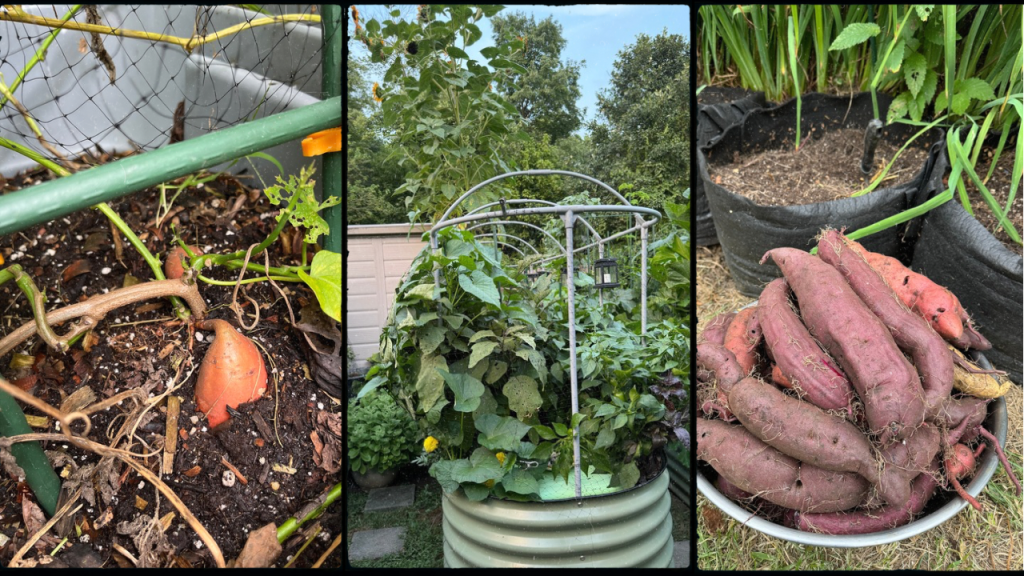
Despite the shorter growing season—we only get about four warm months—I’ve had great success growing sweet potatoes in Maryland Zone 7. The first year I grew them, I used tote containers, and later switched to fabric grow bags and raised beds.
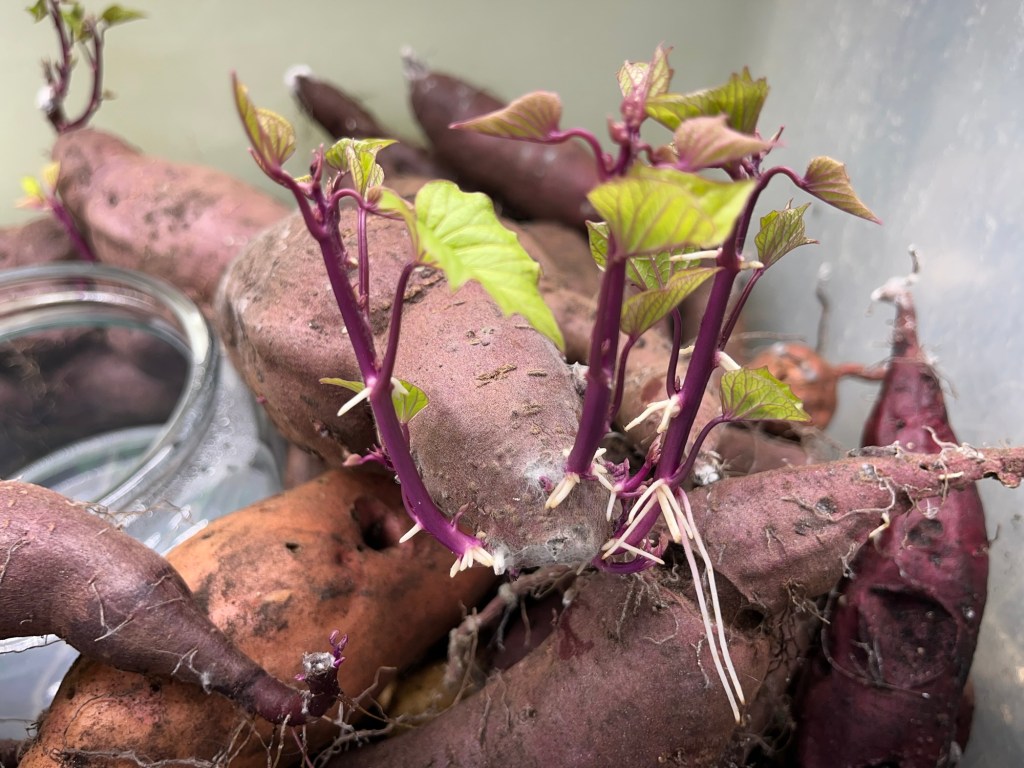
Each method taught me something new. One surprise I discovered after storing my first harvest was that the tubers chit—they start sprouting on their own!
Why Homegrown Sweet Potatoes Are So Full of Life
One of the reasons I love growing sweet potatoes is how alive they are. My homegrown tubers start sprouting without any water, soil, or extra effort. And that’s because they’re vibrant and untreated—unlike many store-bought sweet potatoes that are irradiated to prevent sprouting.

That early sprouting is called chitting. Gardeners often chit seed tubers—like sweet potatoes and regular potatoes—by placing them in egg cartons or trays in a cool, well-lit space. But in my case, my sweet potatoes do it all on their own.
Can You Grow Potatoes and Sweet Potatoes the Same Way?
I want to point out that growing sweet potatoes is quite different from growing regular potatoes. While they share some similarities, they actually come from completely different plant families. Sweet potatoes belong to the Convolvulaceae family, also known as the morning glory family. Regular potatoes, on the other hand, are part of the Solanaceae family, or nightshade family, which includes tomatoes, peppers, and eggplants.
So even though they’re both called “potatoes,” they’re not closely related at all—and that’s why their growing methods, plant habits, and care needs are so different. Unlike regular potatoes, which are grown by planting pieces of the tuber, sweet potatoes are grown by planting slips—these are the vine-like sprouts that grow from a mature sweet potato.
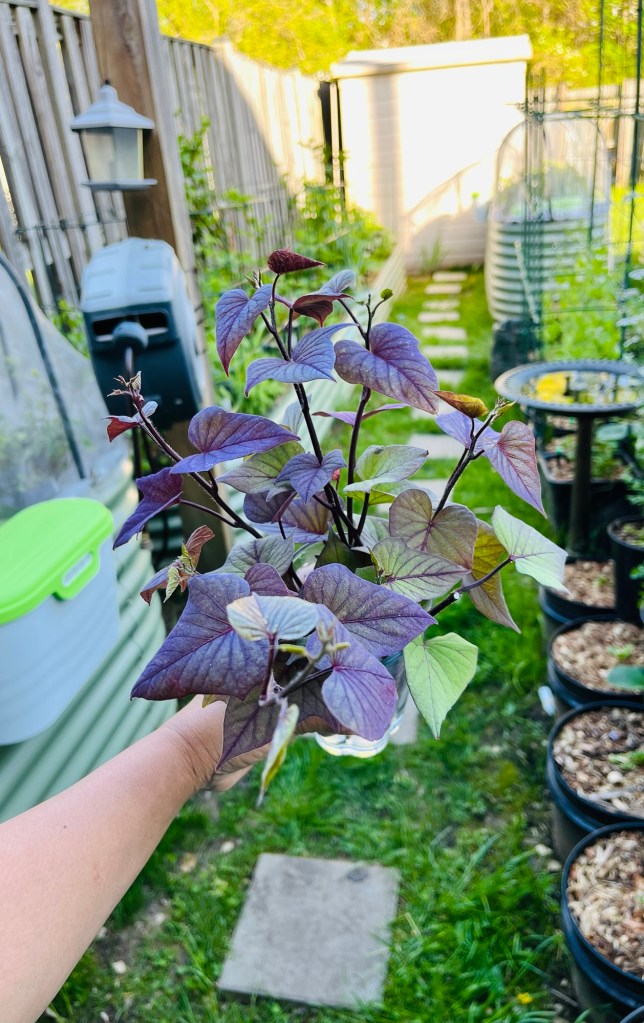
What Happened This Year… And the Lesson I Learned
I grew slips from at least four different varieties and had more than I could plant in my five fabric grow bags. So I did what any merciful gardener might do… I tucked the extras into one of my Vego Garden raised beds, right alongside my peppers and eggplants.
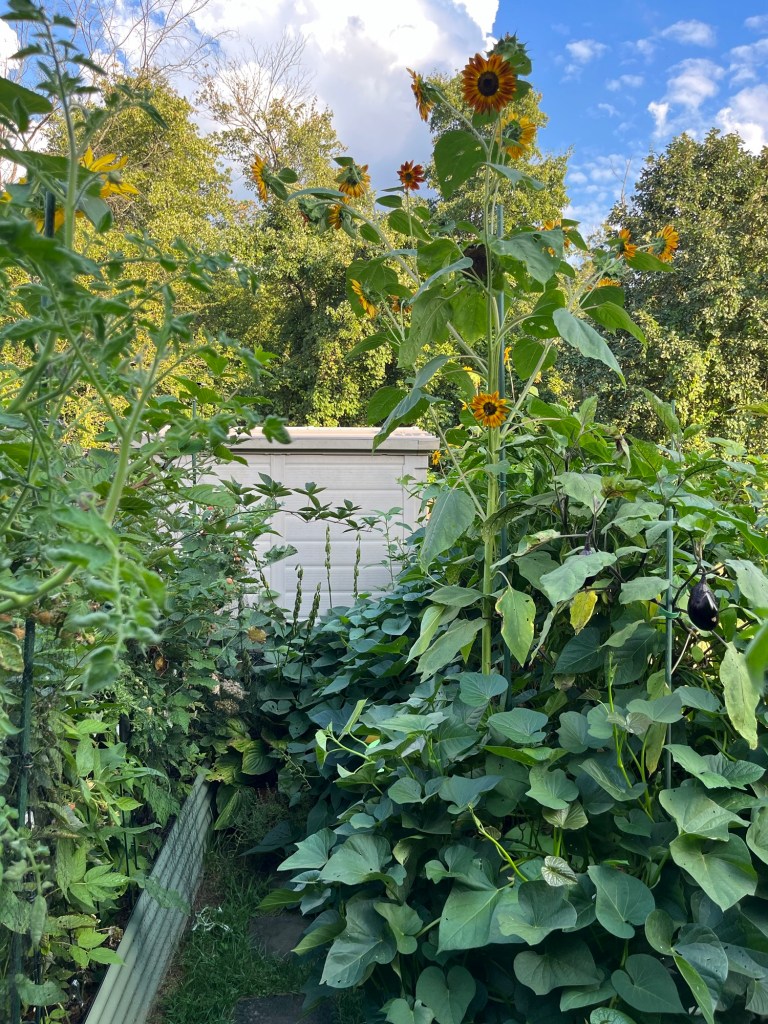
By mid-summer, the sweet potato vines had completely taken over. They sprawled across the bed, shading out my poor peppers and eggplants. 🌿💥
Let’s just say—I won’t be doing that again.
I think moving forward, I’m sticking to fabric grow bags only. They’re breathable, lightweight, and perfect for small space gardening. Plus, training the vines vertically helps keep the garden neat and the neighboring plants happy.
What to Do When Your Sweet Potatoes Start Chitting?
When I notice my tubers starting to chit in early spring, I take a few simple steps depending on the timing and my goals:
✅ If I want to eat the tubers:
I gently remove the sprouts. This prevents the tuber from losing nutrients and helps it store better until I’m ready to grow.
✅ If I want to grow sweet potato greens for cooking:
I pot the sprouts indoors and let them grow into leafy tops. Sweet potato leaves are delicious in stir-fries and soups!
✅ If I’m close to planting season:
I root the slips in soil or water and get them ready for transplanting when the soil warms up.

Sweet potatoes love the heat. I wait until late spring, well after the danger of frost has passed, before planting outdoors here in Zone 7.
How I Grow Sweet Potatoes in Small Space?
Sweet potato vines naturally like to sprawl across the ground. Each leaf node has the potential to root and send out new vines, which can eventually produce more tubers. If you have a large garden space where the vines can freely spread, that’s ideal—they’ll likely reward you with a generous harvest.
But in a small space garden like mine, that growth habit can quickly become overwhelming. Sweet potatoes can easily take over an area if left unchecked, so you really have to love them and be willing to manage their growth. The good news is: yes, you can absolutely grow sweet potatoes in a small space—you just need the right strategy.
For me, that means growing them vertically, and here’s how I do it:
🌿 1. I use an A-frame trellis or stake structure.
I train the vines to grow upward instead of sprawling across the ground. In past seasons, I even grew sweet potatoes alongside melons and watermelons using this method, and I was happy with the results. This year, I kept it simple and grew sweet potatoes on their own in grow bags using the same A-frame structure.
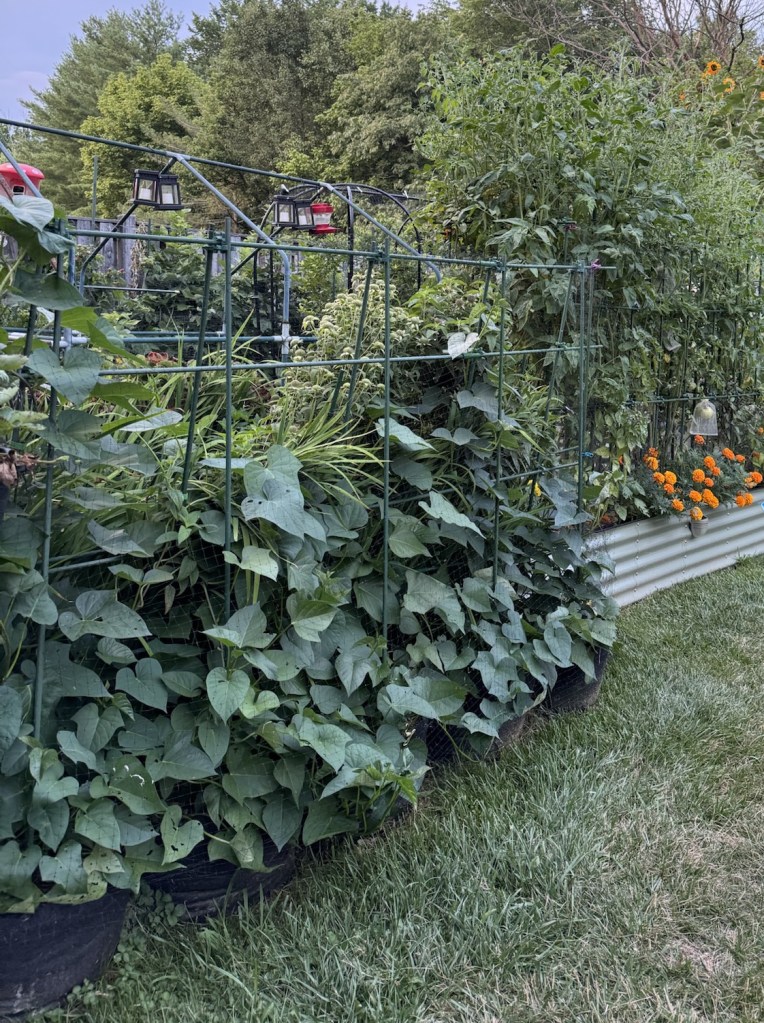
🌿 2. I gently tie the vines to guide them.
Sweet potatoes don’t have tendrils like melons or cucumbers, so they won’t cling to a trellis on their own. I use soft ties, velcro plant tape, or string to gently secure the vines and train them upward as they grow.
🌿 A Word of Caution from Experience
You can also train vines on other vertical structures—like the frame I attached to one of my raised beds. But take it from me: if sweet potatoes share space with other plants, they can quickly take over. Their large leaves can cast heavy shade, and nearby plants may suffer from lack of sunlight.
So if you’re growing in a raised bed, it’s best to give sweet potatoes their own space. Trust me—it’ll save you (and your other plants) a lot of stress!
Protection from Wildlife
I quickly learned that sweet potatoes are one of a deer’s favorite snacks. I’ll never forget walking out to check on my sweet potato plants, only to find the leaves completely eaten. I wasn’t happy about it—but it was a valuable lesson: never leave sweet potato plants (or any vulnerable crops) uncovered.
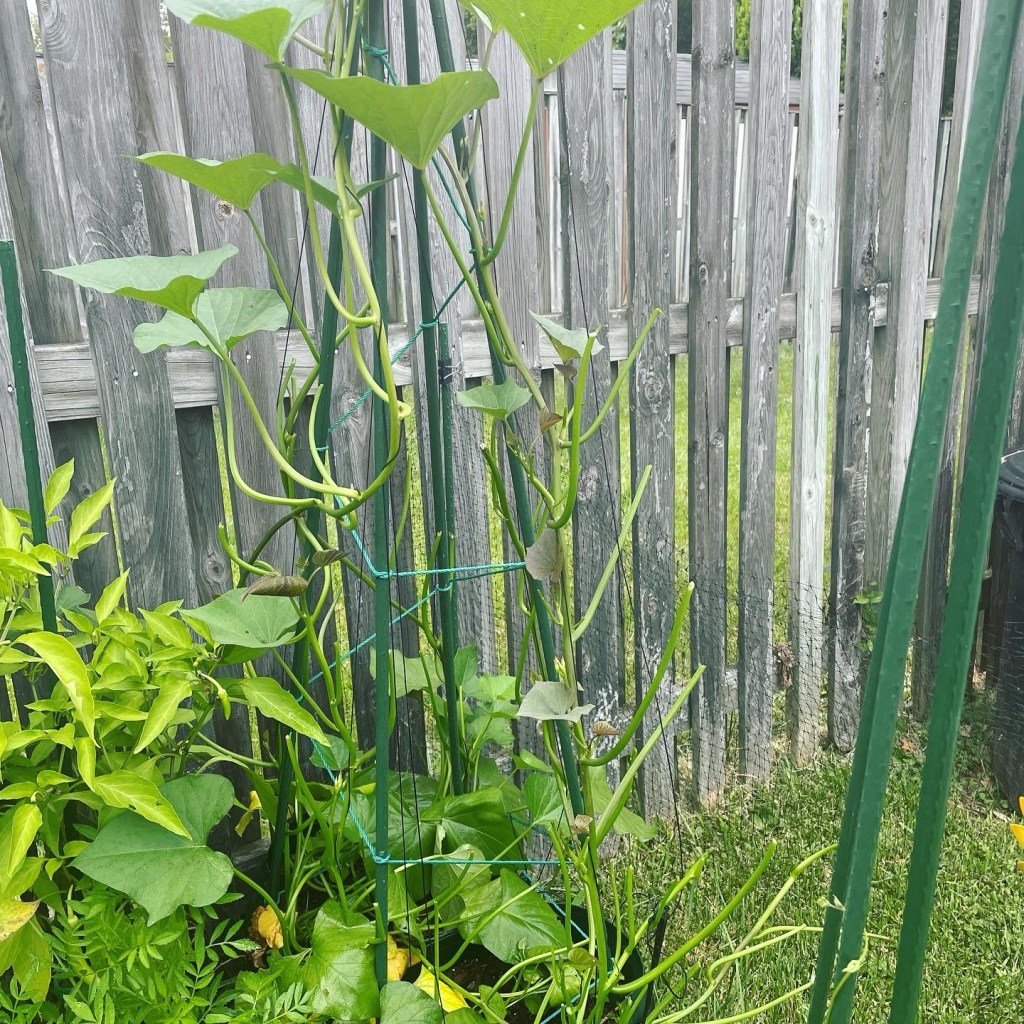
Since then, I’ve been using deer netting to protect not just my sweet potatoes, but my entire garden. It’s an inexpensive and effective way to keep deer out. Just keep in mind—any vine or leaf that grows outside the netting is fair game and will likely get eaten. While the netting can feel a bit restrictive to the plants, it actually helps me manage their growth and keep them contained in a small space.
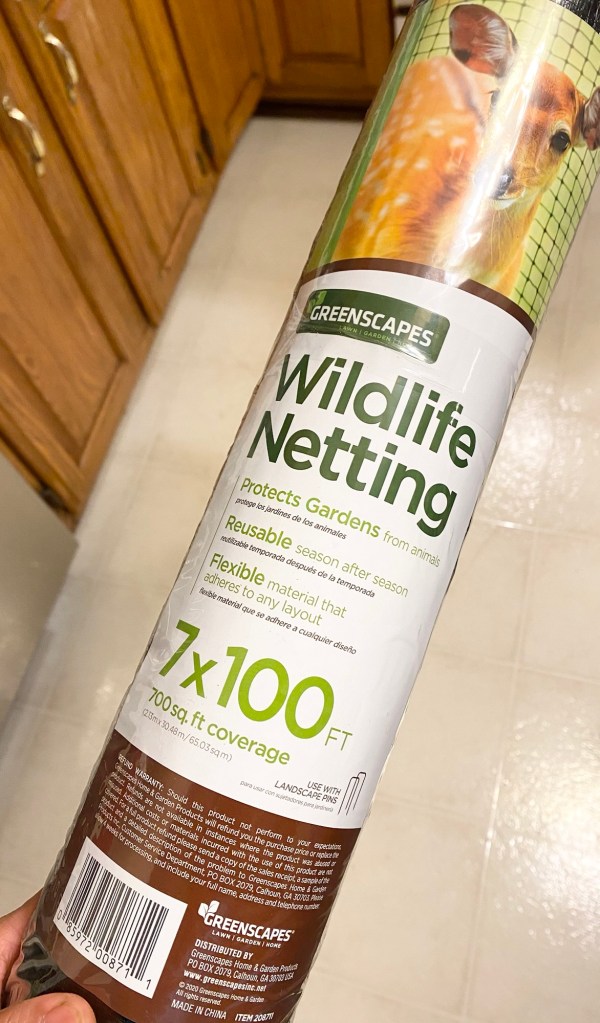
Using deer netting has been a total game changer. Now, I make it a rule: I don’t leave the garden for the day until everything is covered and protected. It brings peace of mind and helps my plants thrive—without becoming a buffet for wildlife.
When to Harvest Sweet Potatoes?
One of the clearest signs that sweet potatoes are nearing maturity is when the leaves start to turn yellow or brown and begin to die back. This usually happens about 90 to 120 days after planting. The plant is sending a signal that it’s done growing and the tubers are ready.
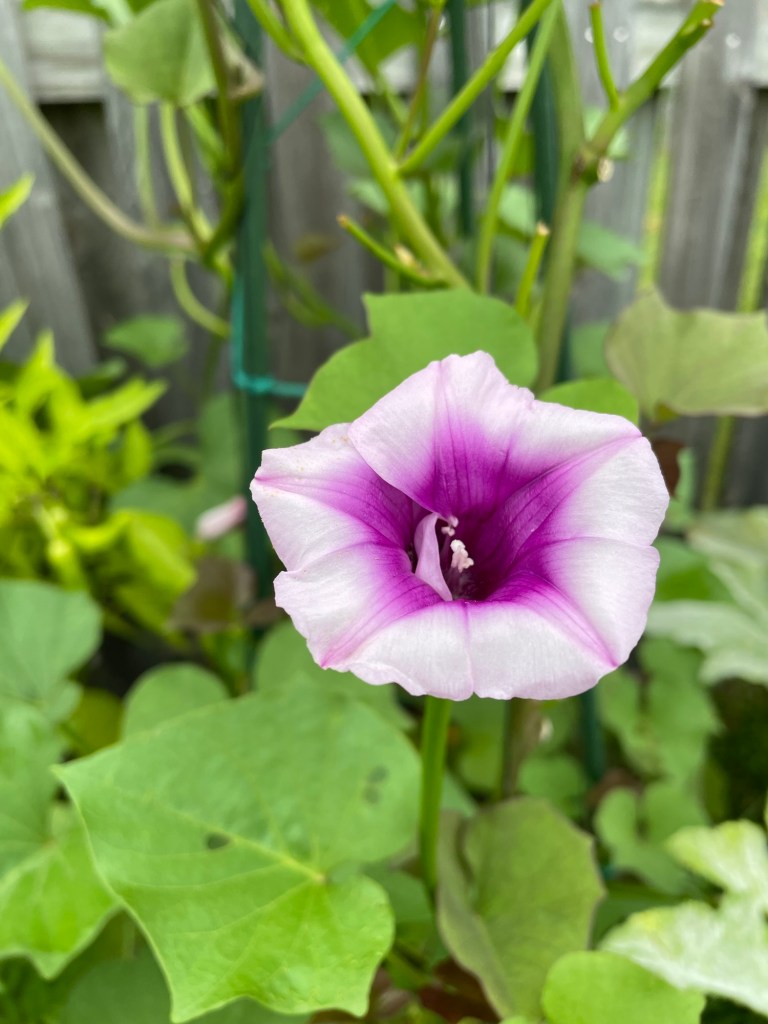
Sweet potatoes sometimes produce small, morning glory-like flowers. While not every variety flowers, when they do, it can be a sign that the plant is mature. But unless you’re trying to cross-pollinate and create a new variety, I usually pinch off the flowers early to redirect the plant’s energy into growing bigger tubers.
Pro Tip for Harvest Time
When harvest day finally arrives, make sure to protect your skin and clothes. Sweet potato vines can irritate sensitive skin, and the creamy white substance that they produce after being cut will stain clothing.
I always wear:
- Gloves 🧤
- Long sleeves
- And my Farmers Defense apron
It’s worth it to stay comfortable and avoid those stubborn stains!
Let’s Chat, Garden Friend 🌱
Are you looking forward to growing sweet potatoes in your garden?
Drop your thoughts in the comments below or come say hi on Instagram or YouTube @gingerfootgarden. I’d love to hear your stories, tips, or even sweet potato recipes!
Thanks for being here. Until next time, happy gardening!
🌱
Lannie | Gingerfoot Garden
















 Gingerfoot Garden
Leave a comment