
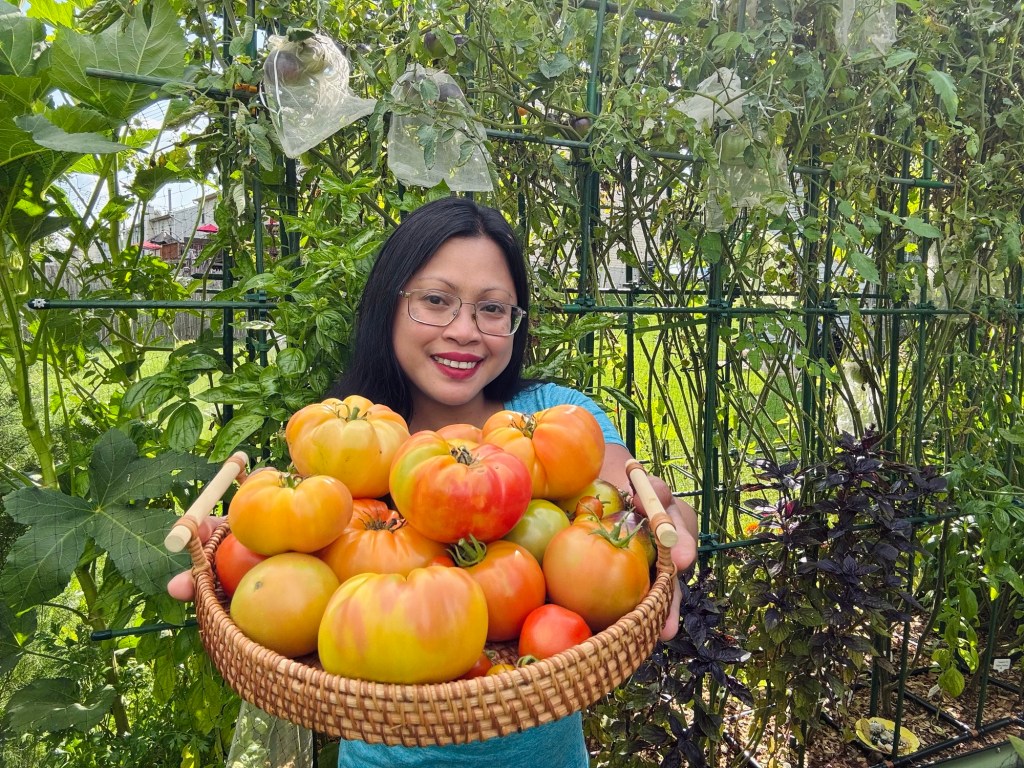
Tomatoes are one of America’s favorite crops to grow—but honestly? I never understood the hype until I tried growing one myself.
As a small-space gardener, I remember thinking, “Tomatoes can’t be good to grow in small gardens. They get so unruly and hardly produce, right?” I once asked someone how much harvest they’d gotten from a single plant, and when she replied, “Just a couple,” I thought, “Not worth it.”
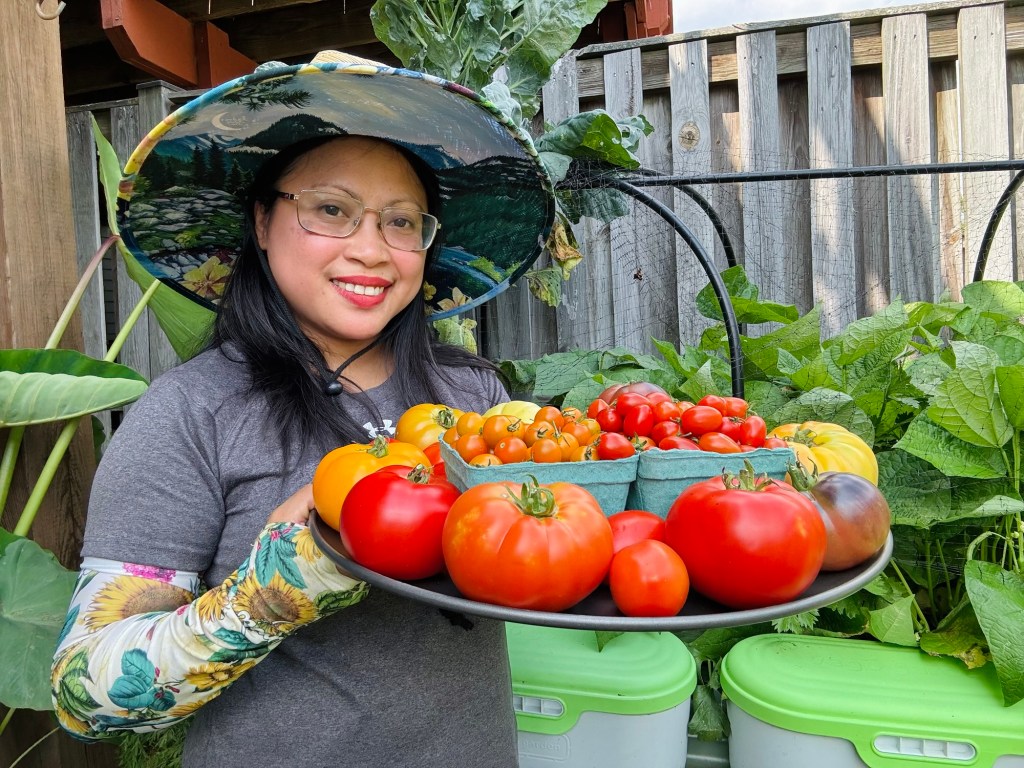
But everything changed when I began connecting with gardeners from all over the world. I saw the vibrant varieties they were growing—purple, yellow, striped, pear-shaped, and more! It opened my eyes to all the possibilities. I couldn’t resist trying a few for myself.
I started with a compact variety called Tiny Tim, and after that, my tomato seed collection just kept growing. 😂 Mind you, at the time, the only tomatoes I knew were Roma and cherry! And here I was now, marveling at names like Black Krim, Sart Roloise, and Orange Accordion.
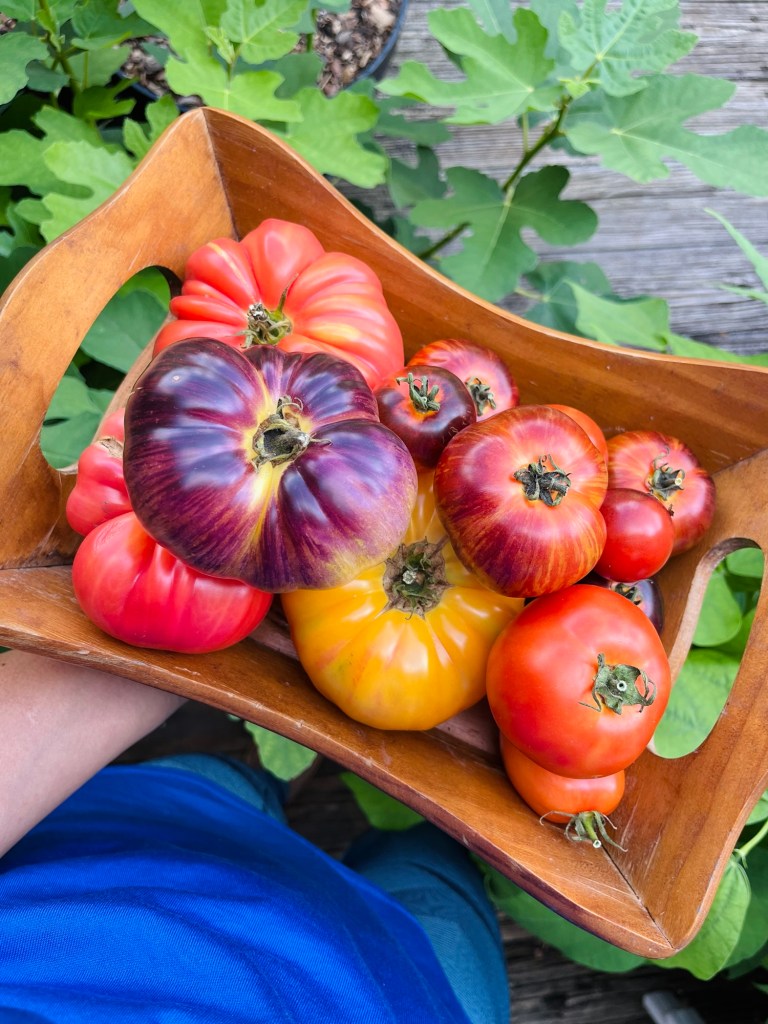
On my second year gardening, I ended up trying 20 varieties in containers because I wanted to see all the colors! Tomatoes became the highlight of my garden that summer—and honestly, one of the highlights of my gardening journey.
Whenever my husband tells someone that I grew 20+ tomato plants, we both just laugh. Because really—what does one do with that many tomatoes?! (Spoiler alert: You can do a lot. I’ll share my favorite tomato preservation tips in a future post—so stay tuned!)
So yes, I was wrong about tomatoes. You absolutely can grow them in small spaces. With the right techniques, they won’t just survive—they’ll thrive. And once the harvest starts coming in, you’ll realize: there’s no such thing as having too many tomatoes.
They’re perfect for sauces, soups, sautéing, salsas, and of course, slicing into fresh summer salads. 🍅
Here are 10 tips that have helped me grow thriving tomato plants—even in containers and compact raised beds. Whether you’re a beginner or just want to improve your harvest, these tips are for you.
🌱 Tip #1: Choose the Right Variety
Tomatoes grow in all shapes and sizes, but choosing the right one for your space is key.
If you’re limited on room, go for determinate or dwarf varieties like Tiny Tim, Orange Hat, Geranium Kiss or Choemato. These are compact, manageable, and great for containers.
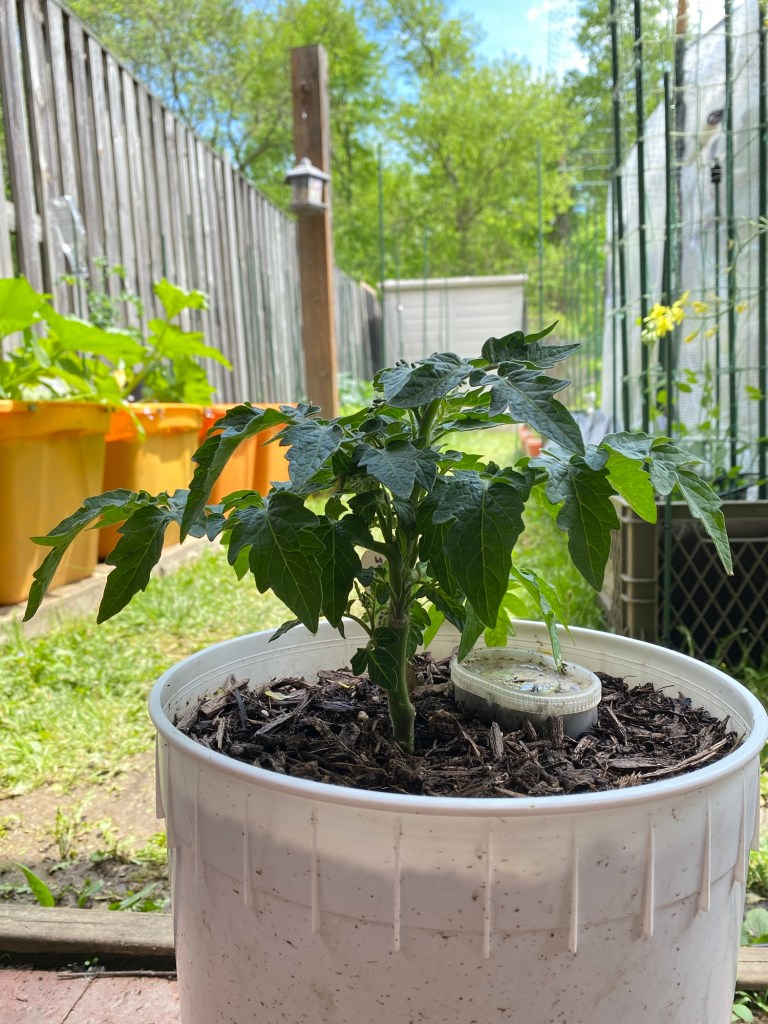
If you’ve got a little more space, indeterminate tomatoes like Sungold, Brandywine, or Cherokee Purple will give you fruit all season long. Just be ready to support their vigorous growth.
➡️ Personal tip: Cherry tomatoes are some of the most productive and low-maintenance varieties I’ve grown—and they ripen way faster than slicing tomatoes and they’re so good for snacking in the garden.
🌿 Tip #2: Prepare the Soil
Tomatoes are heavy feeders that thrive in rich, well-draining soil. Whether you’re planting in a raised bed or container, amend your soil with compost, worm castings, and a slow-release fertilizer. I prefer blends that are higher in potassium and phosphorus.
Containers should hold at least 5 gallons of soil for each plant. Trust me—the bigger the container, the better the plant.
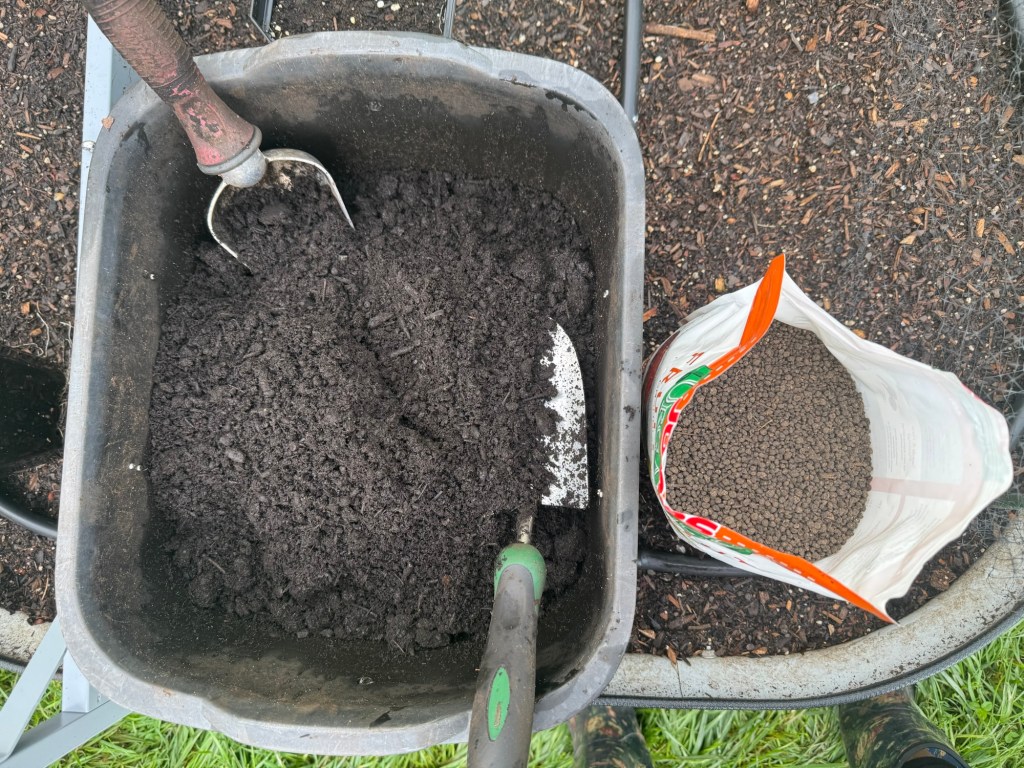
🌱 Tip #3: Plant Deep
Tomatoes naturally develop adventitious roots along their stems, meaning any part of the stem that touches soil or moisture can grow roots. That’s why planting them deeply can significantly strengthen the plant. More roots mean better access to nutrients and water, which leads to a healthier, more productive tomato plant.
When transplanting, I always remove the lower leaves and plant the seedling deep into the soil. Some gardeners even lay the plant sideways to encourage root growth along the stem—this can be especially helpful for weak or leggy seedlings. Personally, I’ve had great success planting vertically, but both methods can work well. It really comes down to what your plant needs and what works best for your space and style.
🌸 Tip #4: Companion Plant
Companion planting is one of my favorite natural pest management methods. I plant basil and marigolds next to my tomatoes to attract pollinators and deter hornworms.
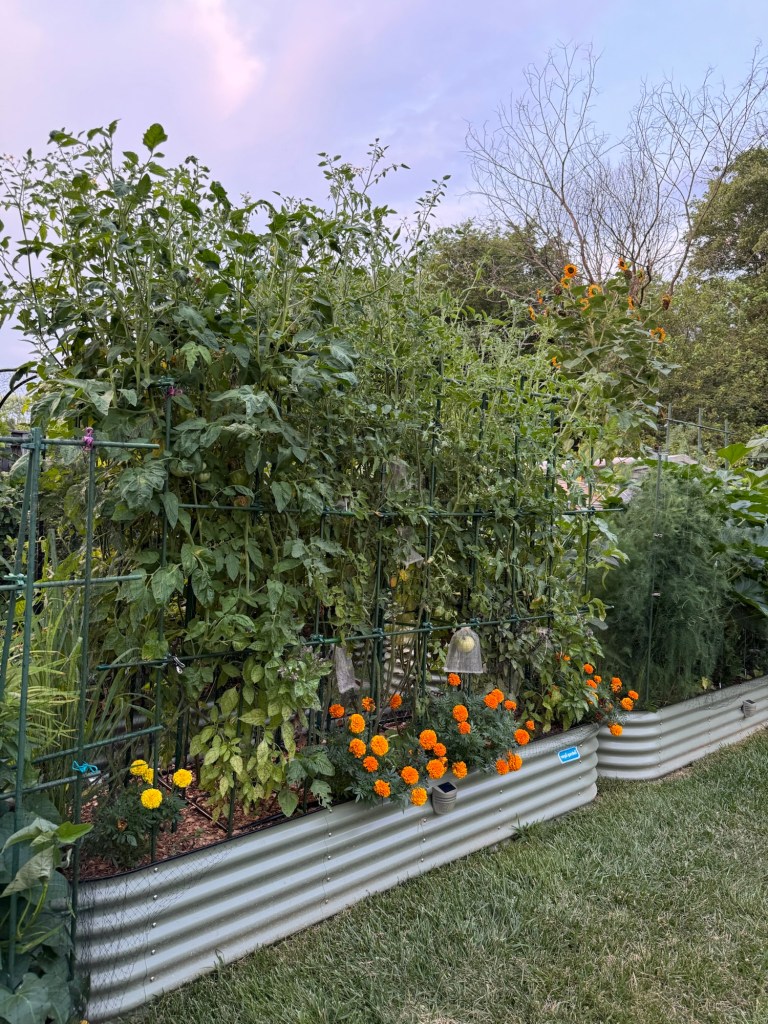
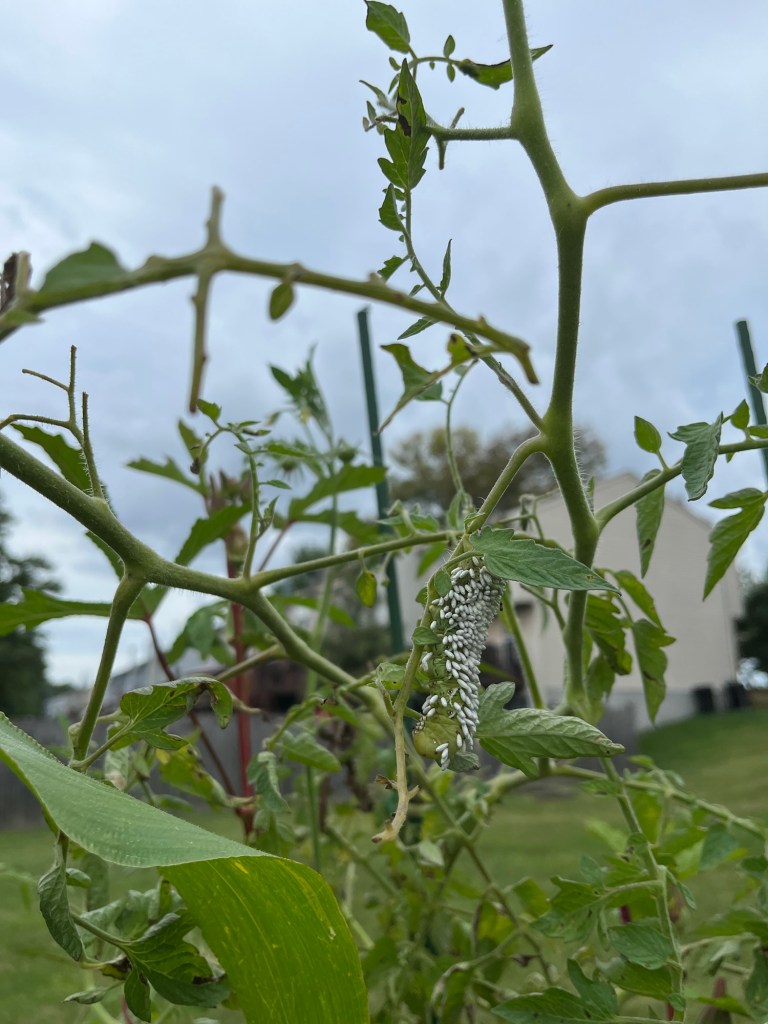
No, it doesn’t prevent pests entirely—but it really does reduce the damage, especially when paired with beneficial insects like braconid wasps.
💧 Tip #5: Water Consistently
One of the most common causes of blossom end rot isn’t calcium—it’s irregular watering. Make sure you water deeply and consistently, keeping the soil evenly moist.
Avoid frequent, shallow watering. Instead, let the roots reach deep by spacing your watering days and soaking well each time.
🌿 Tip #6: Support Your Plant
Tomatoes left to sprawl can quickly become unruly, especially in a small space garden. While I’ve seen gardeners embrace the “let them grow wild” method, that’s not really my style—especially when space is limited. If you’ve ever felt overwhelmed by tangled vines or hard-to-reach fruit, adding support will make a huge difference in both plant health and manageability.
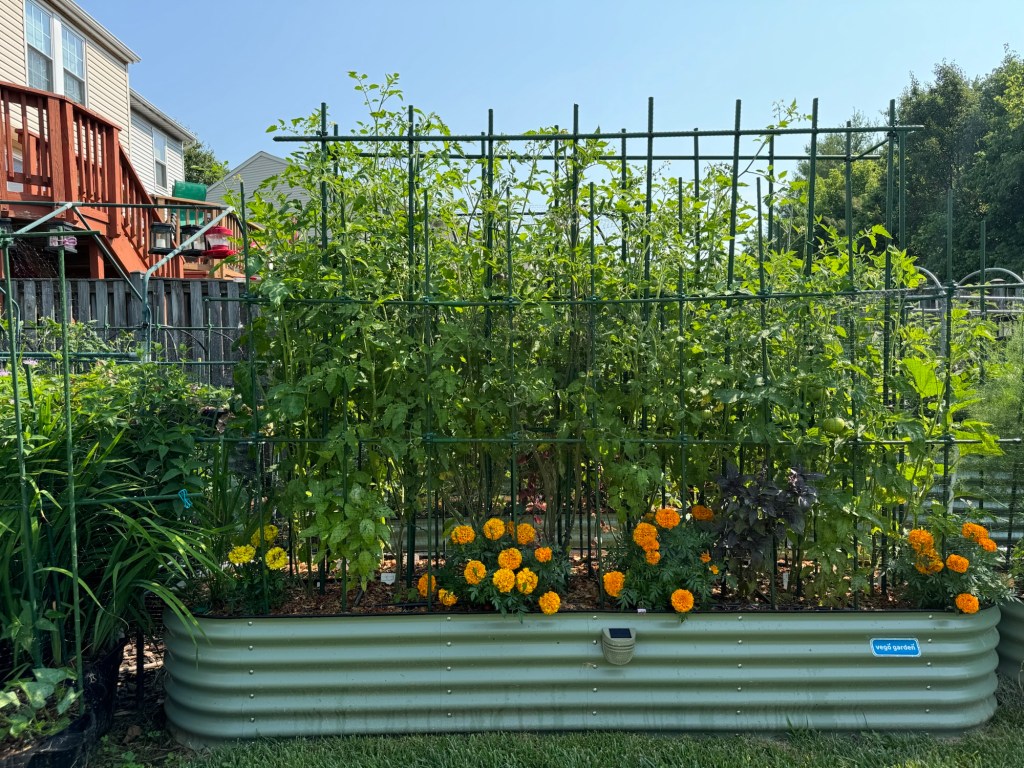
While some tomato plants might survive with minimal support, I prefer a more structured approach. Personally, I’m not on the “Chaos Gardening” train—but hey, you do you! I use stakes, cages, or trellises to keep my plants upright and the fruit off the ground, which also makes harvesting so much easier.
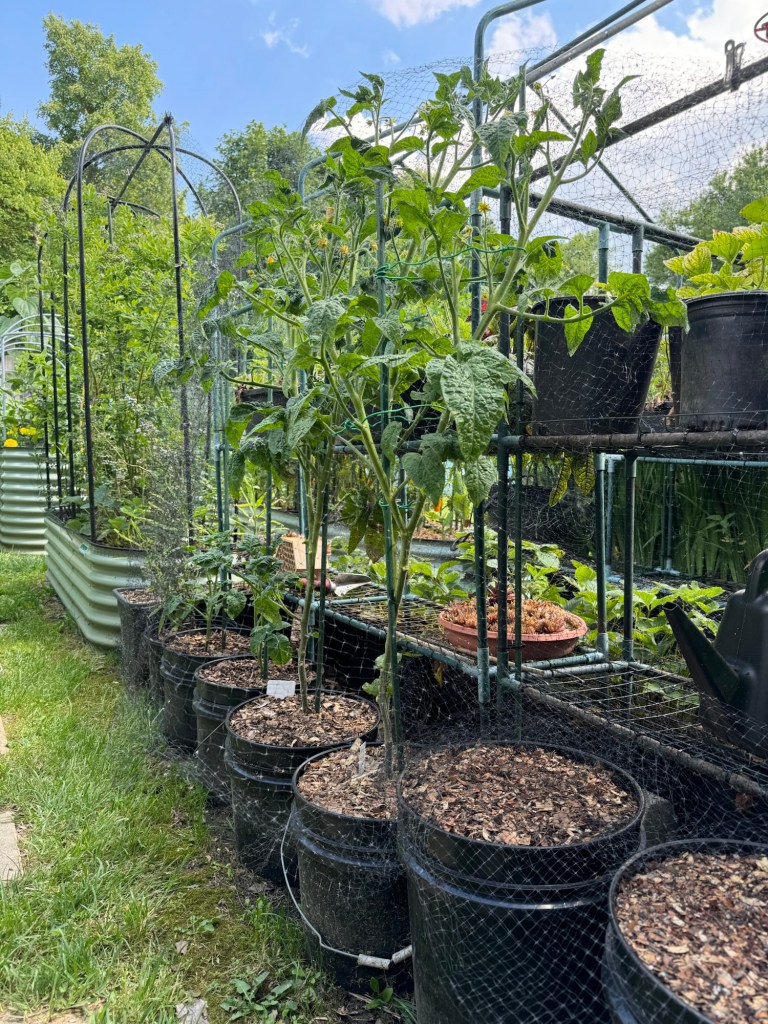
Compact or determinate varieties usually do well with short cages, but indeterminate types benefit from tall stakes or even the Florida weave system. I haven’t tried Florida weave myself, mainly because I prefer the stability of a solid stake—especially with the kind of storms and wind we get in my area.
For most of my tomato plants, I use 6- to 7-foot stakes, which give me peace of mind and strong support for heavy fruit. Dwarf and bush varieties do just fine with 4- to 5-foot stakes. Stakes have worked best for me because they’re easy to customize, tie, and adjust as the season goes on.
🍂 Tip #7: Mulch for Moisture
Mulching helps conserve water, suppress weeds, and regulate soil temperature. I use organic mulches like straw, wood chips, or even shredded leaves to keep the soil healthy and cool.
Plus, mulch creates a barrier to prevent disease from splashing up onto your leaves during heavy rain.
✂️ Tip #8: Prune for Airflow
Pruning is one of the simplest ways to improve airflow, reduce disease, and help your tomato plants thrive—especially in small spaces. I always remove any lower leaves that are touching or close to the soil to prevent soil-borne diseases from splashing up onto the plant. Just be careful not to remove more than one-third of the plant at a time, and always sanitize your pruners to avoid spreading fungal or bacterial issues.
I also avoid pruning when rain is in the forecast or when the weather is wet, as that can create more problems than it solves. Timing really matters when it comes to plant health.
Removing side shoots—also called “suckers”—can help control the size of your plant, especially if you’re training it up a string or trying to keep it compact. That said, I’ve learned to prune mindfully. I mostly focus on removing growth at the bottom near the soil and leave the upper suckers to grow. Over-pruning can actually reduce fruit production, so balance is key.
With determinate varieties, especially Romas and cherry tomatoes, I usually leave the side shoots alone and only remove yellowing or crowded leaves at the base to keep things tidy and healthy.
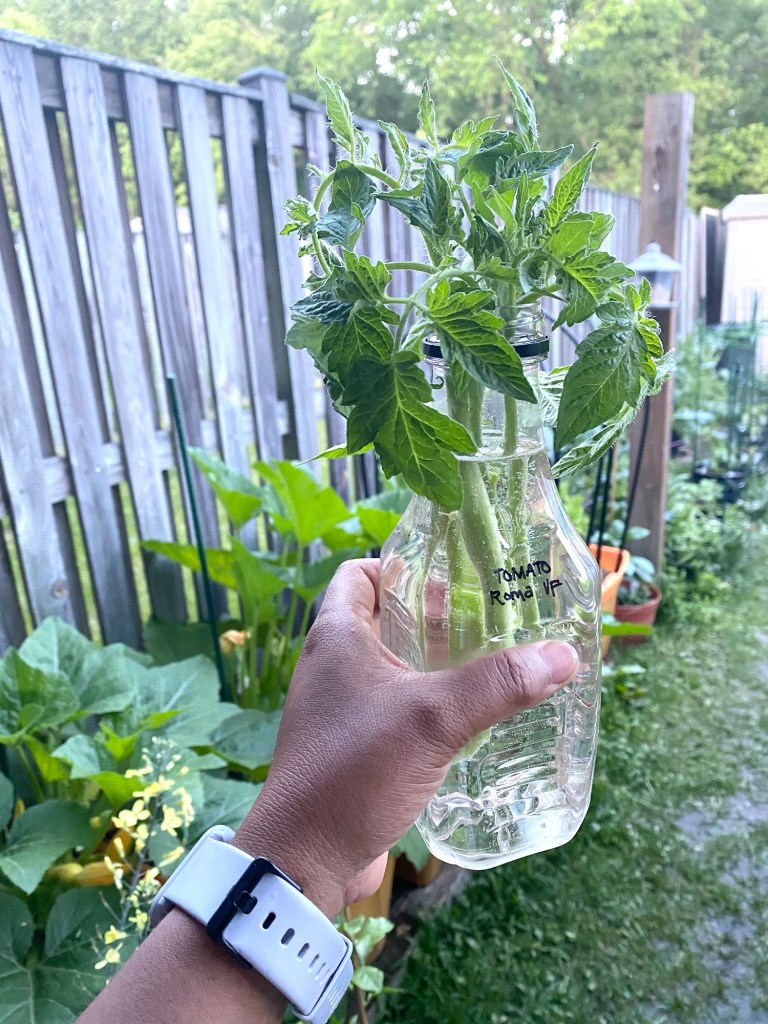
Side note: those pruned side shoots—also known as “suckers”—don’t have to go to waste! You can easily propagate them in water or directly in soil. Just remove the lower leaves and leave 2–3 small leaves at the top so the cutting can focus on developing roots. Within about a week, you should see roots forming, and then you can transplant your new tomato plant wherever you’d like. It’s a simple, budget-friendly way to multiply your tomatoes!
🌼 Tip #9: Feed Regularly
Tomatoes don’t just want to be fed—they demand it! I feed mine twice a month with a phosphorus and potassium-rich liquid fertilizer, and I also sprinkle in worm castings and pre-composted kitchen scraps from my Vego Garden kitchen composter throughout the season.
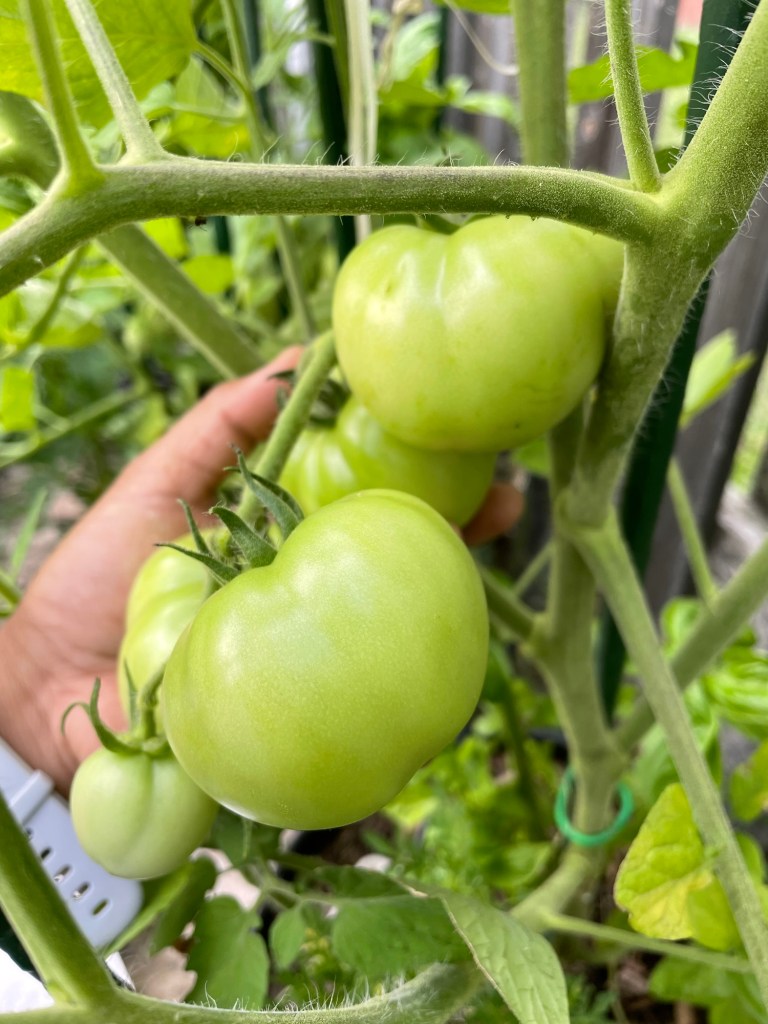
Start fertilizing once your first flowers appear and keep feeding throughout the growing season.
🍅 Tip #10: Harvest Often
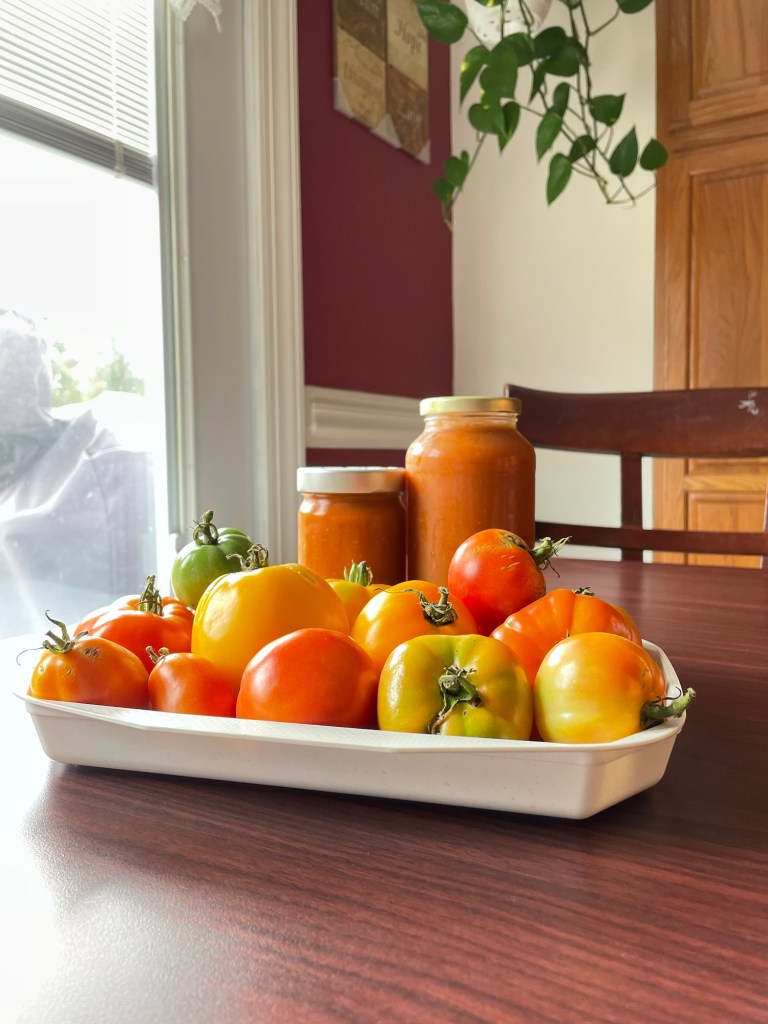
Tomatoes are best harvested when fully colored and slightly soft. But if there’s heavy rain in the forecast or you’re battling squirrels, pick them at the blush stage and let them ripen on your counter.
Harvesting regularly encourages the plant to produce more—so don’t be shy with your snips!
🛡️ Bonus Tip: Protect Your Plants
If you’ve ever had a tomato almost ready to pick—only to find it half-eaten by a squirrel—you know the heartbreak.
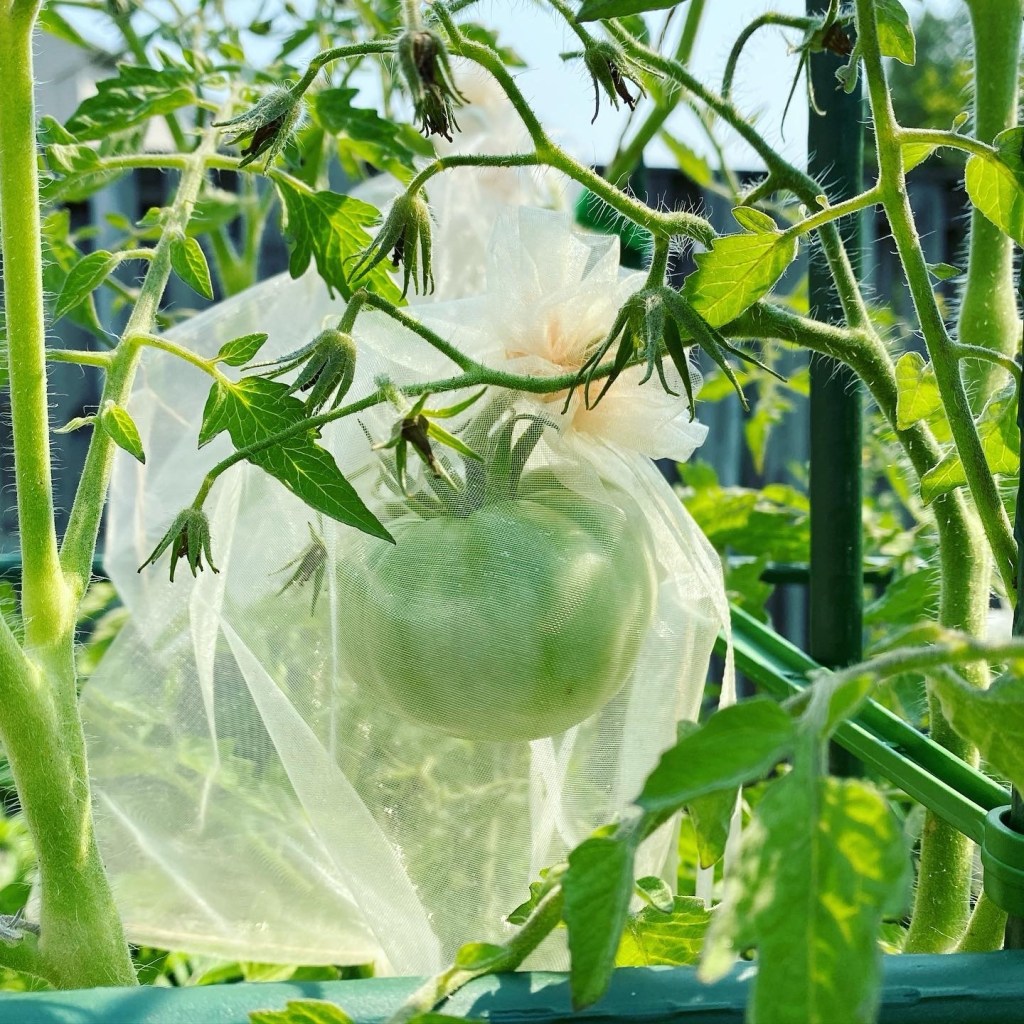
To protect my plants, I use deer netting, wrap fruit in mesh bags, and keep a jar nearby for any pests I hand-pick. I prefer physical pest control over sprays or powders, and it’s worked wonders for my harvest.
Final Thoughts: You Can Grow Tomatoes—Even in a Small Space
I never thought tomatoes were “worth it” in a small garden… but I was wrong.
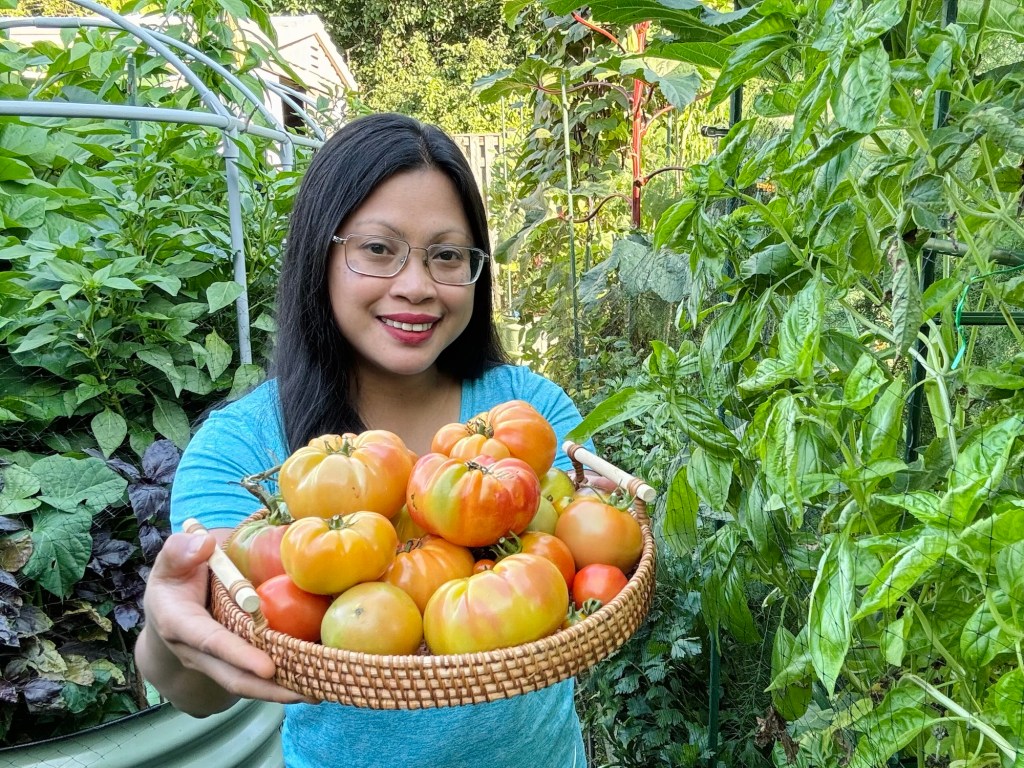
Now, I can’t imagine a season without them. They’ve taught me patience, creativity, and how to make the most out of every square foot I have. Whether you’re planting just one variety or going all out with 20 (like I did one year 😅), the joy of growing tomatoes is truly unmatched.
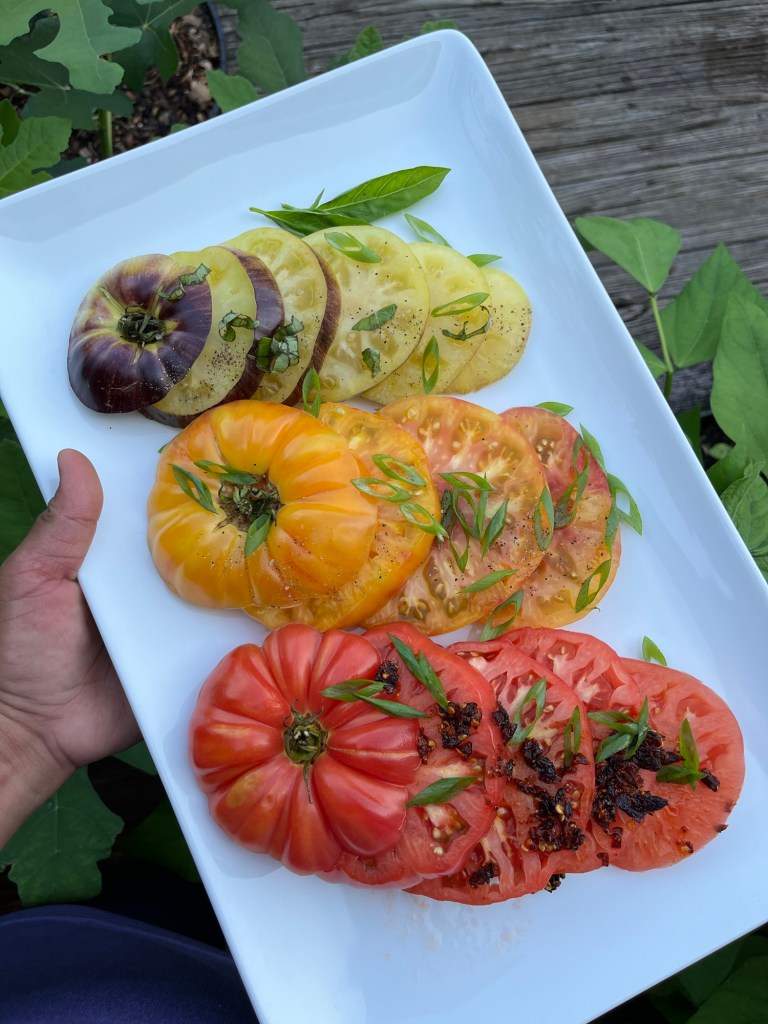
And yes—you can do it, even in a small garden.
💬 Let’s Chat in the Comments:
Have you grown tomatoes before? What’s your favorite variety to grow—and how many plants is too many? (Trick question: there’s no such thing! 😉)






 Gingerfoot Garden
Leave a comment